Key Takeaway
The transition from human-led browsing to machine-to-machine 'Agentic Commerce' will render traditional SEO obsolete while creating a multi-decade growth super-cycle for India’s Tier-1 IT firms and API-first digital platforms.
As AI agents begin to handle end-to-end transactions via APIs, the digital economy is shifting from visual interfaces to autonomous workflows. This deep dive explores why Indian IT giants like TCS and Infosys are the primary architects of this transition and how consumer tech players like Zomato must adapt or perish.
The Death of the 'Buy' Button: Welcome to the Era of Agentic Commerce
For three decades, the internet has been built for human eyes. We browse, we scroll, we compare, and we click. This visual-first paradigm created the trillion-dollar industries of Search Engine Optimization (SEO), digital advertising, and UI/UX design. But we are standing at the precipice of a structural collapse of this model. Enter Agentic Commerce—a world where autonomous AI agents, not humans, execute transactions, negotiate prices, and manage supply chains via direct API calls.
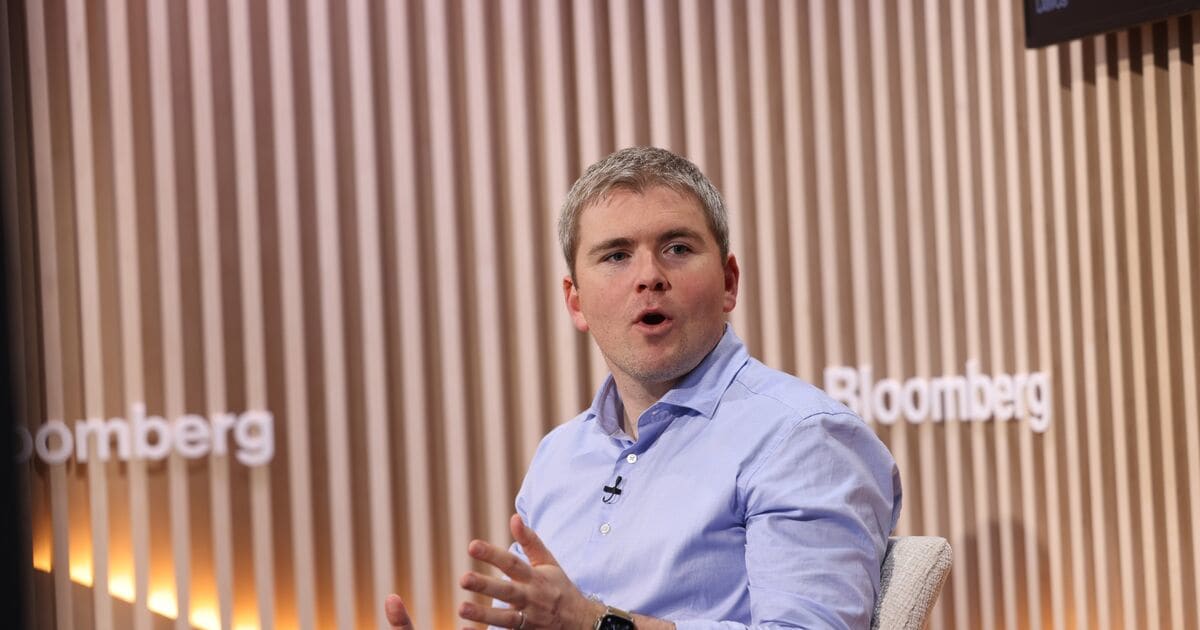
In a recent discourse that sent shockwaves through the fintech world, Stripe co-founder John Collison highlighted that the future of the internet isn't just AI-assisted; it is AI-driven. For the Indian markets, this isn't just a technological curiosity; it is a fundamental revaluation event. As the 'Back Office of the World,' the Indian IT sector (valued at over $250 billion) is uniquely positioned to build the plumbing for this invisible economy. Meanwhile, domestic e-commerce giants listed on the NSE and BSE must now pivot from 'eyeball-capture' strategies to 'machine-readability' or risk being filtered out by the algorithms of the future.
Why Agentic Commerce Matters Now: The API Revolution
Traditional e-commerce relies on a high-friction funnel: Awareness -> Consideration -> Click -> Checkout. Agentic commerce collapses this. If a user tells their AI assistant, "Find me a high-protein meal for under ₹500 and deliver it by 8 PM," the AI doesn't visit a website. It queries the APIs of Zomato (NSE: ZOMATO) or Swiggy, compares nutritional data, checks real-time delivery logistics, and executes the payment via a gateway like Razorpay or Pine Labs infrastructure.
This shift from B2C (Business-to-Consumer) to A2B (Agent-to-Business) means that the value moves away from 'Front-end' (visuals) to the 'Back-end' (API robustness, data latency, and fulfillment reliability). Historically, when the world moved from Desktop to Mobile in 2012-2014, the Nifty IT index saw a multi-year re-rating as companies spent billions on digital transformation. Agentic commerce is 'Digital Transformation 2.0,' but with 10x the velocity.
How Will Agentic Commerce Affect Indian IT Stocks?
Indian IT service providers are the primary beneficiaries of this transition. Global Fortune 500 companies are currently sitting on mountains of 'legacy debt'—outdated software that cannot communicate with AI agents. To participate in agentic commerce, global retailers must modernize their entire stack into an API-first architecture. This is where the Indian giants come in.
1. Tata Consultancy Services (NSE: TCS) - The Architectural Giant
With a market cap exceeding ₹15 lakh crore and a P/E ratio hovering around 30x, TCS is the safest bet for the agentic shift. Their 'Cognitive Business Operations' unit is already integrating LLMs into enterprise workflows. TCS doesn't just build websites; they build the ERP systems that agents will eventually query. As global firms move toward autonomous supply chains, TCS’s deep domain expertise in retail and BFSI (which accounts for nearly 30% of their revenue) becomes an impenetrable moat.
2. Infosys (NSE: INFY) - The AI-First Challenger
Infosys has been aggressive with its 'Topaz' AI offering. For Infosys, the opportunity lies in 'Agentic Orchestration.' When a global retailer like Walmart or Target wants to allow AI agents to browse their inventory, they need a secure, scalable API gateway. Infosys’s history of high-margin consulting means they will be the ones designing the 'Agentic Strategy' for the West, generating high-value billing rates that could see their operating margins push back toward the 24% mark.
3. LTIMindtree (NSE: LTIM) - The Agile Mid-Cap Play
LTIMindtree has shown a higher propensity for cloud-native projects compared to its larger peers. Since agentic commerce requires heavy cloud infrastructure (AWS/Azure/GCP), LTIM’s strong partnership ecosystem positions them as a high-growth beneficiary. With a more concentrated focus on the 'experience' layer of the cloud, they are likely to win contracts for making legacy data 'AI-ready.'
The Consumer Tech Pivot: Zomato, Nykaa, and PB Fintech
While IT services build the tools, Indian consumer tech firms must change their business models. If 40% of orders on Zomato (NSE: ZOMATO) eventually come from AI agents (like a smart fridge or a personal AI assistant), the expensive UI/UX and gamified 'Gold' features become less relevant. The winner will be the one with the best API integration and the most reliable fulfillment data.
PB Fintech (NSE: POLICYBZR) is a fascinating case. Currently, a human compares insurance on their site. In an agentic world, an AI agent will scrape PolicyBazaar’s data to find the best premium-to-coverage ratio in milliseconds. This could lead to a massive increase in volume but a potential squeeze on the 'sponsored' listings that currently drive high-margin ad revenue for the platform.
Expert Perspective: The Bull vs. Bear Case
"The bull case is simple: Agentic commerce removes the 'human friction' in the economy. Velocity of money increases, and the companies providing the infrastructure (IT Services) see a permanent expansion in their addressable market. However, the bear case is the 'Commoditization Trap.' If AI agents are doing the buying, brand loyalty dies. Price becomes the only metric, potentially leading to a race to the bottom for margins in the retail sector."
Contrarian analysts argue that Traditional SEO Agencies and Visual Ad-tech firms (like those listed on smaller exchanges) are the biggest 'losers.' If an AI agent buys your soap, it doesn't care about a 30-second YouTube pre-roll ad or a celebrity endorsement. It cares about the structured data in the product's API manifest.
Actionable Investor Playbook: Navigating the Agentic Shift
Investors should not expect this to happen overnight, but the 're-rating' of stocks often happens years before the full revenue realization. Here is the strategic roadmap:
- Accumulate Tier-1 IT: Focus on TCS and HCL Tech (NSE: HCLTECH) on dips. These firms have the balance sheets to acquire smaller AI-agent startups. HCLTech, with its focus on software products (HCL Software), is uniquely positioned to create 'Agent-ready' enterprise tools.
- Watch the API-First SaaS: Look for companies with high API-call volumes. While many are private (like Postman), their growth signals a massive tailwind for the Cloud Computing sector in India.
- Avoid 'Legacy Digital': Be cautious of firms that rely heavily on 'eyeball' metrics and have poor API documentation. If a company's inventory isn't digitally accessible in real-time, it doesn't exist in the agentic economy.
- Time Horizon: This is a 3-7 year play. The 'infrastructure build' phase is happening now (2024-2026), followed by the 'transactional explosion' phase (2027 onwards).
How will Agentic Commerce change the Nifty 50 landscape?
Historically, the Nifty 50 has been dominated by Banks and Energy. However, the 'Agentic Shift' could see a resurgence in the IT weightage, which has cooled off since the 2021 highs. If Indian IT can successfully transition from 'maintenance' to 'agentic architecture,' we could see a valuation re-rating similar to the 1999-2000 Y2K boom, but with more sustainable earnings. In 2022, when the market realized the potential of Generative AI, the Nifty IT index saw a 15% recovery in a single quarter; agentic commerce is the logical conclusion of that trend.
Risk Matrix
| Risk Factor | Probability | Impact on Stocks |
|---|---|---|
| Autonomous Transaction Errors (Hallucinations) | High | Short-term volatility; liability issues for IT providers. |
| Regulatory Crackdown on AI Payments (RBI) | Medium | Delayed adoption in India; negative for Zomato/Paytm. |
| Collapse of Digital Ad Revenue Models | Very High | Negative for Nykaa and ad-heavy platforms. |
What to Watch Next: The 2025 Catalysts
The next 12 months will provide critical data points for investors. Watch for:
- Q3/Q4 FY25 Earnings Calls: Listen for keywords like 'Agentic Workflows,' 'Autonomous Enterprise,' and 'API Monetization' from the CEOs of TCS and Infosys.
- Stripe’s India Expansion: Any move by Stripe to deepen its 'Agentic' infrastructure in India will be a direct signal for the local payment gateway ecosystem.
- RBI Guidelines on AI-led Transactions: Any framework released by the Reserve Bank of India regarding 'autonomous financial agents' will set the pace for domestic adoption.
Agentic commerce is not just a new way to shop; it is the final form of the digital economy. For the Indian investor, the choice is clear: back the architects of this new world or get left behind in the visual-first graveyard.
See TCS's AI Score
Our algorithmic screener scores TCS on fundamentals, momentum, and risk — free to try, no card needed.
Try the AI Screener →Have questions about this story?
Ask Welth, our finance-focused AI research assistant, for a deeper breakdown — free trial included.
Chat with Welth AI →Disclaimer: This content is generated by WelthWest Research Desk based on publicly available reports and is for informational purposes only. It does not constitute financial advice, investment recommendations, or an offer to buy or sell securities. Always consult a qualified financial advisor before making investment decisions.