Key Takeaway
The decoupling of AI-driven tech valuations from crude price volatility signals a fundamental shift in market leadership. While IT exporters gain from global AI infrastructure spending, India’s macro-vulnerability to oil remains the primary anchor on Nifty’s upside potential.
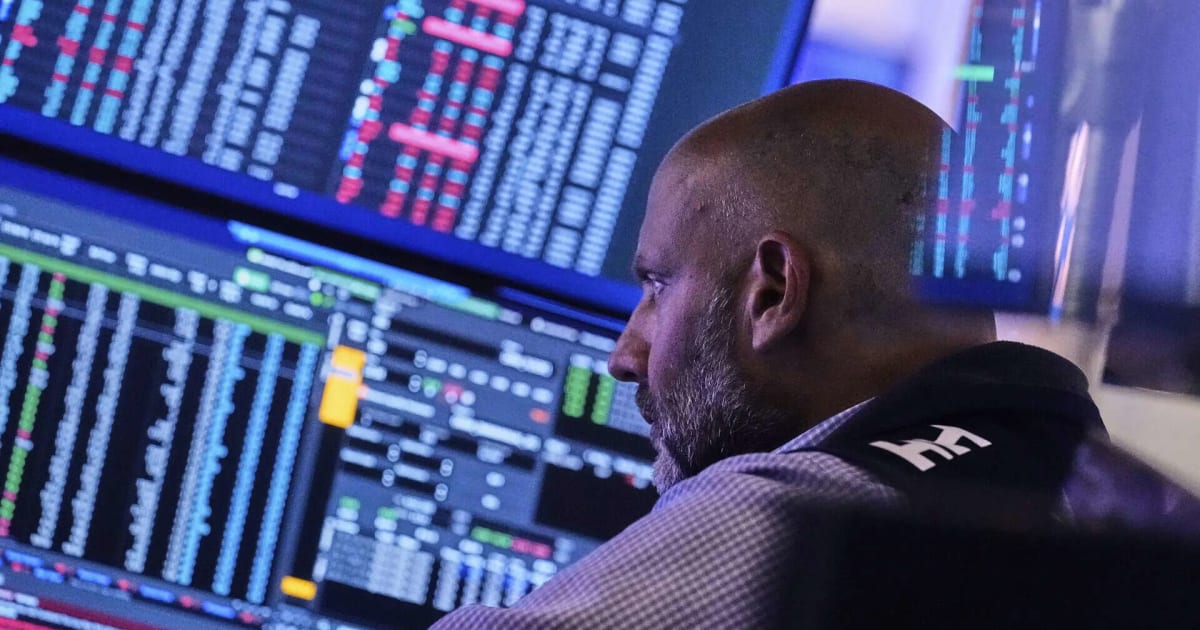
As global AI fervor masks geopolitical energy risks, Indian markets face a tug-of-war between IT-sector growth and oil-linked inflation. This report details the winners, losers, and tactical shifts required to navigate the current semiconductor-vs-crude volatility.
The Great Decoupling: Can AI Infrastructure Outrun Energy Inflation?
For the past decade, the correlation between global crude oil prices and Indian equity market performance has been near-inelastic. When Brent crosses the $85/bbl threshold, the Nifty 50 typically corrects as the Current Account Deficit (CAD) widens and domestic inflation expectations spike. However, the current cycle is witnessing a structural anomaly: the relentless momentum in AI-adjacent semiconductor manufacturing and IT services is effectively neutralizing the bearish sentiment typically triggered by Middle East-induced energy premiums.
This decoupling is not merely a market quirk; it is a manifestation of the 'AI-first' capital expenditure cycle. As global hyperscalers (Microsoft, Google, NVIDIA) pour billions into data center infrastructure, the demand for services provided by Indian IT majors and the nascent OSAT (Outsourced Semiconductor Assembly and Test) ecosystem has become a defensive moat against macroeconomic volatility.
How does the AI-Crude tug-of-war impact Indian equity valuations?
To understand the current market dynamics, we must look at the historical parallel of 2022. During the initial stages of the Russia-Ukraine conflict, Brent crude spiked to $120/bbl, resulting in a 10-12% drawdown in Nifty IT indices as FIIs rotated out of growth stocks into defensive value. Today, the narrative has shifted. The AI boom has provided a secular growth tailwind that outweighs cyclical energy shocks, provided that the energy spike does not trigger a global recessionary impulse.
The impact on the Indian market is bifurcated. On one hand, the IT sector—accounting for approximately 13-15% of the Nifty 50 weight—is benefiting from structural demand in Generative AI and cloud optimization. On the other hand, the energy-sensitive sectors are under pressure. The cost of raw materials for paint manufacturers like Asian Paints or tyre giants like MRF is highly correlated to crude derivatives. When crude prices rise, these companies face margin compression that cannot always be passed on to consumers, leading to a contraction in P/E multiples.
Sector-Level Analysis: Winners and Losers
The divergence between technology and energy-linked cyclicals is becoming increasingly stark in the NSE/BSE data.
The AI-Semiconductor Bull Case
- TCS (Tata Consultancy Services) & Infosys: These firms are transitioning from traditional cost-arbitrage models to high-margin AI integration services. Their P/E ratios, currently hovering between 25x-30x, are being supported by the 'AI-infrastructure' narrative rather than traditional IT spending cycles.
- Kaynes Technology: As a proxy for the 'Make in India' semiconductor push, Kaynes represents the OSAT ecosystem. Their revenue growth is tied more to global electronic supply chain diversification than to domestic fuel prices.
The Energy-Sensitive Headwinds
- HPCL & BPCL: These Oil Marketing Companies (OMCs) are the direct casualties of crude volatility. Government-mandated retail fuel price caps mean that any surge in international crude prices directly erodes their marketing margins, making their earnings highly unpredictable.
- InterGlobe Aviation (IndiGo): Jet fuel (ATF) accounts for nearly 40% of their operational costs. A 10% rise in crude prices, if not offset by yield management, translates to a significant drop in EBITDA margins.
Expert Perspective: The Bull vs. Bear Debate
The Bull Argument: The AI revolution is a multi-year capex cycle, similar to the internet boom of the late 90s. Even if crude prices spike, the demand for semiconductor-adjacent services and AI software is inelastic. Indian IT firms are now essential infrastructure providers for global tech giants.
The Bear Argument: We are ignoring the 'Energy Tax.' If crude oil sustains above $90/bbl, it will force the RBI to keep interest rates higher for longer to manage imported inflation. This will compress the valuation multiples of all growth stocks, regardless of their AI exposure.
Actionable Investor Playbook: Navigating the Volatility
Investors should adopt a 'Barbell Strategy' to navigate this environment:
- Increase Exposure to AI-Proxies: Focus on companies with high exposure to semiconductor design and AI-led digital transformation. Look for entry points during broad market dips triggered by geopolitical news, as these are temporary, not structural.
- Trim Energy-Heavy Cyclicals: Reduce positions in companies with high raw material sensitivity to crude (Paints, Tyres) until crude stabilizes below the $80/bbl range.
- Monitor the INR: The most critical indicator is not just the price of crude, but the USD/INR exchange rate. If the Rupee depreciates significantly due to oil-driven CAD pressure, IT exporters (Infosys, HCL Tech) gain a 'currency tailwind' that provides a natural hedge for their portfolios.
Risk Matrix
| Risk Factor | Probability | Impact |
|---|---|---|
| Persistent Crude Spike (>$95/bbl) | Medium | High |
| Global Recessionary Impulse | Low | Very High |
| Supply Chain Disruption (Semiconductors) | Medium | Medium |
What to Watch Next
Investors should keep a close eye on the upcoming RBI Monetary Policy Committee (MPC) meeting minutes for signals on how the central bank views imported inflation. Furthermore, the Q3/Q4 earnings guidance from global hyperscalers will provide the best leading indicator for the sustainability of the Indian IT rally. Monitor the Brent Crude futures expiry and any shift in OPEC+ production quotas as the primary catalysts for short-term market volatility.
See TCS's AI Score
Our algorithmic screener scores TCS on fundamentals, momentum, and risk — free to try, no card needed.
Try the AI Screener →Have questions about this story?
Ask Welth, our finance-focused AI research assistant, for a deeper breakdown — free trial included.
Chat with Welth AI →Disclaimer: This content is generated by WelthWest Research Desk based on publicly available reports and is for informational purposes only. It does not constitute financial advice, investment recommendations, or an offer to buy or sell securities. Always consult a qualified financial advisor before making investment decisions.
