Key Takeaway
Global AI leaders signaling a development slowdown could trigger a significant re-rating of AI-linked tech stocks. Indian IT services and semiconductor plays face indirect sentiment headwinds, demanding a reassessment of growth premium and strategic portfolio adjustments.
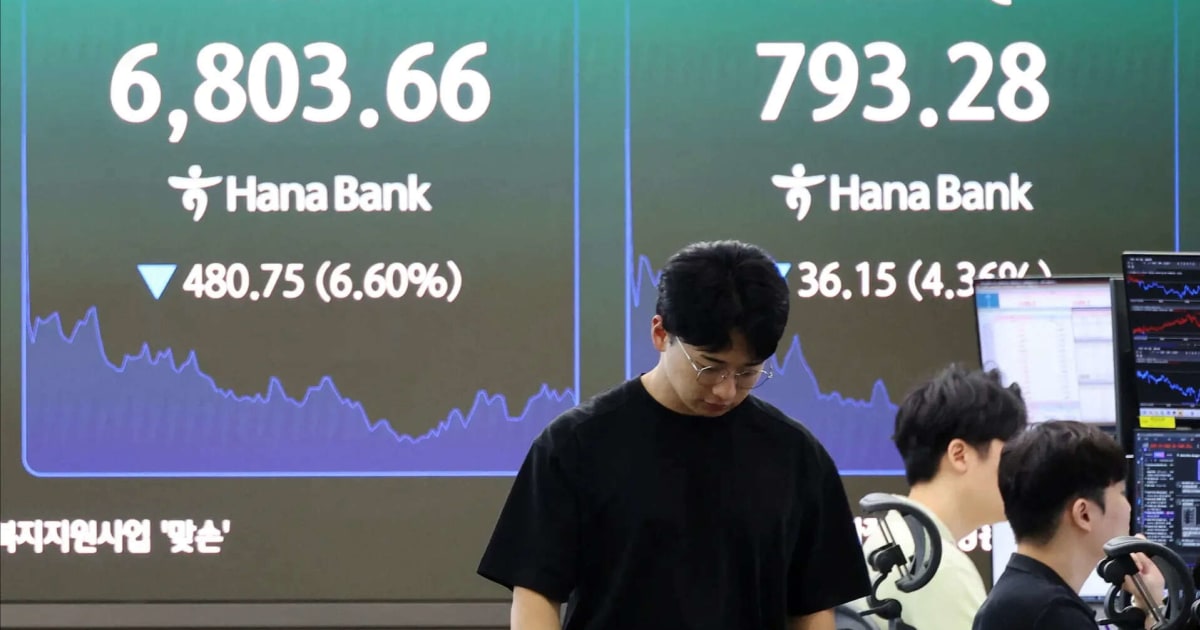
Major global AI companies are advocating for a more cautious approach to development, sending ripples through the technology sector. This pivotal shift could temper investor enthusiasm for high-flying AI stocks and profoundly impact the Indian market, particularly its IT services and burgeoning semiconductor ecosystem. Investors must prepare for potential FII outflows and re-evaluate growth narratives.
AI Headwinds: Global Tech Giants Signal Caution, Indian Markets Brace for Impact
The relentless ascent of artificial intelligence, a narrative that has fueled global tech rallies for the better part of two years, is showing its first significant cracks. Major players at the forefront of AI innovation, companies with market capitalizations dwarfing entire national economies, have begun to sound a note of caution, advocating for a measured pace of development rather than an unbridled sprint. This shift, from aggressive acceleration to deliberate deceleration, represents a seismic event for the technology sector and carries profound implications for global equity markets, particularly India’s deeply intertwined IT services and nascent semiconductor ecosystems.
For investors, the 'why now' is critical. The AI narrative has been a cornerstone of growth stock valuations, propelling companies with even tangential AI exposure to unprecedented heights. This sudden call for a slowdown, emanating from the very architects of AI's future, suggests a deeper underlying concern – whether it's ethical dilemmas, computational resource constraints, or the sheer pace of technological advancement outstripping regulatory and societal absorption capacity. Regardless of the specific impetus, the message is clear: the AI growth story, as we've known it, is evolving, and the market is now grappling with the potential for a significant re-rating of what was previously considered an unstoppable force.
How Will Global AI Concerns Affect Indian Stock Market Valuations?
The Indian stock market, despite its domestic resilience, is not immune to global sentiment shifts, especially when they pertain to the technology sector. The AI slowdown narrative poses a multi-faceted challenge. Firstly, it directly impacts the valuation multiples of Indian IT services companies that have aggressively pivoted towards AI, machine learning, and generative AI offerings. These firms have enjoyed a premium, partly due to their perceived ability to capture a share of the burgeoning global AI spend. A slowdown in this spend or a re-evaluation of AI's immediate commercialization timeline could compress these multiples.
Historically, significant shifts in global tech sentiment have led to FII (Foreign Institutional Investor) outflows from growth-oriented emerging markets like India. For instance, during the dot-com bust of 2000-2001, despite India's then-nascent tech sector, the broader market witnessed a substantial correction. More recently, the 'tech winter' of 2022, driven by rising interest rates, saw FIIs pull approximately $17 billion from Indian equities, disproportionately affecting sectors perceived as high-growth. While the current situation is distinct, the risk of FIIs de-risking from growth sectors and rotating into safer assets or value plays is palpable. Such outflows would not only impact stock prices but also exert pressure on the Indian Rupee and overall market liquidity.
The Indian semiconductor ecosystem, though still in its infancy, is another area of concern. Companies engaged in chip design, testing, or those anticipating benefits from India's production-linked incentive (PLI) schemes for semiconductors, could face headwinds. Global demand for advanced AI chips, while still robust, could see a moderation in growth projections if the overarching AI development pace slows. This could affect long-term investment decisions by global chip manufacturers looking to set up facilities in India, indirectly impacting domestic ancillary industries and employment generation.
Specific Indian Stocks Under the Microscope: Who Wins, Who Loses?
The AI recalibration will create clear winners and losers within the Indian equity landscape. While the immediate impact is bearish for AI-linked tech, other sectors might benefit from a capital rotation.
Losers: AI-Linked Indian IT Services & Semiconductor Plays
- Tata Elxsi (NSE: TATAELXSI): This engineering R&D services company has a significant focus on AI, machine learning, and data analytics across automotive, broadcast, and healthcare sectors. With a TTM P/E ratio often exceeding 60x, its premium valuation is largely predicated on its high-growth, niche tech offerings. A global AI slowdown could pressure its order book and margin outlook, leading to a de-rating as investors question the sustainability of its growth trajectory.
- Persistent Systems (NSE: PERSISTENT): Known for its strong digital engineering and cloud transformation capabilities, Persistent has been aggressively building out its AI/ML practice. While its diversified client base offers some resilience, a broader tech correction driven by AI concerns could impact discretionary spending by clients, affecting its revenue growth and potentially its P/E multiple, which has historically commanded a premium over larger IT peers.
- L&T Technology Services (NSE: LTTS): As a pure-play engineering and R&D services provider, LTTS has invested heavily in areas like AI-powered automation and smart manufacturing. Its exposure to industrial and automotive sectors, which are increasingly adopting AI, makes it susceptible to a slowdown in AI adoption budgets or project deferrals. Any re-evaluation of AI's ROI by global clients could directly impact LTTS's pipeline.
- KPIT Technologies (NSE: KPITTECH): Specializing in automotive software and embedded systems, KPIT has a strong AI play in autonomous driving and connected car technologies. While the long-term automotive electrification and autonomy trend remains intact, any short-to-medium term caution in AI development could delay project timelines or reduce R&D spending by OEMs, impacting KPIT's growth projections and its premium valuation (often above 80x TTM P/E).
- HCLTech (NSE: HCLTECH), Wipro (NSE: WIPRO), Infosys (NSE: INFY), TCS (NSE: TCS): These large-cap IT services giants, while more diversified, have all made substantial investments in AI capabilities, offering generative AI solutions and platforms. While their sheer scale and broad service portfolios provide a buffer, a pervasive bearish sentiment in the global tech sector, triggered by AI concerns, could lead to a broad-based correction in their valuations. Investors might re-evaluate their growth prospects, especially if AI-driven deal wins slow down, impacting their revenue guidance and potentially leading to a compression of their P/E multiples from current levels (e.g., Infosys TTM P/E ~25x).
Potential Winners: Traditional Sectors & Value Plays
- Oil & Gas (e.g., Reliance Industries - NSE: RELIANCE): In a flight to safety scenario, or when growth narratives falter, traditional sectors with stable cash flows and strong underlying commodity prices often benefit from capital rotation. Rising global oil prices, driven by geopolitical factors and supply constraints, provide a direct tailwind for upstream exploration & production companies and integrated players like Reliance Industries. While Reliance has a significant digital and retail footprint, its O2C (Oil to Chemicals) segment remains a substantial contributor to its EBITDA. A shift away from growth-heavy tech could see increased investor interest in such defensive, commodity-linked plays.
Expert Perspectives: Navigating the AI Crossroads
The market is sharply divided on the long-term implications of this AI slowdown narrative. Bulls argue that this is merely a 'pruning' phase, a necessary consolidation after a period of hyper-growth. They contend that the fundamental drivers of AI adoption – efficiency gains, new product development, and competitive necessity – remain robust. They might point to the massive R&D budgets of tech giants, which will continue to fuel innovation, albeit at a more deliberate pace. For Indian IT, bulls would highlight the increasing demand for AI integration services, data engineering, and ethical AI frameworks, which could still drive significant revenue streams, albeit with a longer sales cycle. They might also argue that the current valuations, while high, reflect the transformative potential of AI, which is still in its early innings.
Conversely, Bears view this as a potential 'canary in the coal mine' moment, signaling a broader tech sector correction. They emphasize that the high-flying valuations of many AI-linked stocks have been predicated on an aggressive growth trajectory that is now being questioned by the industry's own leaders. Bears would highlight the potential for reduced discretionary tech spending, project deferrals, and increased scrutiny on AI-driven ROI, which could significantly impact the order books and revenue growth of Indian IT service providers. They might also draw parallels to previous tech bubbles, where initial exuberance was followed by a sharp re-evaluation when commercial realities set in. For them, the risk of a significant P/E multiple compression for AI-exposed stocks is substantial, irrespective of the long-term potential of the technology.
Actionable Investor Playbook: Navigating the AI Shift
In this evolving landscape, investors need a clear strategy to protect capital and identify new opportunities. The key is to distinguish between short-term sentiment shifts and long-term structural trends.
- Sell/Reduce Exposure: Consider trimming positions in Indian IT services companies with very high P/E multiples (e.g., TTM P/E > 50x) that are heavily reliant on niche AI/ML offerings for their growth narrative. Companies like Tata Elxsi and KPIT Technologies, while fundamentally strong, could face significant valuation headwinds if the market re-rates AI growth expectations. Evaluate their client concentration and exposure to discretionary tech spending.
- Watch & Re-evaluate: For large-cap IT services firms (Infosys, TCS, Wipro, HCLTech), monitor their commentary on AI deal pipeline, generative AI adoption rates, and any changes in client spending patterns. These companies have more diversified revenue streams, offering some resilience. Look for entry points during potential corrections, especially if their valuations dip below historical averages (e.g., Infosys P/E moving towards 20x). The time horizon here is medium-term (6-12 months), waiting for clarity on global tech spending.
- Buy/Accumulate: Consider rotating capital into defensive sectors with stable cash flows and strong fundamentals that are less exposed to the AI narrative. Oil & Gas, driven by commodity prices, and certain consumer staples or pharmaceutical stocks could offer shelter. For instance, increasing exposure to Reliance Industries, with its diversified O2C, retail, and telecom segments, could offer a hedge against tech volatility. Entry points could be during any broader market dips caused by FII outflows. The time horizon for these plays is typically medium to long-term (12-24 months).
- Sector-Specific Bets: Within IT, focus on companies with strong balance sheets, consistent dividend payouts, and those providing foundational IT services that are less discretionary, even in a cautious environment. Cybersecurity firms, regardless of AI's pace, will remain critical.
Risk Matrix: Assessing the Downside Potential
Understanding the risks is paramount for prudent investment decisions. The current situation presents several distinct risks:
- Broader Tech Sector Correction (Probability: Medium-High): If the AI slowdown narrative gains traction, it could trigger a broader sell-off across the global tech sector, similar to the 2022 tech winter. This would directly impact Indian IT stocks and could spill over into other growth-oriented sectors. The risk is amplified by the interconnectedness of global financial markets.
- FII Outflows from Indian Equities (Probability: Medium): A significant re-rating of global tech could lead FIIs to de-risk from emerging market growth equities, including India. Sustained outflows could impact the Nifty and Sensex, put pressure on the Indian Rupee, and reduce overall market liquidity, making it harder for domestic institutions to absorb selling pressure.
- Compression of Valuation Multiples (Probability: High): Even without a sharp decline in earnings, the perception of slower AI growth could lead to a significant compression of P/E multiples for AI-linked stocks. Companies trading at 40x-80x earnings could see their multiples halve if investors demand a lower growth premium. This would result in substantial capital erosion for existing shareholders.
- Delayed Commercialization of AI (Probability: Medium): If the ethical, regulatory, or technical challenges of scaling AI prove more significant than anticipated, the timeline for widespread commercialization and revenue generation from advanced AI applications could be pushed back. This would impact the long-term growth projections of companies heavily invested in these areas.
What to Watch Next: Catalysts and Data Points
The narrative around AI is highly dynamic, and several upcoming events and data releases will be crucial in shaping market sentiment:
- Big Tech Earnings Calls (Q4 2023 & Q1 2024): Pay close attention to the commentary from global tech giants (Microsoft, Google, Amazon, Nvidia) regarding their AI development plans, investment outlook, and any revised guidance on AI-related revenue. Any explicit mention of 'slowdown' or 'caution' will be a significant market mover.
- Indian IT Services Q3 & Q4 FY24 Results: Scrutinize the management commentary from HCLTech, Infosys, TCS, Wipro, L&T Technology Services, Persistent Systems, and Tata Elxsi. Look for changes in their deal pipelines, particularly for AI/ML projects, and any revised revenue growth guidance. Key metrics to watch include new deal wins, attrition rates (as a proxy for demand), and client spending patterns.
- Global Semiconductor Sales Data: Monitor reports from industry bodies like the Semiconductor Industry Association (SIA) for trends in global chip demand, especially for high-performance computing and AI accelerators. Any moderation in growth projections will directly impact the semiconductor ecosystem.
- Regulatory Developments: Keep an eye on global regulatory discussions around AI ethics, safety, and governance. Any concrete legislative action or new frameworks could influence the pace and direction of AI development.
- Macroeconomic Indicators: Global inflation data, central bank interest rate decisions (particularly the US Federal Reserve), and manufacturing PMIs will continue to influence overall market sentiment and FII flows, indirectly impacting the tech sector.
The shift in the global AI narrative is not merely a fleeting headline; it represents a fundamental re-evaluation of one of the most powerful investment themes of our time. For Indian investors, understanding these nuances and proactively adjusting portfolios will be key to navigating the potential turbulence and identifying resilient growth avenues in the months ahead.
See Tata Elxsi's AI Score
Our algorithmic screener scores Tata Elxsi on fundamentals, momentum, and risk — free to try, no card needed.
Try the AI Screener →Have questions about this story?
Ask Welth, our finance-focused AI research assistant, for a deeper breakdown — free trial included.
Chat with Welth AI →Disclaimer: This content is generated by WelthWest Research Desk based on publicly available reports and is for informational purposes only. It does not constitute financial advice, investment recommendations, or an offer to buy or sell securities. Always consult a qualified financial advisor before making investment decisions.