Key Takeaway
The South Korean semiconductor sell-off acts as a canary in the coal mine for global tech valuations. Investors should brace for FII outflows as risk-off sentiment shifts capital from high-multiple IT services to defensive Indian sectors.
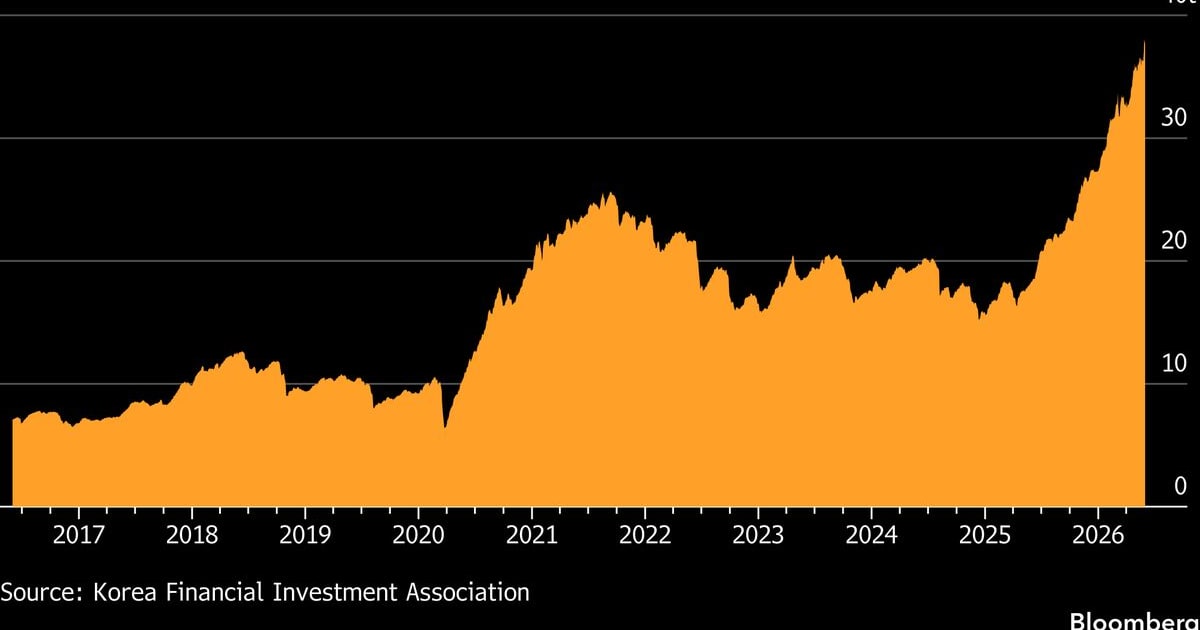
As South Korean markets buckle under the weight of an AI trade unwinding, the contagion risk to Indian IT giants is rising. This report dissects the ripple effects on Nifty tech stocks, evaluates the risk of reduced discretionary spending, and provides a defensive playbook for the current market volatility.
The South Korean Tech Sell-off: A Global Warning Shot
In the interconnected web of global equity markets, South Korea functions as the ultimate bellwether for the semiconductor and hardware cycle. When the KOSPI index experiences a sharp contraction driven by an 'AI trade unwind,' it is rarely an isolated incident. For the Indian investor, this is not just a story about Seoul; it is a preview of potential FII (Foreign Institutional Investor) sentiment shifts that could pressure the Nifty IT index.
The current correction suggests that the 'AI Supercycle' narrative, which propelled global tech valuations to record P/E multiples, is facing a reality check. As capital retreats from speculative semiconductor plays, the secondary effect is a broader re-rating of IT services firms that rely on global enterprise spending.
Why does the South Korean market crash matter to Indian investors?
South Korea’s export-heavy economy is the global barometer for semiconductor demand. When domestic tech giants there face margin compression due to cooling AI demand or inventory build-ups, it signals that the 'AI Capex' phase may be plateauing. Historically, when the KOSPI tech sector drops more than 5% in a week, Indian IT stocks have faced a lagged correction of 3-4% within the following fortnight as FIIs rebalance their emerging market (EM) portfolios.
Deep Market Impact: Contagion and the Nifty IT Index
The Indian IT sector, currently trading at an average P/E of 28x-32x, is particularly vulnerable to a global risk-off sentiment. Unlike 2022, where the correction was driven by rising interest rates, the current risk is discretionary spending contraction. If global enterprises hit the 'pause' button on digital transformation budgets due to AI-driven uncertainty, Indian Tier-1 firms will face immediate top-line pressure.
Stock-by-Stock Breakdown: Who is most at risk?
- TCS (TCS.NS): As a bellwether, TCS faces the most direct impact from FII rebalancing. With a massive market cap, it is the first point of exit for global funds looking to reduce India exposure.
- Infosys (INFY.NS): High exposure to North American financial services makes Infosys sensitive to any slowdown in US corporate tech spending. Watch for margin compression if the AI-spend narrative cools.
- HCLTech (HCLTECH.NS): Heavily integrated into the semiconductor and engineering R&D ecosystem, HCLTech is uniquely exposed to the hardware cycle. Any volatility in semiconductor demand directly impacts their ER&D revenue streams.
- LTIMindtree (LTIM.NS): As a mid-tier high-growth player, LTIMindtree carries a premium valuation. In a risk-off environment, mid-caps are prone to sharper drawdowns than their large-cap counterparts.
Expert Perspective: The Bull vs. Bear Divide
The Bear Case: The AI trade was a liquidity-fueled bubble. As the cost of capital remains high and enterprise ROI on AI remains unproven, we are entering a multi-quarter period of IT budget stagnation.
The Bull Case: Digital transformation is a non-discretionary necessity. Even if AI-specific spending cools, the structural shift to cloud and cybersecurity remains, providing a floor for Indian IT valuations.
Actionable Investor Playbook: Navigating the Volatility
In periods of tech-led contagion, the objective is capital preservation. We recommend a three-pronged approach:
- Defensive Rotation: Shift weightage toward domestic consumption stories. FMCG (HUL, Nestle) and Pharma (Sun Pharma, Dr. Reddy’s) historically outperform when global tech sentiment turns bearish.
- Gold as a Hedge: Increase allocation to Gold ETFs or Sovereign Gold Bonds (SGBs). Gold acts as the ultimate safe haven when FIIs pull liquidity from emerging markets.
- Staggered Entry: Do not attempt to catch falling knives in IT. Wait for a base formation (look for RSI levels below 30 on the Nifty IT index) before considering long-term accumulation.
Risk Matrix: Assessing the Downside
| Risk Factor | Probability | Impact |
|---|---|---|
| Global Contagion (US Tech Crash) | Medium | High |
| Sharp FII Outflows | High | Medium |
| IT Budget Cuts (Enterprise) | Medium | High |
What to watch next?
Keep a close eye on the upcoming quarterly earnings guidance from US-based hyper-scalers (Microsoft, AWS, Google). If their Capex guidance for the next fiscal year is revised downward, the 'AI Supercycle' narrative will effectively be declared over, necessitating a defensive posture in Indian equity portfolios.
See TCS's AI Score
Our algorithmic screener scores TCS on fundamentals, momentum, and risk — free to try, no card needed.
Try the AI Screener →Have questions about this story?
Ask Welth, our finance-focused AI research assistant, for a deeper breakdown — free trial included.
Chat with Welth AI →Disclaimer: This content is generated by WelthWest Research Desk based on publicly available reports and is for informational purposes only. It does not constitute financial advice, investment recommendations, or an offer to buy or sell securities. Always consult a qualified financial advisor before making investment decisions.
