Key Takeaway
Alibaba's aggressive $10.2 billion AI funding signals an unprecedented acceleration in the global AI arms race, creating a significant tailwind for Indian IT service providers positioned to capitalize on surging demand for AI development and implementation expertise, potentially driving multi-year revenue growth.
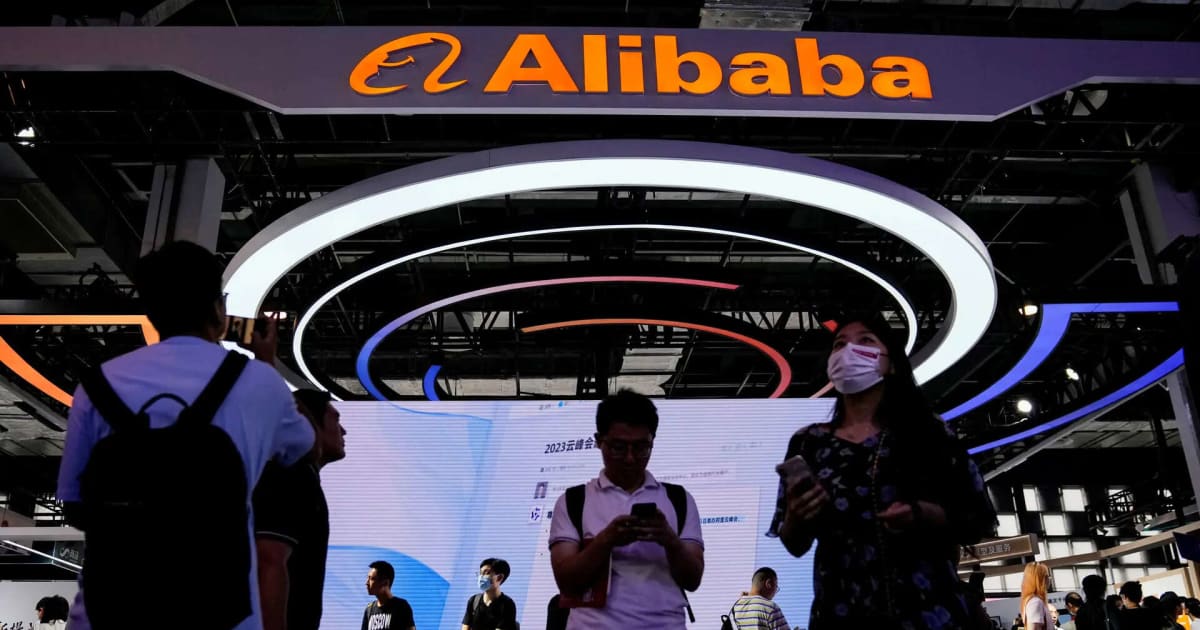
Chinese tech titan Alibaba has just raised a colossal $10.2 billion in a share placement, earmarking the funds for an aggressive push into artificial intelligence. This move reshapes the global tech landscape, intensifying the AI race and sending ripples through international markets. For Indian investors, this development signals a pivotal moment, presenting both opportunities and challenges for the subcontinent's thriving IT sector.
Alibaba Fuels AI Arms Race with $10.2 Billion Capital Raise: A Definitive Guide for Indian Investors
The global technology sector is witnessing an unprecedented capital reallocation towards artificial intelligence, epitomized by Alibaba Group Holding’s recent audacious move. The Chinese e-commerce and cloud computing behemoth successfully executed a $10.2 billion share placement, explicitly stating its intent to funnel these substantial proceeds into accelerating its AI development initiatives. This isn't merely a corporate fundraising event; it's a strategic declaration in the intensifying global AI arms race, with profound implications that extend far beyond China's borders, particularly for the Indian IT services landscape.
What makes this development particularly salient now is the sheer scale and explicit purpose of the funding. In an era where AI is rapidly transitioning from a nascent technology to a foundational layer for economic growth, Alibaba's commitment underscores the strategic imperative for tech giants to dominate this frontier. The immediate market reaction saw Alibaba's Hong Kong-listed shares dip due to dilution concerns, yet the long-term reverberations for the broader tech ecosystem, especially in India, are overwhelmingly positive, signaling sustained, robust demand for AI-related talent and services.
Why Does Alibaba's AI Investment Matter for the Indian Stock Market?
Alibaba's massive capital injection into AI is a powerful leading indicator of the broader enterprise and consumer-facing AI spending trends that will define the next decade. For the Indian stock market, specifically its globally dominant IT services sector, this translates into a significant, multi-year demand surge. Indian IT firms, with their deep talent pools in software development, data science, and cloud integration, are uniquely positioned as critical enablers for global enterprises, including hyperscalers and large corporations, embarking on their own AI transformation journeys.
Historically, significant capital deployments by global tech leaders in emerging technologies have consistently created a ripple effect, boosting demand for specialized services from offshore partners. Consider the dot-com boom of the late 1990s or the cloud computing explosion of the 2010s; each era saw Indian IT companies become indispensable partners. This AI wave is poised to be even more impactful, given AI's pervasive nature across industries. Data from NASSCOM suggests that India's AI market is projected to grow at a CAGR exceeding 20% over the next five years, driven largely by global enterprise spending on AI implementation, MLOps, and data engineering – areas where Indian IT excels.
The immediate consequence for India is a heightened demand for skilled professionals in areas like generative AI, machine learning engineering, natural language processing, and computer vision. This will not only drive revenue growth for service providers but also potentially lead to margin expansion as specialized AI services command premium pricing. Furthermore, it validates the strategic pivots many Indian IT majors have already made towards building robust AI capabilities, transforming them from traditional cost-arbitrage players to strategic innovation partners.
Stock-by-Stock Breakdown: Indian IT Majors Poised to Benefit
The implications of Alibaba's AI push are not uniform across the Indian IT sector. Companies with established AI/ML practices, significant investment in talent reskilling, and strong partnerships with global cloud providers are set to be the primary beneficiaries. Here’s a closer look at specific NSE/BSE listed stocks:
- Tata Consultancy Services (TCS): As India’s largest IT service provider by market capitalization (approx. INR 14.5 trillion), TCS is a bellwether for the sector. Its extensive global client base and significant investments in AI research and development, particularly through its Co-Innovation Network (COIN™) and AI.Cloud unit, position it strongly. TCS has been aggressively training its workforce in generative AI and has already secured several large deals in AI-driven transformation. A sustained increase in global AI spending will directly translate into higher order book growth for TCS, particularly in data modernization and AI platform development. The company’s P/E ratio, currently around 30x, reflects its premium valuation, but sustained AI-led growth could justify further upside.
- Infosys (INFY): Infosys, with its strategic 'Topaz' AI offering, is another major beneficiary. Topaz focuses on leveraging generative AI to deliver enterprise-grade solutions across various industries. The company's strong presence in North America and Europe, coupled with its robust cloud capabilities, makes it an attractive partner for global enterprises looking to integrate AI. Infosys has a history of adapting swiftly to technological shifts, and its current push into AI, evidenced by its aggressive hiring and reskilling initiatives, suggests it will capture a significant share of the burgeoning AI market. Its current P/E of around 25x offers a compelling entry point for long-term AI plays.
- Wipro (WIPRO): Wipro, under its 'ai360' strategy, has committed a significant $1 billion investment over three years into AI capabilities, talent, and partnerships. This aggressive stance positions Wipro to capitalize on the AI wave, particularly in areas like intelligent automation and AI-driven business process optimization. While Wipro has faced some growth challenges in the past, its focused AI investment could be a catalyst for renewed momentum. Investors should watch for deal wins and revenue contribution from its AI offerings.
- HCLTech (HCLTECH): HCLTech's strong engineering and R&D services (ERS) segment, which contributes a substantial portion of its revenue, makes it particularly well-suited for complex AI implementation projects. Many AI initiatives require deep engineering expertise, from embedded systems to specialized hardware integration, areas where HCLTech excels. Its partnerships with hyperscalers and focus on industry-specific AI solutions will be key growth drivers. The company's recent emphasis on 'AI Everywhere' across its service lines underscores its commitment.
- LTIMindtree (LTIM): As a pure-play digital transformation firm, LTIMindtree is inherently aligned with the AI growth story. Its expertise in cloud, data, and analytics forms the bedrock for AI implementations. The company’s agile delivery model and focus on niche, high-value AI solutions for specific industry verticals (e.g., banking, retail) position it for accelerated growth. The merger of L&T Infotech and Mindtree has created a stronger entity with enhanced capabilities to address large-scale AI projects.
- Persistent Systems (PERSISTENT): A mid-cap IT firm, Persistent Systems has carved a niche in product engineering and digital transformation, making it a dark horse in the AI race. Its strong focus on cloud-native development, data modernization, and platform engineering are crucial enablers for AI. Persistent's ability to innovate quickly and cater to specialized client needs could see it outperform larger peers in specific AI sub-segments, particularly in areas requiring deep product development and integration expertise.
Expert Perspective: Bulls vs. Bears on Indian IT's AI Opportunity
The consensus among market participants is largely bullish on Indian IT's long-term prospects driven by AI. However, a nuanced view reveals contrasting arguments:
The Bull Case: Proponents argue that Alibaba's investment, alongside similar moves by Microsoft, Google, and Amazon, validates the multi-trillion-dollar opportunity in AI. Indian IT, with its cost-effectiveness, vast talent pool (India produces over 1.5 million engineering graduates annually), and proven delivery models, will be the primary execution partner for global AI strategies. The shift from traditional IT services to high-value AI consulting and implementation will lead to higher revenue per employee and improved margins. Furthermore, the defensive nature of IT services in an uncertain global economy, coupled with secular AI growth, provides a strong investment thesis. They point to the robust deal pipelines reported by major IT firms in their recent quarterly results as evidence of this accelerating demand.
The Bear Case: Skeptics, while acknowledging the AI opportunity, caution against potential headwinds. They argue that the AI boom could also lead to automation of some traditional IT tasks, potentially impacting lower-end service segments in the long run. Intense competition from global consulting firms and AI-native startups could also erode margins. Geopolitical tensions, particularly between the US and China, could disrupt supply chains or client relationships, impacting global tech spending. Moreover, the rapid pace of AI innovation demands continuous, significant investment in reskilling and R&D, which could strain profitability if not managed effectively. The current high valuations of some IT stocks might also limit immediate upside, requiring a longer investment horizon.
Actionable Investor Playbook: Navigating the AI Wave
For investors looking to capitalize on the AI-driven tailwinds, a strategic approach is crucial:
- Buy/Accumulate: Focus on large-cap Indian IT service providers with demonstrated AI capabilities, strong balance sheets, and diversified client portfolios (e.g., TCS, Infosys). These companies offer stability and are likely to capture the lion's share of large-scale AI transformation projects. Consider accumulating on dips, as short-term market volatility might present better entry points.
- Watch for Niche Players: Keep a close eye on mid-cap IT firms and specialized product engineering companies (e.g., Persistent Systems, LTIMindtree) that have deep expertise in specific AI sub-segments or industry verticals. These firms could offer higher growth potential but come with increased risk. Look for consistent deal wins and increasing revenue contribution from AI services.
- Entry Points & Time Horizons: Given the long-term secular trend of AI adoption, investors should consider a multi-year investment horizon (3-5 years minimum). Entry points could be strategically chosen during broader market corrections or specific sector-related dips. For instance, if the Nifty IT index corrects by 5-7% from its highs, it could present an attractive entry.
- Sector Allocation: Consider increasing allocation to the IT sector, specifically towards companies with strong AI/ML capabilities, as part of a diversified portfolio. This isn't just a tactical trade; it's a strategic allocation to a foundational technology that will reshape industries.
- Avoid: Companies that have not articulated a clear AI strategy, demonstrate minimal investment in AI talent and R&D, or rely heavily on legacy IT services without a clear transition plan. These firms risk being left behind in the rapidly evolving landscape.
Risk Matrix: Assessing Potential Headwinds
While the AI opportunity is immense, several risks could impact the investment thesis:
- Intensified Competition (Medium Probability, Medium Impact): The global AI race attracts significant capital and talent. Competition from global consulting firms, hyperscalers, and AI-native startups could pressure pricing and margins for Indian IT firms.
- Geopolitical Tensions (Low Probability, High Impact): Escalating tensions between major global powers (e.g., US-China) could lead to trade restrictions, talent mobility challenges, or a fragmentation of global tech supply chains, impacting the ability of Indian firms to serve diverse markets or access critical technologies.
- Talent Scarcity & Wage Inflation (Medium Probability, Medium Impact): The demand for specialized AI talent far outstrips supply. This could lead to significant wage inflation, eroding profitability, and making it challenging for companies to scale their AI operations effectively.
- Regulatory & Ethical Hurdles (Low Probability, Medium Impact): As AI becomes more pervasive, regulatory scrutiny around data privacy, algorithmic bias, and ethical AI use will intensify. Compliance could add complexity and cost, potentially slowing down adoption in certain sectors.
What to Watch Next: Catalysts for the AI Investment Story
Investors should closely monitor several key indicators and events:
- Quarterly Earnings Calls of Indian IT Firms: Pay attention to management commentary on AI deal wins, revenue contribution from AI services, hiring trends in AI, and outlook on AI spending from clients. Specific metrics like 'AI-led revenue growth' or 'number of generative AI projects' will become critical.
- Global Tech Giants' AI Investments: Continued large-scale investments and strategic announcements from companies like Microsoft, Google, Amazon, and Meta in AI will signal sustained industry momentum, directly benefiting service providers.
- NASSCOM and Industry Reports: Regular reports from industry bodies and research firms on AI market size, adoption rates, and talent trends in India will provide valuable insights into the sector's health and growth trajectory.
- Hyperscaler Earnings & Guidance: The financial performance and forward guidance of major cloud providers (AWS, Azure, GCP) are crucial, as their infrastructure underpins much of the enterprise AI development. Strong growth here indicates robust underlying demand for AI-related services.
- Government AI Policies & Initiatives: Policies from major economies (US, EU, India, China) regarding AI development, regulation, and funding will shape the long-term environment for the industry. India's own 'National Strategy for Artificial Intelligence' will be a key driver for domestic adoption and innovation.
See TCS's AI Score
Our algorithmic screener scores TCS on fundamentals, momentum, and risk — free to try, no card needed.
Try the AI Screener →Have questions about this story?
Ask Welth, our finance-focused AI research assistant, for a deeper breakdown — free trial included.
Chat with Welth AI →Disclaimer: This content is generated by WelthWest Research Desk based on publicly available reports and is for informational purposes only. It does not constitute financial advice, investment recommendations, or an offer to buy or sell securities. Always consult a qualified financial advisor before making investment decisions.
