Key Takeaway
Alibaba's audacious $10 billion AI infrastructure investment underscores the irreversible global commitment to artificial intelligence. This capital injection will fuel a significant demand surge for AI-centric cloud services and specialized IT capabilities, creating a multi-year tailwind for Indian IT service providers with strong digital transformation and AI portfolios.
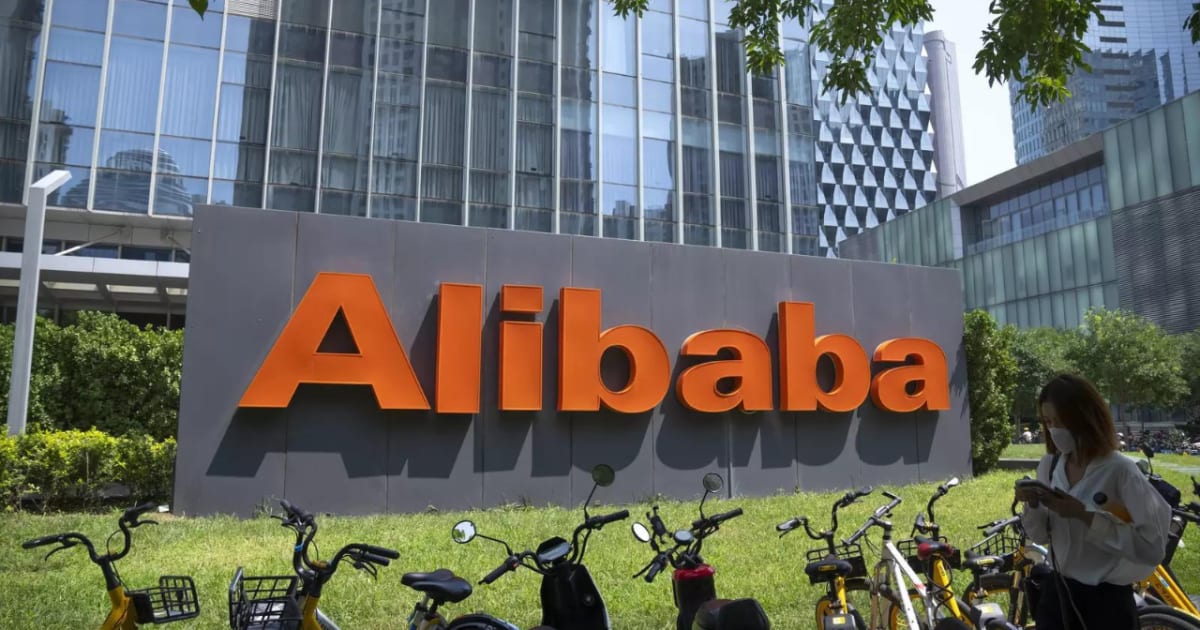
Alibaba's massive $10 billion share placement to fund global AI infrastructure expansion is more than just a corporate financing move; it's a powerful signal of the accelerating AI arms race. This deep dive explores how this colossal investment will ripple through the global tech ecosystem, specifically impacting Indian IT service providers and cloud infrastructure players, and offers an actionable playbook for investors navigating this transformative period.
Alibaba's $10 Billion AI Infrastructure Bet: A Catalyst for Indian IT Growth?
The global technology landscape is undergoing a seismic shift, with Artificial Intelligence (AI) emerging as the undisputed frontier of innovation and investment. At the heart of this transformation lies the recent announcement from Chinese e-commerce and cloud giant, Alibaba Group Holding Ltd. (NYSE: BABA), detailing a proposed $10 billion share placement specifically earmarked for an aggressive global AI infrastructure expansion. This monumental capital allocation is not merely a corporate funding exercise; it serves as a stark reminder of the intense, capital-intensive global race to dominate AI, a race that promises to reshape industries and redefine economic power.
For investors tracking the Indian equities market, particularly within the bustling IT services sector, this development resonates with significant implications. While Alibaba's direct operational footprint in India is distinct from its global cloud and AI ambitions, the sheer scale of its investment reinforces a universal truth: AI is no longer a future concept but a present, urgent imperative for businesses worldwide. This urgent demand for AI-related services, cloud infrastructure, and specialized talent creates a potent, albeit indirect, tailwind for Indian IT service providers renowned for their digital transformation capabilities and growing AI expertise. The 'so what' for investors is clear: companies positioned to capitalize on this global AI infrastructure build-out are poised for sustained growth, making a detailed examination of their fundamentals and strategic positioning critical now.
What Does Alibaba's $10 Billion AI Investment Mean for the Global Tech Ecosystem?
Alibaba's decision to commit $10 billion to global AI infrastructure signifies a strategic pivot and a profound belief in the long-term monetization potential of artificial intelligence. This investment will likely be channeled into expanding data centers, acquiring cutting-edge AI chips, developing proprietary AI models, and fostering a robust ecosystem of AI applications. The move positions Alibaba to compete more aggressively with global cloud and AI leaders like Amazon Web Services (AWS), Microsoft Azure, and Google Cloud, particularly in emerging markets and regions where its cloud offerings are gaining traction.
The immediate consequence is an amplification of demand across the AI value chain. Semiconductor manufacturers, already stretched by the insatiable appetite for AI-specific chips like GPUs, will see continued robust order books. Cloud infrastructure providers, irrespective of their direct competition with Alibaba, will experience heightened demand for their foundational services as companies globally accelerate their AI adoption journeys. Enterprises, facing increasing pressure to integrate AI for efficiency, innovation, and competitive advantage, will seek external expertise for strategy, implementation, and maintenance of complex AI systems. This is precisely where Indian IT service giants, with their vast talent pools and established global delivery models, are uniquely positioned to capture significant market share.
Historically, significant capital infusions into foundational technologies have often preceded periods of sustained growth for ancillary service providers. For instance, during the dot-com boom of the late 1990s, massive investments in internet infrastructure directly fueled the rise of IT service companies. More recently, the multi-trillion-dollar global shift to cloud computing over the last decade has been a primary growth driver for Indian IT firms. Alibaba's AI commitment mirrors these historical parallels, signaling the dawn of a new, AI-driven investment cycle.
How Will Alibaba's AI Push Impact Indian IT Stocks?
The impact on Indian IT stocks, while indirect, is significant and multifaceted. The underlying premise is that a global acceleration in AI adoption necessitates an exponential increase in IT services related to cloud migration, data engineering, AI model development, integration, and ongoing management. Indian IT service providers, with their established client relationships, technical prowess, and cost-effective delivery models, are natural beneficiaries.
Consider the scale: the global AI market is projected to reach over $1.8 trillion by 2030, growing at a CAGR exceeding 37% from 2023. Alibaba's $10 billion injection is a fraction of this, yet it represents a powerful signaling effect, encouraging other enterprises and nations to double down on their AI strategies. This creates a rising tide that lifts many boats in the IT services ocean.
Specifically, Indian IT companies with robust capabilities in:
- Cloud Modernization & Migration: As AI applications are predominantly cloud-native, the demand for moving legacy systems to the cloud and optimizing existing cloud infrastructure will surge.
- Data Engineering & Analytics: AI models are only as good as the data they are trained on. Indian IT firms excel in building and managing complex data pipelines, crucial for AI success.
- Generative AI & Machine Learning Services: From custom model development to integrating off-the-shelf AI solutions, specialized AI engineering talent will be in high demand.
- Cybersecurity for AI: The expanded AI attack surface will necessitate sophisticated cybersecurity measures, a growing segment for Indian IT.
While the immediate financial impact on Indian IT firms' quarterly results might not be directly traceable to Alibaba's funding, the long-term trend of increased deal flow, higher spending on digital transformation, and a shift towards AI-centric projects is undeniable. This narrative is already playing out in their order book commentaries and increasing focus on AI-related talent acquisition.
Stock-by-Stock Breakdown: Indian IT Companies to Watch
Several Indian IT majors and niche players are particularly well-positioned to benefit from this global AI infrastructure push. Their current capabilities, strategic partnerships, and investment in AI talent will be key differentiators.
- Tata Consultancy Services (TCS, NSE: TCS): As India's largest IT service provider, TCS boasts an unparalleled client base and a deep focus on digital transformation. With a market capitalization exceeding INR 13.5 trillion and a trailing P/E ratio of approximately 30x, TCS has been aggressively building its AI capabilities through partnerships (e.g., with Google Cloud, AWS, Microsoft Azure) and internal upskilling programs. Its 'AI.Cloud' unit is directly geared towards leveraging cloud for AI solutions. The increased global AI spending will translate into larger, more complex AI implementation projects for enterprises, a sweet spot for TCS's integrated service offerings.
- Infosys Ltd. (NSE: INFY): Infosys, with its strong consulting arm and 'Topaz' AI platform, is another prime beneficiary. The company's focus on enterprise AI, data analytics, and cloud services positions it directly in the path of increased AI-driven demand. Infosys currently commands a market cap of around INR 6 trillion and trades at a P/E of roughly 25x. Its robust deal wins in recent quarters, often including significant cloud and digital components, suggest a growing pipeline of AI-adjacent work. Their strategic investments in AI startups and research further solidify their long-term potential.
- Wipro Ltd. (NSE: WIPRO): Wipro, under its 'FullStride Cloud' services, has been making concerted efforts to enhance its cloud and AI capabilities. While historically seen as a laggard in some digital segments, Wipro's renewed focus on strategic acquisitions in the cloud and consulting space, alongside its $1 billion investment in AI, positions it for a comeback. With a market cap nearing INR 2.5 trillion and a P/E around 20x, Wipro offers a potentially higher beta play on the AI theme, especially if its strategic initiatives gain traction. Increased enterprise AI budgets could fuel its turnaround story.
- HCL Technologies Ltd. (NSE: HCLTECH): HCLTech's strong presence in engineering and R&D services, coupled with its 'HCLTech AI' framework, makes it a critical player. As companies invest in AI infrastructure, the demand for specialized engineering services to optimize hardware, software, and network components for AI workloads will grow. HCLTech, with a market cap of approximately INR 3.8 trillion and a P/E of 22x, is well-suited to capture this niche. Its focus on industry-specific AI solutions also provides a differentiated advantage.
- LTIMindtree Ltd. (NSE: LTIM): Formed from the merger of L&T Infotech and Mindtree, LTIMindtree brings together significant cloud and digital expertise. Its focus on modernizing enterprise applications and leveraging data for AI-driven insights makes it highly relevant. With a market cap of over INR 1.5 trillion and a P/E of around 35x, LTIMindtree is a growth-oriented player benefiting from increased enterprise spending on AI-powered digital transformation initiatives. Their agile delivery model is particularly attractive for rapid AI prototyping and deployment.
- Persistent Systems Ltd. (NSE: PERSISTENT): A mid-cap IT firm with a strong focus on product engineering and digital transformation, Persistent Systems has been proactively investing in AI and machine learning capabilities. Its deep expertise in healthcare and financial services, sectors ripe for AI disruption, provides a unique advantage. With a market cap of roughly INR 600 billion and a P/E of 45x, Persistent offers a higher growth potential, albeit with higher valuation, for investors seeking exposure to specialized AI engineering services. Their consistent deal wins in cutting-edge tech validate their positioning.
Expert Perspective: Bulls vs. Bears on Indian IT's AI Opportunity
The narrative surrounding Indian IT's AI opportunity isn't without its contrasting viewpoints. Bulls and bears offer distinct interpretations of Alibaba's investment and its broader implications.
The Bullish Argument: Proponents argue that Alibaba's $10 billion commitment is a clear validation of the AI megatrend, signaling a multi-year investment cycle that Indian IT is perfectly positioned to capture. They point to the vast talent pool, cost advantages, and proven execution capabilities of Indian service providers in complex digital projects. The growing sophistication of Indian firms in areas like generative AI, large language model (LLM) customization, and AI security positions them as indispensable partners for global enterprises. Bulls would highlight that while direct revenue from Alibaba might be minimal, the ripple effect of accelerated AI adoption across all client sectors globally will drive significant demand for cloud infrastructure, data services, and AI integration, directly benefiting top-tier Indian IT firms. The current valuations, post-recent corrections, are also seen as attractive entry points for long-term growth.
The Bearish Argument: Conversely, skeptics caution against over-exuberance. They argue that the AI race is highly competitive and rapidly evolving, with hyperscalers and specialized AI startups potentially capturing a larger share of the value chain. Bears might contend that Indian IT firms, while strong in implementation, may lack the cutting-edge R&D and proprietary AI model development capabilities of global tech giants. Furthermore, the capital intensity of AI infrastructure could lead to margin pressures if clients demand sophisticated AI solutions at competitive price points. Geopolitical risks, particularly impacting global tech supply chains and investment flows between major economies, could also dampen enthusiasm. They might also point to the risk of 'AI commoditization' where basic AI services become widely available and erode margins for traditional service providers. The immediate revenue impact from Alibaba's specific investment on Indian firms is also considered negligible, making the correlation somewhat speculative.
Actionable Investor Playbook: Navigating the AI Wave
For investors looking to capitalize on the global AI infrastructure surge, a nuanced approach is essential. The long-term growth trajectory for AI-centric IT services appears robust, but careful stock selection and strategic positioning are key.
- Buy & Hold (Long-Term Horizon: 3-5 years): Focus on large-cap Indian IT service providers with strong balance sheets, diversified client portfolios, and demonstrated investments in AI and cloud capabilities. Companies like TCS and Infosys are prime candidates due to their scale, global reach, and ability to undertake large, complex digital transformation projects that increasingly incorporate AI. Consider accumulating these stocks on dips, as their long-term growth story remains intact despite short-term macroeconomic headwinds.
- Watch for Entry Points (Medium-Term Horizon: 1-2 years): Keep a close eye on mid-cap players with specialized AI expertise or strong growth momentum in digital segments, such as LTIMindtree and Persistent Systems. These firms often offer higher growth potential but come with higher valuation multiples. Look for corrections in their stock prices that bring their P/E ratios closer to industry averages or provide attractive risk-reward propositions. Monitor their deal wins and management commentary specifically on AI-related projects.
- Monitor & Evaluate (Short-Term Horizon: 6-12 months): For companies like Wipro and HCLTech, which are undergoing strategic transformations or have specific niche strengths, monitoring their execution on AI initiatives and their ability to capture new market share will be crucial. Entry points here might be more opportunistic, following positive quarterly results or significant AI-related deal announcements. Assess their progress in upskilling their workforce and forging strategic AI partnerships.
- Avoid: Companies within the IT sector that show limited investment in AI, have a significant reliance on legacy systems, or demonstrate a slow pace of digital transformation may underperform. The shift to AI will accelerate the obsolescence of traditional IT services, making adaptability paramount.
Key Metrics to Watch: Beyond traditional financial ratios, investors should scrutinize the percentage of revenue derived from digital and AI services, the pace of AI talent acquisition and upskilling, and management's strategic vision for AI integration. Order book growth, particularly for large deals with an AI component, will be a strong indicator of future performance.
Risk Matrix: Navigating Potential Headwinds
While the AI opportunity is significant, several risks could impact the projected growth trajectory for Indian IT firms:
- AI Monetization Uncertainty (Probability: Medium): The success of Alibaba's (and indeed, other tech giants') AI monetization strategies remains uncertain. If the return on investment for large-scale AI infrastructure proves slower or less profitable than anticipated, it could temper future capital expenditure and enterprise adoption, indirectly impacting IT service demand. This could lead to a 'trough of disillusionment' in the AI hype cycle, affecting investor sentiment.
- Intensified Competition & Margin Pressure (Probability: High): The AI sector is attracting massive investment from all quarters, leading to fierce competition not only among hyperscalers but also among IT service providers. This could lead to price wars and margin pressures as companies vie for AI-centric projects. Indian IT firms, while cost-efficient, are not immune to this, especially for commoditized AI services. The battle for skilled AI talent also drives up wage costs.
- Geopolitical Tensions & Supply Chain Disruptions (Probability: Medium): Escalating geopolitical tensions, particularly between the US and China, could impact global tech supply chains, affecting the availability and cost of critical AI components (like advanced semiconductors). This could delay AI infrastructure build-outs and increase operational costs for all players, including Indian IT firms reliant on global tech ecosystems. Trade restrictions or data localization mandates could also fragment the global AI market.
- Rapid Technological Obsolescence (Probability: Medium): The pace of innovation in AI is extraordinarily fast. What is cutting-edge today could be obsolete tomorrow. Indian IT firms must continuously invest in R&D and talent development to stay ahead of the curve. Failure to adapt to new AI paradigms (e.g., shifts in LLM architectures, new AI hardware) could lead to a loss of competitive advantage and client relevance. The 'AI skills gap' could also widen, making it harder to deliver on complex projects.
What to Watch Next: Catalysts and Data Points
The global AI narrative is dynamic, and several upcoming catalysts and data releases will provide further clarity on its trajectory and impact on Indian IT:
- Hyperscaler Earnings Calls (Next 2-4 Quarters): Pay close attention to the earnings calls of major cloud providers (Microsoft, Amazon, Google Cloud, Alibaba). Their commentary on AI-related capital expenditure, cloud consumption trends, and AI service adoption rates will be direct indicators of the market's health. Specific mention of enterprise AI spending will be critical.
- Indian IT Earnings & Management Commentary (Ongoing): The quarterly results of TCS, Infosys, Wipro, HCLTech, LTIMindtree, and Persistent Systems will be vital. Scrutinize their deal wins, particularly those with a significant AI or cloud component, and management's outlook on AI spending from clients. Look for specific metrics on AI revenue contribution or project pipeline.
- Global AI Chip Manufacturer Updates (Ongoing): Updates from Nvidia (NASDAQ: NVDA), AMD (NASDAQ: AMD), and Intel (NASDAQ: INTC) regarding their AI chip demand, production capacities, and next-generation product launches will indicate the underlying strength of AI infrastructure build-out. Their guidance often provides a leading indicator for the broader AI ecosystem.
- Industry Reports & Surveys (Ongoing): Keep an eye on reports from leading technology research firms (Gartner, IDC, Forrester) on enterprise AI adoption, spending forecasts, and emerging AI trends. These provide a macro perspective that can validate or challenge current investment theses.
- Regulatory Developments (Ongoing): Any new regulations concerning AI governance, data privacy, or ethical AI frameworks in major economies could influence enterprise AI strategies and the scope of IT services required for compliance.
Alibaba's $10 billion AI investment is a loud drumbeat signaling the next phase of global technology evolution. For Indian IT, it represents a significant opportunity to extend their leadership in digital transformation. Savvy investors who understand these underlying currents and position themselves strategically stand to benefit as the AI wave continues to gather momentum.
See TCS's AI Score
Our algorithmic screener scores TCS on fundamentals, momentum, and risk — free to try, no card needed.
Try the AI Screener →Have questions about this story?
Ask Welth, our finance-focused AI research assistant, for a deeper breakdown — free trial included.
Chat with Welth AI →Disclaimer: This content is generated by WelthWest Research Desk based on publicly available reports and is for informational purposes only. It does not constitute financial advice, investment recommendations, or an offer to buy or sell securities. Always consult a qualified financial advisor before making investment decisions.
