Key Takeaway
The successful listing of Bagmane Prime Office REIT signals a structural shift in Indian capital markets, transitioning from speculative residential bets to institutional-grade, yield-generating commercial assets backed by global private equity.
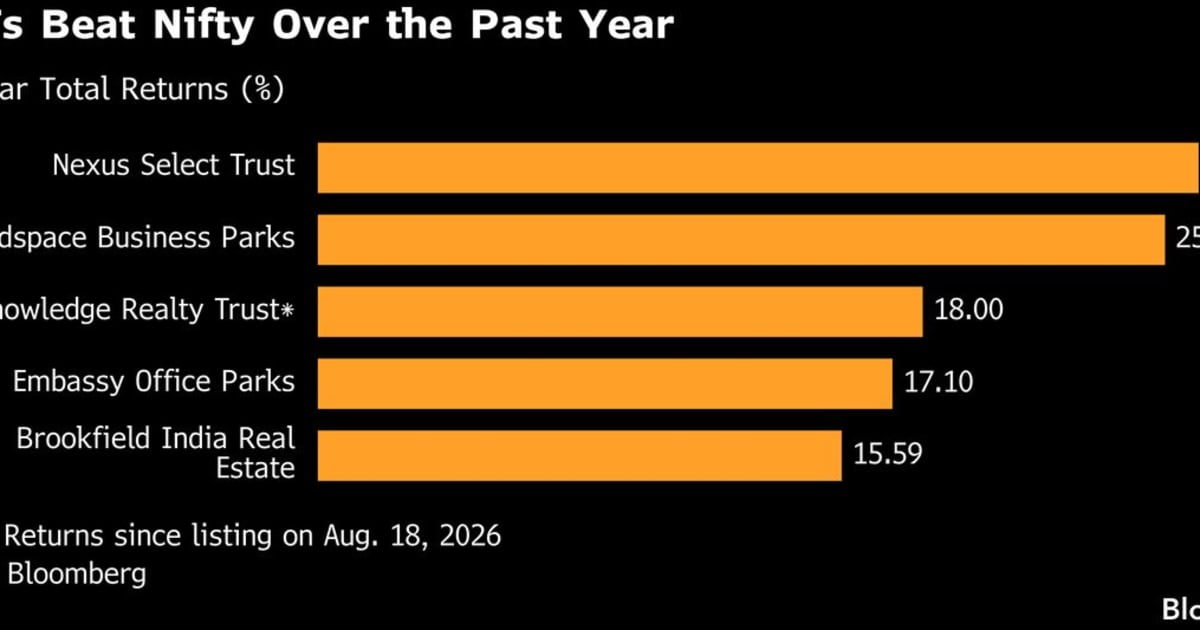
Blackstone and Bagmane Group have successfully listed India's latest REIT following a $360 million IPO, marking a pivotal moment for the commercial real estate sector. This deep dive explores why this listing acts as a benchmark for institutional appetite and what it means for the valuations of existing players like Embassy and Mindspace. We analyze the yield spreads, occupancy risks, and the strategic roadmap for investors looking to capitalize on India's Grade-A office demand.
The Institutionalization of Indian Skyline: Bagmane Prime Office REIT’s Strategic Debut
The successful listing of the Bagmane Prime Office REIT (Real Estate Investment Trust) on the National Stock Exchange (NSE) and Bombay Stock Exchange (BSE) marks a watershed moment for the Indian commercial real estate (CRE) sector. Backed by global private equity giant Blackstone Inc. and the Bengaluru-based Bagmane Group, the $360 million (approximately ₹3,000 crore) IPO wasn't just a capital-raising exercise; it was a high-stakes litmus test for the Indian REIT framework in a volatile global macroeconomic environment.
For the uninitiated, a REIT functions much like a mutual fund but for real estate. It allows retail and institutional investors to own a slice of income-generating commercial assets, providing a blend of periodic dividends (through Net Distributable Cash Flows) and capital appreciation. The Bagmane debut is significant because it enters the market at a time when the Reserve Bank of India (RBI) maintains a hawkish stance on inflation, and global tech giants—the primary tenants of these office parks—are recalibrating their physical footprint.
Historically, the Indian REIT journey began in 2019 with the Embassy Office Parks REIT. Since then, the market has matured, but the Bagmane listing adds a new layer of depth. With a portfolio concentrated in Bengaluru’s secondary business districts and high-growth corridors like the Outer Ring Road (ORR), this REIT offers a concentrated bet on India’s Silicon Valley. When the Embassy REIT listed, the Nifty Realty index saw a 12% re-rating within six months as investors realized the transparency and yield potential of the vehicle. We are likely standing at the precipice of a similar re-valuation today.
Why does the Bagmane REIT listing matter for the Indian stock market now?
The timing of this listing is surgical. While global REITs, particularly in the US and Europe, have struggled with high vacancy rates due to the 'Work From Home' (WFH) legacy, Indian Grade-A office spaces have shown remarkable resilience. The Bagmane Prime Office REIT boasts an occupancy rate hovering around 95%, significantly higher than the global average. This divergence is what Blackstone is betting on—the 'Global Capability Center' (GCC) boom.
The Indian stock market has been searching for yield-plus-growth stories. With the 10-year Indian Government Bond (G-Sec) yield trading around 7.0-7.2%, investors are looking for instruments that offer a 200-300 basis point spread. Bagmane’s projected distribution yield of approximately 8.5% to 9% makes it a formidable competitor to traditional fixed-income instruments. This listing forces a re-rating of the entire sector, as it provides a fresh data point for 'Cap Rates' (Capitalization Rates) in the Bengaluru market, which remains the primary engine of Indian office absorption.
Deep Market Impact: Connecting the Dots to the Nifty Realty Index
The entry of Bagmane REIT injects liquidity and price discovery into a sector that was previously opaque. From a macro perspective, the $360 million infusion is a vote of confidence in the SEZ (Special Economic Zone) policy reforms. Recent amendments allowing the partial denotification of SEZ spaces into non-SEZ areas have unlocked massive value for REITs, and Bagmane is a direct beneficiary of this regulatory tailwind.
Data suggests that for every $1 billion invested in Indian REITs, there is a corresponding 4-5% increase in the institutional holding of mid-cap developer stocks. We expect this listing to trigger a 'halo effect' on developers who have significant commercial portfolios but are currently valued on residential sales multiples. The market is moving from valuing 'land banks' to valuing 'contractual cash flows.'
"The Bagmane listing confirms that the Indian office story is no longer about 'outsourcing' but about 'integration.' As GCCs evolve from back-offices to innovation hubs, the demand for premium, sustainable, and well-managed office parks becomes inelastic."
Stock-by-Stock Breakdown: The Winners and the Peers
The Bagmane listing doesn't happen in a vacuum. It directly impacts the valuation and sentiment of several listed entities on the NSE and BSE. Here is how the key players are affected:
- Embassy Office Parks REIT (NSE: EMBASSY): As the first mover, Embassy has the largest portfolio. The Bagmane listing provides a valuation benchmark. If Bagmane trades at a premium due to its newer assets, Embassy’s older but well-located assets in Bengaluru may see a catch-up rally. Watch for their upcoming quarterly distribution guidance.
- Mindspace Business Parks REIT (NSE: MINDSPACE): With a heavy concentration in Mumbai and Hyderabad, Mindspace offers geographic diversification. The success of the Bagmane IPO reduces the 'liquidity risk' perception of the REIT sector as a whole, likely leading to a compression in its yield spread over G-Secs.
- Brookfield India Real Estate Trust (NSE: BIRET): Brookfield has been aggressive with inorganic acquisitions. The Bagmane listing proves that there is still massive institutional appetite, potentially easing the path for Brookfield to raise further capital for its next round of asset injections.
- DLF Ltd (NSE: DLF): While primarily a developer, DLF’s rental arm (DCCDL) is a behemoth. The Bagmane listing increases the probability of DLF eventually spinning off its rental business into a REIT, a move that analysts suggest could unlock 20-25% additional value for DLF shareholders.
- Prestige Estates Projects (NSE: PRESTIGE): Prestige has a significant commercial pipeline in Bengaluru. Successful benchmarking by Bagmane allows Prestige to negotiate better terms for its own future commercial monetizations or potential REIT plans.
How will high interest rates affect REIT stock prices?
This is the most frequent question from our subscribers. Traditionally, REITs have an inverse relationship with interest rates. When rates rise, the yield on REITs becomes less attractive compared to risk-free bonds. However, Indian REITs have a built-in hedge: Rental Escalations. Most Indian office leases have a 12-15% rent escalation clause every three years. This organic growth in Net Operating Income (NOI) often outpaces interest rate hikes, allowing REITs to maintain their spreads even in a tightening cycle. Therefore, a plateauing of RBI rates could be the primary catalyst for a 15-20% upside in the REIT sector over the next 12 months.
Expert Perspective: The Bull vs. Bear Debate
The Bull Case: Proponents argue that India is the world's only large-scale 'office-first' market. With the expansion of the 'China Plus One' strategy and the rise of domestic fintech and GCCs, the demand for Grade-A space in Bengaluru and Hyderabad is projected to grow at a CAGR of 8% through 2027. They see REITs as the safest way to play the India growth story with a 10-12% total return (yield + appreciation).
The Bear Case: Skeptics point to the global slowdown in the technology sector. If US-based tech firms freeze hiring or reduce headcount, the incremental demand for office space could stall. Furthermore, any delay by the RBI in cutting rates could keep REIT prices suppressed as investors prefer the safety of high-yield fixed deposits (FDs) which currently offer 7.5% to 8% for senior citizens.
Actionable Investor Playbook
For investors looking to navigate this new landscape, we recommend a tiered approach:
- The Core Income Strategy: Allocate 10-15% of your fixed-income portfolio to a basket of REITs (Embassy, Mindspace, and now Bagmane). Aim for an entry price that provides a pre-tax yield of at least 8.2%.
- The Growth Play: Watch DLF and Prestige Estates. The re-rating of commercial yields via the Bagmane listing will eventually reflect in the NAV (Net Asset Value) of these developers.
- Time Horizon: This is not a short-term trade. The REIT model is designed for a 3-to-5-year horizon to capture both the distribution cycles and the rental escalation windows.
- Entry Point: Look for opportunities during market-wide sell-offs. REITs often exhibit lower volatility than the Nifty 50, making them excellent defensive additions during periods of uncertainty.
Risk Matrix: Assessing the Downside
| Risk Factor | Probability | Impact Assessment |
|---|---|---|
| Prolonged High Interest Rates | Medium | Will cap the upside of unit prices but won't impact distributions. |
| Tech Sector Headwinds | High | Could lead to slower leasing of vacant spaces and lower MTM (Mark-to-Market) gains. |
| Regulatory Changes in SEZ | Low | Any reversal in the denotification policy would be a significant negative. |
What to Watch Next: Upcoming Catalysts
The story doesn't end with the listing. To gauge the trajectory of Bagmane and the broader sector, investors must track three critical data points in the coming months:
- The First Quarterly Distribution: This will confirm if the REIT is meeting its NDCF (Net Distributable Cash Flow) targets as promised in the prospectus.
- RBI Monetary Policy Committee (MPC) Minutes: Any hint of a 'pivot' or a shift to a 'neutral' stance will be the biggest green flag for REIT prices.
- Bengaluru Office Absorption Data: Quarterly reports from consultants like JLL or CBRE will indicate if the demand for ORR (Outer Ring Road) space remains robust despite global tech layoffs.
The Bagmane Prime Office REIT is more than just a new ticker on the exchange; it is a signal that India’s commercial real estate has matured into a globally competitive asset class. For the disciplined investor, it offers a rare combination of transparency, yield, and a front-row seat to India’s digital transformation.
See Bagmane Prime Office REIT's AI Score
Our algorithmic screener scores Bagmane Prime Office REIT on fundamentals, momentum, and risk — free to try, no card needed.
Try the AI Screener →Have questions about this story?
Ask Welth, our finance-focused AI research assistant, for a deeper breakdown — free trial included.
Chat with Welth AI →Disclaimer: This content is generated by WelthWest Research Desk based on publicly available reports and is for informational purposes only. It does not constitute financial advice, investment recommendations, or an offer to buy or sell securities. Always consult a qualified financial advisor before making investment decisions.