Key Takeaway
The widening gap between stagnant IT salaries and skyrocketing premium property prices in Bengaluru is creating a structural demand ceiling. Investors should pivot from high-ticket residential developers to REITs and affordable housing finance as the 'luxury' sentiment cools.
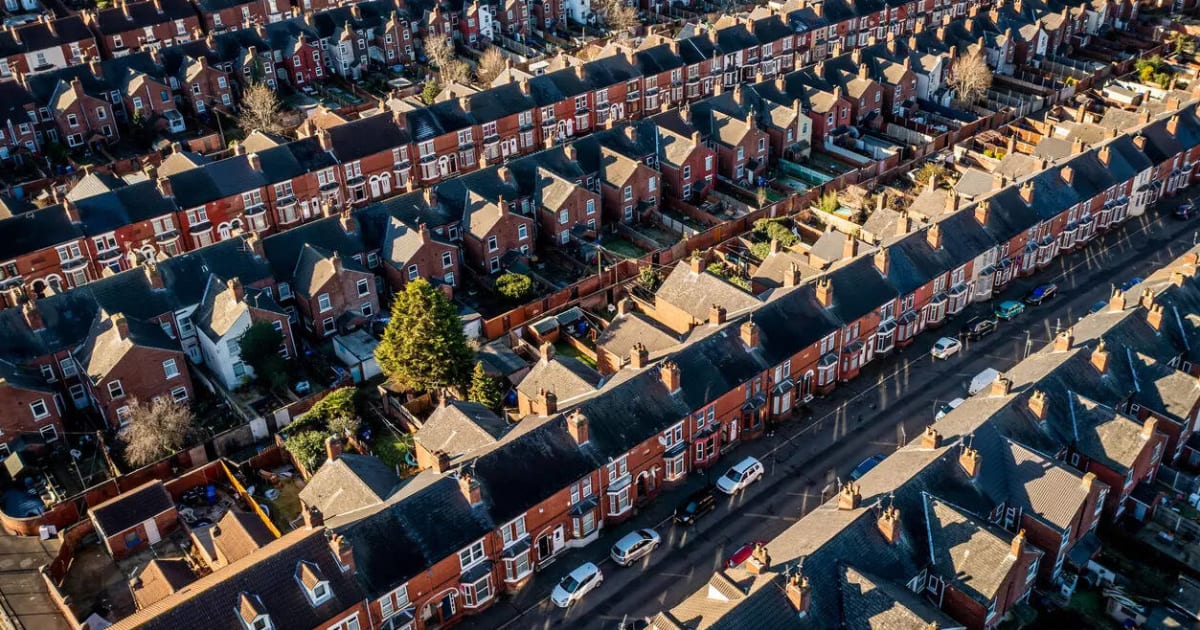
A viral debate comparing Bengaluru's property prices to international markets has exposed a deep-seated affordability crisis in India's tech capital. This analysis explores how this sentiment shift impacts major NSE-listed developers and why the premium residential segment may face a significant correction. We break down the winners and losers in the current market cycle.
The Affordability Paradox: Why a Viral Tweet is a Warning Shot for Investors
In the high-stakes world of Indian real estate, sentiment often precedes the balance sheet. Recently, a viral comparison by a tech founder—noting that a single income could purchase a three-bedroom house in the United Kingdom while two high-tier salaries struggle to secure a flat in Bengaluru—has ignited a firestorm. While social media debates are often ephemeral, the underlying data points to a systemic fracture in the Indian residential market. For the senior financial analyst at WelthWest Research Desk, this isn't just a lifestyle complaint; it is a fundamental indicator of 'Affordability Exhaustion.'
Bengaluru, once the bastion of affordable middle-class housing, has seen property prices in premium corridors like Sarjapur Road, Whitefield, and Indiranagar surge by 30-50% in the post-pandemic era. However, the Nifty IT index, which represents the primary buyer pool for these properties, has seen volatile growth, and entry-level tech salaries have remained largely stagnant for a decade. When the cost of the asset outpaces the income of its primary consumer by such a wide margin, the 'Premiumization' story begins to lose its luster. This disconnect is now reflecting in the cooling pre-sales numbers of major developers on the National Stock Exchange (NSE).
Is the Bengaluru Real Estate Bubble About to Burst?
To understand the gravity of the situation, we must look at the Price-to-Income Ratio. Historically, a healthy ratio for urban India hovered around 4.5x to 5.5x. In premium pockets of Bengaluru and Mumbai, this has now breached the 10x mark. This escalation is driven not just by genuine demand, but by speculative investment and the influx of 'black money' looking for a safe haven. For institutional investors, this lack of transparency is a red flag.
The Nifty Realty Index has been one of the top performers over the last 24 months, but the momentum is shifting. In 2022, when the RBI began its rate hike cycle, the market remained resilient due to pent-up demand. However, in late 2024, we are seeing 'Buyer Fatigue.' The luxury segment (units priced above ₹3 Crore) is seeing an inventory buildup. According to recent data, while launches have increased by 20%, absorption rates in the premium category have slowed by 8% quarter-on-quarter. This suggests that the 'Fear of Missing Out' (FOMO) that drove the 2021-2023 rally is being replaced by a 'Wait and Watch' approach.
How will the RBI's stance on interest rates affect real estate stocks?
The Reserve Bank of India (RBI) has maintained a hawkish stance to curb inflation, keeping the Repo Rate at 6.5%. For the real estate sector, this is a double-edged sword. High rates increase the cost of capital for developers like PRESTIGE (NSE: PRESTIGE) and DLF (NSE: DLF), while simultaneously making home loans more expensive for the retail buyer. If the RBI delays rate cuts into mid-2025, the affordability crisis will deepen, potentially leading to a price correction in the secondary market, which eventually drags down the primary market valuations.
Deep Market Impact: Connecting Sentiment to the NSE
The impact of this affordability crisis is not uniform. It creates a clear divide between 'Volume Players' and 'Value Players.' The premium residential segment, which has been the darling of the markets recently, is now the most vulnerable. Companies with high exposure to the Bengaluru 'Tech-Belt' are seeing their P/E ratios stretched to historical highs, often discounting three years of future growth.
Historically, when property prices in a specific hub reach a saturation point—much like the Gurgaon cycle of 2013-2016—the sector enters a multi-year time correction. During that period, the Nifty Realty index underperformed the Nifty 50 by nearly 40%. We are seeing early signs of a similar rotation today. Investors are moving away from pure-play residential developers and toward Real Estate Investment Trusts (REITs) and fractional ownership platforms that offer yield without the liquidity risk of physical assets.
Stock-by-Stock Breakdown: The Winners and Losers
1. Prestige Estates Projects (NSE: PRESTIGE)
Prestige Estates is the most direct play on the Bengaluru market. With a market cap exceeding ₹70,000 Crore, the company has benefited immensely from the city's growth. However, with a significant portion of its pipeline skewed toward high-end residential projects in East and South Bengaluru, any slowdown in tech-sector hiring or a shift in sentiment will hit their pre-sales velocity. Their current P/E ratio of ~65x leaves little room for error. If pre-sales dip below the ₹5,000 Cr per quarter mark, expect a sharp re-rating.
2. Brigade Enterprises (NSE: BRIGADE)
Brigade is often seen as a more diversified alternative to Prestige. While they have a strong Bengaluru presence, their robust commercial and hospitality portfolios act as a natural hedge against residential volatility. Their lease rentals from Grade-A office spaces provide a steady cash flow that pure residential players lack. However, they are not immune to the cooling demand in the ₹1.5 Cr - ₹2.5 Cr segment, which is their 'bread and butter' category.
3. Sobha Limited (NSE: SOBHA)
Sobha is the gold standard for quality, but they are also the most exposed to the 'Luxury' sentiment. Their backward integration model allows for better margins, but their high-ticket sizes make them sensitive to the affordability debate. With the stock trading near its 52-week highs, any news of inventory overhang in their flagship Bengaluru projects could trigger profit-booking from institutional FIIs.
4. DLF Limited (NSE: DLF)
While primarily a North India player, DLF sets the tone for the national premium market. Their recent success in Gurugram with 'The Arbour' and 'Privana' showed that ultra-luxury is still selling, but at the cost of the mid-market. DLF's massive land bank is its greatest strength, but as a sector leader, its valuation (P/E ~100x) is a barometer for the entire industry's 'irrational exuberance.'
5. Can Fin Homes (NSE: CANFINHOME)
As a housing finance company (HFC) with a strong focus on the South Indian market, Can Fin Homes is a 'Winner' in a shifting landscape. As buyers move away from ₹3 Cr flats and toward more affordable ₹60-80 Lakh homes in the outskirts, HFCs that cater to this segment will see steady AUM (Assets Under Management) growth. Their low NPA (Non-Performing Asset) levels make them a defensive play in a bearish realty cycle.
Expert Perspective: The Bull vs. Bear Debate
"The Indian real estate market is undergoing a structural shift. The era of 20% annual price appreciation is over. We are moving toward a 'user-driven' market where yield and utility will trump speculation." — WelthWest Research Desk Lead Analyst
The Bear Case: Bears argue that the 'Wealth Effect' from the stock market boom has artificially propped up real estate. If the Nifty 50 undergoes a 10-15% correction, the surplus liquidity driving luxury home sales will evaporate. Furthermore, the rising trend of 'Reverse Migration' and satellite offices in Tier-2 cities (Mysuru, Coimbatore) is reducing the desperate need to stay in Bengaluru's core areas.
The Bull Case: Bulls contend that the supply of 'Grade-A' developers is limited. While there are thousands of projects, only 5-10 developers have the trust of the buyer. This 'Consolidation' means that even if the overall market slows, the top NSE-listed players will continue to gain market share from unorganized builders. They also point to the rising number of HNIs (High Net-worth Individuals) in India as a permanent floor for luxury demand.
Actionable Investor Playbook: How to Navigate the Cooling Market
- For Long-term Investors: Reduce exposure to pure-play residential developers with P/E ratios above 50x. Look for entry points in REITs like Embassy Office Parks (NSE: EMBASSY) or Nexus Select Trust (NSE: NXST), which offer 6-8% yields and exposure to commercial recovery.
- For Tactical Traders: Watch the ₹1,600 level for PRESTIGE and the ₹1,200 level for BRIGADE. These are psychological supports. A breach below these on high volume would signal a trend reversal.
- The 'Affordable' Pivot: Focus on companies like SignatureGlobal (NSE: SIGNATURE) or Aavas Financiers that operate in the sub-₹1 Crore segment, where the demand-supply gap is most acute and less sensitive to the 'luxury bubble' discourse.
- Time Horizon: 18-24 months. Expect a period of 'Time Correction' where stock prices remain sideways while earnings catch up to valuations.
Risk Matrix: What Could Go Wrong?
- Interest Rate Pivot (Probability: High): If the RBI maintains high rates longer than expected, mortgage defaults in the mid-market could rise, impacting HFCs.
- Regulatory Scrutiny (Probability: Medium): Increased focus on 'black money' and benami transactions in real estate could dry up liquidity in the premium segment overnight.
- IT Sector Slowdown (Probability: High): Bengaluru's real estate is a derivative of the global tech spend. A US recession would lead to immediate layoffs and a freeze on property purchases in the city.
What to Watch Next: The Catalysts
Investors should keep a close eye on the Quarterly Earnings Calls of major developers in Q3 and Q4 FY25. Specifically, look for the 'Inventory Turnover Ratio' and 'Collection Efficiency.' Any mention of 'incentives' or 'subvention schemes' to move stock is a classic sign of a peaking market. Additionally, the upcoming Union Budget may contain clues on tax incentives for first-time homebuyers, which could provide a temporary floor for the struggling affordable segment.
See PRESTIGE's AI Score
Our algorithmic screener scores PRESTIGE on fundamentals, momentum, and risk — free to try, no card needed.
Try the AI Screener →Have questions about this story?
Ask Welth, our finance-focused AI research assistant, for a deeper breakdown — free trial included.
Chat with Welth AI →Disclaimer: This content is generated by WelthWest Research Desk based on publicly available reports and is for informational purposes only. It does not constitute financial advice, investment recommendations, or an offer to buy or sell securities. Always consult a qualified financial advisor before making investment decisions.