Key Takeaway
The monumental $7 trillion global data center investment, fueled by insatiable AI demand, extends far beyond chipmakers. Indian IT services, power management, and cooling solution providers are uniquely positioned for a sustained, multi-year growth cycle, translating into significant upside for discerning investors.
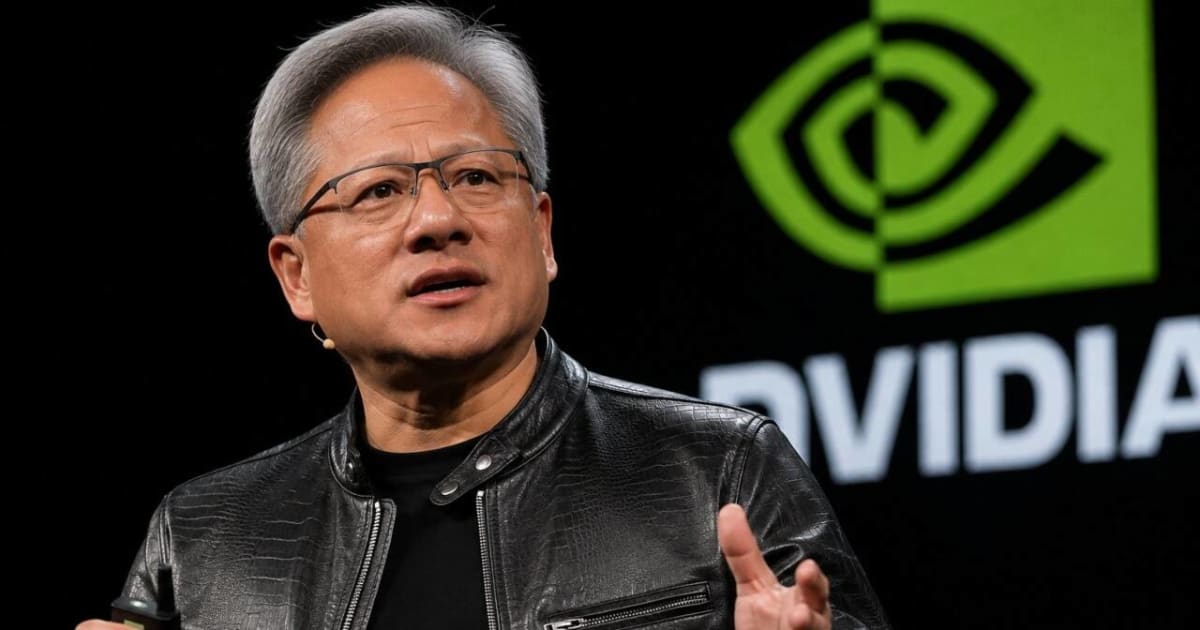
The global economy is witnessing an unprecedented surge in data center investments, projected to hit $7 trillion by 2030, driven by the AI revolution. This deep dive reveals how this seismic shift creates immense opportunities for Indian enterprises, from IT service giants to specialized infrastructure players. Discover the specific stocks set to benefit and the strategic moves investors should consider now.
Beyond Nvidia: The $7 Trillion Data Center Boom & India's Hidden Winners
The narrative surrounding the artificial intelligence (AI) revolution has, for understandable reasons, largely centered on semiconductor titans like Nvidia. Their astronomic valuations and groundbreaking chip advancements have captivated global markets. However, the true scale of the AI-driven transformation extends far beyond the silicon. WelthWest Research Desk's latest analysis reveals a parallel, equally monumental investment wave sweeping through the global economy: the build-out of a new generation of data centers, projected to command an astounding $7 trillion in capital expenditure by 2030. This isn't merely an upgrade cycle; it's a foundational re-architecture of digital infrastructure, and its implications for the Indian stock market are profound, creating a multi-year investment thesis for discerning investors.
What's happening now is a confluence of exponential data growth, the insatiable computational demands of large language models (LLMs), and the imperative for businesses worldwide to adopt AI at scale. Existing data center infrastructure, often designed for traditional cloud computing workloads, is simply inadequate for the power-hungry, heat-generating AI clusters required today. This necessitates not just more servers, but entirely new paradigms in power delivery, advanced cooling systems, and sophisticated data center management. This pivotal shift is creating a burgeoning ecosystem of beneficiaries, extending well beyond the familiar names in semiconductors, with significant tailwinds for Indian companies positioned strategically within this value chain.
Why is the $7 Trillion Data Center Investment a Game-Changer for Indian Markets NOW?
The sheer scale of the projected $7 trillion investment by 2030 underscores a sustained, decade-long boom in digital infrastructure. This isn't a fleeting trend; it’s a structural shift that will redefine global technology spending. For Indian markets, this translates into a multi-faceted opportunity. India's IT services sector, renowned for its global delivery capabilities and engineering talent, is uniquely positioned to capitalize on the massive demand for data center management, cloud migration, AI infrastructure deployment, and cybersecurity services that accompany this build-out. Historically, major global technology cycles, such as the Y2K bug or the dot-com boom, have disproportionately benefited Indian IT, propelling companies like Infosys and TCS to global prominence. This current cycle, marked by an even greater capital commitment, promises similar, if not larger, ripple effects.
Beyond services, the infrastructure component presents an intriguing, albeit nascent, opportunity for Indian manufacturing. While global supply chains for specialized power and cooling components are well-established, there's a growing push for regionalization and diversification. Indian manufacturers of electrical components, switchgear, precision cooling systems, and even modular data center solutions could potentially tap into this global demand, provided they can meet international quality and scale requirements. The domestic demand for data centers within India itself, driven by digitalization initiatives and local cloud adoption, further strengthens this narrative, creating a robust home market for these technologies.
To put the $7 trillion figure into perspective, this represents an annual average investment of nearly $1 trillion. This dwarfs the entire market capitalization of many national stock exchanges. The consistent capital flow into this sector guarantees sustained demand for every component, from the foundational power infrastructure to the intricate software layers. This is not just about building new facilities; it's about upgrading existing ones, optimizing energy efficiency, and integrating advanced AI capabilities into every layer of the digital stack. The ripple effect will be felt across multiple industries, ensuring a prolonged period of growth for companies equipped to meet these demands.
Which Indian Companies Stand to Gain from the Data Center Boom? A Stock-by-Stock Breakdown
The impact of this unprecedented data center investment will cascade through various segments of the Indian stock market. We've identified key players across IT services, power management, and engineering that are strategically positioned to capture significant value.
- Infosys (NSE: INFY): As one of India's IT bellwethers with a market capitalization exceeding INR 6.2 trillion and a trailing P/E of approximately 28x, Infosys is a prime beneficiary. Their robust cloud transformation services, expertise in enterprise AI integration, and strong global client relationships position them to win large-scale data center migration, modernization, and management contracts. Infosys's focus on digital engineering and AI consulting directly addresses the complex needs of corporations building out AI-ready infrastructure. Their ability to deliver end-to-end solutions, from strategy to implementation, makes them a critical partner in this new era.
- Tata Consultancy Services (NSE: TCS): With a market cap north of INR 14.5 trillion and a P/E around 32x, TCS, the largest Indian IT services company, boasts an unparalleled global footprint and deep domain expertise. Their significant investments in AI research and development, coupled with extensive experience in managing large-scale IT operations for Fortune 500 companies, make them a formidable player. TCS’s cloud services unit is actively engaged in hyperscaler partnerships and enterprise cloud adoption, directly benefiting from the need for optimized data center utilization and AI workload management. Their emphasis on automation and intelligent operations aligns perfectly with the demands of next-gen data centers.
- L&T Technology Services (NSE: LTTS): This pure-play engineering and R&D services company (NSE: LTTS) with a market cap of approximately INR 47,000 crores and a P/E of about 45x, stands to gain significantly. LTTS's expertise in embedded systems, product engineering, and digital manufacturing positions them to work with global equipment manufacturers of power management units, cooling systems, and specialized data center hardware. Their capabilities in designing energy-efficient solutions and optimizing physical infrastructure are directly relevant to the core challenges of building sustainable AI data centers. As companies seek to innovate in cooling technologies (e.g., liquid cooling) and modular power solutions, LTTS's engineering prowess becomes invaluable.
- Persistent Systems (NSE: PERSISTENT): A mid-cap IT services firm (NSE: PERSISTENT) with a market cap of around INR 57,000 crores and a P/E of roughly 55x, Persistent Systems has a strong niche in product engineering and digital transformation. Their focus on cloud-native development, data engineering, and AI/ML solutions makes them an agile partner for companies looking to build and optimize software layers within the new data center ecosystem. Persistent's ability to drive innovation in platform engineering and integrate emerging technologies directly supports the software-defined infrastructure trend that is critical for modern data centers.
- Schneider Electric India (NSE: SCHNEIDER): While primarily a power management and automation specialist, Schneider Electric India (NSE: SCHNEIDER) with a market cap of approximately INR 85,000 crores and a P/E around 80x, is a direct beneficiary of the infrastructure build-out. They provide critical components like uninterruptible power supplies (UPS), switchgear, racks, and data center management software. The immense power requirements of AI data centers (often 5-10x that of traditional centers) translate directly into increased demand for their robust, scalable, and energy-efficient power solutions. Their global leadership in data center infrastructure will see significant leverage through their Indian operations.
- ABB India (NSE: ABB): Similar to Schneider, ABB India (NSE: ABB) with a market cap of about INR 1.5 trillion and a P/E exceeding 100x, is a major player in electrification, industrial automation, and robotics. Their portfolio includes high-voltage switchgear, power distribution systems, and industrial automation solutions crucial for large-scale data center operations. As data centers become more automated and require sophisticated energy management, ABB’s offerings in smart grids, digital substations, and energy efficiency solutions become highly relevant. The increasing demand for reliable and efficient power infrastructure for AI workloads will drive their order books.
These companies, spanning the spectrum from pure-play IT services to core infrastructure providers, represent a diversified approach to investing in the data center boom. While their valuations reflect robust growth expectations, the sheer scale and longevity of this investment cycle suggest sustained earnings momentum.
The Bull vs. Bear Debate: What Are the Contrarian Views on Data Center Investment?
While the prevailing sentiment around data center investment is overwhelmingly bullish, a balanced perspective requires acknowledging potential headwinds and contrarian arguments. Bulls point to the undeniable demand drivers: AI's exponential growth, the increasing digitization of every industry, and the necessity for localized data processing. They highlight the scarcity of suitable land, power, and cooling infrastructure, suggesting that existing assets will appreciate in value and new builds will command premium pricing. Furthermore, the long investment cycles in data center construction, often spanning years, imply a sustained revenue stream for providers and their partners. The current power crisis in some regions, paradoxically, reinforces the value of efficient power management solutions, benefiting companies like Schneider and ABB.
However, bears raise valid concerns. One primary risk is the potential for oversupply or consolidation in the long run. Aggressive capital deployment by hyperscalers and private equity firms could lead to a glut of capacity in certain geographies, compressing margins for data center operators and, by extension, their suppliers. Historically, technology infrastructure booms have often been followed by periods of rationalization. Another concern is the escalating cost of capital and rising interest rates, which could make large-scale, multi-year data center projects less attractive, potentially delaying or scaling back investments. Geopolitical tensions impacting global supply chains for critical components – from advanced semiconductors to specialized cooling systems – also pose a significant risk, leading to delays and increased costs. Furthermore, the increasing focus on environmental, social, and governance (ESG) factors could place additional burdens on data center operators to achieve net-zero emissions, requiring significant R&D and capital expenditure that might not always translate into immediate revenue growth for service providers.
Actionable Investor Playbook: Navigating the Data Center Opportunity
For investors seeking to capitalize on the multi-trillion-dollar data center boom, a strategic and diversified approach is crucial. This is a secular growth story, suggesting a longer investment horizon than typical cyclical plays.
- Diversified Exposure: Instead of betting on a single segment, consider a basket approach. Allocate capital across leading IT services companies (Infosys, TCS) for their exposure to cloud migration, AI integration, and managed services. Complement this with engineering and product development specialists (LTTS, Persistent) capturing the R&D and specialized software needs. Finally, include infrastructure enablers (Schneider Electric India, ABB India) for their fundamental role in power and cooling.
- Long-Term Horizon: The projected $7 trillion investment by 2030 indicates a sustained, multi-year trend. This is not a quarterly trade. Investors should adopt a 3-5 year horizon, allowing these companies to execute on large-scale projects and demonstrate consistent earnings growth.
- Watch for Entry Points: While the sentiment is bullish, market corrections or broader sector dips can offer attractive entry points. Monitor the P/E ratios relative to historical averages and growth projections. Companies like Infosys and TCS, while trading at a premium to their historical averages, still offer compelling value given their growth runways. For high-growth engineering plays like LTTS and Persistent, look for pullbacks that bring their valuations closer to their long-term growth potential.
- Focus on Innovation & Efficiency: Prioritize companies that are not just building more, but building smarter. Data centers of the future will be hyper-efficient, liquid-cooled, and highly automated. Companies investing in these next-generation technologies will have a competitive edge. Look for commentary on R&D spending, patent filings related to cooling or power, and partnerships with hyperscalers.
- Small-Cap/Mid-Cap Exploration: Beyond the large-cap giants, there might be smaller, agile Indian companies specializing in niche data center components, cybersecurity for critical infrastructure, or edge computing solutions. These could offer higher growth potential, albeit with increased risk. Thorough due diligence is paramount here.
The last time a comparable technological shift occurred with such scale was arguably the internet boom of the late 1990s, where infrastructure providers and early software companies saw unprecedented growth. While the exuberance of that era led to a bust, the underlying infrastructural build-out laid the foundation for decades of digital transformation. This data center boom is a similar foundational shift, but arguably more mature and backed by tangible, enterprise-driven demand.
Risk Matrix: Assessing the Downsides of the Data Center Investment Wave
No investment thesis is without risk. For the data center boom, several factors warrant close monitoring:
- Oversupply & Price Compression (Probability: Medium): The aggressive build-out by hyperscalers and co-location providers could lead to an excess of capacity in certain regions, particularly if AI adoption rates plateau or if technological advancements drastically reduce the compute needed for current workloads. This could lead to price wars and margin compression for data center operators, which would trickle down to their service and component providers.
- Geopolitical Supply Chain Disruptions (Probability: Medium-High): Critical components for data centers, including advanced semiconductors, specialized cooling equipment, and high-density power units, are often sourced from a global, interconnected supply chain. Geopolitical tensions, trade wars, or regional conflicts could disrupt the availability and increase the cost of these components, delaying projects and impacting profitability.
- Energy Costs & Regulatory Scrutiny (Probability: High): AI data centers are immense energy consumers. Rising global energy prices, coupled with increasing regulatory pressure to decarbonize and achieve net-zero emissions, could significantly increase operational costs. Companies unable to innovate in energy efficiency or access renewable energy sources might face competitive disadvantages and stricter compliance requirements.
- Technological Obsolescence (Probability: Low-Medium): While the current infrastructure build-out is massive, the pace of technological change in AI is rapid. A revolutionary breakthrough in quantum computing or highly efficient, decentralized AI processing could potentially render some current data center designs less optimal or even obsolete in the very long term, though this is a more distant risk.
What to Watch Next: Catalysts for the Data Center Boom
Several upcoming catalysts and data releases will continue to shape this investment narrative:
- Hyperscaler Capital Expenditure (CapEx) Announcements: Pay close attention to the quarterly CapEx guidance from major cloud providers like Amazon (AWS), Microsoft (Azure), and Google (GCP). Sustained or increasing CapEx indicates continued investment in their global data center footprint, directly benefiting suppliers and service providers.
- Power Grid Modernization & Renewable Energy Integration: News related to large-scale power grid upgrades, new renewable energy projects, and government incentives for sustainable energy in data centers will be critical. This directly impacts the operational viability and cost structure of future data centers.
- New AI Chip Architectures & Cooling Innovations: Announcements from chipmakers beyond Nvidia (e.g., AMD, Intel, custom ASIC developers) regarding new AI accelerator chips and, crucially, new cooling technologies (like advancements in liquid cooling or immersion cooling) will dictate the future design and requirements of data centers.
- Earnings Reports of Key Indian IT & Infrastructure Players: Closely monitor the quarterly earnings calls of Infosys, TCS, LTTS, Persistent, Schneider Electric India, and ABB India. Look for management commentary on data center-related deal wins, order book growth in relevant segments, and outlook on CapEx from their key clients. Specific mentions of 'AI infrastructure,' 'hyperscaler partnerships,' or 'data center modernization' will be key indicators.
- Government Policies & Incentives: Watch for government policies, both globally and within India, that incentivize data center development, promote green data centers, or provide tax breaks for digital infrastructure investments. These can accelerate the pace of build-out and improve profitability.
The $7 trillion data center investment is not just a story of technological advancement; it's a profound economic transformation. For investors, understanding its breadth and depth, and identifying the key enablers within the Indian market, will be paramount for long-term portfolio growth.
See L&T Technology Services (LTTS)'s AI Score
Our algorithmic screener scores L&T Technology Services (LTTS) on fundamentals, momentum, and risk — free to try, no card needed.
Try the AI Screener →Have questions about this story?
Ask Welth, our finance-focused AI research assistant, for a deeper breakdown — free trial included.
Chat with Welth AI →Disclaimer: This content is generated by WelthWest Research Desk based on publicly available reports and is for informational purposes only. It does not constitute financial advice, investment recommendations, or an offer to buy or sell securities. Always consult a qualified financial advisor before making investment decisions.