Key Takeaway
Bitcoin's steadfast hold above $83,000 signals robust digital asset appetite, while surging global oil prices threaten Indian inflation and corporate margins. This dual dynamic creates a complex landscape favoring energy giants and challenging consumer-facing sectors, demanding a nuanced investor approach.
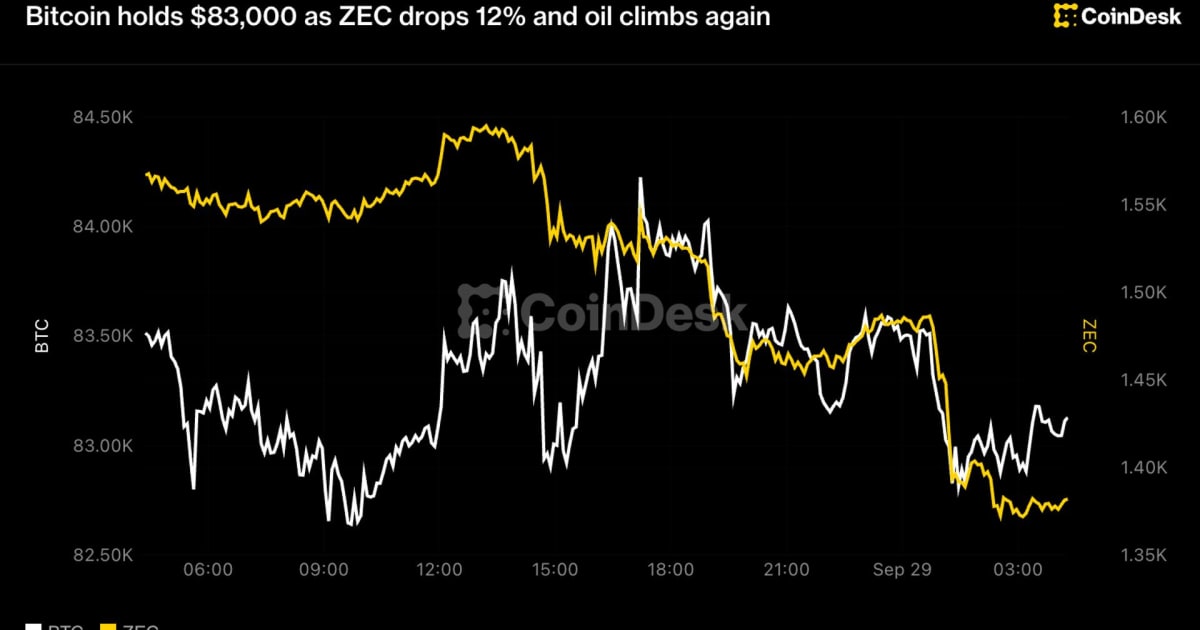
The financial world grapples with a potent confluence of events: Bitcoin's unexpected resilience at $83,000, a significant surge in global crude oil prices, and a notable decline in altcoin ZEC. This WelthWest deep dive unpacks the 'why now' and 'what next' for investors, particularly focusing on the ripple effects across the Indian stock market and specific sectors.
Bitcoin's $83,000 Milestone, Surging Oil, and ZEC's Decline: A WelthWest Deep Dive into Indian Market Repercussions
The global financial landscape is currently navigating a fascinating intersection of forces, with significant implications for investors worldwide, particularly within the Indian market. Bitcoin, the bellwether cryptocurrency, has demonstrated remarkable resilience, firmly holding its ground above the $83,000 mark. Simultaneously, global crude oil prices have embarked on a sustained upward trajectory, while specific altcoins, exemplified by Zcash (ZEC), have experienced a notable downturn. This trifecta of events is not merely a collection of isolated data points; it represents a complex interplay of investor sentiment, macroeconomic pressures, and shifting capital flows that demand an in-depth analysis for discerning investors.
The 'why now' is critical. Bitcoin's tenacity at this elevated price point, following a period of significant volatility, suggests a maturing investor base and potentially a broader acceptance of digital assets as a legitimate store of value or a hedge against traditional market uncertainties. Its ability to absorb profit-taking and maintain support indicates a persistent demand that could be drawing capital from conventional asset classes or reflecting a pervasive 'risk-on' sentiment across global markets. On the other hand, the relentless ascent of oil prices is a direct consequence of geopolitical tensions, supply chain disruptions, and a resurgent global demand, particularly from Asian economies. For a net oil importer like India, this isn't just a headline; it's a direct threat to the nation's current account balance, a catalyst for inflation, and a significant input cost for a vast array of industries. ZEC's decline, in contrast, highlights the ongoing divergence within the crypto market, where capital increasingly consolidates around established, high-liquidity assets like Bitcoin, leaving smaller, less differentiated altcoins vulnerable.
How Will Surging Oil Prices Impact Indian Inflation and Corporate Margins?
The immediate and most palpable impact of climbing crude oil prices on the Indian economy is inflationary pressure. India imports over 85% of its crude oil requirements. Every dollar increase in crude oil prices can significantly widen the trade deficit and exert downward pressure on the Indian Rupee. This directly translates into higher import bills for fuel, which then cascades through the economy. Transportation costs for goods and services rise, impacting everything from food prices to manufacturing inputs. The Reserve Bank of India (RBI) faces a formidable challenge: balancing economic growth with inflation control. Sustained high oil prices could force the RBI to maintain a hawkish stance or even consider interest rate hikes, which would invariably dampen credit growth and investment.
From a corporate perspective, companies with high energy input costs are directly in the crosshairs. Industries like manufacturing, logistics, chemicals, and aviation will see their operational expenditures swell, compressing profit margins. Consider the airline sector: fuel costs typically represent 30-40% of an airline's operating expenses. A 10% rise in crude prices, without a corresponding increase in ticket fares, can severely erode profitability. Conversely, the beneficiaries are clear: domestic oil exploration and production companies, as well as refining and marketing companies, stand to gain from higher realizations on their output.
Historically, periods of sustained high oil prices have often correlated with inflationary spikes in India. For instance, during the 2008 commodity supercycle and again in 2022 following geopolitical events, the Nifty 50 experienced significant corrections, primarily driven by inflation concerns and subsequent monetary tightening. In Q1 2022, when crude oil briefly touched $130/barrel, India's CPI inflation surged to 7.79%, well above the RBI's comfort zone, leading to a 250 basis point hike in the repo rate over the subsequent year. This historical parallel underscores the severity of the current situation for Indian stocks and consumer spending.
Specific Indian Stocks to Watch: Winners and Losers from Bitcoin's Rise & Oil's Surge
The current market dynamics create a clear bifurcation of fortunes within the Indian stock market. Investors seeking to navigate this environment must identify companies positioned to either benefit from higher energy prices or those resilient to inflationary pressures.
- Oil and Gas Majors (Winners):
- Reliance Industries Ltd (NSE: RELIANCE): As India's largest conglomerate with significant interests in oil refining and petrochemicals, Reliance is a primary beneficiary of rising crude prices. Its refining margins (GRMs - Gross Refining Margins) typically expand when crude prices increase, and its integrated value chain helps mitigate some volatility. The company's recent Q4 FY24 results showed robust performance in its O2C (Oil-to-Chemicals) segment, driven by favorable product cracks. A P/E ratio around 28x, while slightly above the sector average, reflects its diversified business model and market leadership.
- Oil and Natural Gas Corporation (NSE: ONGC): As India's largest crude oil and natural gas producer, ONGC directly benefits from higher crude oil realizations. Every $1 increase in Brent crude prices can add significantly to its top line. With its current dividend yield often above 4-5%, it also offers a compelling income play. Its Q4 FY24 net profit surged by over 78%, underscoring the direct correlation with energy prices. Sector peer Oil India Ltd (NSE: OIL) also stands to gain substantially.
- Indian Oil Corporation Ltd (NSE: IOC): While primarily a refiner and marketer, IOC's marketing margins can improve if the government allows pass-through of higher crude costs to consumers. However, political considerations often cap retail fuel prices, impacting its profitability. Its refining segment benefits from higher GRMs, making it a mixed bag but generally leaning positive in a rising crude environment, especially if inventory gains accrue.
- High Energy Input Cost Companies (Losers/Under Pressure):
- InterGlobe Aviation Ltd (NSE: INDIGO): As India's largest airline, IndiGo is highly sensitive to aviation turbine fuel (ATF) prices. A sustained increase in crude oil directly translates to higher ATF costs, which can significantly erode its already thin margins. Despite strong passenger demand, the inability to fully pass on costs poses a significant headwind. Its Q4 FY24 profits, while positive, faced pressure from rising fuel expenses.
- UltraTech Cement Ltd (NSE: ULTRACEMCO): Cement manufacturing is an energy-intensive process, relying heavily on coal and pet coke. Rising energy prices directly increase production costs, impacting profitability. While strong infrastructure demand provides a demand buffer, margin compression remains a concern. Its Q4 FY24 results highlighted cost pressures despite volume growth. Sector peers like Grasim Industries Ltd (NSE: GRASIM) and Shree Cement Ltd (NSE: SHREECEM) face similar challenges.
Expert Perspectives: Bulls vs. Bears on Bitcoin and Inflation
The current confluence of events elicits diverse opinions from market experts. Bitcoin bulls argue that its resilience at $83,000 indicates its growing status as 'digital gold' and a hedge against fiat currency devaluation, especially in an inflationary environment. They point to institutional adoption, ETF inflows, and the upcoming halving events as structural tailwinds that will continue to drive demand, pushing it towards six-figure valuations. They view ZEC's decline as a natural market consolidation, where only the strongest digital assets will survive and thrive, a 'flight to quality' within crypto itself. For them, Bitcoin's limited supply and decentralized nature make it an attractive alternative to traditional assets, especially when inflation erodes purchasing power.
In contrast, Bitcoin bears view the current price as a speculative bubble, fueled by excessive liquidity and retail FOMO (Fear Of Missing Out). They emphasize the inherent volatility of cryptocurrencies, citing the potential for rapid corrections and regulatory crackdowns as significant risks. While acknowledging its recent stability, they argue that the lack of intrinsic value and susceptibility to 'whale' movements make it an unreliable store of value. They might also argue that Bitcoin's energy consumption poses an ESG (Environmental, Social, and Governance) risk that will eventually deter institutional capital.
Regarding oil and inflation, bulls for energy stocks believe that the structural undersupply in the global oil market, coupled with robust demand from emerging economies, will keep crude prices elevated for an extended period. They see Indian upstream and downstream oil companies as undervalued, offering attractive dividend yields and strong earnings growth potential. They contend that the Indian government will eventually allow full pass-through of costs to consumers, protecting corporate margins.
Conversely, bears on the broader Indian market are deeply concerned about the inflationary spiral. They argue that sustained high oil prices will inevitably lead to aggressive monetary tightening by the RBI, impacting corporate earnings across the board and potentially triggering a broader market correction. They worry about the erosion of consumer purchasing power, which forms a significant component of India's GDP. For them, the risk of 'stagflation' – high inflation coupled with low growth – is a tangible threat, making defensive sectors and companies with strong pricing power more attractive.
Actionable Investor Playbook: Navigating the Dual Dynamics
Given the complex interplay of these market forces, a strategic and diversified approach is crucial for Indian investors. Here are concrete steps to consider:
- Buy/Accumulate Energy Sector Leaders: Focus on fundamentally strong Indian upstream oil and gas producers like ONGC (NSE: ONGC) and Oil India Ltd (NSE: OIL). Their direct correlation with crude prices makes them compelling buys in this environment. Consider entry points during any temporary dips in crude prices or broader market corrections. The time horizon for these investments should be medium to long-term (1-3 years), capitalizing on the structural demand for energy.
- Watch Reliance Industries (NSE: RELIANCE) for Diversified Exposure: While Reliance benefits from refining, its diversified portfolio (Jio, Retail) offers a hedge against pure-play energy volatility. It's a 'watch' for entry on dips, particularly if its digital and retail segments show accelerated growth, providing a buffer against potential government intervention in fuel pricing. Target a P/E below its historical average for optimal entry.
- Consider Inflation Hedges: Beyond energy, look for companies with strong pricing power or those in sectors less impacted by energy costs. Select FMCG companies with strong brand equity (e.g., Hindustan Unilever, NSE: HINDUNILVR) or IT services firms (e.g., Tata Consultancy Services, NSE: TCS) that derive revenue primarily from global contracts and have lower direct energy exposure. These act as defensive plays against domestic inflation.
- Avoid/Reduce Exposure to High Energy Consumers: Companies in sectors like aviation (IndiGo, NSE: INDIGO), heavy manufacturing, and logistics that cannot easily pass on increased fuel costs should be approached with caution. Monitor their quarterly earnings for signs of margin compression. Consider reducing exposure or avoiding new positions until crude prices stabilize or decline.
- Strategic Allocation to Bitcoin: For investors with a high-risk tolerance and a long-term view (5+ years), a small, strategic allocation (e.g., 1-5% of portfolio) to Bitcoin via regulated avenues (if available in India) or through global ETFs can be considered as a potential inflation hedge and a play on digital asset adoption. However, extreme caution is warranted due to its inherent volatility.
- Monitor Altcoin Exposure: For altcoins like ZEC, the current trend suggests a 'flight to quality' within crypto. Reassess the fundamental value proposition and competitive landscape of any altcoin holdings. Consider trimming positions in less differentiated or lower-market-cap altcoins, especially if their development roadmap is unclear or adoption lags.
Risk Matrix: Assessing the Probabilities of Key Market Threats
Understanding the risks is paramount. Here’s a breakdown of critical risks with their probability assessments:
- Sustained High Oil Prices Leading to Aggressive RBI Tightening (Probability: Medium-High): If Brent crude remains above $90-$95 per barrel for an extended period, the RBI will likely be compelled to hike interest rates further to curb inflation. This would increase borrowing costs for businesses and consumers, potentially slowing economic growth and impacting equity valuations across the board.
- Global Economic Slowdown Triggering Demand Destruction (Probability: Medium): A significant slowdown in major global economies (e.g., US, Europe, China) could reduce demand for commodities, including oil. While this would ease inflationary pressures, it would also hit export-oriented Indian companies and potentially dampen domestic consumption, leading to a broader market downturn.
- Cryptocurrency Market Correction (Probability: Medium): Despite Bitcoin's recent resilience, the crypto market remains highly volatile. A sudden shift in investor sentiment, major regulatory clampdowns, or a significant security breach could trigger a sharp correction, impacting even established assets like Bitcoin. This risk is always present in the nascent digital asset space.
- Geopolitical Escalation Impacting Supply (Probability: Medium): Further escalation of geopolitical conflicts in oil-producing regions could disrupt supply chains and push crude prices significantly higher, exacerbating inflation and potentially leading to a global energy crisis. This is a black swan event with high impact.
What to Watch Next: Catalysts and Data Points
Investors should closely monitor several upcoming catalysts and data releases to refine their strategies:
- RBI Monetary Policy Committee (MPC) Meetings: The next MPC meeting announcements will be crucial for understanding the central bank's stance on inflation and interest rates. Any hawkish commentary or rate hikes will directly impact market sentiment.
- Global Crude Oil Inventories and OPEC+ Decisions: Weekly EIA (Energy Information Administration) reports on US crude inventories and any announcements from OPEC+ regarding production quotas will provide insights into future oil supply and demand dynamics.
- Indian Inflation Data (CPI & WPI): Monthly Consumer Price Index (CPI) and Wholesale Price Index (WPI) releases will be key indicators of inflationary pressures within the Indian economy. A sustained rise above the RBI's target band (2-6%) is a red flag.
- Quarterly Earnings of Energy Companies: The upcoming quarterly results of ONGC, Reliance, and IOC will offer concrete data on how rising crude prices are impacting their profitability and future guidance. Pay close attention to refining margins and exploration expenditure.
- Regulatory Developments in Crypto: Any new regulations or policy statements from major economies (US, EU, India) regarding cryptocurrencies could significantly influence market sentiment and investor confidence in digital assets.
- US Federal Reserve's Stance on Interest Rates: The Fed's decisions on interest rates continue to have a profound impact on global liquidity and risk appetite, influencing both equity and crypto markets.
See ONGC's AI Score
Our algorithmic screener scores ONGC on fundamentals, momentum, and risk — free to try, no card needed.
Try the AI Screener →Have questions about this story?
Ask Welth, our finance-focused AI research assistant, for a deeper breakdown — free trial included.
Chat with Welth AI →Disclaimer: This content is generated by WelthWest Research Desk based on publicly available reports and is for informational purposes only. It does not constitute financial advice, investment recommendations, or an offer to buy or sell securities. Always consult a qualified financial advisor before making investment decisions.