Key Takeaway
Unfilled CME Bitcoin gaps act as structural price magnets that often trigger broader digital-asset volatility. For Indian investors, this creates a high-beta spillover risk for IT firms heavily invested in blockchain R&D and digital transformation services.
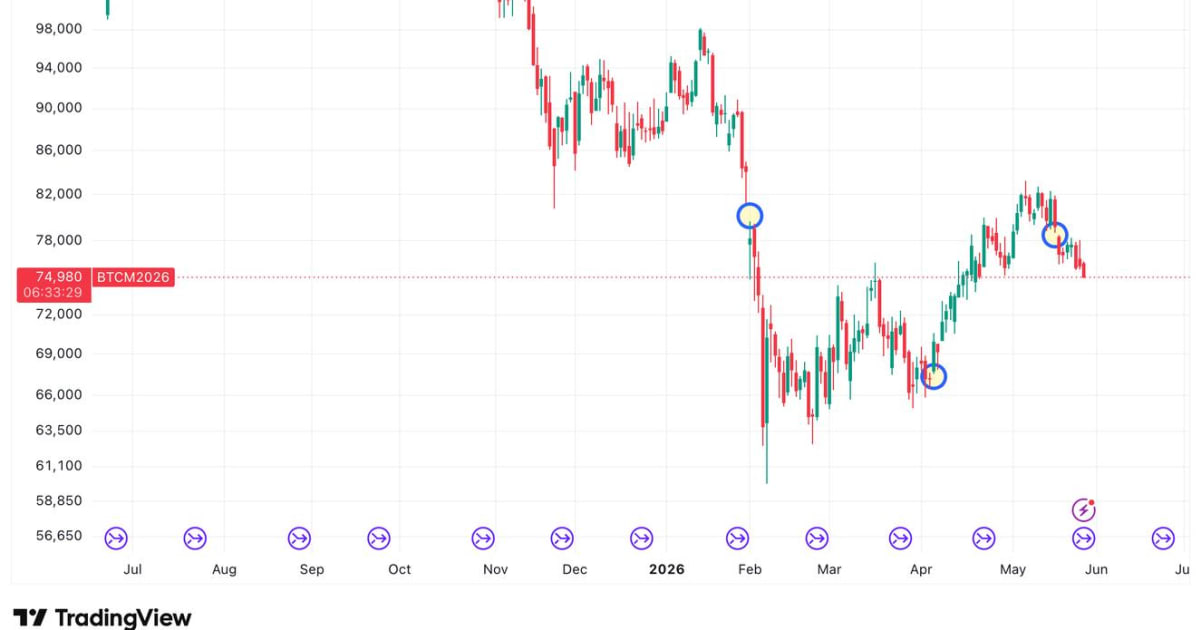
As Bitcoin's CME futures gaps remain unresolved, global liquidity patterns suggest a potential correction phase. We analyze the technical implications for Indian equity markets and identify which tech-adjacent stocks are most exposed to this digital asset sentiment shift.
The CME Gap Phenomenon: A Hidden Magnet for Market Volatility
In the high-frequency world of digital assets, the Chicago Mercantile Exchange (CME) Bitcoin futures market serves as a critical pulse point. Because the CME closes over weekends while Bitcoin trades 24/7, price disparities at the market open create 'gaps'—technical anomalies that history suggests are filled with uncanny frequency. With several gaps currently left unresolved, institutional algorithms and retail traders are bracing for a potential retrace, creating ripple effects that extend far beyond the crypto-native ecosystem.
For the Indian investor, this is not merely a 'crypto' story. It is a proxy for global risk appetite. When Bitcoin experiences sudden liquidity contractions to close these gaps, the sentiment spills over into Indian IT and fintech stocks that have positioned themselves as 'blockchain-ready' or 'Web3-integrated.' Understanding these gaps is now a prerequisite for managing a modern, high-beta portfolio.
Why Do CME Gaps Matter for the Indian Stock Market?
The correlation between Bitcoin and high-growth Indian tech stocks has strengthened as firms pivot toward digital ledger technology (DLT). While the Reserve Bank of India (RBI) maintains a cautious stance on direct crypto exposure, the indirect exposure through service providers and infrastructure firms is significant. Historically, during the 2022 crypto liquidity crunch, we observed a 12-15% drawdown in Nifty IT index constituents that touted aggressive Web3 revenue pipelines, showing that sentiment remains deeply tethered to global digital asset health.
How do CME gaps influence institutional liquidity?
Large institutional players utilize CME gaps as anchor points for liquidity. When price action drifts away from these levels, the 'magnetic' pull of the gap often serves as a magnet for stop-loss orders. As these orders trigger, the resulting volatility compresses margins for fintech firms relying on high-volume transaction environments, ultimately impacting their quarterly P/E valuations.
Stock-by-Stock Breakdown: Who is Exposed?
We analyzed several NSE/BSE-listed firms that maintain exposure to blockchain infrastructure or high-frequency digital payment architecture.
- Persistent Systems (PERSISTENT): With a strong emphasis on digital engineering and cloud-native blockchain solutions, Persistent is highly sensitive to shifts in global tech spend. A sudden crypto-related liquidity drain often leads to a temporary contraction in their 'digital transformation' project pipeline.
- Zensar Technologies (ZENSARTECH): As a player in the mid-cap space, Zensar’s venture into decentralized finance (DeFi) consulting makes them a high-beta play. Their stock often mirrors the volatility of the underlying crypto market during periods of heightened regulatory or technical uncertainty.
- Tanla Platforms (TANLA): While primarily a CPaaS leader, Tanla’s integration of blockchain for secure messaging and fraud detection makes them an indirect beneficiary of crypto adoption—and a victim of its volatility. Watch for shifts in their P/E ratio, currently hovering near 25x, which could compress if sentiment turns bearish.
- Intellect Design Arena (INTELLECT): Their banking-as-a-service (BaaS) and blockchain-led trade finance modules link their performance to the institutional adoption of digital assets.
Expert Perspective: The Bull vs. Bear Debate
The Bull Argument: Bulls argue that these gaps are merely noise. They posit that Indian IT firms are diversified enough that blockchain revenue accounts for less than 5% of top-line growth. They view any gap-fill retracement as a 'buy-the-dip' opportunity for long-term tech compounders.
The Bear Argument: Bears emphasize the psychological tether. They argue that the market is currently in a 'risk-off' regime where any volatility in Bitcoin serves as a catalyst for institutional outflows from high-beta emerging market stocks. They point to the 2022 experience where Bitcoin's 60% drawdown coincided with a multi-quarter stagnation in mid-cap IT valuations.
Actionable Investor Playbook
Investors should adopt a tiered approach to managing this volatility:
- Monitor the Gap Levels: Track the specific price levels of unresolved CME gaps. If Bitcoin approaches these levels, expect a 48-hour lag before Indian IT stocks reflect the resulting volatility.
- Rebalance High-Beta Holdings: If you hold positions in stocks like Persistent or Tanla, consider tightening trailing stop-losses by 5-7% to protect capital during potential sector-wide sentiment dips.
- Focus on Fundamental Floor: Look for firms with strong cash flows and low debt-to-equity ratios. During periods of digital asset turbulence, the market shifts from 'growth-at-any-cost' to 'quality-first' valuation metrics.
Risk Matrix
| Risk Factor | Probability | Impact |
|---|---|---|
| Sudden Global Liquidity Drain | Medium | High |
| Regulatory Crackdown on Indian Crypto Proxies | High | Medium |
| Correlation Breakout (Bitcoin decouples from Tech) | Low | Low |
What to Watch Next
The primary catalyst to watch is the upcoming FOMC meeting minutes, which will dictate global liquidity conditions. Additionally, keep a close eye on the NSE IT Index performance following any Bitcoin weekend price action. If the Nifty IT index fails to hold its 200-day moving average during a week of significant CME gap-filling, it may signal a broader shift in institutional risk sentiment toward Indian tech.
See Zensar Technologies's AI Score
Our algorithmic screener scores Zensar Technologies on fundamentals, momentum, and risk — free to try, no card needed.
Try the AI Screener →Have questions about this story?
Ask Welth, our finance-focused AI research assistant, for a deeper breakdown — free trial included.
Chat with Welth AI →Disclaimer: This content is generated by WelthWest Research Desk based on publicly available reports and is for informational purposes only. It does not constitute financial advice, investment recommendations, or an offer to buy or sell securities. Always consult a qualified financial advisor before making investment decisions.
