Key Takeaway
Sustained Bitcoin ETF inflows signal a pivotal shift in institutional crypto adoption, indirectly influencing Indian investor sentiment and potentially redirecting speculative capital. While direct Indian stock market exposure is limited, this global phenomenon highlights a broader risk-on environment and presents nuanced opportunities for domestic firms in blockchain tech and IT services.
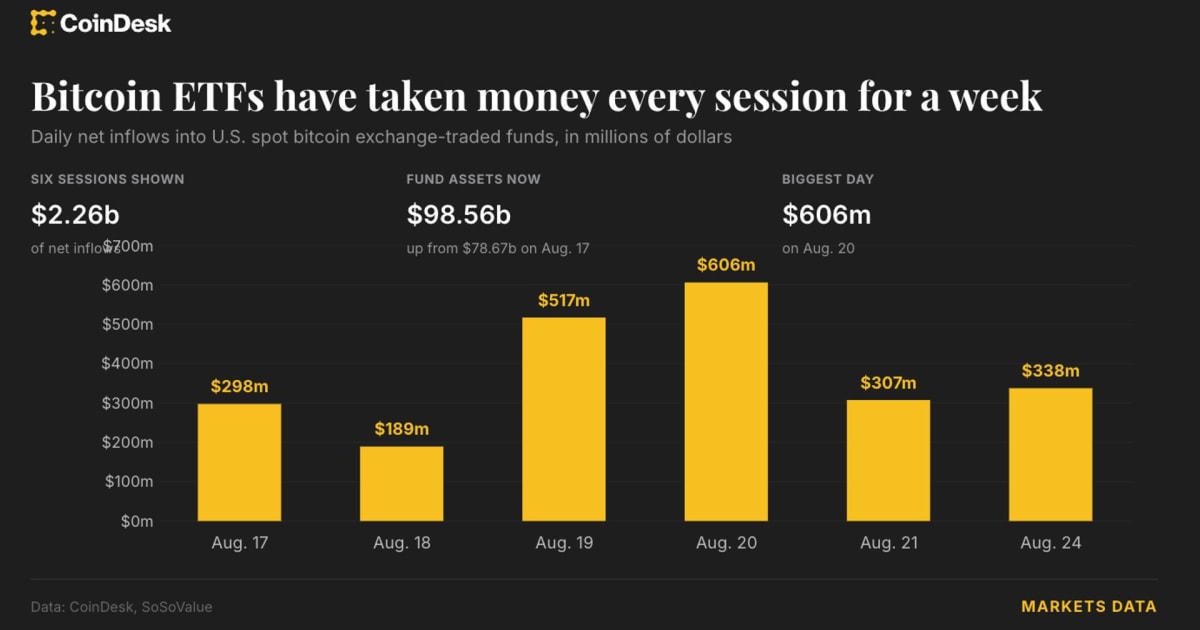
Bitcoin's ascent past $80,000, fueled by relentless ETF inflows, marks a new era of institutional validation for digital assets. WelthWest Research Desk dissects the 'why now' behind this surge and its ripple effects. Explore how this global crypto boom subtly impacts the Indian stock market, investor psychology, and sectors like IT services and fintech, despite regulatory hurdles.
Bitcoin's $80,000 Breakthrough: Unpacking the Institutional Tidal Wave and India's Indirect Play
The cryptocurrency world is witnessing an unprecedented surge, with Bitcoin (BTC) not just breaching but sustaining levels above $80,000 for multiple consecutive days. This isn't merely another volatile price spike; it's a profound market realignment driven by a consistent, multi-day torrent of inflows into newly launched spot Bitcoin Exchange Traded Funds (ETFs) in major global markets. The sheer volume and persistence of capital flowing into these regulated investment vehicles signify a pivotal moment: cryptocurrencies are undeniably transitioning from a niche, speculative asset to a legitimate, institutionally recognized asset class. At WelthWest Research Desk, our deep dive reveals that this phenomenon, while geographically distant, carries significant, albeit indirect, implications for the Indian financial landscape and investor psyche.
The ‘why now’ is crucial. The approval and subsequent performance of spot Bitcoin ETFs have provided a regulated, accessible, and often tax-efficient gateway for traditional investors – from pension funds to wealth managers – to gain exposure to Bitcoin without directly holding the underlying asset. This infrastructure has unlocked a vast reservoir of institutional capital previously constrained by regulatory uncertainty and operational complexities. The sustained inflows, consistently reported for over a week, are not just retail FOMO; they represent calculated allocations from significant financial players, fundamentally altering Bitcoin's demand dynamics and price floor. This institutional embrace, coupled with a broader global risk-on sentiment, is the bedrock supporting Bitcoin’s current valuation north of $80,000, pushing the global crypto market capitalization towards unprecedented heights.
How Does Bitcoin's Surge Indirectly Impact the Indian Stock Market?
While India lacks direct listed entities with significant, pure-play Bitcoin exposure, the global crypto rally creates an undeniable atmospheric shift. The increased global crypto market capitalization, now exceeding $3 trillion, and the perceived stability brought by institutional adoption, influences investor sentiment even in markets with strict regulations. Indian investors, renowned for their participation in speculative assets, are acutely aware of global market trends. A sustained global crypto bull run could subtly divert speculative capital from traditional Indian asset classes, particularly small-cap and mid-cap stocks that often attract risk-seeking retail investors.
Historically, periods of significant global asset appreciation, even in unrelated sectors, can create a 'wealth effect' or a 'risk-on' mood that spills over. For instance, during the dot-com bubble of the late 1990s, while Indian IT stocks benefited directly, there was also a broader speculative fervor across many unrelated sectors. Today, a similar, albeit more nuanced, effect could manifest. While the Nifty 50's movements are unlikely to directly mirror Bitcoin's, certain sectors within the Indian market could experience indirect impacts.
The primary beneficiaries, albeit indirectly, would be Indian companies deeply entrenched in blockchain technology development or providing IT services to global financial institutions and crypto exchanges. These firms stand to gain from increased enterprise adoption of blockchain beyond cryptocurrencies, as well as heightened demand for infrastructure and security services from the burgeoning crypto ecosystem. Consider the parallel: when global tech giants thrive, Indian IT service providers often see increased project pipelines and revenue. The blockchain sector is no different.
Indian Stock Market: Sectors and Specific Stocks to Watch Amidst the Crypto Boom
Given the absence of direct crypto-asset holders on Indian exchanges, our focus shifts to companies that could benefit from the broader technological and financial transformation driven by cryptocurrencies and blockchain. These are not 'crypto stocks' in the traditional sense, but rather firms positioned to capitalize on the underlying technology or the increased global financial activity.
- Infosys Ltd. (NSE: INFY): As a global IT services behemoth, Infosys is actively involved in blockchain solutions for enterprise clients in supply chain, finance, and other sectors. A thriving global crypto ecosystem indirectly validates and accelerates blockchain adoption across industries, increasing demand for Infosys's consulting, development, and integration services. Their financial services vertical, which contributed 30.2% to Q3 FY24 revenues, would be a key beneficiary as global banks explore crypto and blockchain integrations. Its current TTM P/E of ~27x offers a relatively stable entry point compared to pure-play tech disruptors.
- Tata Consultancy Services Ltd. (NSE: TCS): Similar to Infosys, TCS has a dedicated blockchain practice, developing solutions for various industries. Their extensive client base among global financial institutions makes them a prime candidate to benefit from increased blockchain spending. As financial institutions look to leverage distributed ledger technology (DLT) for settlements, trade finance, and digital identities, TCS's expertise becomes invaluable. The company's robust order book and consistent dividend yield make it a defensive play within this theme.
- Persistent Systems Ltd. (NSE: PERSISTENT): This mid-cap IT services company has a strong focus on digital transformation and product engineering. They have been investing in blockchain capabilities, particularly in areas like decentralized finance (DeFi) and enterprise blockchain solutions. A global crypto surge could translate into more projects for companies like Persistent Systems that specialize in niche, cutting-edge technologies. Their agile approach often allows them to capture emerging opportunities faster than larger peers.
- Larsen & Toubro Infotech Ltd. (LTIMindtree) (NSE: LTIM): Formed from the merger of L&T Infotech and Mindtree, LTIMindtree offers a comprehensive suite of digital and IT services. They have been active in developing blockchain-based solutions for their banking and financial services clients. As global financial institutions deepen their engagement with digital assets, the demand for secure, scalable blockchain infrastructure services will rise, directly benefiting LTIMindtree's specialized offerings.
- Coforge Ltd. (NSE: COFORGE): With a strong vertical focus on financial services, Coforge is well-positioned to capitalize on increased technology spending by global banks and capital market firms. While not explicitly a 'blockchain company,' the broader digitalization trend driven by crypto and Web3 necessitates robust IT infrastructure and application development, areas where Coforge excels. Their client-centric model allows them to adapt quickly to evolving industry demands, including those spurred by new digital asset paradigms.
It's important to note that these companies are not direct proxies for Bitcoin price movements. Their impact is derived from the broader validation and expansion of the underlying blockchain technology and the increased digitalization needs of global finance.
Bulls vs. Bears: Contrasting Views on Bitcoin's Sustained Ascent
The narrative around Bitcoin's current rally is sharply divided, reflecting the inherent volatility and speculative nature of the asset class.
The Bulls argue: The sustained ETF inflows are a game-changer. This isn't just retail speculation; it's institutional adoption on an unprecedented scale. The regulated nature of ETFs de-risks crypto exposure for traditional portfolios, unlocking trillions in potential capital. Furthermore, Bitcoin's fixed supply, coupled with increasing demand, creates a powerful scarcity narrative, especially post-halving events. They foresee Bitcoin eventually challenging gold's market capitalization as a digital store of value, making $80,000 just a waypoint on its journey to six-figure valuations. The 'digital gold' thesis is gaining significant traction among sophisticated investors who view Bitcoin as a hedge against inflation and geopolitical instability.
The Bears, however, caution: This rally is still largely speculative, driven by 'new money' chasing performance rather than fundamental value. They point to the inherent volatility, the lack of intrinsic earnings, and the significant regulatory overhang in many major economies, including India. Bears argue that a sudden shift in market sentiment, a major security breach, or adverse regulatory action could trigger a rapid and severe price correction, reminiscent of past crypto winters where Bitcoin shed 70-80% of its value. They view the current ETF inflows as a temporary phenomenon, susceptible to macroeconomic shifts like rising interest rates which typically favor less risky assets. The 'greater fool theory' remains a concern for skeptics.
Our analysis at WelthWest leans towards a cautious bullishness, acknowledging the structural shift brought by ETFs but remaining acutely aware of the market's inherent risks. The institutional validation is real, but the asset class is still maturing.
Actionable Investor Playbook: Navigating the Indirect Crypto Opportunity
For Indian investors looking to participate in this global crypto narrative without direct exposure to the highly volatile underlying assets, a strategic approach focusing on indirect beneficiaries is paramount:
- Watchlist & Accumulate Quality IT Services (Long-Term): Companies like Infosys (INFY) and TCS (TCS) are robust, dividend-paying entities that benefit from broader digital transformation trends, including blockchain adoption. Consider accumulating these on dips with a 3-5 year horizon, viewing them as stable growth plays rather than speculative bets. Entry points around their 50-day moving averages after any market corrections could be opportune.
- Evaluate Mid-Cap IT/Tech Innovators (Medium-Term): Firms like Persistent Systems (PERSISTENT) and LTIMindtree (LTIM) offer higher growth potential due to their specialized focus on emerging technologies. These could be considered for a 1-3 year horizon, but require closer monitoring due to potentially higher volatility. Look for strong order book growth and increasing client wins in their digital and blockchain segments.
- Avoid Pure Speculation: Given India's regulatory uncertainty around cryptocurrencies, directly investing in lesser-known crypto-related ventures or highly speculative tokens is fraught with risk. Stick to established, financially sound Indian companies with proven business models.
- Monitor Global Trends and Regulatory Cues: Keep a close eye on global crypto regulatory developments and the performance of global blockchain-focused companies. Any relaxation or tightening of Indian crypto regulations would be a significant catalyst, but currently, the status quo suggests a cautious approach.
The key is to invest in fundamentally strong businesses that are strategically positioned to benefit from the secular growth of blockchain technology, irrespective of Bitcoin’s daily price fluctuations. This provides a buffered exposure to the crypto narrative.
Risk Matrix: Understanding the Perils of Indirect Crypto Exposure
Despite the bullish sentiment, several significant risks could derail the current trajectory or impact indirect beneficiaries:
- Regulatory Crackdown (Probability: Medium-High): Indian regulatory uncertainty remains the foremost domestic risk. A stringent ban or punitive taxation could severely dampen domestic investor sentiment towards all digital assets, indirectly impacting companies perceived to have any crypto-related exposure. Global regulatory shifts, especially from major economies, could also trigger market corrections.
- Crypto Market Volatility & Sentiment Reversal (Probability: High): Despite institutional inflows, the crypto market is inherently volatile. A sudden macroeconomic shock, a 'black swan' event, or even a major ETF outflow could trigger a rapid price correction in Bitcoin, leading to a broader loss of confidence across the digital asset space. This could reduce enterprise blockchain spending if perceived as too risky.
- Technological Obsolescence/Competition (Probability: Low-Medium): While blockchain is transformative, the specific technologies and platforms are constantly evolving. A breakthrough in a competing technology or a shift in enterprise preference could diminish the projected growth for current blockchain service providers.
- Global Economic Slowdown (Probability: Medium): A significant global economic downturn would likely trigger a flight to safety, impacting riskier assets like cryptocurrencies and potentially reducing IT spending by global financial institutions, thereby affecting the revenues of Indian IT service providers.
What to Watch Next: Catalysts and Data Points Shaping the Future
The narrative around Bitcoin and its indirect impact on Indian markets is dynamic. Investors should monitor several key indicators and upcoming events:
- Bitcoin ETF Flow Data (Daily/Weekly): Continue to track the net inflows/outflows into major spot Bitcoin ETFs (e.g., BlackRock's IBIT, Fidelity's FBTC). Sustained positive flows will reinforce the institutional adoption narrative, while significant outflows could signal a shift in sentiment.
- Indian Regulatory Updates: Any official statements or policy papers from the Reserve Bank of India (RBI) or the Ministry of Finance regarding cryptocurrency regulation will be critical. Clarity, either positive or negative, will significantly impact domestic investor participation and enterprise blockchain initiatives.
- Global Macroeconomic Indicators: Inflation data (CPI), interest rate decisions from central banks (Fed, ECB), and employment figures will continue to influence risk appetite globally, directly affecting speculative assets like Bitcoin and indirectly influencing broader market sentiment.
- Corporate Earnings of IT Services Firms (Quarterly): Pay close attention to the commentary from Indian IT giants (Infosys, TCS, Persistent, LTIMindtree, Coforge) during their quarterly earnings calls. Look for specific mentions of blockchain projects, digital transformation deal wins, and guidance related to financial services client spending.
- Technological Developments: Keep an eye on major upgrades or new protocols within the blockchain ecosystem (e.g., Ethereum's scaling solutions, new enterprise blockchain platforms). These can drive further adoption and create new opportunities for service providers.
The sustained institutional embrace of Bitcoin via ETFs is a landmark event, signaling a maturation of the digital asset class. While India's direct participation remains constrained, the ripple effects are undeniable. By focusing on fundamentally strong Indian companies leveraging blockchain technology and providing essential IT services to a globalized financial sector, astute investors can strategically navigate this evolving landscape and potentially capture indirect value from the ongoing crypto revolution.
See NA (No direct Indian listed companies with significant direct crypto exposure)'s AI Score
Our algorithmic screener scores NA (No direct Indian listed companies with significant direct crypto exposure) on fundamentals, momentum, and risk — free to try, no card needed.
Try the AI Screener →Have questions about this story?
Ask Welth, our finance-focused AI research assistant, for a deeper breakdown — free trial included.
Chat with Welth AI →Disclaimer: This content is generated by WelthWest Research Desk based on publicly available reports and is for informational purposes only. It does not constitute financial advice, investment recommendations, or an offer to buy or sell securities. Always consult a qualified financial advisor before making investment decisions.
