Key Takeaway
The sustained margin squeeze on global Bitcoin miners is a leading indicator of forced asset liquidations, posing a hidden contagion risk for Indian blockchain-adjacent firms and high-beta FinTech equities.
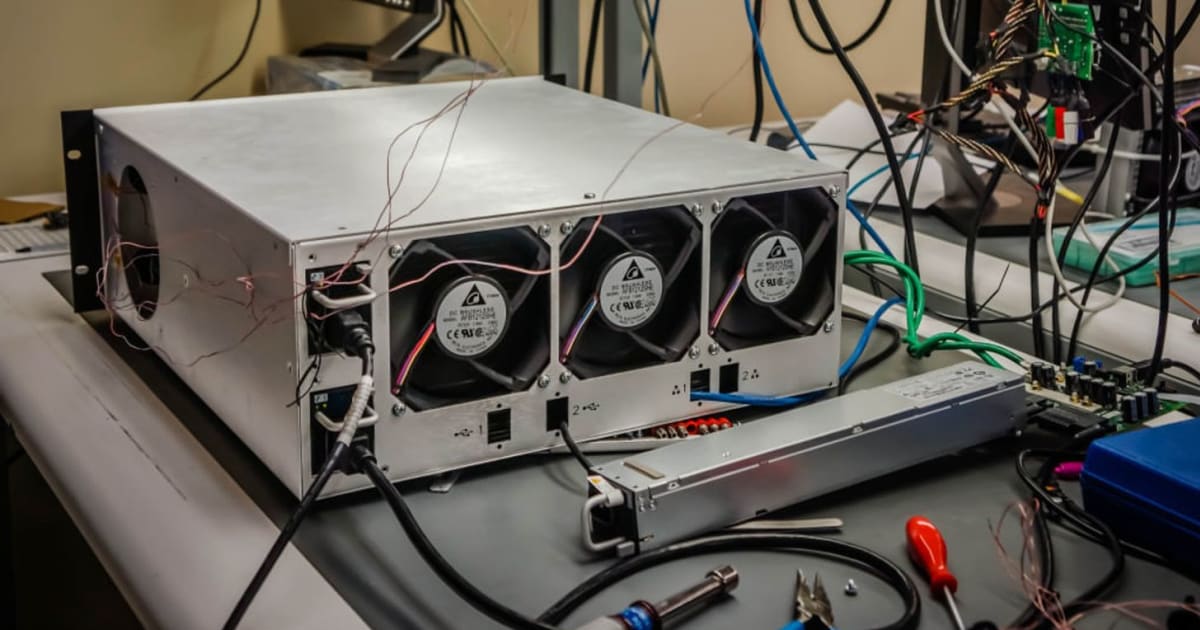
Bitcoin miners are currently operating below break-even thresholds, a scenario historically preceding market capitulation. We analyze how this global mining crisis trickles down to Indian markets, affecting sentiment for IT and FinTech firms linked to digital asset infrastructure.
The Mining Margin Squeeze: A Global Contagion
For the past five months, the global Bitcoin network has been operating in a state of 'profitability purgatory.' With production costs consistently exceeding market spot prices, the world’s largest decentralized computing network is facing its most significant stress test since the 2022 collapse. For investors in the Indian markets, this isn't just a story about digital gold—it is a signal of potential volatility in the broader technology and financial services sectors.
When miners—the backbone of the Bitcoin ecosystem—are squeezed, they are forced to liquidate their BTC reserves to cover operational expenses, electricity costs, and hardware debt. This creates a feedback loop of selling pressure that historically drags down sentiment across high-beta assets. In India, where direct exposure to crypto-mining is negligible, the impact is felt through the sentiment channel, affecting FinTech firms and IT service providers that act as proxies for digital asset adoption.
Why does Bitcoin mining profitability matter to Indian investors?
While the Reserve Bank of India (RBI) maintains a cautious stance on digital currencies, the Indian stock market has become increasingly sensitive to global risk-on/risk-off sentiment. When crypto markets face a liquidity crunch, the 'risk-off' trade accelerates, often leading to a sell-off in Indian IT and FinTech stocks that have invested in blockchain R&D or crypto-custody infrastructure. Historically, during the 2022 crypto winter, the Nifty IT index saw a correlation spike with global digital asset volatility, as institutional investors bundled 'digital transformation' firms with 'crypto-adjacent' risk profiles.
Sector-Level Breakdown: Winners and Losers
The current environment creates a clear divergence in the market. Losers are concentrated in retail-focused crypto exchanges and high-beta digital asset investment funds. These entities rely on trading volume and bullish sentiment to maintain their P/E ratios. As mining profitability drops, trading volumes typically follow, compressing the fee-based revenue models of these firms.
Conversely, winners are found in companies providing energy-efficient hardware and infrastructure services. As miners consolidate, the demand shifts toward high-efficiency rigs, benefiting semiconductor-adjacent players and firms providing specialized data center cooling solutions, which are increasingly relevant in the Indian industrial manufacturing sector.
How will the Bitcoin mining crisis affect NSE/BSE stocks?
Though no listed Indian company is a direct Bitcoin miner, the impact on sentiment is tangible. Below are four key stocks that react to global crypto-volatility:
- Tata Consultancy Services (TCS): As a leader in blockchain enterprise solutions, TCS is often viewed as a proxy for the 'institutionalization' of crypto. A mining crisis dampens the appetite for enterprise blockchain projects, potentially slowing revenue growth in their 'Digital' segment.
- Infosys (INFY): Similar to TCS, Infosys has invested heavily in distributed ledger technology (DLT). A prolonged crypto slump forces management to pivot away from crypto-adjacent R&D, impacting short-term innovation margins.
- Zomato (ZOMATO): While a food-tech giant, its high-beta status and institutional ownership make it a barometer for liquidity. When global risk assets crash, retail-heavy stocks like Zomato face disproportionate selling pressure from FIIs (Foreign Institutional Investors) rebalancing portfolios.
- HCL Technologies (HCLTECH): With a strong focus on data center infrastructure and cloud services, HCL is a 'pick-and-shovel' play. If the global mining industry consolidates, the demand for specialized data center management, where HCL excels, could see a modest uptick in long-term enterprise demand.
Expert Perspective: The Contrarian View
Bulls argue that the current mining crisis is a 'cleansing event.' By forcing inefficient miners out of the network, the protocol becomes more secure and profitable for those with lower operational costs. They suggest that the Indian market’s reaction is a temporary 'noise' event, and that companies with strong fundamentals in blockchain infrastructure remain undervalued. Bears, however, warn that we are entering a phase of 'miner capitulation.' If the price of BTC fails to recover above the $60,000-$65,000 range, we could see a cascading sell-off that forces institutional players to exit crypto-adjacent positions in India to cover margin calls elsewhere.
Actionable Investor Playbook
Investors should adopt a defensive posture regarding high-beta IT stocks until mining profitability stabilizes. Monitor: The 'Hash Rate' of the Bitcoin network. If the hash rate drops significantly, it confirms miner capitulation. Entry Point: Look for entry opportunities in IT leaders only when the 14-day RSI (Relative Strength Index) on the Nifty IT index hits oversold territory (<30), indicating that the sentiment-driven sell-off has been exhausted.
Risk Matrix
| Risk Factor | Probability | Impact |
|---|---|---|
| Forced BTC Liquidation | High | Severe |
| Regulatory Crackdown (India) | Medium | Moderate |
| Global Liquidity Squeeze | High | High |
What to watch next
Investors must keep a close eye on the US CPI data releases and Federal Reserve commentary. These data points dictate the global liquidity environment. Additionally, track the Bitcoin Difficulty Adjustment cycles; a significant drop in difficulty will signal that the mining crisis is hitting a floor, potentially marking the beginning of a recovery phase for the broader digital asset market.
See None (Direct crypto mining is not a primary listed business in India; impact is sentiment-based on IT/FinTech firms with exposure)'s AI Score
Our algorithmic screener scores None (Direct crypto mining is not a primary listed business in India; impact is sentiment-based on IT/FinTech firms with exposure) on fundamentals, momentum, and risk — free to try, no card needed.
Try the AI Screener →Have questions about this story?
Ask Welth, our finance-focused AI research assistant, for a deeper breakdown — free trial included.
Chat with Welth AI →Disclaimer: This content is generated by WelthWest Research Desk based on publicly available reports and is for informational purposes only. It does not constitute financial advice, investment recommendations, or an offer to buy or sell securities. Always consult a qualified financial advisor before making investment decisions.