Key Takeaway
The monumental $6.4 billion Bitcoin options expiry, occurring amidst extreme price volatility near $80,000, signals a critical inflection point for global crypto markets. While direct Indian stock impact is limited, this event amplifies broader risk sentiment, demanding vigilance from investors in tech and fintech, and could influence capital allocation decisions across emerging markets.
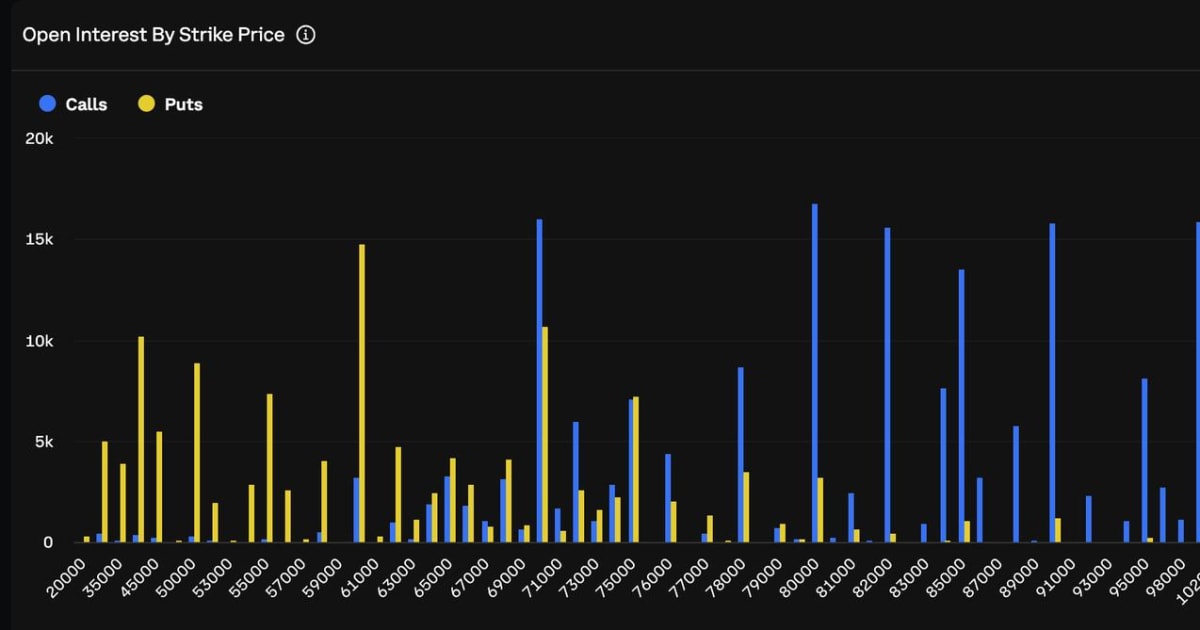
A staggering $6.4 billion in Bitcoin options just expired, sending ripples across global crypto markets and potentially influencing broader investor sentiment. WelthWest Research Desk delves into the intricate dynamics of this event, analyzing its indirect yet significant implications for the Indian stock market, specific NSE/BSE tickers, and offering an actionable investor playbook. Understand how this crypto seismic event could reshape your portfolio.
Bitcoin Options Expiry: Decoding the $6.4 Billion BTC Event and Its Indirect Indian Market Echoes
The digital asset landscape is currently grappling with a monumental event: the expiry of approximately $6.4 billion worth of Bitcoin options contracts, unfolding as BTC prices hover precariously near the psychologically significant $80,000 mark. This is not merely another crypto market blip; it represents one of the largest single-day options expiries in Bitcoin's history, a true stress test for market liquidity and a critical barometer for global risk appetite. At WelthWest Research Desk, we dissect the layers of this event, moving beyond the headlines to unearth its profound, albeit indirect, implications for the Indian stock market and the broader investment ecosystem.
Why does a Bitcoin event of this magnitude matter to investors focused on the Nifty 50 or the BSE Sensex? Because in an increasingly interconnected global financial system, the 'digital gold' narrative of Bitcoin has evolved. It's no longer a fringe asset; institutional adoption is growing, and its volatility can act as a leading indicator for speculative fervor or a broader flight to safety. Significant price dislocations in Bitcoin, particularly around such large expiries, can subtly shift investor appetite for risk assets across the board, including those in high-growth emerging markets like India. This event underscores the growing mainstreaming of crypto as an asset class, demanding a nuanced understanding from every serious investor.
What Happened: Unpacking the $6.4 Billion Bitcoin Options Expiry
At its core, a Bitcoin options expiry involves the settlement of derivative contracts that give traders the right, but not the obligation, to buy or sell Bitcoin at a predetermined price (the strike price) on a specific date. The sheer volume of $6.4 billion expiring on this particular Friday is exceptional, representing a substantial portion of Bitcoin's daily trading volume and a significant chunk of the open interest across major derivatives exchanges like Deribit, CME, and Binance. The concentration of these contracts near the $80,000 price point suggests a fierce battle between bulls and bears, with many call options likely placed with strike prices above this level, and put options below. This creates a scenario ripe for heightened volatility, as market makers and large institutional players actively adjust their hedges to minimize risk or capitalize on price movements as expiry approaches.
The 'max pain' point – the price at which the maximum number of options contracts expire worthless, causing the greatest loss for options holders – is often a focal point during such events. While not a definitive predictor, understanding this dynamic helps gauge potential price magnets. The current high volatility, with Bitcoin experiencing swings of several percentage points in a single day, exacerbates the impact of this expiry. This isn't just about individual traders winning or losing; it's about the systemic implications for liquidity providers and the potential for cascading effects across crypto markets, which can then spill over into broader financial sentiment.
Deep Market Impact Analysis: Connecting Crypto Volatility to Indian Equities
While no direct Indian stock is purely a 'Bitcoin proxy,' the indirect linkages are becoming increasingly apparent. The primary channel of impact is through global risk sentiment. When a significant asset class like Bitcoin experiences extreme volatility or a sudden price shock, it can trigger a 'risk-off' mood among global institutional investors. This often leads to a reallocation of capital away from perceived riskier assets, including emerging market equities like those in India. For instance, during the crypto market downturns of early 2022, we observed periods where the Nifty 50, after an initial lag, exhibited increased correlation with global tech indices and, by extension, assets considered speculative. While not a one-to-one correlation, a sustained period of crypto market instability can dampen foreign institutional investor (FII) flows into India, impacting sectors that rely heavily on growth capital.
Consider the historical parallel: during the 'crypto winter' of 2022, Bitcoin's market capitalization plummeted from its peak, leading to a noticeable, albeit temporary, contraction in global venture capital funding for tech startups. While India's startup ecosystem is robust, a sustained global risk-off sentiment, partly fueled by crypto volatility, could temper enthusiasm for high-growth tech and fintech ventures. Moreover, some Indian high-net-worth individuals and family offices are known to have exposure to crypto assets. Significant losses in their crypto portfolios could indirectly impact their liquidity and investment decisions within the Indian equity market, particularly in real estate or luxury consumption sectors.
Which Indian Stocks Are Indirectly Affected by Bitcoin's Volatility?
Although no Indian company holds Bitcoin directly on its balance sheet in a significant, disclosed manner like some Western counterparts, several NSE/BSE listed entities are tangentially exposed through sentiment, business models, or investor perception. Here are 4-6 specific stocks and sectors to watch:
- Info Edge (India) Ltd. (NSE: NAUKRI): As a leading internet conglomerate with investments in various Indian startups (including fintech), Info Edge's valuation is sensitive to broader tech sentiment and the availability of venture capital. A crypto-induced global risk-off environment could indirectly impact the funding landscape for its portfolio companies, affecting future growth prospects and investor confidence. While its core businesses are robust, speculative asset volatility can dampen the overall 'tech growth' narrative that often props up its P/E multiple, currently around 70x TTM.
- One 97 Communications Ltd. (NSE: PAYTM): While Paytm's direct exposure to crypto is minimal due to regulatory restrictions in India, its identity as a prominent fintech player means it is often grouped by global investors with other innovative financial technology companies. A broader sentiment shift against 'speculative tech' or digital assets can spill over, impacting investor perception, particularly given its historical volatility since IPO. Its focus on digital payments aligns it with the broader digital transformation narrative, which could be seen as less attractive during periods of heightened global risk aversion.
- Tata Consultancy Services Ltd. (NSE: TCS): As a global IT services giant, TCS doesn't have direct crypto exposure. However, its client base includes major financial institutions and global tech companies. A significant downturn in global financial markets, partly triggered by extreme crypto volatility, could lead to a slowdown in IT spending by these clients, affecting TCS's order book and revenue growth in the long run. While its diversified portfolio provides resilience, a sustained global economic slowdown is a headwind.
- L&T Technology Services Ltd. (NSE: LTTS): This engineering and R&D services company has exposure to various global industries, including some emerging tech sectors. While not directly crypto-related, a global flight from risk and a slowdown in innovation funding could indirectly impact its clients' R&D budgets, potentially affecting its growth trajectory. Investors often view LTTS as a proxy for global industrial tech sentiment.
- HDFC Bank Ltd. (NSE: HDFCBANK) / ICICI Bank Ltd. (NSE: ICICIBANK): While Indian banks are insulated from direct crypto exposure due to RBI regulations, their performance is tied to overall economic stability and FII inflows. A significant global risk-off event, partly triggered by crypto market turmoil, could lead to FII outflows, putting pressure on banking sector liquidity and capital markets. Moreover, a global slowdown could temper credit growth and asset quality in the long run.
Expert Perspective: Bulls vs. Bears on Bitcoin's Trajectory
The current Bitcoin options expiry event presents a fertile ground for diverging expert opinions. The Bulls argue that the expiry of such a large volume of options often acts as a 'cleansing event,' removing speculative froth and allowing the market to re-establish a healthier price discovery mechanism. They point to the robust institutional infrastructure now supporting Bitcoin, including spot ETFs in the US, as evidence of its maturation. Furthermore, they believe that the significant open interest near $80,000 indicates strong underlying demand and a potential for a 'gamma squeeze' post-expiry if prices break higher, forcing market makers to buy Bitcoin to hedge their short positions. For the bulls, any post-expiry dip is a buying opportunity, viewing Bitcoin as an uncorrelated asset that diversifies traditional portfolios, especially amidst global geopolitical uncertainties.
Conversely, The Bears caution that such large expiries, especially amidst high volatility, can trigger significant downside if price support levels are breached. They emphasize the 'max pain' theory, suggesting that market makers might manipulate prices to maximize their profits, often leading to a move towards the max pain price. The bears highlight Bitcoin's historical susceptibility to 'whiplash' movements around derivatives expiries, where initial moves can be sharply reversed. They also point to the potential for regulatory crackdowns globally, which could be exacerbated by extreme volatility, further deterring institutional adoption. For the bears, the current price near $80,000 might be an unsustainable peak, driven by speculative fervor, and the expiry could be the catalyst for a significant correction, particularly if global liquidity tightens.
Actionable Investor Playbook: Navigating the Post-Expiry Landscape
Given the indirect nature of the impact on Indian equities, our actionable playbook focuses on vigilance, selective positioning, and long-term trends rather than short-term speculative plays:
- Watch for Broader Risk Sentiment: Monitor global equity indices (S&P 500, Nasdaq), VIX index, and FII flow data into India. A sustained risk-off environment post-Bitcoin expiry could signal a period of consolidation for Indian markets. Entry points for quality Indian tech/fintech stocks might emerge if global sentiment deteriorates.
- Selective Accumulation in Resilient Tech/Fintech: Instead of speculative plays, consider accumulating fundamentally strong Indian tech and fintech companies that have demonstrated consistent profitability and healthy balance sheets, rather than those solely reliant on growth narratives. Companies like Persistent Systems (NSE: PERSISTENT) or Coforge (NSE: COFORGE), with strong global client bases and niche expertise, might be more resilient than pure-play internet ventures during periods of global uncertainty.
- Focus on Domestic Demand Plays: If global risk sentiment is dampened, sectors driven by domestic consumption and infrastructure spending might offer more stability. Consider companies in the manufacturing, capital goods, or consumer discretionary sectors that are less exposed to global FII sentiment.
- Long-Term Perspective on Digital Transformation: The underlying trend of digital transformation remains intact, irrespective of short-term crypto volatility. Companies enabling this shift, even if indirectly impacted by sentiment, represent long-term growth opportunities. Consider a time horizon of 3-5 years for such investments.
- Allocate to Diversified Financials: Large, diversified financial institutions like Axis Bank (NSE: AXISBANK) or Kotak Mahindra Bank (NSE: KOTAKBANK), while not immune to FII outflows, offer exposure to India's robust banking sector and are better insulated than smaller, more specialized fintechs from global speculative asset shocks.
Risk Matrix: Assessing the Probabilities
Understanding the potential risks is paramount in this volatile environment:
- Increased Crypto Volatility Leading to Broader Risk-Off Sentiment (Probability: Medium-High): A significant price drop in Bitcoin (e.g., a sustained move below $70,000) post-expiry could trigger a broader flight from risk globally. This would likely manifest as FII outflows from emerging markets, including India, impacting capital-intensive sectors and growth stocks. The historical precedent of tech stock corrections following major crypto downturns, though not perfectly correlated, suggests this is a tangible risk.
- Regulatory Crackdowns or Policy Uncertainty (Probability: Medium): Extreme volatility in the crypto market often draws increased scrutiny from global regulators. Any significant new regulatory measures, particularly from major economies, could deter institutional adoption and create fresh uncertainty, negatively impacting the broader digital asset ecosystem and, by extension, global investor sentiment towards innovation.
- Liquidity Crunch in Crypto Markets (Probability: Low-Medium): While unlikely to cause a systemic financial crisis, a sudden and severe liquidity crunch in crypto markets, perhaps due to a 'black swan' event or a major exchange failure post-expiry, could briefly spill over into traditional markets through investor confidence channels. This is a tail risk but warrants monitoring.
- Underperformance of Indian Tech/Fintech Stocks (Probability: Medium): Even without direct exposure, if global investors perceive Indian tech and fintech stocks as part of a broader 'growth-at-any-cost' narrative that is being reassessed due to crypto volatility, these sectors could see relative underperformance, particularly those with higher P/E multiples.
What to Watch Next: Catalysts and Data Releases
The narrative around Bitcoin's post-expiry trajectory and its broader impact will evolve rapidly. Investors should keep a close eye on:
- Bitcoin Price Action & On-Chain Metrics: Monitor BTC's price stability, especially support levels around $75,000 and $70,000. Key on-chain metrics like exchange net flows, whale movements, and funding rates on perpetual futures can provide early signals of sentiment shifts.
- Global Macroeconomic Data: Upcoming inflation reports (e.g., US CPI, PPI), central bank statements (Fed, ECB), and global GDP forecasts will significantly influence risk sentiment, potentially overshadowing or amplifying crypto market movements.
- FII Flow Data into India: Daily and weekly FII investment data from NSDL will be crucial indicators of global investor confidence in Indian equities, particularly in the weeks following the expiry.
- Regulatory Developments: Any new pronouncements or proposed legislation from major financial regulators (SEC, EU MiCA, RBI) regarding digital assets will be critical.
- Corporate Earnings & Guidance (Q1 FY25): As Indian companies release their first-quarter earnings, pay close attention to management commentary on global demand, IT spending, and capital allocation, especially from IT services and financial firms.
The $6.4 billion Bitcoin options expiry is a potent reminder of the interconnectedness of modern financial markets. While its direct impact on Indian stocks may be muted, its influence on global risk sentiment is undeniable. Savvy investors will leverage this understanding to position their portfolios for resilience and long-term growth, rather than being swayed by short-term speculative waves.
See No direct Indian stock impact; indirect sentiment impact on tech/fintech companies with tangential crypto interests.'s AI Score
Our algorithmic screener scores No direct Indian stock impact; indirect sentiment impact on tech/fintech companies with tangential crypto interests. on fundamentals, momentum, and risk — free to try, no card needed.
Try the AI Screener →Have questions about this story?
Ask Welth, our finance-focused AI research assistant, for a deeper breakdown — free trial included.
Chat with Welth AI →Disclaimer: This content is generated by WelthWest Research Desk based on publicly available reports and is for informational purposes only. It does not constitute financial advice, investment recommendations, or an offer to buy or sell securities. Always consult a qualified financial advisor before making investment decisions.