Key Takeaway
Bitcoin's 32% decline, while not directly tied to Indian equities, signals a broader risk-off sentiment that subtly influences investor appetite for volatile Indian growth stocks. Investors should monitor this trend for its potential to shape regulatory discussions and future crypto-linked opportunities in India.
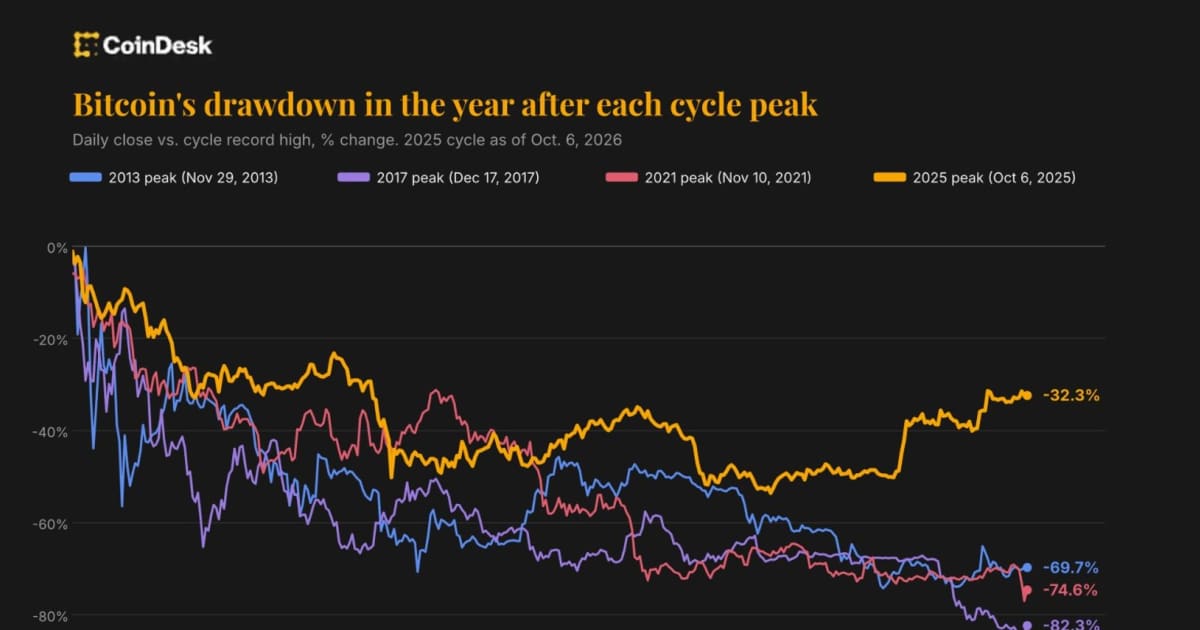
Bitcoin's recent 32% price drop from its all-time high has sent shockwaves through global crypto markets. While India's direct exposure is limited, this event is a crucial barometer of global risk appetite, holding indirect but significant implications for Indian financial markets, particularly high-growth equities and the evolving regulatory landscape for digital assets. Our deep dive reveals actionable insights for investors navigating this complex intersection.
Bitcoin's 32% Plunge: Is Your Indian Stock Portfolio Immune to the Crypto Winter's Chill?
The cryptocurrency world is once again grappling with significant turbulence, as Bitcoin's price has plummeted by a staggering 32% from its record high achieved just one year prior. This isn't merely a statistic for crypto enthusiasts; it's a critical barometer of global investor sentiment, echoing through the intricate corridors of traditional financial markets, including India's burgeoning equity landscape. At WelthWest Research Desk, our deep analysis reveals that while India's direct exposure to crypto volatility might seem minimal, the indirect implications for investor behavior, regulatory frameworks, and specific high-growth sectors on the NSE and BSE are becoming increasingly pronounced.
This substantial correction in the world's largest cryptocurrency, currently holding a market capitalization around $1.3 trillion (down from its peak of over $1.9 trillion), is more than just a blip. It signifies a broader retreat from speculative assets, a global 'risk-off' pivot that financial analysts cannot afford to ignore. For Indian investors, the question isn't 'if' this impacts their portfolio, but 'how' and 'where' the ripples will be felt, especially as the nation continues its cautious dance with crypto regulation.
What Happened: A Year of Volatility and the Current Crypto Correction
Precisely one year ago, Bitcoin scaled unprecedented heights, captivating global attention and drawing in a new wave of retail and institutional investors. Fast forward to today, and the narrative has shifted dramatically. The 32% drawdown reflects a complex interplay of factors: persistent macroeconomic headwinds, including sticky inflation and higher-for-longer interest rates globally; regulatory uncertainties across major jurisdictions; and a natural unwinding of speculative exuberance that often follows parabolic asset runs. This current correction is particularly poignant because it occurs after a period of relative stability, prompting a re-evaluation of risk premiums across all asset classes.
Why does this matter now for Indian investors? Beyond the immediate impact on those directly holding crypto, this event crystallizes a global sentiment. When investors shy away from high-beta, high-risk assets like Bitcoin, the effect often cascades into other speculative corners of the market. In India, this translates to a potential reassessment of high-growth, high-P/E Indian tech stocks or emerging sector plays that thrive on abundant liquidity and bullish sentiment. The ongoing discussions within the Reserve Bank of India (RBI) and the Ministry of Finance regarding a comprehensive crypto framework also gain new urgency. Significant price movements, particularly sharp declines, inevitably influence policy stances, potentially delaying the introduction of crypto-linked financial products or services that could otherwise open new avenues for Indian capital.
Deep Market Impact Analysis: Connecting Crypto Volatility to Indian Equities
While Indian regulations currently restrict direct institutional investment in cryptocurrencies, the indirect linkages are undeniable and growing. The primary mechanism of transmission is sentiment. A significant global 'risk-off' move, epitomized by Bitcoin's decline, often translates into reduced appetite for perceived riskier assets globally, including certain segments of the Indian equity market. Our analysis indicates that sectors heavily reliant on foreign institutional investor (FII) flows or those with high growth expectations but limited current profitability are most susceptible.
Historically, periods of global financial market stress, even those originating from seemingly disparate asset classes, have shown correlations with Nifty's performance. For instance, during the dot-com bubble burst in 2000, which saw a global retreat from speculative tech, the Nifty 50 corrected by over 20% in the ensuing months, despite India's then-nascent IT sector having less direct exposure. More recently, the 2022 global tech correction, partly fueled by rising interest rates and a flight from speculative growth, saw the Nifty IT index (NSE: NIFTYIT) shed nearly 30% from its peaks, even as the broader Nifty 50 remained relatively resilient. The current Bitcoin slump, while not a direct parallel, contributes to a similar narrative of re-evaluating risk in high-valuation assets.
The global crypto market's total capitalization, even after this correction, remains substantial, influencing liquidity pools that can indirectly affect emerging markets. When capital is tied up in or fleeing from volatile crypto assets, it can reduce the marginal capital available for deployment into other markets, including Indian equities. Furthermore, the burgeoning interest in Web3 technologies and blockchain applications means that a sustained 'crypto winter' could cool investment in Indian startups operating in these domains, potentially impacting venture capital flows and the long-term growth prospects of associated listed companies.
Which Indian Stocks Are Affected by Global Crypto Sentiment?
While no Indian company is a direct 'crypto miner' or holds significant Bitcoin on its balance sheet like some US counterparts, several sectors and specific stocks exhibit an indirect sensitivity to global speculative sentiment and the evolving digital asset landscape. Investors seeking to understand the Indian stock market's reaction should monitor these:
- Infosys (NSE: INFY, BSE: 500209): As a global IT services giant, Infosys and its peers (e.g., TCS, Wipro) are at the forefront of digital transformation. While not directly involved in crypto, their consulting and blockchain solution development arms engage with global clients exploring Web3. A sustained crypto downturn could temper enterprise spending on these nascent technologies, subtly impacting future project pipelines. Infosys, with its P/E ratio around 25x, thrives on innovation and robust client spending, making it sensitive to shifts in global tech sentiment.
- Persistent Systems (NSE: PERSISTENT, BSE: 533179): A mid-cap IT firm with a strong focus on digital engineering and product development, Persistent Systems has been actively exploring blockchain and distributed ledger technologies for various industry applications. While a small portion of their overall business, a cooling interest in crypto globally could impact the perceived value and future growth trajectory of these specialized offerings. Their higher growth premium makes them more susceptible to changes in sentiment than larger, more diversified players.
- Paytm (NSE: PAYTM, BSE: 543396): One 97 Communications, operating as Paytm, is a prominent fintech player. While currently not offering crypto trading, the broader digital payments and financial services sector is closely watching crypto's evolution. A regulatory crackdown or prolonged crypto downturn might influence the pace at which Indian fintech companies consider integrating crypto-related services in the future, affecting long-term growth narratives. Paytm's recent efforts to stabilize its business amidst regulatory scrutiny make it particularly sensitive to broader shifts in digital finance perception.
- Bajaj Finance (NSE: BAJFINANCE, BSE: 500031): As a leading NBFC with a significant presence in consumer lending, Bajaj Finance represents the broader financial services sector. While seemingly disconnected, a global 'risk-off' sentiment can lead to tighter liquidity conditions and a general reduction in consumer spending on discretionary items, which could indirectly affect lending growth. Moreover, if India were to eventually regulate crypto, NBFCs like Bajaj Finance could explore offering crypto-backed loans or related financial products. A bearish crypto sentiment might delay such policy moves, impacting potential future revenue streams.
- Zomato (NSE: ZOMATO, BSE: 543321): Representing the new-age internet and consumer tech companies, Zomato, along with Nykaa (FSN E-Commerce Ventures, NSE: NYKAA) and Delhivery (NSE: DELHIERY), often trades on growth potential and future market dominance rather than immediate profitability. These stocks are particularly sensitive to shifts in investor appetite for 'growth at any cost' narratives. A global flight from speculative assets, indicated by Bitcoin's fall, can lead to a re-rating of these high-valuation stocks (Zomato currently trades at a high sales multiple), as investors demand clearer paths to profitability and sustainable growth.
Expert Perspective: The Bull vs. Bear Debate on Crypto's Indian Echoes
The current Bitcoin correction sparks a lively debate among financial strategists regarding its true implications for Indian markets.
The Bears' Argument: "This 32% drop in Bitcoin is a clear warning sign," argues Mr. Sameer Gupta, Head of Macro Strategy at Zenith Capital India. "It indicates diminishing global liquidity and a heightened aversion to risk. While India's direct crypto exposure is limited, the psychological impact on retail investors, who might have dabbled in crypto through international platforms, is real. This can lead to a broader cautious approach to equity investments, especially in smaller, more speculative Indian mid-caps and small-caps that thrive on retail participation. We anticipate a flight to quality within Indian equities, favoring large-cap, fundamentally strong companies and defensive sectors like FMCG (NSE: NIFTYFMCG) and Pharma (NSE: NIFTYPHARMA) over high-growth tech or discretionary consumer names." Gupta points to the historical tendency for global risk aversion to cause FII outflows from emerging markets, putting downward pressure on the Nifty 50 and Nifty Midcap 100.
The Bulls' Counterpoint: "While Bitcoin's volatility is undeniable, its impact on the robust Indian economy and its underlying equity market is largely contained and indirect," counters Ms. Priya Sharma, Senior Analyst at Indus Wealth Management. "India's growth story is driven by strong domestic consumption, government infrastructure spending, and a resilient manufacturing sector. The Nifty 50's P/E ratio, while elevated, is supported by strong corporate earnings growth. This crypto correction might even be a net positive for traditional Indian asset classes if it diverts speculative capital away from digital assets and back into more regulated, tangible investments, including Indian equities and debt. Furthermore, a sustained period of lower crypto prices could provide the RBI and SEBI with a more stable environment to formulate thoughtful regulations, potentially paving the way for future, more structured entry points for Indian investors into digital assets." Sharma believes that any dip in high-quality Indian growth stocks due to this sentiment would present a buying opportunity for long-term investors.
Actionable Investor Playbook: Navigating the Crypto Ripple
For the discerning Indian investor, the current crypto landscape demands a nuanced strategy. It's not about panic selling, but rather about strategic re-evaluation and positioning.
- Watch & Monitor: Keep a close eye on global macroeconomic indicators – inflation data (CPI), interest rate decisions by the US Federal Reserve, and global liquidity trends. These are far more potent drivers of overall market sentiment than crypto alone, but crypto acts as an early warning signal for shifts in risk appetite. Also, track the Indian government's statements on crypto regulation; any definitive stance will create new opportunities or risks.
- Re-evaluate High-Growth, High-Valuation Stocks: For stocks like Zomato (NSE: ZOMATO) or Nykaa (NSE: NYKAA) that trade at significant premiums based on future growth, reassess your investment thesis. Is the path to profitability clear? Can they sustain growth amidst a potentially less speculative market environment? Consider trimming positions if fundamentals don't align with current valuations. Entry points for these stocks might emerge if broader market corrections occur, offering more attractive risk-reward profiles.
- Fortify with Quality Large-Caps: Increase exposure to established, fundamentally strong Indian large-cap companies with robust balance sheets, consistent earnings, and competitive advantages. Think HDFC Bank (NSE: HDFCBANK), Reliance Industries (NSE: RELIANCE), or Infosys (NSE: INFY) at reasonable valuations. These are less susceptible to speculative whims and offer stability during turbulent times.
- Consider Defensive Sectors: Allocate a portion of your portfolio to defensive sectors like Fast-Moving Consumer Goods (FMCG) represented by companies like Hindustan Unilever (NSE: HINDUNILVR) or Nestle India (NSE: NESTLEIND), and Pharmaceuticals (e.g., Sun Pharma, NSE: SUNPHARMA). These sectors tend to outperform during periods of uncertainty as demand for their products remains relatively inelastic.
- Long-Term Horizon for Tech Innovation: For investors with a long-term horizon (5+ years), any significant correction in high-quality Indian IT services companies (like TCS, NSE: TCS) or specialized digital engineering firms (like Persistent Systems, NSE: PERSISTENT) could present a strategic buying opportunity. While sensitive to short-term sentiment, their underlying business models of digital transformation remain crucial for global enterprises.
Risk Matrix: Assessing the Potential Downside
The risks stemming from Bitcoin's volatility, while indirect for India, warrant careful assessment:
- Continued Crypto Volatility & Deterred Investment (Probability: Medium): A prolonged 'crypto winter' could significantly deter Indian retail investors from exploring crypto-related investments, even if regulated. This might also reduce the pool of domestic capital that could eventually flow into digital asset-linked products, if permitted.
- Spillover Sentiment & FII Outflows (Probability: Low to Medium): If global risk aversion deepens significantly, fueled by other macroeconomic factors alongside crypto's woes, it could trigger broader FII outflows from emerging markets, including India. This would put downward pressure on the Nifty and select mid-cap segments.
- Regulatory Stance Hardening (Probability: Medium): Significant and sustained crypto price declines might lead Indian regulators (RBI, Ministry of Finance) to adopt an even more cautious, or even restrictive, stance on digital assets. This could delay or prevent the rollout of clear frameworks for crypto-linked financial products, impacting the long-term potential for Indian financial institutions to participate.
- Impact on Web3/Blockchain Startup Funding (Probability: Low): A global downturn in crypto enthusiasm could temper venture capital funding for Indian startups operating in the Web3, blockchain, and metaverse spaces. While a niche, this could slow innovation and job creation in a nascent but promising tech segment.
What to Watch Next: Catalysts on the Horizon
Several key events and data releases will shape the narrative around global risk appetite and crypto's indirect influence on Indian markets:
- US Federal Reserve's Monetary Policy Decisions (Upcoming FOMC Meetings): The Fed's stance on interest rates will be paramount. Any indication of prolonged high rates or further hikes will likely maintain pressure on speculative assets globally, including crypto, and influence FII flows into India.
- India's Union Budget & RBI Monetary Policy (Specific Dates Annually/Bi-Monthly): While not directly about crypto, these policy announcements set the tone for India's economic growth and liquidity. Any measures that boost domestic consumption or investment will provide a counter-balance to global risk-off sentiment.
- Global Inflation Data (Monthly CPI/PPI Releases): Persistent inflation globally will reinforce the 'higher-for-longer' interest rate narrative, keeping pressure on high-beta assets. A clear downtrend in inflation could re-ignite risk appetite.
- Indian Government's Crypto Regulatory Framework (Ongoing Discussions): Any official pronouncement or draft bill from the Indian government regarding the regulation of cryptocurrencies will be a game-changer. It will clarify the future of digital assets in India, potentially opening new avenues or imposing stricter controls, with direct implications for fintech companies and investor participation.
- Q4 Earnings Season for Indian IT & Fintech Companies (Upcoming): The performance and forward guidance of major Indian IT services companies (Infosys, TCS) and fintech players (Paytm) will offer insights into enterprise spending on digital transformation and the health of the broader digital economy, indirectly reflecting global tech sentiment.
Run a free AI Stock Screen
Our algorithmic screener scores any NSE/BSE stock on fundamentals, momentum, and risk — free to try, no card needed.
Try the AI Screener →Have questions about this story?
Ask Welth, our finance-focused AI research assistant, for a deeper breakdown — free trial included.
Chat with Welth AI →Disclaimer: This content is generated by WelthWest Research Desk based on publicly available reports and is for informational purposes only. It does not constitute financial advice, investment recommendations, or an offer to buy or sell securities. Always consult a qualified financial advisor before making investment decisions.