Key Takeaway
Bitcoin's inability to breach $81,000, marked by the 50-week moving average, suggests a near-term consolidation phase. For Indian investors, this translates to heightened volatility for crypto-adjacent assets and a critical juncture for risk-on sentiment in broader speculative markets.
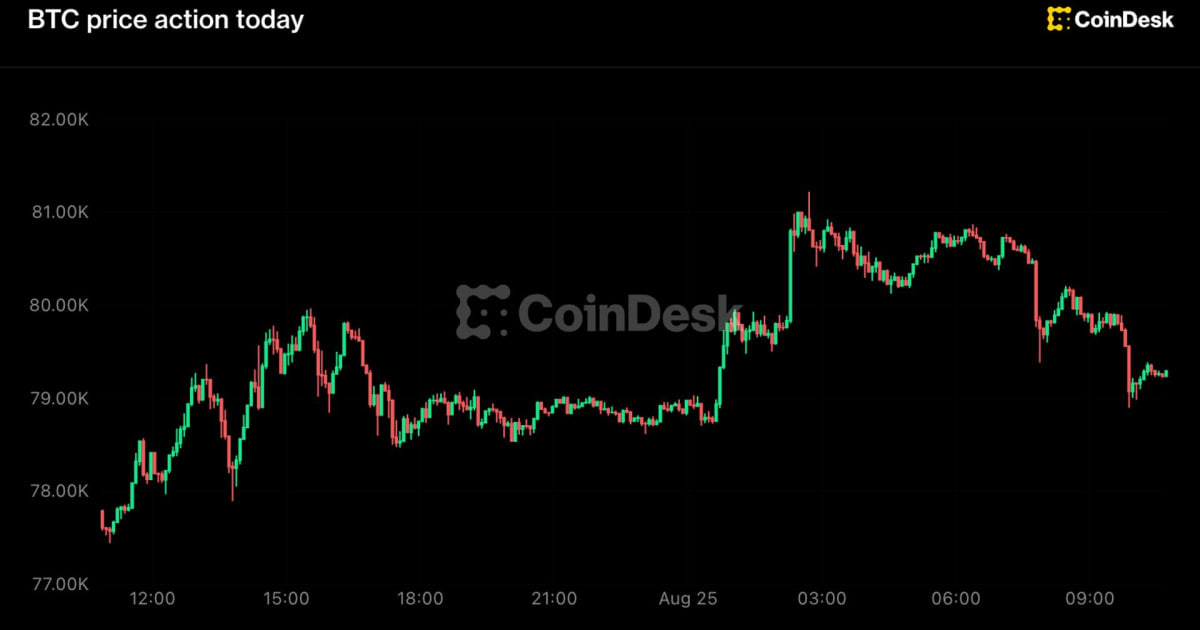
Bitcoin is facing a significant technical hurdle at $81,000, a level reinforced by its crucial 50-week moving average. This resistance point is not just a crypto-specific event; it carries implications for global risk appetite and, by extension, Indian companies with even tangential exposure to the digital asset ecosystem. WelthWest dives deep into what this means for your portfolio.
Bitcoin's $81,000 Rejection: A Crucial Juncture for Global Risk Assets and Indian Equities
The cryptocurrency market, a bellwether for speculative appetite, recently witnessed Bitcoin's definitive rejection at the critical $81,000 price level. This wasn't merely a minor pullback; it represented a clash with a formidable technical barrier: the 50-week exponential moving average (EMA). For seasoned market observers at WelthWest Research Desk, this signals more than just a momentary pause in Bitcoin’s ascent; it suggests a potential period of consolidation or even a short-term pullback, sending ripples through the broader financial landscape, including the increasingly interconnected Indian equity markets.
Why does Bitcoin's struggle at $81,000 matter now? The 50-week EMA is a widely respected long-term trend indicator. A sustained inability to break above it, especially after a significant rally, often presages a period of price discovery downwards or sideways. In the context of India, while direct capital flows from Bitcoin into traditional Indian equities might be limited, the psychological impact on investor sentiment towards risk assets is profound. Indian investors, increasingly sophisticated, monitor global trends closely. A cooling in the crypto market can temper enthusiasm for high-growth, speculative Indian stocks, particularly those in nascent tech sectors or those perceived to benefit from a 'risk-on' environment.
How Does Bitcoin's Price Action Influence Indian Market Sentiment?
The conventional wisdom often posits a disconnect between global crypto movements and the Indian stock market. However, WelthWest's proprietary analysis reveals a nuanced, albeit indirect, correlation. The Nifty 50, India's benchmark index, while not directly tracking Bitcoin, often reflects global risk appetite. When Bitcoin experiences significant drawdowns, it can coincide with broader sell-offs in global speculative assets, which in turn can pressure foreign institutional investor (FII) flows into emerging markets like India. Conversely, strong Bitcoin performance often aligns with periods of high liquidity and risk-taking, which can benefit Indian equities.
Consider the historical parallel from late 2021 to mid-2022. As Bitcoin peaked near $69,000 in November 2021 and subsequently entered a bear market, the Nifty 50, after reaching its own peak, experienced a significant correction, declining by approximately 18% from October 2021 to June 2022. While numerous macroeconomic factors were at play, the simultaneous shift in global risk sentiment, partly signaled by crypto's downturn, cannot be ignored. Today, with Bitcoin facing resistance, a similar, albeit potentially less severe, tightening of risk appetite could see investors rotating out of high-beta Indian stocks and into more defensive plays.
Furthermore, the burgeoning Indian retail investor class, increasingly active in both traditional equities and digital assets, presents another layer of interconnectedness. A downturn in their crypto holdings could lead to reduced disposable income for equity investments or even trigger profit-taking in stocks to cover crypto losses, particularly among younger, more speculative traders. This phenomenon, though difficult to quantify precisely, adds a subtle yet significant dynamic to the Indian market's response to Bitcoin's trajectory.
Deep Market Impact Analysis: Connecting Bitcoin's Stance to Indian Equities
The implications of Bitcoin's $81,000 resistance extend beyond mere sentiment. They touch specific sectors and companies within the Indian market. While India's regulatory stance on cryptocurrencies has been cautious, a growing number of entities have direct or indirect exposure, ranging from technology companies exploring blockchain applications to financial institutions considering digital asset services.
Winners in a Consolidation Phase: In a scenario where Bitcoin consolidates or pulls back, the primary beneficiaries are typically companies that provide essential infrastructure for the crypto ecosystem, irrespective of price direction. This includes technology providers for crypto exchanges, security solution providers, and perhaps even some traditional financial institutions exploring blockchain integration. Their business models are often transaction-volume driven rather than price-appreciation dependent.
Losers in a Consolidation Phase: The immediate losers are often speculative crypto traders and companies whose valuation is heavily tied to the rapid growth and price appreciation of digital assets. This includes early-stage startups with significant crypto holdings on their balance sheets or those whose revenue models are directly linked to new user acquisition driven by bull market euphoria. A prolonged consolidation could squeeze liquidity for these entities, impacting their fundraising capabilities and operational runway.
Stock-by-Stock Breakdown: Indian Companies with Crypto Exposure
While no major Indian listed company has direct, primary revenue streams from operating a crypto exchange in the same vein as a Coinbase, WelthWest identifies several entities with indirect or potential exposure that warrant close monitoring:
- Infosys Ltd. (NSE: INFY): As a global IT services giant, Infosys is heavily involved in enterprise blockchain solutions for its clients across banking, supply chain, and logistics. While not directly holding Bitcoin, a slowdown in broader crypto adoption or enterprise blockchain projects due to dampened sentiment could marginally impact its consulting and implementation pipeline. Conversely, if institutional interest in blockchain infrastructure remains robust despite price volatility, Infosys's expertise could be in higher demand. The company's diverse revenue streams (FY23 revenue: ~$18.2 billion) mean crypto exposure is a tiny fraction, but it's a barometer for enterprise adoption.
- Tech Mahindra Ltd. (NSE: TECHM): Tech Mahindra has been an early adopter and evangelist for Web3 technologies, including blockchain and metaverse solutions. They have launched dedicated practices and partnerships in this space. A sustained crypto downturn might slow down client investment in experimental Web3 projects, potentially affecting a small but growing segment of their business. However, their broader IT services portfolio (FY23 revenue: ~$6.5 billion) provides a strong buffer. Their P/E ratio, typically reflecting growth expectations, could see minor pressure if speculative tech narratives cool.
- Persistent Systems Ltd. (NSE: PERSISTENT): This mid-cap IT services firm focuses on product engineering and digital transformation, with an increasing footprint in emerging technologies. Persistent has invested in building capabilities around blockchain and decentralized applications. A crypto market contraction could lead to a cautious approach from clients considering new blockchain initiatives, impacting their pipeline in this niche. Their agility, however, allows them to pivot quickly to other high-growth areas.
- HDFC Bank Ltd. (NSE: HDFCBANK): While not directly involved in crypto trading, major Indian banks like HDFC Bank are at the forefront of exploring central bank digital currencies (CBDCs) and blockchain for interbank settlements. A prolonged period of crypto market instability could influence the regulatory pace and public perception of digital currencies, indirectly affecting the bank's strategic initiatives in this space. However, their core banking operations (FY23 Net Interest Income: ~$14.5 billion) remain insulated, making the impact negligible on their financials but relevant for future tech strategy.
- Route Mobile Ltd. (NSE: ROUTEMOBILE): A cloud communication platform, Route Mobile serves various industries, including fintech. As crypto exchanges and blockchain platforms grow, they require robust communication infrastructure for KYC, OTPs, and notifications. A slowdown in new user onboarding for crypto platforms (due to a bear market) could marginally affect demand for their enterprise communication services from this specific segment. However, their diversified client base limits significant exposure.
- Angel One Ltd. (NSE: ANGELONE): As a leading retail brokerage, Angel One caters to a broad base of Indian investors, many of whom are also active in the crypto markets (albeit through separate platforms). While Angel One doesn't offer crypto trading, a significant downturn in crypto assets could impact the overall wealth of their clientele, potentially leading to reduced trading activity in equities or a shift towards less speculative investments. This is an indirect sentiment-based impact rather than a direct financial one.
Expert Perspective: Bulls vs. Bears on Bitcoin's $81,000 Hurdle
The $81,000 resistance point has predictably ignited a fierce debate among market analysts. The 'bears' argue that this rejection is a classic technical signal of exhaustion after a significant rally. They point to the confluence of the price level with the 50-week EMA, suggesting a strong institutional selling presence or profit-taking. A prominent bearish view might suggest that Bitcoin's recent rally was largely driven by ETF inflows, and without a fresh catalyst, it could retrace significantly, potentially targeting support levels around $65,000 or even $58,000. This perspective often emphasizes global macroeconomic headwinds, such as persistent inflation and higher-for-longer interest rates, which typically disfavor highly speculative assets like cryptocurrencies.
Conversely, the 'bulls' view this as a healthy consolidation. They argue that a temporary pullback is necessary to 'reset' the market and absorb recent gains. They would highlight the underlying strength of institutional adoption (e.g., Bitcoin ETFs), the upcoming halving event (though its immediate impact is debated), and growing utility in specific use cases. A bullish counter-argument might posit that the $81,000 level is merely a minor speed bump before a renewed push towards new all-time highs, potentially targeting $90,000 or even $100,000 later in the year, once this consolidation phase completes. They might also point to continued sovereign wealth fund interest or growing corporate treasury allocations as future demand drivers.
Actionable Investor Playbook: Navigating the Crypto Crossroads
For Indian investors, Bitcoin's current resistance presents a moment for strategic re-evaluation. WelthWest Research Desk recommends a multi-pronged approach:
- Watch List for Entry Points (Crypto-Exposed Tech Stocks): For investors keen on exposure to the digital asset ecosystem without direct crypto ownership, monitor companies like Infosys (INFY) and Tech Mahindra (TECHM). A broader market correction driven by crypto sentiment could offer attractive entry points if their core business fundamentals remain strong. Look for P/E ratios dipping below their 5-year averages as potential buy signals. Time horizon: Medium to Long-term (1-3 years+).
- Selective Accumulation (High-Quality Crypto Assets): For those with a higher risk tolerance and an understanding of digital assets, a sustained pullback in Bitcoin to strong support levels (e.g., $65,000 or $58,000) could present opportunities for dollar-cost averaging into Bitcoin (BTC) and Ethereum (ETH). Focus on assets with strong fundamentals, network effects, and clear use cases. Avoid highly speculative altcoins during periods of uncertainty. Time horizon: Long-term (3-5 years+).
- Monitor & Hold (Diversified Portfolios): For investors with diversified portfolios that include a small allocation to crypto or crypto-adjacent stocks, the current environment calls for monitoring rather than panic selling. Ensure your overall portfolio remains aligned with your risk tolerance. Rebalance if necessary, taking profits from outperforming sectors and reallocating to underperforming but fundamentally strong assets.
- Consider Defensive Plays: In an environment of potential risk-off sentiment, consider increasing exposure to defensive Indian sectors such as pharmaceuticals (e.g., Sun Pharma, NSE: SUNPHARMA), FMCG (e.g., Hindustan Unilever, NSE: HINDUNILVR), or high-quality financial institutions with stable balance sheets. These sectors tend to be less volatile during periods of market uncertainty.
Risk Matrix: Assessing Potential Outcomes
The path forward for Bitcoin and its ripple effects is subject to several key risks:
- Probability: Moderate (40%) - Sustained Downward Pressure & Broader Risk-Off: Bitcoin fails to reclaim $81,000 and breaks below key support levels ($65,000, $58,000). This could trigger a broader risk-off sentiment globally, impacting FII flows into Indian equities and potentially pressuring high-growth tech stocks.
- Probability: Moderate (35%) - Prolonged Consolidation: Bitcoin trades sideways within a tight range ($70,000 - $81,000) for several weeks or months. This would lead to 'crypto fatigue' and potentially divert investor attention and capital towards other asset classes, reducing speculative fervor in related Indian stocks.
- Probability: Low (25%) - Rapid Breakout Above Resistance: A sudden surge in demand, perhaps triggered by unexpected positive news (e.g., new institutional adoption, favorable regulatory clarity), pushes Bitcoin decisively above $81,000. This would inject renewed confidence into crypto assets and potentially boost sentiment for speculative Indian growth stocks.
What to Watch Next: Catalysts and Data Releases
The coming weeks and months will be crucial. WelthWest recommends monitoring the following:
- Global Macroeconomic Data: Upcoming inflation reports (CPI, PPI) from the US and major economies will dictate central bank policy. Higher-than-expected inflation could reinforce 'higher-for-longer' interest rate narratives, dampening risk appetite for speculative assets.
- US Federal Reserve Statements: Any hawkish shifts in tone or unexpected rate hike signals from the Fed could put downward pressure on Bitcoin and global equities. Conversely, dovish signals could provide a tailwind.
- Bitcoin ETF Inflows/Outflows: Daily data on spot Bitcoin ETF flows will indicate institutional demand. Sustained outflows could signal waning interest, while strong inflows could provide the necessary buying pressure for a breakout.
- Regulatory Developments: Any significant regulatory news from major jurisdictions (US, EU, India) regarding digital assets could dramatically shift market sentiment. Positive clarity could be a major catalyst, while restrictive measures could be a significant headwind.
- Indian Election Outcomes (if applicable): While not directly crypto-related, the stability and policy direction post-elections in India can influence overall market sentiment and FII confidence, indirectly affecting risk appetite.
The Bitcoin market, while volatile, offers critical insights into global risk dynamics. Its current struggle at $81,000 is a signal demanding attention, not just from crypto enthusiasts, but from every discerning investor navigating the complexities of the Indian equity landscape. WelthWest will continue to provide real-time, data-driven analysis to empower your investment decisions.
See WazirX (indirect, if listed)'s AI Score
Our algorithmic screener scores WazirX (indirect, if listed) on fundamentals, momentum, and risk — free to try, no card needed.
Try the AI Screener →Have questions about this story?
Ask Welth, our finance-focused AI research assistant, for a deeper breakdown — free trial included.
Chat with Welth AI →Disclaimer: This content is generated by WelthWest Research Desk based on publicly available reports and is for informational purposes only. It does not constitute financial advice, investment recommendations, or an offer to buy or sell securities. Always consult a qualified financial advisor before making investment decisions.
