Key Takeaway
Bitcoin's ascent beyond $81,000 signals a potential pivot to riskier assets, posing a significant challenge to traditional safe havens and growth stocks in India. Investors must recalibrate portfolios as capital flows shift dramatically.
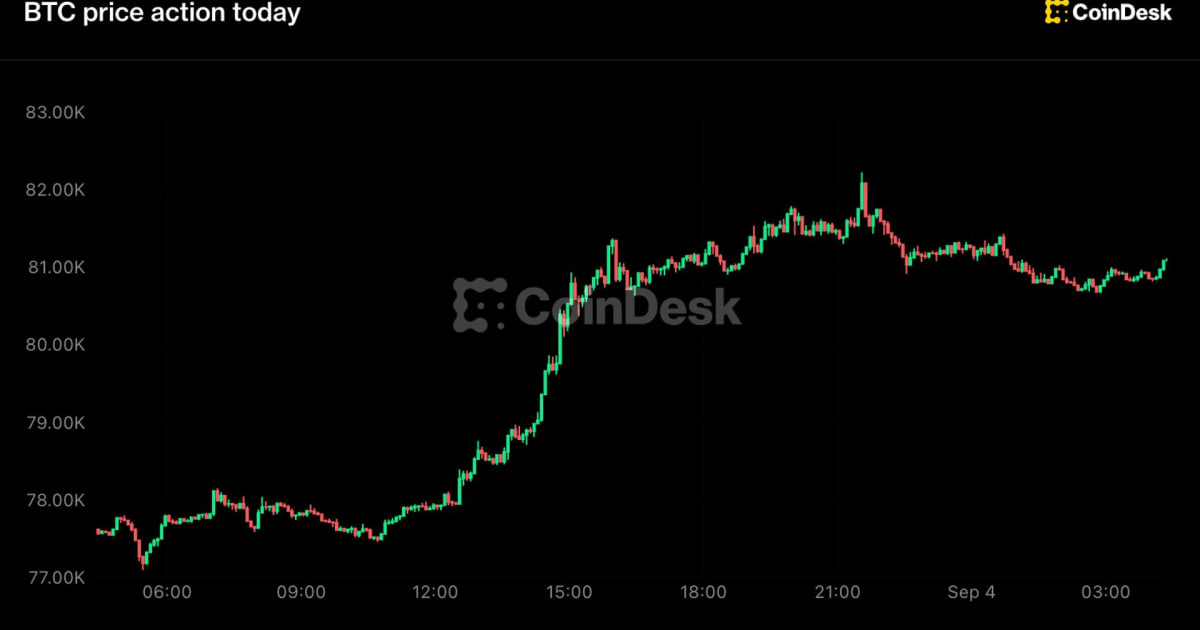
As Bitcoin breaches the $81,000 mark, driven by fading interest rate hike expectations, a substantial shift in investor sentiment towards digital assets is evident. This surge necessitates a critical re-evaluation of its ripple effects on India's equity markets, particularly impacting growth stocks and potentially creating a tailwind for crypto-related entities like WazirX and ZebPay.
Bitcoin's $81,000 Surge: A Paradigm Shift for Indian Investors?
The cryptocurrency market is experiencing a seismic event as Bitcoin decisively breaks through the $81,000 psychological and technical barrier. This monumental climb is not an isolated digital asset phenomenon; it's a potent indicator of evolving global macroeconomic sentiment, directly influencing capital allocation strategies for investors worldwide, including those in India. The primary catalyst appears to be a palpable reduction in the perceived likelihood of aggressive interest rate hikes by major central banks. As the cost of capital softens, speculative assets, often cast aside during periods of monetary tightening, regain their allure. This resurgence in digital currencies, particularly Bitcoin and its burgeoning altcoin brethren, suggests a renewed appetite for risk, a trend that could dramatically reshape the investment landscape for Indian equities.
The "why now" is intrinsically linked to forward-looking economic indicators. Inflationary pressures, while persistent, are showing signs of moderating in key economies, leading central bankers to signal a pause, or even a potential pivot, in their hawkish monetary policy stance. This shift from a 'higher for longer' interest rate narrative to one of potential easing fundamentally alters the risk-reward calculus for investors. When the returns on 'safe' fixed-income assets become less attractive due to anticipated rate cuts, capital tends to migrate towards higher-risk, higher-reward propositions. Cryptocurrencies, with their inherent volatility and potential for exponential gains, fit this description perfectly. The current rally isn't just about Bitcoin hitting a new high; it's about the underlying narrative change that makes such a move possible and sustainable, at least in the short to medium term. For India, where a growing segment of the population is increasingly engaging with digital assets, this trend carries amplified implications, potentially democratizing access to alternative investment classes while simultaneously introducing new layers of market complexity.
Deep Market Impact Analysis: India's Equity Landscape Under Scrutiny
The implications of a sustained Bitcoin rally for the Indian stock market are multifaceted and potentially profound. Historically, periods of heightened risk appetite in global markets have seen capital flows adjust dynamically. When investors rotate into speculative assets like cryptocurrencies, there's a discernible outflow from traditional safe-haven assets and, crucially for India, a potential diversion of funds away from growth-oriented equities. This dynamic is not entirely new; we observed similar patterns in late 2021 and early 2022, where the frenzy around NFTs and DeFi briefly overshadowed traditional tech IPOs. The current Bitcoin surge, however, is occurring against a backdrop of greater institutional adoption of digital assets and a more mature Indian crypto ecosystem, albeit one still navigating regulatory ambiguity.
Consider the impact on Indian growth stocks. Companies in sectors like technology, e-commerce, and even some consumer discretionary segments that have historically relied on speculative capital for their valuations, may find themselves competing more directly with cryptocurrencies for investor attention and funds. If the narrative shifts definitively towards digital assets as the primary vehicle for outsized returns, established growth stocks could experience increased selling pressure. This is particularly true for companies whose growth projections are already stretched and are sensitive to shifts in overall market liquidity and investor sentiment. The benchmark Nifty 50, which has seen robust performance fueled by a combination of domestic savings and global liquidity, could face headwinds if a significant portion of retail and even some institutional capital begins to reallocate towards crypto.
Furthermore, the performance of altcoins, which often exhibit even higher volatility than Bitcoin, can amplify this effect. When smaller, more speculative cryptocurrencies begin to outperform, it signals a broader 'risk-on' sentiment that can draw capital away from established equity markets more aggressively. For instance, a 15-20% jump in a leading altcoin can capture headlines and attract speculative traders who might otherwise be looking at mid-cap or small-cap Indian stocks with similar growth potential but less perceived upside. This creates a competitive environment for capital, where the perceived 'next big thing' can quickly siphon investment away from more traditional avenues. The Reserve Bank of India's (RBI) monetary policy, while independent, often reacts to global trends. A sustained shift towards riskier assets globally might influence the RBI's approach to liquidity management and interest rate decisions, indirectly impacting the cost of capital for Indian businesses and the attractiveness of equity investments.
How Will the Bitcoin Boom Affect India's Crypto Exchanges and Blockchain Firms?
The most direct beneficiaries of a cryptocurrency bull run are, unsurprisingly, the cryptocurrency exchanges and companies deeply integrated into the blockchain ecosystem. In India, platforms like WazirX and ZebPay, despite facing regulatory hurdles in the past, are poised to experience a significant surge in trading volumes and user acquisition. Increased market activity translates directly into higher transaction fees for these exchanges, boosting their revenue streams. While specific revenue figures for Indian crypto exchanges are often not publicly disclosed due to their private nature or evolving regulatory status, the correlation between Bitcoin price action and trading volumes is well-established globally. A sustained rally often leads to a multi-fold increase in daily trading volumes, potentially pushing these platforms towards profitability or significantly enhancing their existing financial performance.
Companies with direct or indirect exposure to blockchain technology, including certain Information Technology (IT) services firms that offer blockchain development or consulting, also stand to gain. While their fortunes are not as directly tied to Bitcoin's price as exchanges, a broader crypto boom often spurs investment in underlying blockchain infrastructure and applications. This can lead to increased demand for specialized IT services. For example, a company like Wipro or Infosys, which has a blockchain practice, might see an uptick in project inquiries and contract wins as businesses explore decentralized applications, supply chain solutions, or digital asset integration. The impact here is more indirect, contingent on the adoption of blockchain beyond speculative trading into enterprise solutions.
Stock-by-Stock Breakdown: Navigating the Crypto Tide in Indian Equities
While direct cryptocurrency plays are limited on Indian bourses, several companies are positioned to be indirectly impacted by the ongoing digital asset surge. Investors should closely monitor these tickers:
- WazirX (Indirect - Private Entity): Although not publicly listed on NSE/BSE, WazirX, owned by Binance, is a bellwether for the Indian crypto exchange landscape. Its performance, driven by trading volumes, directly reflects the health and activity of the Indian crypto market. Any resurgence in crypto interest will undoubtedly boost its operational metrics, even if investors cannot directly buy its stock. Its success or struggles often correlate with the overall sentiment towards regulated crypto trading in India.
- ZebPay (Indirect - Private Entity): Similar to WazirX, ZebPay is a significant player in the Indian crypto exchange space. As a private entity, its stock is unavailable, but its operational performance is a key indicator. A bullish crypto market typically translates into increased user sign-ups and transaction volumes for ZebPay, enhancing its market position and revenue potential. Its ability to navigate regulatory frameworks will be as crucial as market sentiment.
- TATA Consultancy Services (TCS) (BSE: 532540, NSE: TCS): While a diversified IT giant, TCS has been actively investing in blockchain technology and digital transformation initiatives. A surge in crypto interest can lead to increased demand for blockchain-based solutions from enterprises looking to leverage distributed ledger technology for various applications, from supply chain management to digital identity. TCS, with its extensive client base and robust blockchain practice, could see an uplift in project pipelines and revenue from this segment, though it represents a small fraction of their overall business.
- Infosys (BSE: 500209, NSE: INFY): Another IT services major, Infosys, has also been building its capabilities in blockchain and emerging technologies. Increased institutional interest in digital assets and the underlying technology could translate into more opportunities for Infosys to develop and implement blockchain solutions for its global clientele. This impact, like TCS, is incremental but adds to the positive sentiment around companies enabling the digital economy.
- Reliance Industries (BSE: 500325, NSE: RELIANCE): While not directly involved in crypto, Reliance's significant investments in Jio Platforms and its foray into digital services and e-commerce position it to benefit from any broad-based increase in digital adoption and speculative capital that the crypto boom might indirectly fuel. If the crypto surge leads to a general increase in retail participation in financial markets, Reliance's diverse digital ecosystem could see enhanced user engagement and revenue.
- HDFC Bank (BSE: 500180, NSE: HDFCBANK): Traditional banks often face a dual impact. On one hand, a shift of capital to crypto could reduce deposits or lending opportunities in traditional finance. On the other hand, if crypto becomes more integrated into the financial system, banks may find opportunities in custody, payment processing, or providing institutional services related to digital assets. HDFC Bank, as a leader in digital banking, will be closely watching this space to potentially leverage new opportunities while managing potential outflows.
Expert Perspective: Bulls vs. Bears on Bitcoin's Latest Leap
The Bitcoin rally has predictably ignited a fervent debate among market participants. Bulls argue that this is merely the beginning of a new, sustained bull market for digital assets, driven by a confluence of favorable macroeconomic conditions (falling interest rates), increasing institutional adoption, and the unique, uncorrelated nature of Bitcoin as a store of value and medium of exchange. They point to the halving event, which reduces the supply of new Bitcoin, as a fundamental catalyst for price appreciation, suggesting that $81,000 is a stepping stone to much higher valuations, potentially reaching $100,000 and beyond within the next 12-18 months. The narrative of Bitcoin as "digital gold" is gaining traction, attracting capital that would otherwise flow into traditional safe havens like gold or government bonds.
Conversely, bears remain cautious, highlighting the inherent volatility and speculative nature of cryptocurrencies. They argue that the rally is primarily driven by market sentiment and liquidity, rather than fundamental utility, and could be susceptible to sharp reversals. Regulatory uncertainty, particularly in major economies like India, remains a significant overhang. Bears point to historical Bitcoin crashes, where prices plummeted by over 80% from their peaks, as evidence of the asset's speculative bubble potential. They also express concern that the current rally might be a 'dead cat bounce' or a short-lived reaction to temporary shifts in monetary policy, and that a return to higher interest rates or unforeseen macroeconomic shocks could quickly deflate the crypto market. The argument is that chasing such volatile assets could lead to significant capital losses for unsuspecting investors.
Actionable Investor Playbook: Navigating the Crypto-Fueled Market Shift
For the discerning investor in India, the Bitcoin surge presents both opportunities and risks. A strategic approach is paramount:
- For the Risk-Tolerant Investor: Consider a modest allocation (e.g., 5-10% of portfolio) to Bitcoin or Ethereum via regulated platforms. Entry points should be approached with caution; dollar-cost averaging (DCA) into positions on dips rather than lump-sum investments is advisable. The time horizon should be medium to long-term (2-5 years), accepting the high volatility.
- For Growth Stock Investors: Re-evaluate the risk exposure to high-valuation growth stocks that are heavily reliant on speculative capital. Consider trimming positions that appear overextended or have weak fundamentals. Diversify into more value-oriented sectors or companies with strong balance sheets and stable earnings, such as select large-cap manufacturing or infrastructure companies.
- For Exposure to Blockchain Technology: Instead of direct crypto holdings, consider investing in well-established IT services companies like TCS or Infosys that have a demonstrated commitment to blockchain development. These offer indirect exposure to the growing digital asset ecosystem with significantly lower volatility and clearer revenue streams. Monitor their blockchain segment revenue growth for signs of increased demand.
- What to Watch: Keep a close eye on the regulatory landscape for cryptocurrencies in India. Any positive developments or clarity from the government or RBI could unlock significant investment. Also, monitor the performance of altcoins; a continued strong performance in this segment could indicate a broader speculative frenzy, signaling increased risk.
- What to Sell/Avoid: Avoid chasing highly speculative, unproven altcoins or meme coins that lack fundamental utility. Similarly, be wary of traditional safe-haven assets like gold if the risk-on sentiment persists, as they may underperform in the short term.
Risk Matrix: Understanding the Volatility Ahead
The current bullish sentiment in the crypto market is accompanied by several significant risks:
- Regulatory Uncertainty (High Probability, Medium Impact): India's stance on cryptocurrencies remains evolving. Sudden regulatory changes, bans, or stringent taxation could severely impact exchanges and investor sentiment, leading to sharp price corrections.
- Market Volatility & Contagion (High Probability, High Impact): Cryptocurrencies are notoriously volatile. A sharp downturn in Bitcoin or major altcoins could trigger panic selling, leading to significant losses and potentially spilling over into riskier segments of the equity market, impacting growth stocks and even broader indices.
- Macroeconomic Reversals (Medium Probability, High Impact): A resurgence of inflation or unexpected geopolitical events could force central banks to resume aggressive rate hikes, fundamentally altering the risk appetite for assets like Bitcoin and leading to a rapid unwinding of current gains.
- Security Breaches & Fraud (Medium Probability, High Impact): Exchanges and individual wallets remain targets for hackers. A major security breach or a widespread fraud incident could erode trust and lead to substantial investor losses, impacting the entire digital asset ecosystem.
What to Watch Next: Catalysts and Key Data Points
The trajectory of Bitcoin and its impact on Indian markets will be shaped by several upcoming events and data releases:
- Central Bank Policy Meetings: Upcoming meetings of the US Federal Reserve, European Central Bank, and the Reserve Bank of India will be crucial for gauging future interest rate trajectories. Any hawkish surprises could derail the current crypto rally.
- Indian Crypto Regulatory Updates: Keep an eye on any official statements or policy documents from the Indian government or RBI regarding cryptocurrency taxation, regulation, or potential central bank digital currency (CBDC) developments.
- Inflation Data: Key inflation prints from major economies (CPI, PPI) will heavily influence central bank decisions and, consequently, market sentiment towards risk assets.
- Institutional Adoption News: Announcements from major financial institutions regarding their involvement in or offering of crypto-related services can serve as strong catalysts for further price appreciation or investor confidence.
- On-Chain Data Analysis: For crypto enthusiasts, monitoring on-chain metrics like active addresses, transaction volumes, and whale movements can provide insights into the underlying health of the Bitcoin network and potential future price movements.
The current surge in Bitcoin beyond $81,000 is more than just a price anomaly; it's a signal of shifting tides in global capital markets. For Indian investors, understanding these dynamics and their potential impact on domestic equities is critical for navigating the evolving financial landscape and safeguarding their portfolios.
See WazirX (indirectly, as a major Indian crypto exchange)'s AI Score
Our algorithmic screener scores WazirX (indirectly, as a major Indian crypto exchange) on fundamentals, momentum, and risk — free to try, no card needed.
Try the AI Screener →Have questions about this story?
Ask Welth, our finance-focused AI research assistant, for a deeper breakdown — free trial included.
Chat with Welth AI →Disclaimer: This content is generated by WelthWest Research Desk based on publicly available reports and is for informational purposes only. It does not constitute financial advice, investment recommendations, or an offer to buy or sell securities. Always consult a qualified financial advisor before making investment decisions.
