Key Takeaway
Bitcoin's ascent to $78,000, defying a broader AI tech downturn, signals a potential structural shift: crypto emerging as a distinct asset class. For Indian investors, this trend could subtly redirect retail capital and elevate blockchain-exposed fintechs, demanding a re-evaluation of portfolio diversification strategies.
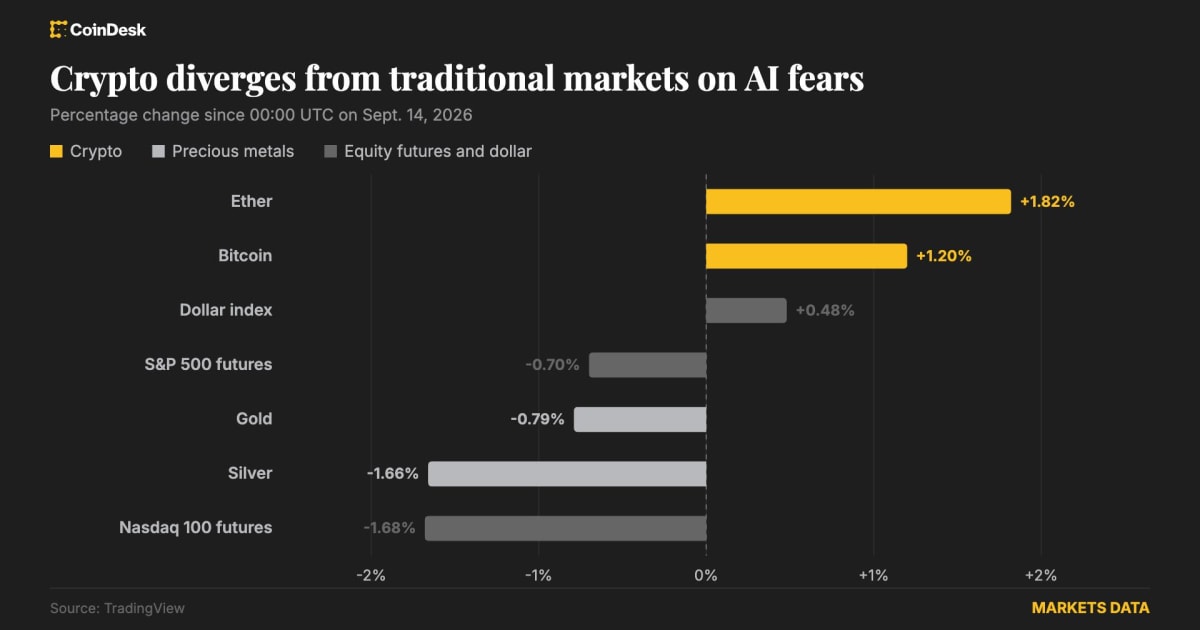
As global tech giants face a significant selloff, Bitcoin has surged past $78,000, igniting discussions about its independence from traditional market dynamics. WelthWest Research Desk delves into this unprecedented decoupling, analyzing its profound implications for Indian retail investors and the nuanced, indirect impact on NSE/BSE listed fintech and IT service providers exploring blockchain. We provide an actionable playbook for navigating this evolving landscape.
Bitcoin's $78,000 Ascent: A Paradigm Shift Decoupling from the AI Tech Selloff?
The financial markets are witnessing a fascinating divergence. While the global technology sector, particularly AI-focused equities, grapples with a notable correction, Bitcoin (BTC) has not only demonstrated remarkable resilience but has surged past the $78,000 mark. This counter-cyclical performance is more than just a headline; it signals a potential paradigm shift, raising profound questions about the traditional correlations between crypto assets and established tech sector movements. WelthWest Research Desk delves deep into this phenomenon, dissecting its implications for global capital flows and, crucially, its nuanced, yet significant, ripple effects across the Indian investment landscape.
The context for this extraordinary rally is critical. Over the past few weeks, investors have pulled back from high-flying AI stocks, driven by concerns over valuations, potential regulatory scrutiny, and a rotation towards more defensive sectors. Yet, instead of succumbing to this broader risk-off sentiment, Bitcoin has acted as an unexpected haven, attracting capital and strengthening its position as an alternative asset. This isn't merely a cyclical fluctuation; it suggests a growing recognition of crypto's independent value proposition, potentially as a hedge against traditional market volatility or as a distinct store of value in an increasingly digital economy. For Indian markets, where direct institutional crypto exposure remains nascent due to regulatory ambiguity, this trend could subtly influence retail investor sentiment, potentially diverting capital from traditional equity avenues towards crypto-linked instruments or companies exploring underlying blockchain technologies.
What Does Bitcoin's Resilience Mean for Global Capital Flows and Indian Retail Investors?
The 'AI selloff' has seen significant pressure on major tech indices. For instance, the NASDAQ 100 has experienced a 6% correction from its recent highs, with several prominent AI infrastructure and chip manufacturers seeing double-digit declines. In stark contrast, Bitcoin's year-to-date performance continues to outpace traditional assets, reinforcing its narrative as 'digital gold' or a 'flight-to-safety' asset in times of broader market uncertainty. This divergence challenges the long-held belief that cryptocurrencies are merely a high-beta play on tech sentiment. Instead, it posits them as a distinct asset class with its own drivers, potentially less correlated with the ebb and flow of traditional equity markets than previously assumed.
For India, the direct impact on institutional portfolios is limited due to the absence of clear regulatory frameworks allowing direct crypto investments. However, the indirect effects are far-reaching. Indian retail investors, who have shown a significant appetite for cryptocurrencies, are likely to view Bitcoin's resilience as validation. This could lead to increased participation in offshore crypto exchanges or a renewed interest in domestic fintech platforms that offer indirect exposure or facilitate blockchain-related services. The total value locked (TVL) in decentralized finance (DeFi) protocols, for example, has shown a 15% increase globally in the last quarter, indicating a growing utility and adoption that transcends speculative trading. This sustained growth, even amidst tech corrections, underscores a fundamental shift in how digital assets are perceived.
Historically, during periods of global market stress, capital often flows into traditional safe havens like gold or government bonds. Bitcoin's current performance suggests it is increasingly being considered within this cohort, albeit with higher volatility. The last time a significant decoupling was observed was briefly in early 2022, where Bitcoin showed relative strength against a falling tech sector, although that period was short-lived. This current episode, sustained over several weeks, indicates a more robust and potentially enduring shift in investor psychology and asset allocation strategies. If this trend solidifies, it could mean a marginal, yet noticeable, redirection of retail capital that might otherwise have flowed into Indian small-cap or mid-cap equities, particularly those in the nascent tech space.
Which Indian Stocks Will Feel the Ripple Effect of Bitcoin's Surge?
While no Indian listed company is a pure-play cryptocurrency firm, several NSE/BSE listed entities stand to be tangentially affected by this evolving crypto landscape. The impact is primarily through two channels: their engagement with blockchain technology for enterprise solutions and the broader sentiment towards digital innovation. Here are 4-6 specific stocks to watch:
- Infosys Ltd. (NSE: INFY): As a global IT services giant, Infosys has been actively exploring blockchain solutions for its enterprise clients across supply chain, finance, and cybersecurity. While blockchain revenue currently forms a small fraction of its ~₹1,53,670 crore annual revenue, the increased positive sentiment around crypto could accelerate enterprise adoption of blockchain, indirectly benefiting Infosys's consulting and implementation services. Their focus on digital transformation positions them well to capitalize on this trend, particularly in areas like Web3 infrastructure development.
- Tata Consultancy Services Ltd. (NSE: TCS): Similar to Infosys, TCS has established a strong blockchain practice, developing solutions for various industries. Their annual revenue exceeding ₹2,40,893 crore provides a substantial base for investing in emerging technologies. A sustained bullish outlook on crypto could incentivize more enterprises to invest in secure, transparent blockchain systems, thereby boosting demand for TCS's specialized services. Their innovation labs are actively researching distributed ledger technologies, making them a key indirect beneficiary.
- Persistent Systems Ltd. (NSE: PERSISTENT): A mid-cap IT services firm known for its product engineering and digital transformation expertise, Persistent Systems has a growing focus on blockchain and distributed ledger technologies, particularly in the financial services sector. With a market capitalization of around ₹55,000 crore, even a modest uptick in blockchain adoption could have a more pronounced proportional impact on its revenue growth compared to larger peers. Increased interest in the underlying technology of crypto could translate into more client engagements for their specialized teams.
- Ramco Systems Ltd. (NSE: RAMCOSYS): This enterprise software product company has been an early adopter of blockchain for its HR and supply chain solutions. While smaller, with a market cap of approximately ₹1,200 crore, its dedicated investment in blockchain integration across its product suite makes it a direct, albeit niche, play on the enterprise adoption of decentralized technologies. Positive crypto sentiment could enhance the perceived value and demand for their blockchain-enabled offerings.
- One 97 Communications Ltd. (NSE: PAYTM): While Paytm's primary business is digital payments, its fintech ecosystem is constantly evolving. Although direct crypto integration faces regulatory hurdles, a broader acceptance and positive sentiment towards digital assets could create an environment where blockchain-based payment solutions or tokenized assets become more viable in the future. Paytm's large user base and innovative spirit position it to potentially explore these avenues if regulations permit, making it a speculative, long-term watch.
- Finolex Industries Ltd. (NSE: FINOLEXIND): While seemingly unrelated, companies like Finolex that rely heavily on supply chain efficiency could indirectly benefit from blockchain's broader adoption. Blockchain's ability to enhance transparency and traceability in supply chains could lead to cost savings and improved operational efficiencies. This impact, however, is very long-term and indirect, reflecting the pervasive potential of blockchain beyond just finance.
Sector peers for these companies, such as Wipro (NSE: WIPRO) and HCL Technologies (NSE: HCLTECH), also have nascent blockchain practices and would experience similar, though perhaps less pronounced, tangential effects. The overarching theme is that a sustained positive narrative around cryptocurrencies tends to bolster the perceived value and practical applications of the underlying blockchain technology, thereby creating a tailwind for companies actively developing and deploying these solutions.
Expert Perspectives: Bulls vs. Bears on Crypto's Independence
The current market dynamics have ignited a fierce debate among financial strategists regarding Bitcoin's long-term trajectory and its relationship with traditional assets.
The Bulls argue that Bitcoin's recent performance is irrefutable evidence of its maturation into a distinct asset class. They point to the growing institutional adoption, the approval of spot Bitcoin ETFs in major markets, and the increasing utility of blockchain technology beyond mere speculation. "Bitcoin isn't just a speculative tech play anymore; it's a macro asset," asserts Cathie Wood of Ark Invest, highlighting its potential as a hedge against inflation and a store of value uncorrelated with traditional markets. They believe that as global liquidity tightens and traditional tech valuations face scrutiny, capital will increasingly flow into assets with verifiable scarcity and decentralized governance, characteristics inherent to Bitcoin. Furthermore, the upcoming Bitcoin halving event is often cited as a supply shock catalyst, historically leading to significant price appreciation. They foresee an eventual integration of digital assets into diversified portfolios, driven by both retail and institutional demand, irrespective of broader tech sector performance.
The Bears, however, remain skeptical. They contend that while a short-term decoupling might be observed, Bitcoin's fundamental drivers are still intertwined with risk appetite and global liquidity, much like growth tech stocks. "Crypto is still a highly speculative asset, and its volatility makes it unsuitable as a true safe haven," argues economist Nouriel Roubini, often dubbed 'Dr. Doom.' Bears suggest that the current rally could be a temporary anomaly, fueled by short-term trading dynamics or specific market events rather than a fundamental shift. They highlight regulatory uncertainties, particularly in major economies like India, and the inherent volatility of the asset class (Bitcoin has experienced multiple 50%+ drawdowns in its history) as significant impediments to its status as a stable investment. They caution that any sustained downturn in global markets, or a renewed crackdown by regulators, could quickly re-establish a correlation with risk assets, negating any perceived independence.
WelthWest's view leans towards a nuanced perspective: while full decoupling is unlikely given Bitcoin's still-nascent market cap relative to global equities, its increasing institutional acceptance and utility are undeniably reducing its correlation coefficient with traditional tech. This suggests a partial, rather than complete, independence, making it a valuable diversifier for a portion of an investor's portfolio.
Actionable Investor Playbook: Navigating the Crypto-Tech Divide
For Indian investors, the current environment demands a strategic approach, balancing potential opportunities with inherent risks. Here's an actionable playbook:
- For the Crypto-Curious (Small Allocation): Consider allocating a small, non-material portion (e.g., 2-5%) of your portfolio to Bitcoin or a diversified crypto index via regulated global platforms, if permissible. Entry points could be considered on significant pullbacks (e.g., 10-15% corrections from current highs) to mitigate volatility. The time horizon for such an investment should be long-term (3-5 years) to ride out market cycles.
- Focus on Indirect Plays (Indian Equities): For investors preferring the regulated Indian equity market, focus on IT services companies with established blockchain practices. Infosys (INFY) and TCS (TCS) represent stable large-cap plays with exposure to enterprise blockchain adoption. For a higher-beta, mid-cap exposure, consider Persistent Systems (PERSISTENT), which has a more concentrated focus on niche digital transformation segments, including blockchain. These are 'watch' or 'accumulate on dips' candidates, with a medium-term (1-3 years) horizon.
- Monitor Fintech Innovators: Keep a close watch on companies like Paytm (PAYTM). While direct crypto integration is restricted, a shift in regulatory stance or broader acceptance of digital assets could unlock new avenues for their platform. This is a 'watch' category with a long-term (5+ years) horizon, primarily speculative on regulatory evolution.
- Diversify Beyond Tech: If the AI tech selloff continues, consider rebalancing a portion of your portfolio from high-growth tech stocks into more value-oriented sectors within the Indian market, such as industrials, infrastructure, or certain financial services companies that are less exposed to global tech cycles. This acts as a hedge against continued tech weakness.
- Education is Key: Before making any crypto-related decisions, thoroughly understand the underlying technology, market dynamics, and regulatory landscape. Avoid impulsive decisions based on price surges alone.
Risk Matrix: Assessing the Hurdles Ahead
While the bullish sentiment around Bitcoin is palpable, several significant risks could derail its trajectory and impact related investments:
- Indian Regulatory Uncertainty (High Probability, High Impact): The most significant risk for Indian investors remains the unpredictable regulatory environment. A sudden, restrictive stance from the Reserve Bank of India (RBI) or the government could severely curtail retail participation and stifle any potential innovation by Indian fintechs in the crypto space. The probability of new regulations (either positive or restrictive) emerging in the next 6-12 months is high.
- Crypto Market Volatility and Price Corrections (High Probability, High Impact): Despite recent resilience, cryptocurrencies are inherently volatile. A rapid price correction of 20-30% or more, driven by macroeconomic shocks, large institutional liquidations, or unforeseen events, remains a constant threat. Such a correction would erode investor confidence and could re-establish correlation with broader risk assets. The probability of such a correction within a 6-month timeframe is moderately high.
- Global Macroeconomic Headwinds (Medium Probability, Medium Impact): A deeper global recession, sustained high inflation, or unexpected geopolitical conflicts could trigger a broad-based risk-off event, impacting all asset classes, including cryptocurrencies. While Bitcoin has shown resilience, a severe global economic contraction could still lead to capital flight even from alternative assets. The probability of significant global macroeconomic deterioration in the next 12-18 months is medium.
- Technological and Security Risks (Low Probability, High Impact): While less frequent, significant security breaches on exchanges, vulnerabilities in blockchain protocols, or the emergence of quantum computing threats could undermine the fundamental trust in cryptocurrencies. The probability of a catastrophic, widespread technological failure is low, but the impact would be severe.
What to Watch Next: Catalysts for the Crypto-Tech Narrative
Several key events and data releases will shape the narrative around Bitcoin's independence and its impact on the broader market:
- Upcoming RBI Statements/Government Policy on Crypto (Ongoing): Any official communication from the Indian government or RBI regarding cryptocurrency regulation will be a major catalyst. Watch for announcements during parliamentary sessions or official press releases. A clear, supportive framework could unlock significant domestic capital.
- US Federal Reserve Interest Rate Decisions (Next FOMC Meeting: June 11-12, 2024): Monetary policy directly impacts global liquidity and risk appetite. A more hawkish stance could put pressure on all risk assets, including crypto, testing its resilience. Conversely, dovish signals could fuel further rallies.
- Global Spot Bitcoin ETF Flows (Weekly Data Releases): Continued strong inflows into US spot Bitcoin ETFs will signal sustained institutional demand, reinforcing the decoupling narrative. Conversely, significant outflows could indicate waning institutional interest. Major financial data providers release these figures weekly.
- Enterprise Blockchain Adoption Reports (Quarterly): Watch for earnings calls and investor presentations from IT service giants like Infosys and TCS. Any significant increase in their blockchain-related project pipeline or revenue contribution will signal growing real-world utility, strengthening the investment case for indirect plays.
- Developments in AI Sector Valuations (Ongoing): The trajectory of the AI tech selloff will be crucial. If the correction deepens, and Bitcoin maintains its strength, the decoupling narrative will gain further traction. Monitor earnings reports from major AI players like NVIDIA, Microsoft, and Google.
The journey of Bitcoin towards a distinct asset class, independent of traditional tech cycles, is a complex and evolving story. For Indian investors, understanding these dynamics and their nuanced impact on the domestic market is paramount to building a resilient and forward-looking portfolio.
See No direct Indian listed stocks are primarily crypto plays, but fintech companies exploring blockchain (e.g., Infosys, TCS for enterprise solutions, though indirect) could see tangential interest.'s AI Score
Our algorithmic screener scores No direct Indian listed stocks are primarily crypto plays, but fintech companies exploring blockchain (e.g., Infosys, TCS for enterprise solutions, though indirect) could see tangential interest. on fundamentals, momentum, and risk — free to try, no card needed.
Try the AI Screener →Have questions about this story?
Ask Welth, our finance-focused AI research assistant, for a deeper breakdown — free trial included.
Chat with Welth AI →Disclaimer: This content is generated by WelthWest Research Desk based on publicly available reports and is for informational purposes only. It does not constitute financial advice, investment recommendations, or an offer to buy or sell securities. Always consult a qualified financial advisor before making investment decisions.