Key Takeaway
The record 10.83 million BTC currently 'underwater' signals a classic market capitulation phase. For Indian investors, this marks a pivot point where capital is likely to rotate out of speculative digital assets and back into defensive NSE stocks and physical gold.
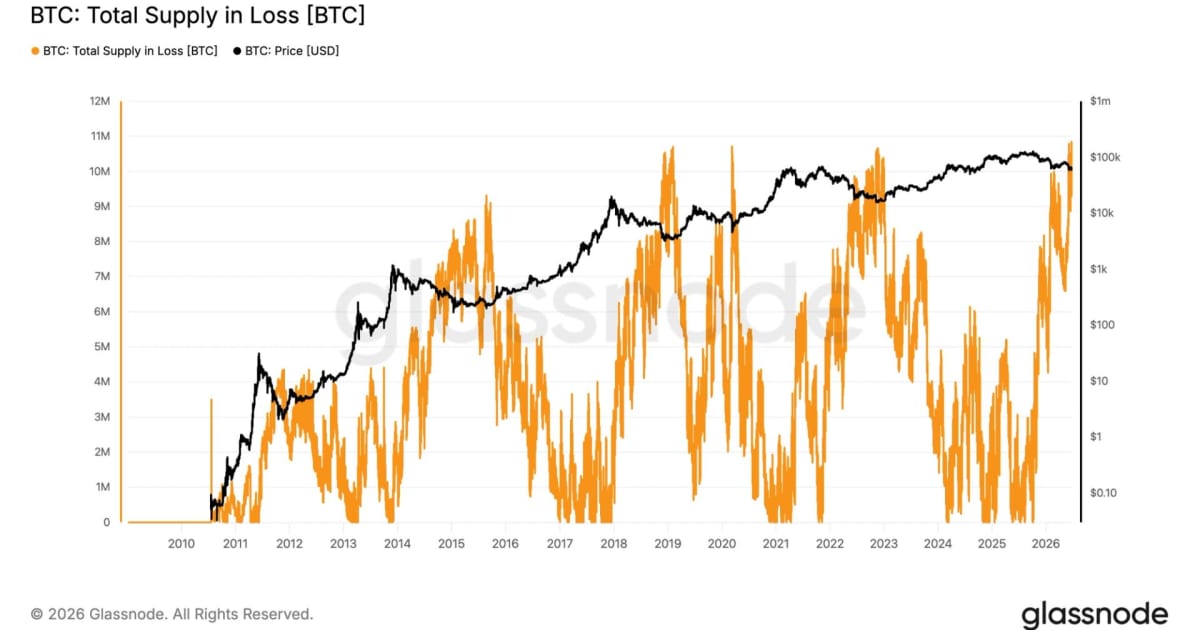
Bitcoin has reached a staggering milestone with over 10.83 million BTC held at a loss, surpassing previous bear market peaks. This deep-dive analysis explores the 'Wealth Effect' contagion on Indian retail sentiment and identifies which BSE/NSE sectors will benefit from the ensuing flight to safety. From fintech volatility to the resurgence of gold-backed lenders, we map the strategic shifts necessary for the current macro environment.
The Anatomy of Capitulation: Why 10.83 Million BTC in Loss is a Watershed Moment
The cryptocurrency market is currently witnessing a phenomenon rarely seen in its decade-long history. Data from on-chain analytics reveals that the Bitcoin supply in loss has hit a record high of 10.83 million BTC. To put this in perspective, with a total circulating supply of approximately 19.7 million, more than 55% of all existing Bitcoin is now 'underwater'—meaning its current market value is lower than the price at which it was last moved on-chain.
In the world of sophisticated financial analysis, this isn't just a bearish statistic; it is a measure of unrealized psychological pain. Historically, when the supply in loss crosses the 10 million mark, it triggers a 'capitulation' phase. This is the moment when retail investors, exhausted by volatility, finally throw in the towel, and institutional 'smart money' begins to accumulate. However, the 2024 context is different. Unlike the 2018 or 2022 crashes, this record loss is occurring amidst high global interest rates and a cooling of the 'fintech-first' investment thesis that dominated the post-pandemic era.
Why does this matter for the Indian Market?
While the Indian stock market (Nifty 50 and Sensex) often appears decoupled from crypto, the 'Wealth Effect' creates an invisible bridge. Indian retail investors have poured billions into digital assets over the last three years. When 10.83 million BTC are in loss globally, it implies that a significant portion of the Indian retail 'risk capital' is locked or evaporating. This leads to reduced liquidity in the mid-cap and small-cap segments of the NSE, as investors lose the appetite for high-beta plays. Historically, when Bitcoin saw a similar drawdown in late 2022, the Nifty IT index faced a correlated 12% correction as global sentiment toward 'disruptive tech' soured.
Deep Market Impact: From Digital Gold to Physical Safety
The immediate impact of this record loss is a rotation of capital. In India, the narrative of Bitcoin as 'Digital Gold' is currently failing its biggest test. Consequently, we are seeing a resurgence in traditional safe havens. The correlation between Bitcoin's supply-in-loss peaks and the rise in domestic gold prices is becoming increasingly evident. As digital portfolios bleed, the Indian household's trust in physical assets and blue-chip equities is being reinforced.
How will the liquidity crunch affect Indian Fintech?
One of the most searched queries today is: "Will the crypto crash affect Indian fintech stocks?" The answer lies in the ecosystem. Companies involved in digital payments, brokerage, and wealth management are seeing a decline in 'active transacting users' (ATUs). When speculative assets like Bitcoin underperform, the velocity of money within retail trading apps slows down. This directly impacts the transaction-based revenue models of several newly listed Indian unicorns.
Stock-by-Stock Breakdown: NSE/BSE Winners and Losers
The record Bitcoin loss creates a ripple effect across specific sectors in the Indian equity market. Here is how specific tickers are positioned:
- Muthoot Finance (NSE: MUTHOOTFIN) & Manappuram Finance (NSE: MANAPPURAM): As Bitcoin falters, Gold prices in India have remained resilient, trading near all-time highs of ₹72,000-₹75,000 per 10 grams. These gold-loan NBFCs benefit from higher collateral values and a shift in retail sentiment back toward gold-backed credit. Impact: Bullish.
- PB Fintech (NSE: POLICYBZR): As a proxy for the 'new-age' digital economy, PB Fintech's sentiment is often tied to global risk appetite. While its core insurance business is robust, the 'valuation premium' it enjoys is susceptible to global tech sell-offs triggered by crypto capitulation. Impact: Neutral to Bearish.
- Tata Consultancy Services (NSE: TCS): TCS and other Tier-1 IT firms have significant investments in 'Blockchain-as-a-Service' (BaaS) for global banks. A prolonged crypto winter could lead to a slowdown in discretionary spending on experimental blockchain projects by BFSI clients in the US and Europe. Impact: Marginal Negative.
- Nazara Technologies (NSE: NAZARA): Being India's premier gaming and e-sports stock, Nazara has exposure to the Web3 and 'Play-to-Earn' ecosystem. A record high in Bitcoin supply-in-loss dampens the valuation of its crypto-integrated gaming subsidiaries. Impact: Bearish.
- Reliance Industries (NSE: RELIANCE): Through Jio, RIL is building a massive data and digital ecosystem. While not directly linked to Bitcoin, RIL often acts as a 'safe harbor' for FIIs (Foreign Institutional Investors) exiting speculative global positions. We expect a capital inflow into RIL as a defensive play. Impact: Bullish.
Expert Perspective: The Bull vs. Bear Case
"The 10.83 million BTC in loss is the ultimate 'flush out' signal. In 2015, 2018, and 2022, every time the supply in loss hit these extremes, it preceded a massive 300% rally within 18 months. We are at the point of maximum pessimism, which is usually the point of maximum financial opportunity."
— Contrarian Macro Strategist
Conversely, bears argue that the structural dynamics have changed. With the RBI's consistent hawkish stance on digital assets and the 30% flat tax plus 1% TDS in India, the 'rebound' for Indian retail might never come. The bearish view suggests that this 10.83 million BTC isn't just a temporary loss—it's a permanent impairment of capital that will lead to a multi-year stagnation in the fintech sector.
Can the RBI's stance protect Indian banks?
A common Google search—"Will RBI rate hikes stop the crypto contagion?"—misses the point. The RBI's proactive 'shadow ban' and strict regulatory framework have actually insulated the Indian banking system (SBI, HDFC Bank, ICICI Bank) from the direct fallout of this record supply-in-loss. Unlike US banks that faced liquidity crises due to crypto exposure (e.g., Silvergate), Indian banks remain fortress-like, making them the preferred destination for capital rotating out of digital assets.
Actionable Investor Playbook
In light of this data, investors should consider the following tactical moves:
- The 'Safety First' Move: Increase allocation to Gold ETFs (like Nippon India Gold BeES) or Sovereign Gold Bonds. The inverse correlation between 'Bitcoin pain' and 'Gold gain' is at a 2-year high.
- The Defensive Equity Play: Focus on high-dividend-yielding PSU stocks and Large-cap Banks (HDFC, ICICI). These stocks provide a cushion against the volatility seen in the tech and speculative sectors.
- The 'Wait and Watch' List: Keep a close eye on Paytm (ONE97) and Zomato. If these stocks hold their support levels despite the crypto carnage, it indicates that the Indian 'new-age' tech story has finally decoupled from global speculative bubbles.
- Entry Points: For those looking to 'buy the dip' in crypto-proxies, wait for the Bitcoin supply-in-loss to stabilize or start declining, which would signal that the selling pressure is exhausted.
Risk Matrix: Assessing the Fallout
| Risk Factor | Probability | Impact on Indian Market |
|---|---|---|
| Forced Exchange Liquidations | High | Short-term panic in mid-cap IT and Fintech stocks. |
| Regulatory Crackdown (SEBI/RBI) | Medium | Increased compliance costs for listed digital platforms. |
| Global Liquidity Squeeze | Medium | FII outflows from Nifty 50, leading to index correction. |
What to Watch Next: The Catalysts of Q3 2024
The story of the 10.83 million BTC in loss is far from over. Investors must track these three key catalysts over the next 90 days:
- US Federal Reserve Rate Decision: Any signal of a rate cut will provide a massive relief rally to Bitcoin, potentially turning some of that 'supply in loss' back into profit and reigniting the Indian tech rally.
- Institutional ETF Inflows: Watch the daily net flows of US-based Bitcoin ETFs. If institutional buying continues despite the record losses, it confirms the 'capitulation' thesis.
- Gold Loan Growth Data: Monthly updates from Muthoot and Manappuram will reveal if Indian retail is indeed pivoting back to traditional asset-backed borrowing as their digital portfolios shrink.
Ultimately, the record 10.83 million BTC in loss is a reminder that in finance, extreme pain is often the precursor to structural shifts. For the Indian investor, the message is clear: the era of easy crypto gains is being replaced by a 'flight to quality' where fundamentals, cash flows, and tangible assets like gold and blue-chip NSE stocks will once again reign supreme.
See None (Direct)'s AI Score
Our algorithmic screener scores None (Direct) on fundamentals, momentum, and risk — free to try, no card needed.
Try the AI Screener →Have questions about this story?
Ask Welth, our finance-focused AI research assistant, for a deeper breakdown — free trial included.
Chat with Welth AI →Disclaimer: This content is generated by WelthWest Research Desk based on publicly available reports and is for informational purposes only. It does not constitute financial advice, investment recommendations, or an offer to buy or sell securities. Always consult a qualified financial advisor before making investment decisions.
