Key Takeaway
Bitcoin's recent surge, mirroring gold's safe-haven appeal during market turbulence, signals a potential paradigm shift in asset allocation. For Indian investors, this trend underscores the growing relevance of digital assets and presents both opportunities and risks across the crypto and traditional stock markets.
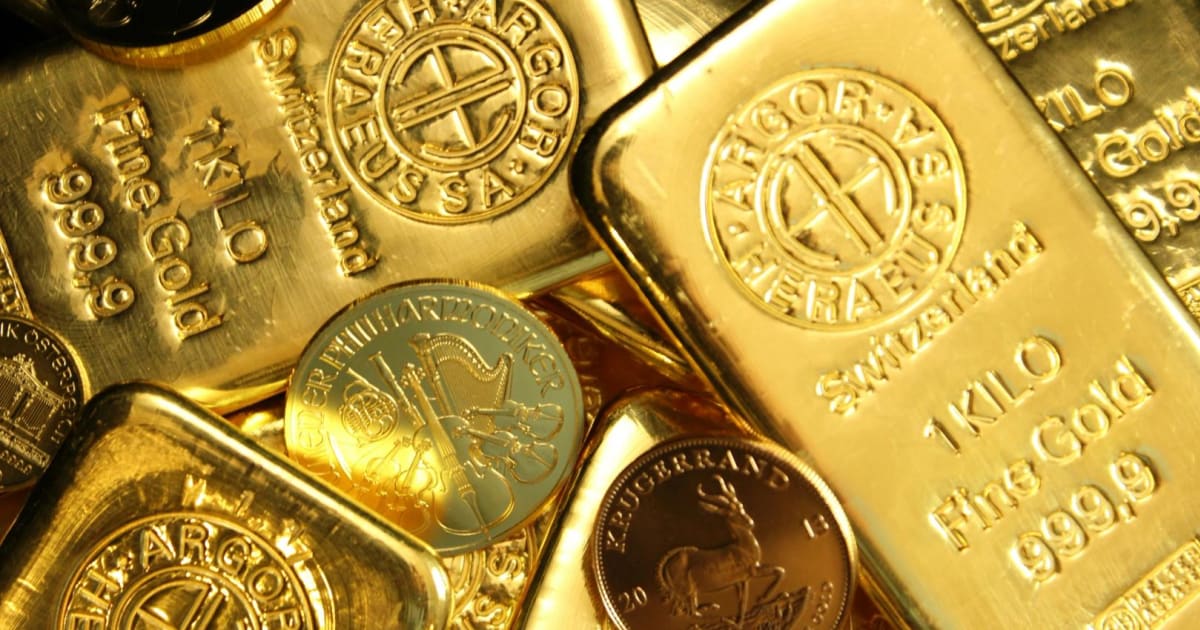
As Bitcoin exhibits an unprecedented correlation with gold during periods of market stress, a critical question arises: is digital gold emerging as a new inflation hedge? This in-depth analysis explores the profound implications for global and Indian investors, examining how this trend could reshape portfolio strategies and impact specific listed companies.
Bitcoin's Golden Correlation: A New Inflation Hedge Emerges?
In a financial landscape increasingly defined by uncertainty and inflationary pressures, Bitcoin has begun to exhibit a remarkable, and for many, surprising, correlation with gold. This phenomenon, observed during critical market junctures, suggests a recalibration of investor sentiment, with digital assets potentially carving out a new niche as a store of value, akin to the yellow metal's long-held status. The implications for global capital flows and, crucially, for the burgeoning Indian digital asset ecosystem, are profound and warrant immediate investor attention.
The Shifting Sands of Safe Havens: Why This Matters Now
The traditional playbook for hedging against inflation and market volatility has long centered on assets like gold, government bonds, and certain commodities. However, recent market dynamics have seen Bitcoin not only outperform traditional equities but also move in tandem with gold when geopolitical tensions escalate or inflation readings spike. This convergence challenges established notions of safe-haven assets and signals a maturing investor base that is increasingly comfortable allocating capital to digital alternatives. For India, a nation grappling with its own inflationary concerns and a rapidly evolving regulatory environment for cryptocurrencies, this global trend is not just an academic observation but a tangible force that could shape domestic investment strategies and the future trajectory of its own crypto industry.
The past year has been a testament to this evolving narrative. When inflation clocked in at multi-decade highs in developed economies, and geopolitical risks intensified, both Bitcoin and gold saw significant price appreciation, often moving in lockstep. This is a departure from historical patterns where Bitcoin was often viewed primarily as a speculative, high-risk asset. Its newfound affinity with gold suggests investors are increasingly viewing it as a potential hedge against currency debasement and systemic risk, a role traditionally reserved for precious metals. This shift is particularly relevant for India, where retail investor participation in financial markets is growing, and there's a palpable search for assets that can preserve purchasing power in an unpredictable economic climate.
Deep Market Impact Analysis: India's Crypto and Equity Landscape
The correlation between Bitcoin and gold has ripple effects that extend far beyond the cryptocurrency realm, directly influencing the Indian stock market. As investors seek diversification and inflation protection, capital allocation decisions are being re-evaluated. This trend benefits cryptocurrency exchanges and companies involved in crypto mining, as increased investor interest translates into higher trading volumes and demand for mining services. Conversely, it could draw capital away from certain traditional asset classes that are perceived as less effective inflation hedges. For India, this means a potential acceleration in the growth of its domestic crypto ecosystem, which includes platforms like WazirX (indirectly through its parent company) and the privately held CoinDCX, indicating robust sector expansion.
The impact on gold-related equities in India, such as gold mining companies or those with significant gold holdings, is also noteworthy. While a direct replacement of gold by Bitcoin is unlikely in the short to medium term, any sustained shift in investor preference towards digital assets as a primary inflation hedge could subtly alter demand dynamics for physical gold and, by extension, affect gold mining companies. For instance, companies like Hindustan Zinc, while diversified, have exposure to precious metals, and their performance could be indirectly influenced by a broader shift in the perceived value of gold as an inflation hedge.
Furthermore, companies actively exploring or implementing blockchain technology across various sectors, from supply chain management to financial services, stand to benefit from the growing mainstream acceptance of digital assets. This increased recognition of blockchain's potential, driven partly by Bitcoin's positive market performance, can spur innovation and investment in Indian firms leveraging this distributed ledger technology. The current sentiment surrounding Bitcoin and its correlation with gold is decidedly bullish, implying a medium-term impact on the market. However, this optimism is tempered by the inherent volatility of cryptocurrencies and the ever-present shadow of regulatory uncertainty in India.
How Will Bitcoin's Gold-like Behavior Affect Indian Equity Portfolios?
The primary mechanism through which Bitcoin's outperformance and gold correlation impacts Indian equity portfolios is through asset allocation. Investors, particularly those with a medium to long-term horizon, are increasingly looking for assets that can offer protection against inflation and currency depreciation. If Bitcoin is perceived to fulfill this role more effectively or with potentially higher upside than gold, capital may be reallocated from traditional safe havens to digital assets. This could manifest as reduced investment in gold ETFs or even a slight pullback from certain defensive equity sectors that were traditionally favored for their stability.
Conversely, sectors that are closely tied to the growth of the digital asset ecosystem in India are poised for significant gains. This includes cryptocurrency exchanges that facilitate trading and custody services, as well as companies involved in the infrastructure of digital asset ownership, such as blockchain technology providers. The underlying logic is simple: as more capital flows into cryptocurrencies, the businesses that enable and support this ecosystem will experience increased demand for their services. For instance, a sustained surge in crypto adoption could lead to higher transaction fees for exchanges and increased demand for specialized hardware and energy for mining operations, benefiting companies operating in these niches.
The analogy to historical market events is instructive. During periods of significant global economic stress, such as the 2008 financial crisis or the COVID-19 pandemic's initial shock, gold typically rallied as investors fled riskier assets. Bitcoin's recent behavior, mirroring these rallies, suggests it is graduating from a purely speculative asset to one with potential diversification and hedging properties. For Indian investors, this means reassessing the risk-reward profiles of their existing portfolios and considering the inclusion of digital assets, not just for speculative gains, but for their emergent role as potential portfolio stabilizers.
Stock-by-Stock Breakdown: Navigating the Winners and Losers
The current market narrative, driven by Bitcoin's performance and its correlation with gold, creates distinct opportunities and challenges for specific Indian companies. While direct stock market listings of major Indian cryptocurrency exchanges are limited, their parent companies and related entities offer an indirect play on this burgeoning sector. The broader implication is a bullish sentiment for the crypto sector, with a medium-term impact on the market.
- WazirX (Indirectly via Parent Company - Binance): While WazirX itself is not directly listed on Indian exchanges, its parent company, Binance, is a global leader in the cryptocurrency exchange space. Any surge in Bitcoin adoption and trading volumes globally directly benefits Binance, and by extension, its Indian operations. Increased trading activity on WazirX, driven by rising interest in Bitcoin as an inflation hedge, would translate into higher revenue from transaction fees for the platform. This indirect exposure makes Binance-linked entities sensitive to the positive sentiment surrounding Bitcoin.
- CoinDCX (Private, but Indicative of Sector Growth): CoinDCX, a prominent Indian cryptocurrency exchange, operates in the private domain. However, its continued growth, funding rounds, and expansion efforts are strong indicators of the sector's potential. Reports of increased user acquisition and trading volumes on platforms like CoinDCX, mirroring global trends, suggest a robust domestic appetite for digital assets. While not a publicly traded stock, its success story provides a benchmark for the overall health and investor interest in India's crypto market.
- Hindustan Zinc Limited (NSE: HINDZINC): As a diversified metals and mining company, Hindustan Zinc has exposure to precious metals, including silver, and its overall performance is often linked to commodity cycles. While not a direct gold miner like some global counterparts, any sustained shift in investor preference away from gold as a primary inflation hedge towards digital assets could, over the long term, subtly impact the perceived value and demand for gold-backed investments. Currently, with a market capitalization of approximately ₹1.15 trillion and a P/E ratio around 28, its valuation reflects its diversified commodity exposure. However, if Bitcoin's role as a digital gold alternative solidifies, it could present a long-term, albeit indirect, headwind for traditional precious metal investments.
- Companies Exploring Blockchain Technology (e.g., Infosys, TCS): Major IT services companies like Infosys (NSE: INFY) and Tata Consultancy Services (NSE: TCS) are increasingly involved in developing and implementing blockchain solutions for enterprise clients across various industries. The growing mainstream acceptance and positive price action of Bitcoin can accelerate the adoption of blockchain technology. This translates into increased demand for blockchain development services, potentially boosting the revenue streams of these IT giants. Infosys, with a market cap of around ₹6.5 trillion and a P/E of approximately 25, and TCS, with a market cap of ₹14.5 trillion and a P/E of around 28, are well-positioned to capture this growth.
What About Traditional Safe Havens?
The rise of Bitcoin as a potential inflation hedge directly challenges the traditional role of gold. While gold's physical scarcity and millennia-old track record provide a strong psychological anchor for investors, Bitcoin offers digital scarcity, programmability, and global accessibility. If this trend continues, traditional gold ETFs and gold mining companies might experience a gradual decline in investor interest as capital seeks higher potential returns or perceived superior hedging capabilities in digital assets. However, it's crucial to note that gold's role is deeply entrenched, and a complete displacement by Bitcoin is a distant prospect. Instead, we might see a scenario where both assets coexist, catering to different investor preferences and risk appetites.
Expert Perspective: Bulls vs. Bears on Bitcoin's Golden Path
The bullish case for Bitcoin, particularly its correlation with gold, rests on the narrative of digital scarcity and a hedge against inflation and currency devaluation. Bulls argue that as central banks continue to print money and inflation remains a persistent concern, assets with a finite supply, like Bitcoin (capped at 21 million coins), will inevitably appreciate. They point to the increasing institutional adoption and the growing acceptance of Bitcoin as a legitimate asset class. The correlation with gold is seen as validation of its safe-haven potential, suggesting it's moving beyond its speculative roots.
Conversely, bears remain skeptical, emphasizing Bitcoin's inherent volatility and its susceptibility to regulatory crackdowns. They argue that the correlation with gold might be a temporary phenomenon, driven by specific market conditions, and could easily break down. Bears highlight that Bitcoin lacks the physical tangibility and historical track record of gold, making it a less reliable store of value. Furthermore, they point to the environmental concerns associated with Bitcoin mining and the ongoing debate about its intrinsic value. For bears, the current price action is more indicative of speculative fervor rather than a fundamental shift in its role as an inflation hedge. They would caution investors against chasing short-term trends and advocate for a return to traditional, proven assets.
Actionable Investor Playbook: Navigating the Digital Gold Rush
Given the evolving landscape, investors seeking to capitalize on this trend or mitigate potential risks should consider a strategic approach. The key is to balance the emerging opportunities in digital assets with the stability of traditional investments.
- Buy: Consider a small allocation to Bitcoin, viewing it as a long-term inflation hedge. For Indian investors, this can be done through regulated platforms, ensuring compliance with local laws. Alternatively, exposure can be gained through companies with significant blockchain technology investments or those offering crypto-related services. For those preferring traditional assets, gold ETFs remain a viable option, though their outperformance relative to Bitcoin in specific hedging scenarios might diminish.
- Sell/Reduce: Investors heavily concentrated in traditional safe-haven assets that have historically underperformed Bitcoin during inflationary periods might consider trimming positions. This is not a call for wholesale divestment but a strategic rebalancing. Certain highly speculative equity segments that lack fundamental backing may also be candidates for reduction if capital is being reallocated towards digital assets.
- Watch: Closely monitor regulatory developments in India concerning cryptocurrencies. Any clarity or adverse rulings can significantly impact domestic market sentiment and growth. Also, observe the persistence of the Bitcoin-gold correlation during future market shocks. A breakdown of this correlation would necessitate a re-evaluation of Bitcoin's hedging capabilities.
- Entry Points: For Bitcoin, consider dollar-cost averaging (DCA) to mitigate volatility risk, rather than attempting to time the market. For Indian IT stocks leveraging blockchain, look for pullbacks in their stock prices to enter, especially after significant project wins or partnerships announced.
- Time Horizons: This is fundamentally a medium to long-term trend. While short-term price movements in Bitcoin can be dramatic, its emergence as a potential inflation hedge is a narrative that will unfold over several years. Indian equity investments in blockchain-focused companies should also be viewed with a similar long-term perspective.
Risk Matrix: Navigating the Uncertainties
While the outlook is bullish, several risks could derail the current narrative:
- Correlation Breakdown (Medium Probability): The correlation between Bitcoin and gold is not a guaranteed constant. Geopolitical events, changes in market liquidity, or specific cryptocurrency-related news could cause Bitcoin to deviate significantly from gold's price action, undermining its perceived hedging role.
- Regulatory Uncertainty in India (High Probability): India's stance on cryptocurrencies remains fluid. A sudden imposition of restrictive regulations, taxes, or outright bans could stifle the domestic crypto market's growth, irrespective of global trends. This remains the most significant immediate risk for Indian investors in the digital asset space.
- Extreme Volatility (High Probability): Bitcoin remains an inherently volatile asset. Significant price swings, driven by market sentiment, technological developments, or external shocks, can lead to substantial capital losses for investors who are not adequately prepared for the risk.
- Technological and Security Risks (Low Probability): While less likely to impact the broad correlation, risks such as major exchange hacks, protocol vulnerabilities, or significant shifts in mining power concentration could affect investor confidence in Bitcoin's long-term viability.
What to Watch Next: Catalysts and Data Releases
Several upcoming factors will be crucial in shaping the future of Bitcoin's role as an inflation hedge and its impact on the Indian market:
- Inflation Data Releases (Monthly): Key global inflation reports (e.g., US CPI, India CPI) will be closely watched. If inflation remains elevated, it will continue to lend credence to the inflation hedge narrative for both gold and Bitcoin.
- Central Bank Policy Announcements (Ongoing): Decisions from major central banks, particularly the US Federal Reserve and the Reserve Bank of India (RBI), on interest rates and quantitative easing will significantly influence liquidity and risk appetite, impacting both crypto and equity markets.
- Indian Regulatory Updates (Unpredictable): Any official pronouncements or legislative actions from the Indian government or the RBI regarding cryptocurrency taxation, regulation, or potential central bank digital currency (CBDC) developments will be a major catalyst for the domestic crypto ecosystem.
- Bitcoin Halving Cycles (Next expected ~April 2024): While not immediate, the next Bitcoin halving event, which reduces the rate at which new Bitcoins are created, historically has been a bullish catalyst for the cryptocurrency. This event will influence long-term supply dynamics.
- Institutional Adoption News (Ongoing): Announcements of further institutional investment in Bitcoin, or the development of new crypto-related financial products, will signal increasing mainstream acceptance and could drive further capital inflows.
The convergence of Bitcoin and gold as potential inflation hedges represents a significant evolution in the financial landscape. For Indian investors, understanding this dynamic is paramount to navigating the opportunities and risks in both the burgeoning digital asset space and the established equity markets. The coming months will be critical in determining whether this correlation is a fleeting trend or the dawn of a new era in asset diversification.
See WazirX (indirectly via parent company)'s AI Score
Our algorithmic screener scores WazirX (indirectly via parent company) on fundamentals, momentum, and risk — free to try, no card needed.
Try the AI Screener →Have questions about this story?
Ask Welth, our finance-focused AI research assistant, for a deeper breakdown — free trial included.
Chat with Welth AI →Disclaimer: This content is generated by WelthWest Research Desk based on publicly available reports and is for informational purposes only. It does not constitute financial advice, investment recommendations, or an offer to buy or sell securities. Always consult a qualified financial advisor before making investment decisions.
