Key Takeaway
Bitcoin's break above $81,000 signals a potent risk-on sentiment, with altcoins like NEAR catching fire. While direct Indian equity exposure remains limited, this crypto resurgence acts as a crucial barometer for global liquidity and speculative appetite, demanding a re-evaluation of traditional asset allocations and a watchful eye on tech-adjacent Indian firms.
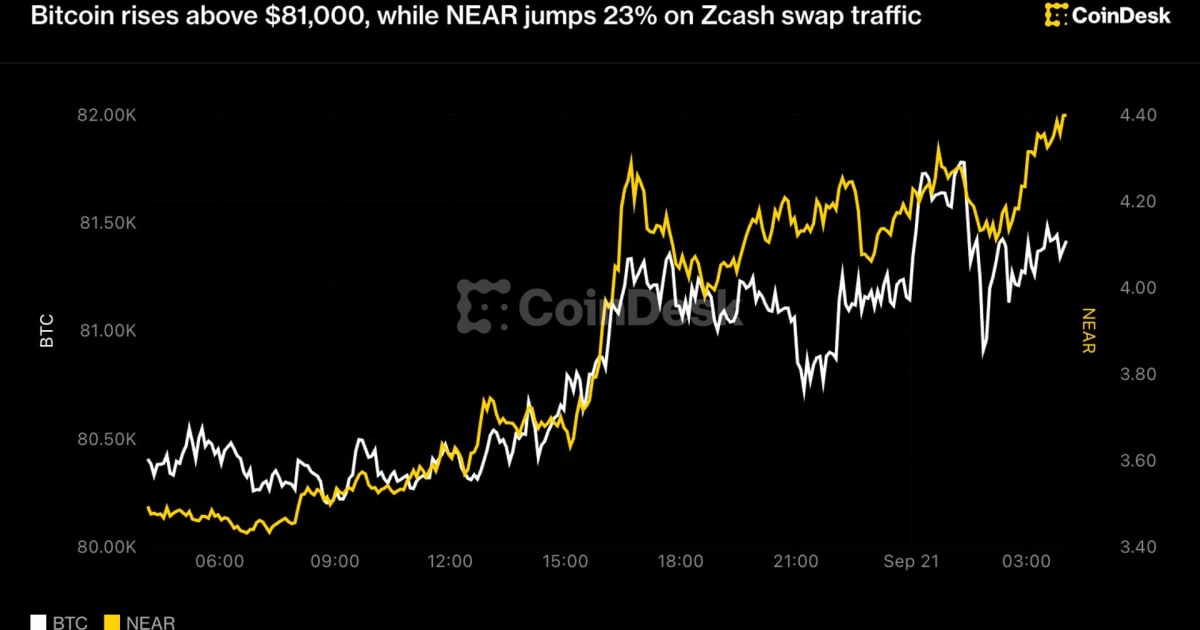
The cryptocurrency market is experiencing a significant uplift as Bitcoin breaches the $81,000 threshold, propelling altcoins and signaling renewed investor confidence. This comprehensive analysis from WelthWest Research Desk delves into the intricate implications for the Indian stock market, despite regulatory hurdles, and identifies key sectors and specific NSE/BSE stocks that could feel the ripple effects. We explore historical parallels, expert perspectives, and actionable strategies for navigating this evolving landscape.
Bitcoin's $81,000 Ascent: A Global Liquidity Barometer and Its Nuanced Indian Echoes
The digital asset landscape is currently experiencing a seismic shift, with Bitcoin, the bellwether of the cryptocurrency market, definitively breaking past the psychological and technical barrier of $81,000. This isn't merely a price point; it's a profound signal of reinvigorated investor confidence and a potent surge in speculative interest that has cascaded across the broader crypto ecosystem. Altcoins, often seen as higher-beta plays, have responded with even greater fervor, exemplified by the remarkable 23% jump in NEAR protocol, driven by increased utility and cross-chain traffic.
This rally transcends the confines of crypto exchanges; it’s a global phenomenon that reflects a confluence of factors, including persistent inflationary concerns, a search for alternative stores of value, and a growing institutional embrace of digital assets. For the Indian investor, while direct equity exposure to cryptocurrency remains nascent due to evolving regulatory frameworks, the global crypto surge acts as a critical macroeconomic indicator. It hints at a pervasive 'risk-on' appetite, potentially influencing capital flows, commodity prices, and even the valuation multiples of growth-oriented tech stocks listed on the NSE and BSE. The question isn't whether it affects India, but how subtly and significantly the ripples spread through its financial fabric.
How Does Bitcoin's Rally Impact Indian Stock Market Dynamics?
The immediate, direct impact of Bitcoin's rally on the Indian stock market might appear muted at first glance, primarily due to the absence of directly crypto-linked equities and the Reserve Bank of India's (RBI) cautious stance on digital assets. However, this perspective overlooks the intricate web of global capital flows and investor sentiment. When global liquidity surges into riskier assets like cryptocurrencies, it often signifies a broader shift away from traditional safe havens and towards growth-oriented, speculative investments. This can indirectly affect Indian equities in several ways.
Firstly, a global 'risk-on' environment could attract Foreign Portfolio Investor (FPI) capital into emerging markets, including India. While some capital might flow directly into crypto, a significant portion could seek out high-growth sectors within India that are seen as beneficiaries of global optimism. Technology and financial services, particularly those exploring blockchain applications or digital payment infrastructure, could see increased interest. Historically, during periods of heightened global risk appetite (e.g., late 2020-early 2021 tech rally), the Nifty IT index often outperformed, demonstrating a correlation with global speculative trends, even if not directly tied to crypto. For instance, in Q4 2020, as Bitcoin began its ascent towards its then-all-time highs, the Nifty IT index gained over 30%, reflecting a broader global tech exuberance.
Secondly, the rising prominence and acceptance of cryptocurrencies could accelerate the digital transformation agenda within India. Companies involved in secure digital transactions, cybersecurity, or even data centers (which power blockchain networks indirectly) might see an uplift. While India lacks a Coinbase equivalent, the underlying technological infrastructure that supports the crypto economy – high-performance computing, secure networks, energy solutions – has parallels in domestic industries. The increasing mainstream discussion around digital assets also subtly pushes Indian financial institutions to explore underlying blockchain technology, even if not for direct crypto trading, but for efficiency gains in traditional finance.
A contrarian view would argue that if crypto becomes too attractive, it could divert speculative capital that might otherwise flow into mid-cap or small-cap Indian equities, especially those in nascent, high-growth sectors. This 'crowding out' effect, while difficult to quantify precisely, remains a perennial concern for emerging markets competing for global investment dollars. However, the sheer size of global financial markets suggests that crypto and traditional equities can coexist, with investors often allocating across asset classes rather than making binary choices.
Which Indian Stocks Stand to Gain (or Lose) from the Crypto Boom?
While no Indian company directly holds Bitcoin as a primary asset or offers direct crypto trading services on the NSE/BSE, several firms could experience indirect impacts. Identifying these requires looking beyond explicit crypto links to underlying technological and financial trends.
- Tata Consultancy Services (TCS) / Infosys (INFY): As global IT services giants, these companies are at the forefront of digital transformation. They are increasingly involved in projects leveraging blockchain for enterprise solutions, supply chain management, and secure data handling for international clients. While not directly exposed to crypto price volatility, a global trend towards digital assets accelerates the demand for their underlying blockchain and cybersecurity consulting services. For instance, TCS's annual reports frequently highlight their blockchain initiatives. A sustained crypto boom validates the underlying technology, potentially increasing their project pipeline in areas like distributed ledger technology (DLT). Their P/E ratios, while reflective of broader IT trends, could see a subtle boost from renewed global tech optimism.
- HCL Technologies (HCLTECH): Similar to TCS and Infosys, HCLTECH has a growing focus on next-gen technologies, including blockchain, AI, and cloud services. As enterprises globally explore integrating blockchain into their operations, HCLTECH, with its strong engineering and R&D capabilities, is well-positioned to capture a share of this market. Their partnerships in emerging tech ecosystems could indirectly benefit from the crypto market's validation of distributed ledger systems.
- Larsen & Toubro Infotech (LTI) / Mindtree (MERGED TO LTIMINDTREE): Now merged as LTIMindtree, this entity focuses on digital and cloud services. Their expertise in financial services technology (FinTech) and digital platforms makes them relevant. While not directly crypto-focused, the broader acceptance of digital assets pushes financial institutions globally to modernize their infrastructure, creating opportunities for LTIMindtree in areas like secure digital identity, payment gateways, and data analytics that could eventually integrate with blockchain solutions.
- Persistent Systems (PERSISTENT): This mid-cap IT firm has a strong focus on product engineering and digital transformation. They have been known to work with clients on emerging technologies. If the global crypto trend fosters innovation in blockchain-based financial products or enterprise solutions, Persistent Systems' agile development model and focus on cutting-edge tech could see an uptick in demand for their services from clients looking to integrate DLT into their operations.
- Axis Bank (AXISBANK) / ICICI Bank (ICICIBANK): While Indian banks are prohibited from dealing in crypto, the global surge in digital assets prompts them to explore blockchain for internal efficiencies – cross-border payments, trade finance, and improved settlement systems. As regulatory clarity potentially emerges over time, these banks, with their substantial digital infrastructure investments, could be among the first to offer regulated digital asset services or integrate blockchain into their core banking. Their current P/B ratios might not reflect this future potential, but a long-term view suggests they are quietly building capabilities.
The 'losers' are less about direct stock price declines and more about opportunity cost. Companies heavily invested in traditional, non-digitized financial infrastructure, or those reliant on outdated payment systems, might find themselves outpaced by the accelerating digital shift, potentially affecting their long-term growth trajectory if they fail to adapt.
Expert Perspectives: Bulls vs. Bears on the Crypto-Equity Nexus
The current Bitcoin rally ignites a fierce debate among market strategists regarding its broader implications for traditional asset classes, particularly Indian equities. Bulls argue that Bitcoin's ascent is a clear signal of robust global liquidity and a heightened appetite for risk, which historically spills over into emerging markets like India. They contend that this rally validates the digital economy's burgeoning influence, benefiting Indian IT services firms that are at the forefront of digital transformation and blockchain adoption for global clients. A 'crypto wealth effect' could also subtly boost discretionary spending globally, indirectly benefiting Indian export-oriented consumer goods or services. Furthermore, the increasing institutional interest in crypto, evidenced by ETF approvals, suggests a maturing asset class, reducing its 'black swan' risk and making it a more acceptable component of diversified portfolios, thereby creating a more stable global investment environment.
Conversely, bears caution against excessive optimism, highlighting the speculative nature of the crypto rally and the potential for a swift reversal, which could trigger a broader flight to safety. They argue that the Indian market's limited direct exposure to crypto means any positive correlation is primarily sentimental and could quickly dissipate. Regulatory uncertainty in India remains a significant overhang; until there's clear, supportive legislation, the domestic financial system will largely remain insulated from the crypto boom's direct benefits. Bears also point to the 'crowding out' effect: if crypto yields astronomical returns, it might divert a portion of speculative capital that would otherwise target high-growth Indian mid-caps, thereby dampening their ascent. The energy consumption concerns and environmental impact of cryptocurrency mining also present a long-term risk that could invite stricter global regulations, potentially cooling enthusiasm.
"While Bitcoin's surge is undeniably impressive, Indian investors must differentiate between global speculative fervor and fundamental domestic drivers. The indirect benefits are real, but regulatory clarity remains the lynchpin for any direct, sustained impact on Indian financial markets beyond sentiment." - WelthWest Senior Analyst
Actionable Investor Playbook: Navigating the Crypto-Driven Waves
For Indian investors looking to position themselves amidst this global crypto surge, a nuanced strategy is paramount, balancing indirect opportunities with inherent risks.
- Watchlist & Research: Focus on Indian IT services companies with significant exposure to digital transformation, blockchain consulting, and cybersecurity. Specifically, keep an eye on TCS, Infosys, HCLTECH, and LTIMindtree. Research their quarterly earnings calls for mentions of blockchain projects, DLT initiatives, and FinTech partnerships. These are not direct crypto plays, but proxies for the underlying technological shift.
- Entry Points: For the listed IT firms, consider accumulating during market corrections or dips, especially if their P/E ratios become more attractive relative to their growth prospects. A P/E range of 25-35x for large-cap IT, depending on individual company growth rates, might present reasonable entry points. For mid-cap IT like Persistent Systems, a higher P/E might be justified given their agility and specialized focus.
- Time Horizon: This is a long-term thematic play, not a short-term trade. The integration of blockchain into enterprise solutions and the broader digital economy will unfold over several years. A 3-5 year horizon is advisable for seeing the indirect benefits materialize in equity valuations.
- Sectoral Allocation: Consider a modest overweight allocation to the IT sector, particularly companies with strong digital capabilities. Also, monitor financial institutions (Axis Bank, ICICI Bank) for any signals of regulatory softening or increased exploration of blockchain for internal efficiencies, which could unlock future value.
- Avoid Direct Speculation (in India): Given the lack of regulated crypto-linked equities in India, direct speculative bets on crypto via unregulated platforms carry substantial risks. Focus on the indirect beneficiaries within the regulated Indian equity market.
Risk Matrix: Assessing the Downsides of the Crypto Rally
While the current sentiment is bullish, prudent investors must acknowledge the inherent risks associated with the cryptocurrency market and its potential ripple effects on Indian equities.
- Regulatory Crackdowns (High Probability, High Impact): Governments globally, including India, could impose stricter regulations, outright bans, or heavy taxation on cryptocurrencies. A sudden, adverse regulatory move by the RBI or the Indian government could dampen investor sentiment towards anything remotely associated with digital assets, even if indirectly, causing a sell-off in related tech stocks. The probability remains high given the ongoing global policy debates.
- High Volatility & Market Corrections (Medium-High Probability, High Impact): The cryptocurrency market is notorious for extreme volatility. A sharp, rapid correction in Bitcoin and altcoins could trigger a broader 'risk-off' sentiment globally, leading to FPI outflows from emerging markets like India and a contraction in valuation multiples for growth stocks. The probability of significant corrections is always present in speculative assets.
- Cybersecurity Risks & Exchange Hacks (Medium Probability, Medium Impact): While not directly impacting Indian equities, major hacks or security breaches on global crypto exchanges could erode investor confidence in the digital asset ecosystem, leading to a broader pullback. This could indirectly affect the perceived trustworthiness of blockchain technology, impacting the demand for related enterprise solutions.
- Global Economic Slowdown (Medium Probability, High Impact): A significant global recession or a tightening of monetary policy by major central banks could reduce overall liquidity, leading investors to divest from riskier assets, including both cryptocurrencies and emerging market equities. In such a scenario, even indirectly linked Indian tech stocks would face headwinds.
What to Watch Next: Catalysts and Data Points
The trajectory of Bitcoin's rally and its subsequent impact on global markets, including India, will be shaped by several upcoming catalysts and data releases:
- Global Regulatory Developments: Keep a close eye on statements and policy proposals from the G20, Financial Stability Board (FSB), and individual governments (especially the US, EU, and India) regarding cryptocurrency regulation. Any move towards clarity or outright restriction will be a major market mover. Key dates include upcoming G20 finance minister meetings.
- US Interest Rate Decisions & Inflation Data: The Federal Reserve's stance on interest rates and upcoming US CPI data (released monthly) will significantly influence global liquidity. Persistent inflation could fuel demand for alternative assets like Bitcoin, while aggressive rate hikes could dampen speculative appetite.
- Institutional Adoption Metrics: Monitor reports on institutional inflows into crypto ETFs, new blockchain enterprise solutions being adopted by Fortune 500 companies, and major financial institutions announcing crypto-related services. These indicate growing mainstream acceptance and capital commitment.
- Technological Breakthroughs in Blockchain: Innovations in scalability, security, and energy efficiency within the blockchain space (e.g., Ethereum's upgrades, new layer-2 solutions) could further enhance the utility and attractiveness of digital assets, driving adoption and investment.
- Indian Government & RBI Stance: Any official communication from the Indian Ministry of Finance or the Reserve Bank of India regarding digital assets will be crucial. This includes discussions around a potential Digital Rupee (CBDC) and regulations for private cryptocurrencies.
The Bitcoin rally is more than just a headline; it's a powerful indicator of shifting global financial paradigms. While India's direct exposure is limited, the indirect signals and technological accelerations demand a proactive, informed approach from every savvy investor.
Run a free AI Stock Screen
Our algorithmic screener scores any NSE/BSE stock on fundamentals, momentum, and risk — free to try, no card needed.
Try the AI Screener →Have questions about this story?
Ask Welth, our finance-focused AI research assistant, for a deeper breakdown — free trial included.
Chat with Welth AI →Disclaimer: This content is generated by WelthWest Research Desk based on publicly available reports and is for informational purposes only. It does not constitute financial advice, investment recommendations, or an offer to buy or sell securities. Always consult a qualified financial advisor before making investment decisions.