Key Takeaway
The arrival of 'Bitcoin VIX' perpetual futures marks a pivotal moment for crypto's institutionalization, offering sophisticated hedging. While direct Indian stock impact is muted, it signals long-term opportunities for blockchain-savvy IT services giants and a potential shift in investor appetite towards digital assets.
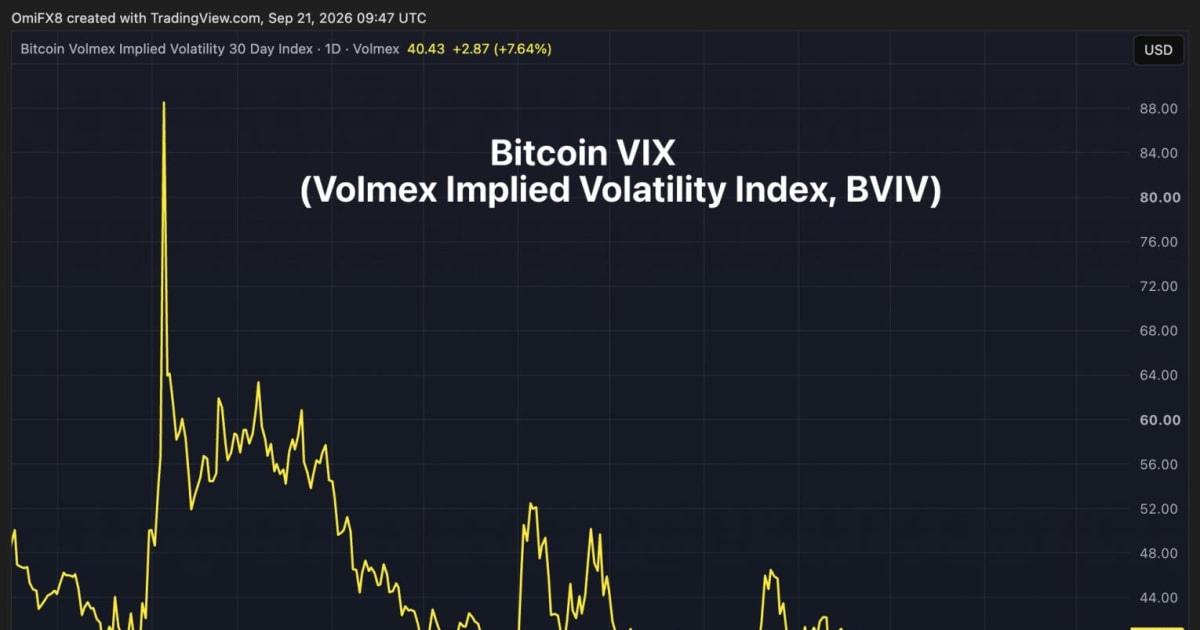
The crypto market just got a significant upgrade with the introduction of 'Bitcoin VIX' perpetual futures, a derivative designed to track implied volatility. This innovation, while global, casts a long shadow on India's burgeoning digital economy, influencing investor sentiment and creating indirect opportunities for domestic tech behemoths. We delve into its profound market implications, dissecting potential winners and losers, and offering an actionable playbook for Indian investors navigating this evolving landscape.
Bitcoin Volatility Futures: A New Era for Crypto & What It Means for Indian Investors
The global cryptocurrency landscape just witnessed a significant evolutionary leap: the debut of perpetual futures linked to 'Bitcoin VIX' on the Hyperliquid platform. This isn't merely another crypto derivative; it's a profound indicator of the market's accelerating institutionalization and a critical step towards maturing an asset class often characterized by its wild price swings. For Indian investors, while the immediate direct impact on domestic equities might appear subtle, the long-term implications for capital allocation, technological adoption, and the strategic positioning of Indian IT giants are substantial and warrant deep analysis.
Historically, Bitcoin's price volatility, often colloquially referred to as its 'VIX,' has been a double-edged sword: a magnet for speculative capital and a deterrent for institutional players seeking predictable risk management tools. The introduction of a dedicated derivative to hedge against this very volatility fundamentally alters this dynamic. It provides a sophisticated mechanism for market participants to manage exposure to Bitcoin's implied future price fluctuations, mirroring the utility of the traditional VIX in equity markets. This innovation arrives at a crucial juncture, as global financial institutions increasingly explore avenues to integrate digital assets into their portfolios, pushing crypto further into the mainstream. For India, a nation with a complex and evolving regulatory stance on cryptocurrencies, this global trend is a bellwether, influencing everything from individual investor sentiment to the strategic priorities of its world-leading technology service providers.
How Will Bitcoin VIX Futures Impact Global Crypto Adoption and Indian Tech?
The direct consequence of a 'Bitcoin VIX' derivative is a significant enhancement in the market's capacity for risk management. Previously, hedging against Bitcoin's notorious volatility was largely a bespoke, over-the-counter affair, or involved less precise instruments. Now, a standardized, exchange-traded product offers a transparent and efficient way to express views on future volatility or to hedge existing spot positions. This increased sophistication is a prerequisite for attracting larger pools of institutional capital, which demand robust risk controls before committing significant funds. We've seen this play out in traditional markets; the introduction of options and futures on underlying assets invariably deepens liquidity and broadens the investor base.
Consider the potential capital flows. As more institutional money, including hedge funds, asset managers, and even corporate treasuries, gains confidence in managing crypto risk through these new tools, a portion of global capital could logically divert towards digital assets. While India's capital controls and regulatory ambiguities mean this direct capital inflow might not immediately translate into substantial crypto market shifts within the country, the indirect effects are undeniable. Indian high-net-worth individuals and family offices with global investment mandates, for instance, might find the risk-adjusted returns of crypto more appealing with enhanced hedging capabilities. Furthermore, the global acceptance and integration of sophisticated crypto derivatives will inevitably accelerate the demand for underlying blockchain infrastructure and related financial technology solutions.
This is where Indian IT services companies, renowned for their prowess in financial technology and enterprise solutions, stand to gain. Companies like Tata Consultancy Services (TCS) (NSE: TCS) and Infosys (INFY) (NSE: INFY) are already deeply embedded in the global financial services ecosystem. As their international banking and investment management clients increasingly explore digital asset strategies, the demand for secure, scalable, and compliant blockchain-based solutions, smart contract development, and digital asset management platforms will surge. TCS, with its robust blockchain research and development initiatives, and Infosys, through its Finacle suite and blockchain offerings, are strategically positioned to capitalize on this burgeoning market. Their established relationships and deep domain expertise give them a significant competitive advantage over smaller, nascent blockchain firms.
Examining the Ripple Effect: NSE/BSE Stocks to Watch
While no Indian stock directly issues or trades these 'Bitcoin VIX' futures, the indirect impact on select NSE/BSE listed companies is noteworthy. We identify a few key players:
- Tata Consultancy Services (TCS) (NSE: TCS): As a global leader in IT services, TCS derives a significant portion of its revenue from the banking, financial services, and insurance (BFSI) sector. With a market capitalization exceeding ₹14 lakh crore and a trailing P/E ratio around 30x, TCS is a bellwether for the Indian IT industry. As global financial institutions integrate more sophisticated crypto derivatives and blockchain solutions, demand for TCS's expertise in distributed ledger technology (DLT) implementation, cybersecurity, and digital transformation will likely increase. This isn't a short-term catalyst but a long-term secular growth driver. Their blockchain CoE (Center of Excellence) is actively developing solutions for supply chain finance, digital identity, and tokenization, aligning perfectly with the evolving needs of a more institutionalized crypto market.
- Infosys (INFY) (NSE: INFY): Similar to TCS, Infosys is a major player in global IT services, with a strong footprint in BFSI. With a market cap around ₹6 lakh crore and a P/E ratio of approximately 25x, Infosys is also well-positioned. Its Finacle suite, a leading core banking solution, offers blockchain capabilities that could be extended to support digital asset trading and custody for its banking clients. As the regulatory clarity around crypto improves globally, and the tools for managing crypto risk become more robust, banks will accelerate their exploration of digital assets, directly benefiting companies like Infosys that provide the underlying technology infrastructure.
- Larsen & Toubro Infotech (LTI) (NSE: LTI) / Mindtree (MTCL) (NSE: MTCL) - Now LTIMindtree (NSE: LTIM): This merged entity, with a combined market cap of around ₹1.5 lakh crore and a P/E ratio of roughly 35x, also has a growing presence in the BFSI sector. While perhaps not as deeply entrenched in blockchain as TCS or Infosys, their agile approach and focus on digital transformation make them strong contenders for smaller, niche blockchain projects or integrations for financial clients exploring crypto. Any acceleration in institutional crypto adoption indirectly expands the addressable market for these next-tier IT service providers.
- Persistent Systems (PERSISTENT) (NSE: PERSISTENT): Known for its product engineering and digital transformation services, Persistent Systems (market cap ~₹35,000 crore, P/E ~50x) has been actively building capabilities in emerging technologies, including blockchain. While smaller than the IT majors, their specialized focus could make them a partner of choice for fintech companies or even crypto exchanges looking to build out their backend infrastructure or integrate new derivative products. The overall maturation of the crypto ecosystem benefits firms with deep technical expertise.
Conversely, traditional asset classes that might see some capital diversion globally could face indirect pressure. However, given the nascent stage of institutional crypto adoption, this is a long-term, gradual shift rather than an immediate threat to the dominance of traditional Indian equity or debt markets.
Bulls vs. Bears: Contrarian Views on Crypto's Institutionalization
The debate around crypto's future is always vibrant, and the introduction of 'Bitcoin VIX' futures only adds another layer of complexity.
The Bulls argue: This is an unequivocal sign of maturity. The availability of sophisticated hedging tools reduces systemic risk, attracts risk-averse institutional capital, and legitimizes crypto as a genuine asset class. They point to the historical parallel of commodities markets, which gained widespread institutional acceptance only after robust futures and options markets developed. The argument is that greater liquidity, transparency, and risk management will lead to sustained growth, driving up underlying asset values and expanding the demand for related technologies. A more predictable, hedgable crypto market could even encourage countries like India to re-evaluate their regulatory stances, potentially opening up domestic opportunities for financial institutions.
The Bears, however, caution: Increased financialization of crypto also introduces new forms of systemic risk. The complexity of derivatives, particularly perpetual futures, can lead to unforeseen leverage and cascading liquidations, especially in a still-developing market with less regulatory oversight than traditional finance. They might argue that while hedging tools exist, the underlying volatility of Bitcoin remains inherently high, and these derivatives merely package that risk in new ways, potentially making it accessible to a broader, less sophisticated investor base. Furthermore, regulatory uncertainty, particularly in major emerging markets like India, remains a significant overhang. Until there's clear, consistent global regulation, the 'Bitcoin VIX' might primarily serve a niche of sophisticated traders rather than truly unlocking vast institutional capital.
A contrarian perspective could also highlight that while these tools exist, the actual adoption by traditional finance might be slower than anticipated due to lingering concerns about custody, compliance, and counterparty risk in the crypto space. The 'Bitcoin VIX' might be a technical achievement, but market acceptance is a different battle.
Investor Playbook: Navigating the Evolving Crypto Landscape
For Indian investors, the strategy must be nuanced, focusing on indirect plays and long-term trends:
- WATCH: The most crucial element to watch is the adoption rate of these new derivatives by institutional players globally. Track reports from major financial institutions regarding their digital asset strategies. Also, monitor any shifts in India's regulatory stance on cryptocurrencies. A more favorable regulatory environment could unlock direct investment opportunities, but until then, indirect plays are safer.
- BUY (Long-Term): Consider accumulating shares of top-tier Indian IT service providers with strong blockchain capabilities and significant exposure to global BFSI clients. TCS (NSE: TCS) and Infosys (NSE: INFY) are prime candidates. These are not direct crypto plays, but rather beneficiaries of the broader trend of digital transformation and institutionalization of digital assets. Their revenue growth from these emerging areas might be modest initially, but it adds a new dimension to their long-term growth story. Entry points can be strategically chosen during broader market corrections, leveraging their robust balance sheets and dividend yields.
- AVOID: Highly speculative, unregulated crypto assets, especially those without clear utility or robust development teams. While the 'Bitcoin VIX' offers hedging for Bitcoin, it doesn't magically de-risk the entire crypto ecosystem. The increased sophistication in derivatives could make some of these smaller, more volatile assets even more susceptible to market manipulation or sharp downturns as capital flows towards more 'institutional-friendly' assets.
- TIME HORIZON: This is a long-term secular trend, not a short-term trade. Investors should adopt a 3-5 year horizon for their investments in related tech stocks. The benefits of crypto institutionalization will accrue gradually.
Risk Matrix: Understanding the Hurdles Ahead
The path to widespread institutional crypto adoption, even with new hedging tools, is not without significant risks:
- Regulatory Uncertainty (High Probability, High Impact): India's stance on crypto remains ambiguous, with previous talks of bans and currently a taxation framework. A sudden, restrictive regulatory move could severely dampen domestic sentiment and limit opportunities for Indian firms, even those serving global clients. Globally, fragmented and inconsistent regulations pose challenges for cross-border institutional participation.
- Increased Market Complexity & Systemic Risk (Medium Probability, Medium Impact): While designed to manage risk, sophisticated derivatives can also introduce new forms of complexity and leverage. An unforeseen 'black swan' event in the crypto derivatives market could trigger cascading liquidations, impacting broader market sentiment, even if the underlying assets are hedged. This could lead to periods of heightened volatility and investor apprehension.
- Cybersecurity Threats & Technical Flaws (Medium Probability, High Impact): The digital asset ecosystem, including derivative platforms, remains a target for sophisticated cyberattacks. A major security breach or a critical technical flaw in a prominent platform could erode trust, lead to significant financial losses, and set back institutional adoption efforts globally.
- Competition from Traditional Finance (Medium Probability, Medium Impact): As traditional exchanges and financial institutions enter the crypto derivatives space, they will bring their own robust infrastructure and established client bases. This increased competition could fragment liquidity or lead to a 'flight to safety' towards more regulated, established platforms, potentially sidelining newer, less regulated venues.
What to Watch Next: Catalysts and Milestones
The evolution of the crypto market and its indirect impact on Indian equities will be shaped by several key events and data points:
- Institutional Adoption Metrics: Monitor reports from Hyperliquid and other platforms on the trading volumes and open interest for 'Bitcoin VIX' futures. An increase indicates growing institutional engagement. Watch for announcements from major global banks or asset managers regarding their use of these new derivatives.
- Regulatory Developments: Keep a close eye on any new draft bills, policy statements, or judicial pronouncements from the Reserve Bank of India (RBI) and the Ministry of Finance concerning cryptocurrencies. Any move towards clarity or a more favorable stance would be a significant catalyst for Indian participation.
- Earnings Calls of IT Majors: Pay attention to the commentary from the management of TCS, Infosys, and other IT service providers during their quarterly earnings calls. Look for specific mentions of blockchain projects, digital asset initiatives, and revenue contributions from these emerging areas within their BFSI segments.
- Global Macroeconomic Environment: The broader risk appetite in global markets heavily influences crypto. Any significant shifts in interest rates, inflation expectations, or geopolitical stability could either accelerate or decelerate institutional interest in volatile assets like Bitcoin.
- Technological Advancements in DLT: Continued innovation in blockchain scalability, security, and interoperability (e.g., Ethereum 2.0, layer-2 solutions) will further enhance the infrastructure supporting advanced derivatives and broader institutional integration.
The debut of 'Bitcoin VIX' perpetual futures is more than just a new product; it's a testament to the inexorable march of digital assets towards mainstream financial acceptance. For savvy Indian investors, understanding these global shifts and their nuanced ripple effects on the domestic market, particularly within the robust IT services sector, is paramount for long-term portfolio positioning.
See No direct Indian stock impact. Indirectly, companies like Tata Consultancy Services (TCS) or Infosys (INFY) involved in blockchain solutions for global clients might see long-term opportunities.'s AI Score
Our algorithmic screener scores No direct Indian stock impact. Indirectly, companies like Tata Consultancy Services (TCS) or Infosys (INFY) involved in blockchain solutions for global clients might see long-term opportunities. on fundamentals, momentum, and risk — free to try, no card needed.
Try the AI Screener →Have questions about this story?
Ask Welth, our finance-focused AI research assistant, for a deeper breakdown — free trial included.
Chat with Welth AI →Disclaimer: This content is generated by WelthWest Research Desk based on publicly available reports and is for informational purposes only. It does not constitute financial advice, investment recommendations, or an offer to buy or sell securities. Always consult a qualified financial advisor before making investment decisions.