Key Takeaway
Bitcoin's inherent unpredictability makes market timing a high-risk, low-reward strategy. While direct Indian stock market exposure is limited, global crypto sentiment can indirectly impact tech innovators and speculative investors. Prudence, not prediction, is the wise investor's compass.
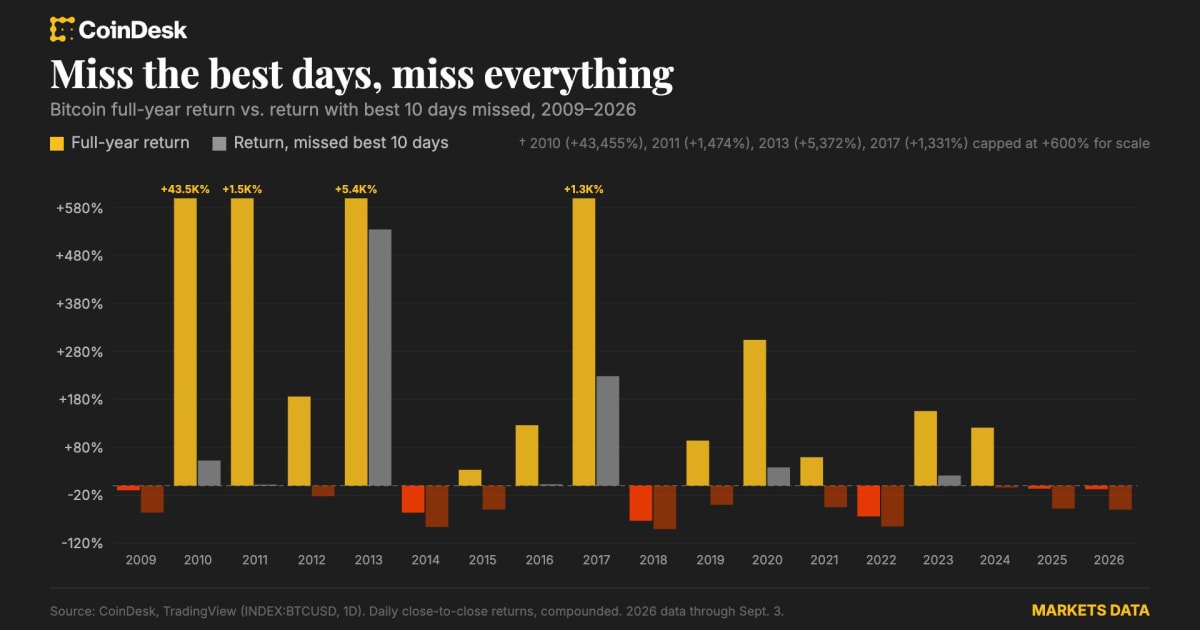
The wild swings of Bitcoin prices continue to baffle even seasoned analysts, highlighting the speculative abyss of cryptocurrency markets. This WelthWest deep dive explores why attempting to time Bitcoin is a fool's errand, dissecting its broader implications for Indian investors and the subtle ripples felt across the NSE and BSE, particularly within the tech and fintech sectors. We'll uncover specific stocks, risks, and an actionable playbook to navigate this volatile landscape.
Bitcoin Volatility: Why Timing the Crypto Market is a Futile Game for Indian Investors
The cryptocurrency market, epitomized by Bitcoin's mercurial price movements, remains a domain of profound unpredictability. For investors globally, and increasingly for those in India, the allure of quick gains often collides with the stark reality of extreme volatility. Our latest investigation at WelthWest Research Desk reveals a fundamental truth: attempting to 'time' the Bitcoin market is not merely challenging; it is, for all practical purposes, an exercise in futility. This isn't just an observation; it's a critical insight for understanding investor sentiment towards a burgeoning asset class that, despite its distance, still casts a long shadow over global financial markets and, by extension, subtly influences the Indian investment landscape.
The core event driving this analysis is the persistent, almost systemic, volatility of Bitcoin and the broader digital asset ecosystem. This matters now more than ever as mainstream financial institutions increasingly acknowledge, if not fully embrace, cryptocurrencies. However, this growing legitimacy often masks the underlying speculative nature that makes precise market entry and exit points virtually impossible to identify consistently. For Indian investors, while direct exposure to Bitcoin via regulated avenues is still evolving, the global crypto market sentiment can significantly sway tech-savvy individuals and potentially impact publicly traded companies exploring blockchain technologies or those with indirect exposure through global investment portfolios. The narrative is clear: high volatility and regulatory uncertainty remain paramount risks, making any prediction of future price movements or policy shifts an educated guess at best, and pure speculation at worst.
How Does Bitcoin's Unpredictability Ripple Through Indian Tech Stocks?
While the direct lines between Bitcoin's daily price swings and the National Stock Exchange (NSE) or Bombay Stock Exchange (BSE) are not immediately obvious, the indirect connections are becoming increasingly tangible. India's burgeoning digital economy and its youthful, tech-forward demographic mean that a significant portion of the investor base is attuned to global technological trends, including cryptocurrencies. When global crypto sentiment sours due to Bitcoin's extreme price drops, it can trigger a broader risk-off sentiment among these investors, potentially affecting sectors perceived as 'growth' or 'innovation'-driven, even if they have no direct crypto exposure.
Consider the impact on companies that are either directly involved in blockchain technology development or those that cater to a demographic that is also heavily invested in crypto. For instance, companies like Infosys (NSE: INFY) or Tata Consultancy Services (NSE: TCS), while not directly linked to Bitcoin's price, are increasingly exploring enterprise blockchain solutions for their global clients. A sustained downturn in crypto sentiment could lead to slower adoption rates for these technologies, potentially impacting future revenue streams, albeit marginally in the short term. Historically, during the crypto winter of 2022, when Bitcoin plummeted by over 60% from its peak, the Nifty IT index, while largely driven by global macro factors, also experienced a significant correction, declining by approximately 25% from its highs. While not a direct causation, the coinciding downturns highlight how broader tech and innovation sentiment can be dampened.
Furthermore, fintech companies in India, such as Paytm (NSE: PAYTM) or PB Fintech (NSE: POLICYBZR), while not offering crypto trading directly (due to regulatory constraints), cater to a digitally native audience that often cross-pollinates between traditional digital finance and crypto. A major crypto market correction could impact discretionary spending or investment appetite among this demographic, subtly influencing these companies' user engagement or transaction volumes. The global crypto market cap, which peaked at nearly $3 trillion in late 2021 before contracting significantly, demonstrates the sheer scale of wealth that can be created and destroyed, influencing broader investor psychology.
Which Indian Stocks Feel the Indirect Crypto Tremor? A Sector Breakdown
Identifying directly 'affected' Indian stocks due to Bitcoin volatility is challenging, given the current regulatory stance on cryptocurrencies in India. However, we can identify companies with indirect exposure or those whose business models are sensitive to the broader global tech and innovation sentiment that often correlates with crypto market cycles. Here’s a breakdown of 4-6 specific NSE/BSE stocks:
- Infosys (NSE: INFY): As a global IT services giant, Infosys is at the forefront of digital transformation. While not directly investing in crypto, its enterprise blockchain services unit is a growing area. A global cooling of interest in blockchain due to crypto market woes could subtly impact the pace of client adoption and project pipelines. For instance, if major global financial institutions become more cautious about blockchain spending due to crypto market instability, Infosys's future revenue from these niche offerings could see slower growth. Their P/E ratio, currently around 25x, reflects growth expectations that could be marginally tempered by such shifts. Sector peer: Wipro (NSE: WIPRO).
- Tata Consultancy Services (NSE: TCS): Similar to Infosys, TCS is a leader in IT consulting and services, with significant investments in emerging technologies, including blockchain. Their 'Quartz' blockchain solution is an example. While not a core revenue driver, a persistent negative sentiment around crypto could lead to slower enterprise adoption of distributed ledger technologies (DLT), indirectly affecting long-term growth prospects in this segment. TCS's strong balance sheet provides a buffer, but market perception of innovation leaders can be sensitive to broader tech trends. Their latest quarterly revenue growth of 3.5% Y-o-Y could see minor pressure if global tech spending on experimental areas like DLT slows.
- Persistent Systems (NSE: PERSISTENT): This mid-cap IT firm focuses heavily on product development and digital engineering, with a strong presence in the banking and financial services sector. Their exposure to clients exploring DLT and fintech innovations means they are more susceptible to shifts in risk appetite within these global sectors. A significant downturn in crypto sentiment could lead to delays or reduced spending on cutting-edge financial technology projects by their clients. Persistent Systems, with a P/E ratio around 50x, trades at a premium reflecting its growth potential in niche tech areas, making it more sensitive to any perceived slowdown in innovation adoption.
- Nazara Technologies (NSE: NAZARA): While primarily a gaming and sports media company, Nazara represents the broader 'digital entertainment' and 'new age tech' segment that often attracts similar investor demographics to crypto. A significant contraction in disposable income or speculative capital due to crypto losses could indirectly impact user engagement or spending within digital entertainment platforms. While direct impact is minimal, sentiment towards high-growth, often speculative, digital businesses can be correlated. During the 2022 crypto downturn, many high-growth tech stocks globally, including gaming companies, saw significant corrections, highlighting this broader trend.
Bulls vs. Bears: Contrasting Views on Bitcoin's Market Impact
The debate around Bitcoin's long-term viability and its influence on traditional markets is fiercely contested. Bulls and bears offer starkly different perspectives, providing crucial context for investors navigating this complex space.
The Bullish Argument: Digital Gold and Decentralized Innovation. Proponents of Bitcoin often argue that its volatility is a necessary, albeit painful, characteristic of a nascent asset class undergoing price discovery. They view Bitcoin as 'digital gold,' a hedge against inflation and a decentralized store of value, particularly in an era of unprecedented fiat currency expansion. From this perspective, every major price correction is merely a 'shakeout' of weak hands, paving the way for stronger, long-term holders. They point to institutional adoption, the increasing clarity in global regulatory frameworks (albeit slow), and the underlying technological innovation of blockchain as unstoppable forces. For Indian markets, bulls might argue that increased global adoption of blockchain by enterprises will eventually benefit Indian IT service providers, regardless of Bitcoin's short-term price swings. They would highlight the distinction between Bitcoin as a speculative asset and blockchain as an underlying technology, asserting that the latter's growth will continue unabated, benefiting companies like Infosys and TCS in the long run.
The Bearish Argument: Speculative Bubble and Regulatory Headwinds. Conversely, bears emphasize Bitcoin's lack of intrinsic value, its energy consumption concerns, and its susceptibility to manipulation. They view the entire crypto market as a speculative bubble, fueled by 'greater fool theory,' where prices are driven by the expectation that someone else will pay more. Volatility, for them, is not a sign of growth but an inherent flaw, making it unsuitable as a reliable store of value or medium of exchange. Regulatory uncertainty, particularly in major economies, remains a significant concern, with fears of outright bans or stringent controls dampening long-term prospects. For Indian markets, bears would stress the limited direct exposure and the RBI's cautious stance, suggesting that any indirect impact on Indian stocks is minor and overshadowed by domestic economic fundamentals. They might argue that companies exploring blockchain are doing so out of technological curiosity rather than a guaranteed revenue stream, and any significant capital allocation to these areas could be a misstep if the technology fails to deliver on its grand promises.
Actionable Investor Playbook: Navigating Crypto's Indirect Ripples
Given the inherent unpredictability of Bitcoin and its indirect, rather than direct, influence on the Indian stock market, a nuanced approach is essential for investors. This playbook focuses on risk management and strategic positioning rather than attempting to time an untimable market.
- Watch List for Tech & Fintech Exposure: Instead of buying or selling based on daily crypto swings, maintain a watch list of Indian IT services companies (e.g., Infosys, TCS, Persistent Systems) and fintech players (e.g., Paytm, PB Fintech). Monitor their quarterly earnings calls for any specific commentary on blockchain project pipelines, client adoption rates of DLT, or exposure to global fintech trends that might be indirectly influenced by crypto sentiment. Look for sustained growth in their digital transformation segments rather than short-term fluctuations.
- Diversify & Allocate Prudently: For investors with a high-risk appetite and an interest in the crypto space, direct exposure to Bitcoin or other cryptocurrencies should remain a small, non-material portion of their overall portfolio – typically no more than 1-5%. This allocation should be capital you are prepared to lose entirely. For Indian stocks, focus on companies with strong fundamentals, diversified revenue streams, and a clear competitive advantage, rather than those with tenuous links to crypto. Entry points for quality tech stocks should be based on valuation metrics (e.g., P/E below sector average, strong free cash flow) during broader market corrections, not solely on crypto volatility.
- Long-Term Horizon for Innovation Plays: If investing in companies exploring blockchain, adopt a long-term investment horizon (5-10 years). The maturation of enterprise blockchain is a multi-year process. Short-term crypto market noise should not dictate investment decisions in these fundamentally strong companies. Focus on their R&D spending, patent filings, and strategic partnerships in the DLT space as indicators of future potential.
- Monitor Regulatory Landscape: Keep a close eye on regulatory developments concerning cryptocurrencies in India and globally. The Indian government's stance, particularly any clarity from the RBI or SEBI, will be a major catalyst. A clear, favorable regulatory framework could unlock new opportunities for Indian fintechs and IT firms, while restrictive policies could dampen enthusiasm. This is a watch item, not an immediate action trigger, unless significant policy shifts occur.
Risk Matrix: Navigating the Crypto-Influenced Landscape
Understanding the specific risks associated with Bitcoin's volatility and its indirect impact is paramount for informed decision-making. Here's a risk matrix:
- Regulatory Crackdown (Probability: Medium-High): Governments globally, including India, are grappling with how to regulate cryptocurrencies. An outright ban or highly restrictive policies in major economies could trigger a significant crypto market downturn, leading to a broader risk-off sentiment that impacts growth-oriented tech stocks. The probability remains medium-high given ongoing global discussions and varying national approaches.
- Systemic Market Contagion (Probability: Low-Medium): While unlikely to directly cause a major Indian stock market crash, a catastrophic failure of a large cryptocurrency exchange or a major stablecoin could trigger a broader financial market panic. This would primarily affect global markets and, by extension, Indian equities through foreign institutional investor (FII) outflows and a general flight to safety. The probability is low-medium, but the impact would be significant.
- Technological Obsolescence/Security Breach (Probability: Low): A fundamental flaw or a major security breach in the Bitcoin protocol or a widely used blockchain could severely erode trust in the entire crypto ecosystem. While Bitcoin's network has proven robust, the broader DLT space is still evolving. The probability is low for Bitcoin itself, but higher for newer, less tested blockchain projects, and any such event would have a ripple effect on overall blockchain adoption sentiment.
- Persistent High Volatility (Probability: High): Bitcoin's price is inherently volatile and likely to remain so for the foreseeable future. This high volatility makes it challenging for institutional adoption as a stable asset and can contribute to investor fatigue and capital flight from speculative assets, indirectly impacting high-growth tech valuations. This is a near-certainty, rather than a mere possibility.
What to Watch Next: Catalysts on the Horizon
Several key catalysts and data releases will shape the future narrative around Bitcoin's volatility and its broader financial market implications. Indian investors should monitor these developments closely:
- Global Regulatory Announcements: Watch for definitive policy statements from major financial regulators like the US SEC, the European Central Bank, or the Bank of England regarding cryptocurrency classification, stablecoin regulation, and exchange licensing. Any move towards greater clarity or stricter enforcement could significantly impact crypto prices and investor sentiment. Dates are often fluid, but major pronouncements typically follow G20 or IMF meetings, or specific legislative cycles.
- Indian Government & RBI Stance: The long-awaited clarity from the Indian government and the Reserve Bank of India (RBI) on cryptocurrency regulation remains a pivotal event. Any framework that either legalizes and regulates or strictly prohibits crypto will have profound implications for Indian investors and potentially for the fintech sector. While no firm date is set, any parliamentary discussions or committee reports should be closely watched.
- Institutional Adoption Metrics: Monitor reports on institutional capital flows into Bitcoin ETFs (where available), corporate treasury allocations to crypto, and major financial institutions launching crypto-related services. Sustained institutional interest could signal a maturation of the asset class, potentially reducing extreme volatility over the long term. Data from firms like Grayscale, Fidelity, and BlackRock on their crypto product performance will be indicative.
- Bitcoin Halving Events: Historically, Bitcoin's 'halving' events (where the reward for mining new blocks is cut in half, reducing supply) have been significant catalysts for price appreciation. The next halving is anticipated around April 2024. While past performance is not indicative of future results, these programmed supply shocks are closely watched by market participants and could trigger renewed volatility or upward price pressure.
- Macroeconomic Indicators: Global inflation data, interest rate decisions by central banks (especially the US Federal Reserve), and geopolitical events will continue to influence risk appetite across all asset classes, including cryptocurrencies. A shift towards tighter monetary policy globally could dampen speculative fervor, while a return to dovish policies might reignite it. Upcoming CPI reports and FOMC meeting minutes are crucial for this broader context.
Run a free AI Stock Screen
Our algorithmic screener scores any NSE/BSE stock on fundamentals, momentum, and risk — free to try, no card needed.
Try the AI Screener →Have questions about this story?
Ask Welth, our finance-focused AI research assistant, for a deeper breakdown — free trial included.
Chat with Welth AI →Disclaimer: This content is generated by WelthWest Research Desk based on publicly available reports and is for informational purposes only. It does not constitute financial advice, investment recommendations, or an offer to buy or sell securities. Always consult a qualified financial advisor before making investment decisions.