Key Takeaway
BlackRock’s institutional pivot toward Real-World Asset (RWA) tokenization marks the end of the 'crypto-experiment' phase and the birth of 'on-chain finance,' forcing Indian financial incumbents to modernize infrastructure or face obsolescence.
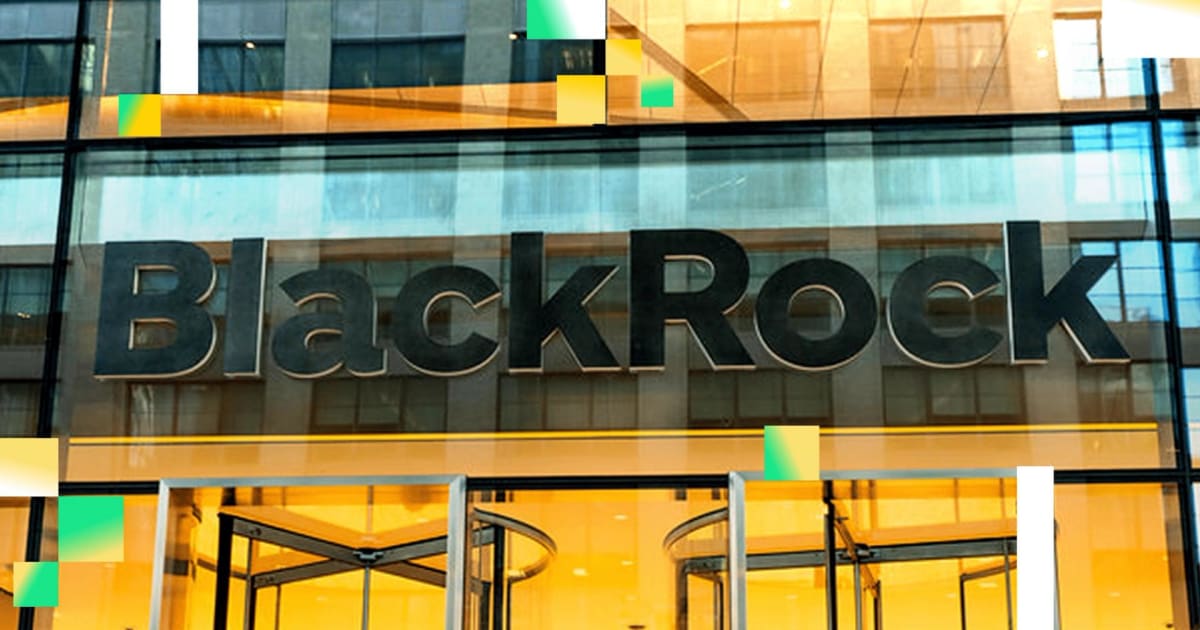
As BlackRock accelerates the tokenization of traditional assets, the global settlement landscape is undergoing a structural shift. This article analyzes the massive implications for Indian IT giants and market infrastructure providers, identifying the winners and losers in the race to build the next-generation financial stack.
The Paradigm Shift: Why BlackRock’s Tokenization Matters Now
When the world’s largest asset manager, BlackRock, shifts its operational architecture toward on-chain tokenization, it is not merely an experiment—it is a signal that the infrastructure of global finance is being rebuilt. By representing traditional assets like government bonds and private credit on public or private blockchains, BlackRock is effectively slashing settlement times from T+2 or T+3 to near-instantaneous atomic settlement.
For the Indian market, this is a clarion call. The domestic financial sector, long reliant on legacy clearing houses and manual reconciliation, now faces a 'modernize-or-lose' ultimatum. The convergence of Decentralized Finance (DeFi) with Traditional Finance (TradFi) is no longer a peripheral concern; it is the new competitive baseline for global capital allocation.
How Will Indian IT Firms Capitalize on the Tokenization Boom?
The transition to blockchain-based asset management requires massive overhauls of core banking systems (CBS) and ledger architectures. Indian IT services firms are the primary architects of this transition. Historically, when global financial hubs migrated to cloud-native architectures in 2018-2019, the Nifty IT index outperformed the broader market by nearly 15% over an 18-month horizon. We expect a similar, albeit more specialized, tailwind for firms with deep-rooted blockchain and distributed ledger technology (DLT) practices.
Stock-by-Stock Breakdown: Winners and Structural Risks
- TCS (TATA CONSULTANCY SERVICES): As the primary systems integrator for global banks, TCS is uniquely positioned. Its 'Quartz' blockchain solution is already being deployed in pilot programs for central bank digital currencies (CBDCs). With a P/E ratio currently hovering around 30x, TCS offers a lower-risk play on the institutional adoption of DLT.
- Infosys (INFY): Infosys has invested heavily in Finacle, its core banking platform. By integrating tokenization modules directly into Finacle, Infosys can upsell existing clients on digital asset custody and programmable settlement features, insulating them from pure-play fintech disruption.
- HCL Technologies (HCLTECH): HCL’s strength lies in its 'Digital Foundation' services. As banks pivot toward hybrid-cloud and blockchain-integrated infrastructures, HCL’s expertise in managing complex legacy-to-modern transitions makes them a primary beneficiary of the increased R&D spend by global investment banks.
- CDSL (CENTRAL DEPOSITORY SERVICES LTD): CDSL sits at the center of the Indian securities infrastructure. While it faces a threat from decentralized settlement, it is the most likely candidate to lead the 'regulated tokenization' space in India. If CDSL evolves into a 'trusted validator' for tokenized securities, its valuation—currently trading at a premium P/E of 60x—could see further expansion as it captures new revenue streams from on-chain asset servicing.
The Contrarian View: Bulls vs. Bears
The Bull Case: Proponents argue that tokenization is the ultimate efficiency upgrade. By eliminating intermediaries and enabling fractional ownership, the 'programmable money' era will unlock trillions in liquidity that is currently trapped in legacy silos. For Indian firms, this is a massive export opportunity as they build the plumbing for Western financial institutions.
The Bear Case: Skeptics point to the regulatory 'black hole.' If the Reserve Bank of India (RBI) continues to maintain a cautious stance on public ledger technologies, domestic firms may be forced to build 'walled-garden' private blockchains, which could limit interoperability and stifle the very innovation that tokenization promises to deliver. Furthermore, the cybersecurity risk of smart contract vulnerabilities remains an existential threat that could lead to catastrophic capital loss.
Actionable Investor Playbook: Navigating the On-Chain Future
Investors should view this as a multi-year secular trend rather than a short-term trade.
- Accumulate IT Service Providers: Focus on firms with established DLT practices. TCS and Infosys remain the 'blue chips' of this transition. Look for pullbacks to the 200-day moving average as entry points.
- Monitor Market Infrastructure: Keep a close eye on BSE and CDSL. If these entities announce partnerships with global blockchain consortia, it signals a strategic pivot that justifies their high valuation multiples.
- Time Horizon: This is a 3-5 year play. The 'on-chaining' of assets will occur in phases: first, high-liquidity government securities, followed by private credit and real estate.
Risk Matrix
| Risk Factor | Probability | Impact |
|---|---|---|
| Regulatory Crackdown (India) | Medium | High |
| Smart Contract/Cyber Breach | Medium | High |
| Slow Institutional Adoption | Low | Medium |
What to Watch Next: Catalysts for 2024-2025
Watch for updates from the RBI on the 'e-Rupee' (CBDC) pilot programs. Any expansion of the wholesale CBDC pilot to include secondary market trade settlement will be the definitive green light for the sector. Additionally, monitor the quarterly earnings calls of the major IT firms; specifically, look for mentions of 'blockchain revenue' or 'DLT consulting' as a percentage of total contract value. If this figure trends above 5%, we are entering the 'hyper-growth' phase of this technological migration.
See TCS's AI Score
Our algorithmic screener scores TCS on fundamentals, momentum, and risk — free to try, no card needed.
Try the AI Screener →Have questions about this story?
Ask Welth, our finance-focused AI research assistant, for a deeper breakdown — free trial included.
Chat with Welth AI →Disclaimer: This content is generated by WelthWest Research Desk based on publicly available reports and is for informational purposes only. It does not constitute financial advice, investment recommendations, or an offer to buy or sell securities. Always consult a qualified financial advisor before making investment decisions.