Key Takeaway
The FAA's clearance of the Boeing 737 MAX 10 software issue removes a critical certification hurdle, signaling potential acceleration in global aircraft deliveries. For Indian investors, this translates to a bullish outlook for airlines with significant MAX orders and indirect benefits for domestic aerospace manufacturing, potentially driving stock performance in companies like SpiceJet, Akasa Air (indirectly via suppliers), and even infrastructure plays.
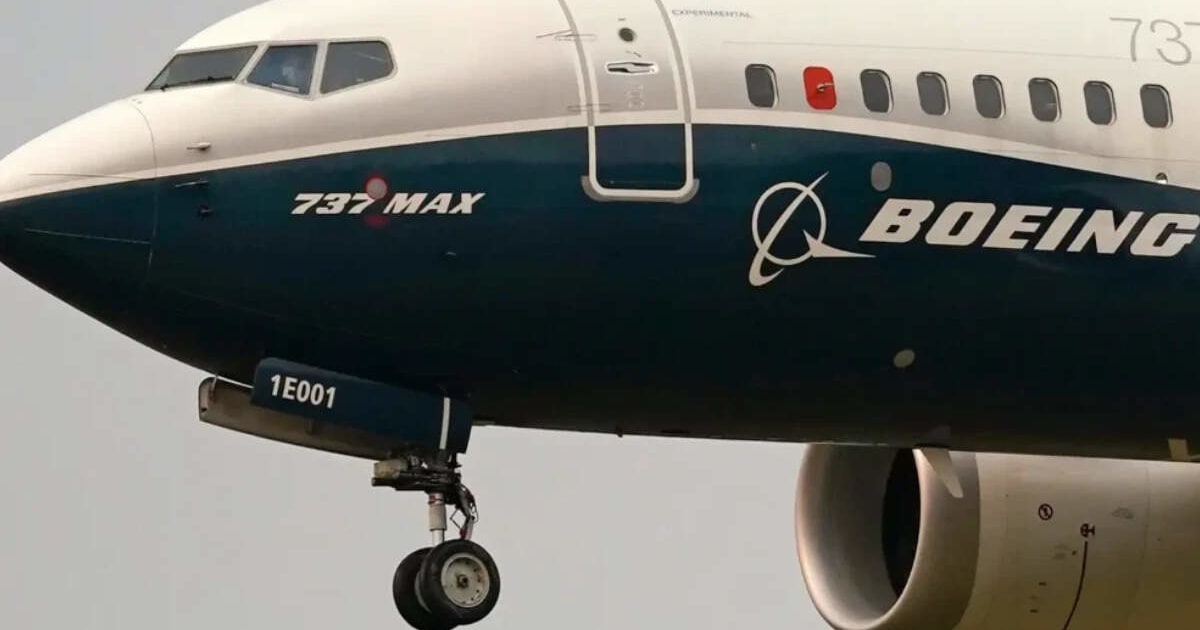
The US FAA's recent clearance of a critical software issue for the Boeing 737 MAX 10 is a pivotal development for the global aviation industry. This deep dive by WelthWest Research Desk explores how this seemingly distant event will reverberate through the Indian stock market, impacting airlines, aerospace suppliers, and investor sentiment. We analyze specific NSE/BSE stocks, present an actionable investor playbook, and dissect the underlying risks and catalysts.
Boeing 737 MAX 10 Software Fix: Decoding the Bullish Tailwind for Indian Aviation Stocks
The United States Federal Aviation Administration (FAA) recently announced a critical resolution for the Boeing 737 MAX 10, declaring that a previously identified software glitch poses no safety concern. This development is far more than a technical footnote; it's a significant catalyst that clears a major regulatory hurdle, paving a clearer path for the certification and eventual delivery of Boeing's newest narrow-body jet. At WelthWest Research Desk, we understand that seemingly isolated global events often cast long shadows – or bright lights – on distant markets. This particular clearance, while originating in the US, holds profound implications for the Indian aviation sector, which is currently undergoing an unprecedented expansion phase.
For investors, the 'so what' is clear: this move directly impacts Boeing's production and delivery timelines. As a dominant force in global aircraft manufacturing, any acceleration in Boeing’s output directly influences global aircraft supply chains, potentially easing capacity constraints for airlines worldwide. While not a direct Indian market event, it removes a significant overhang for a major global aerospace player, contributing to broader market stability and optimism in the aviation sector, which indirectly benefits Indian carriers and ancillary industries positioning for growth.
What Happened and Why It Matters Now for Indian Investors?
The Boeing 737 MAX 10, a crucial model designed to compete directly with Airbus' A321neo, has been mired in a prolonged certification process, exacerbated by the fallout from previous 737 MAX incidents. A specific software issue within its engine anti-ice system had been a key point of contention. The FAA's recent pronouncement, confirming the glitch does not compromise safety, effectively signals that a critical impediment to certification has been resolved. This is not merely a technical fix; it's a psychological turning point for Boeing and its customers.
Why does this matter now, specifically for Indian investors? India is projected to be the world's third-largest aviation market by 2024, with domestic passenger traffic hitting record highs. Indian airlines have placed colossal orders for new aircraft to meet this demand, with a significant portion allocated to Boeing. Delays in MAX 10 certification had created uncertainty, potentially pushing back fleet expansion plans for carriers banking on this model. With this clearance, the probability of timely deliveries increases, providing greater clarity and confidence for airlines planning their future capacity. This translates into more predictable growth trajectories and, consequently, more stable investment propositions for aviation stocks listed on the NSE and BSE.
Deep Market Impact Analysis: Connecting Global Aerospace to Indian Equities
The resolution of the MAX 10 software issue injects a fresh wave of optimism into the global aviation supply chain, which inevitably trickles down to India. The Indian aviation sector, represented by key players like IndiGo (InterGlobe Aviation Ltd - NSE: INDIGO) and SpiceJet (NSE: SPICEJET), is highly sensitive to aircraft availability and delivery schedules. While IndiGo is predominantly an Airbus operator, it is not entirely immune to broader market sentiment shifts. SpiceJet, on the other hand, is a significant Boeing 737 MAX customer, with a substantial number of aircraft awaiting delivery. Akasa Air, a relatively newer entrant, also operates a fleet of 737 MAX aircraft and has ambitious expansion plans contingent on timely deliveries.
Historically, significant bottlenecks in aircraft production or certification have led to upward pressure on aircraft leasing rates and operational costs for airlines, impacting their profitability. For instance, in late 2022, when global supply chain issues peaked, several Indian carriers reported higher maintenance costs and delivery delays, directly affecting their quarterly earnings. The removal of a major hurdle for the MAX 10 alleviates some of this systemic pressure, suggesting a more predictable flow of new aircraft into the market over the next 12-24 months. This enhanced predictability can lead to improved operational efficiencies and better capacity planning for Indian airlines, ultimately bolstering their financial performance and investor appeal.
Beyond airlines, the indirect impact extends to aerospace component manufacturers and maintenance, repair, and overhaul (MRO) service providers. While India's direct contribution to Boeing's specific MAX 10 component manufacturing is nascent, the broader uptick in global aviation activity and aircraft deliveries stimulates demand for MRO services and spares, areas where Indian companies are increasingly building capabilities. This could provide tailwinds for smaller, unlisted aerospace ancillaries, and eventually, broader industrial indices.
Stock-by-Stock Breakdown: Indian Equities Under the MAX 10 Spotlight
Let's dissect the potential impact on specific Indian stocks:
- SpiceJet Ltd (NSE: SPICEJET): As a primary Boeing 737 MAX operator in India, SpiceJet stands to gain significantly. The airline has a substantial order book for the 737 MAX family, and timely deliveries are crucial for its fleet modernization and expansion plans, especially as it navigates financial restructuring. Faster MAX 10 certification could free up production slots for other MAX variants, directly benefiting SpiceJet. Improved delivery predictability could enhance investor confidence in SpiceJet's turnaround story, potentially driving its stock from its current market capitalization of around ₹4,000-5,000 crores. A clear path for MAX deliveries reduces operational uncertainty, which has historically weighed on its P/E multiple.
- InterGlobe Aviation Ltd (NSE: INDIGO): While primarily an Airbus operator, IndiGo's strong market position means it benefits from overall sector stability and growth. Reduced global delivery bottlenecks for Boeing aircraft can indirectly ease pressure on Airbus's production lines, potentially leading to faster deliveries for IndiGo's vast A320neo and A321neo orders. Furthermore, a stable competitive landscape (with SpiceJet potentially strengthening) fosters healthy market dynamics. IndiGo, with its market cap exceeding ₹1.5 lakh crores and a robust balance sheet, represents a blue-chip play that benefits from systemic improvements in the aviation ecosystem.
- Taneja Aerospace & Aviation Ltd (BSE: 532867): This smaller player, involved in aircraft manufacturing, MRO, and related services, could see indirect benefits. As the Indian aviation sector expands and new aircraft enter service, demand for MRO facilities and indigenous component manufacturing is expected to rise. While not directly tied to MAX 10 production, a healthier global and domestic aviation market creates a more favorable operating environment for companies like Taneja, potentially improving order books and revenue streams, though the impact would be more long-term and speculative.
- GMR Airports Infrastructure Ltd (NSE: GMRINFRA): As a leading airport operator, GMR Infra directly benefits from increased air traffic. More aircraft deliveries mean more flights, more passengers, and higher aeronautical and non-aeronautical revenues for airports. The sustained growth of Indian airlines, facilitated by timely aircraft inductions, directly translates to improved financial performance for airport infrastructure companies. GMR Infra, with its significant market cap and strategic airport assets, is a prime beneficiary of any development that supports robust airline growth and capacity expansion.
- PVR INOX Ltd (NSE: PVRINOX): While seemingly tangential, consumer discretionary stocks like PVR INOX can see indirect benefits. Increased airline capacity and potentially lower airfares (due to newer, more fuel-efficient aircraft) make travel more accessible. This can lead to increased leisure travel, which often includes cinema visits as part of a broader entertainment spend. While the correlation is indirect, a thriving aviation sector often signals robust consumer sentiment and disposable income, which are crucial drivers for entertainment companies.
Expert Perspective: Bulls vs. Bears on Indian Aviation's Flight Path
The FAA's MAX 10 decision has certainly tilted the scales towards a bullish outlook for Indian aviation, but a balanced perspective is crucial.
The Bulls argue: "This is a clear de-risking event. Boeing can now focus on final certification and ramping up production, which is a net positive for all airlines awaiting deliveries globally. For Indian carriers like SpiceJet, it means greater certainty on fleet expansion, allowing for better network planning and cost efficiencies from newer, more fuel-efficient aircraft. The Indian aviation market is already booming, and this just removes one more potential bottleneck. Expect sustained growth in passenger traffic and improved profitability for well-managed airlines. The sector's P/E multiples, while seemingly high, are justified by the secular growth story, and this news only strengthens that narrative." They would point to the recent robust traffic numbers, with domestic passenger traffic reaching over 1.3 crore in April 2024, a significant year-on-year increase, as evidence of underlying demand that aircraft deliveries will only help meet.
The Bears, however, caution: "While positive, this is just one step in a multi-stage certification process. Unforeseen issues could still arise. Furthermore, the global supply chain for aircraft components remains fragile, and even if Boeing clears its internal hurdles, external factors could still delay deliveries. For Indian airlines, competition remains fierce, fuel prices are volatile, and rupee depreciation continues to be an overhang. While SpiceJet benefits from MAX deliveries, its underlying financial health still requires significant improvement. IndiGo faces intense competition and potential overcapacity if all planned aircraft materialize. Investors should not get carried away by a single positive development but focus on the broader economic environment and competitive intensity." They might highlight that despite record traffic, some airlines still operate on thin margins, and a single positive news item doesn't fundamentally alter the challenging operating environment.
Actionable Investor Playbook: Navigating the Aviation Uplift
For investors looking to capitalize on this development, a multi-pronged approach is advisable:
- Strategic Accumulation in Airlines: For long-term investors, consider accumulating shares in airlines with significant Boeing MAX orders, particularly SpiceJet (NSE: SPICEJET) on dips. The news reduces a key operational risk, potentially improving its future earnings visibility. Entry points around current support levels, with a 12-18 month time horizon, could yield returns as deliveries materialize and operational efficiencies improve. For a more diversified play, InterGlobe Aviation (NSE: INDIGO) remains a strong 'buy on dips' given its market leadership and robust balance sheet, benefiting from overall sector tailwinds.
- Infrastructure Plays: GMR Airports Infrastructure (NSE: GMRINFRA) is a less volatile, indirect beneficiary. Its revenue growth is directly correlated with increased air traffic, which will be supported by more aircraft deliveries. This is a watch-and-accumulate stock, particularly if the broader infrastructure theme gains momentum.
- Watchlist for Ancillaries: Keep an eye on smaller, unlisted aerospace component manufacturers or MRO service providers that might eventually come to market or see their valuations improve. For listed players like Taneja Aerospace & Aviation (BSE: 532867), the impact is longer-term and requires deeper due diligence into their specific order books and partnerships. This is a 'watch' rather than 'buy' at this stage.
- Avoid Over-Leveraged Bets: While sentiment is bullish, avoid speculative plays in companies with weak fundamentals that might not fully capitalize on the broader tailwinds. Focus on companies with clear growth strategies and improving financials.
Risk Matrix: Assessing Potential Headwinds
- Certification Delays (Probability: Medium): While the software issue is resolved, the MAX 10 still needs full FAA certification. Any further unforeseen issues during flight testing or regulatory review could lead to additional delays, reversing positive sentiment.
- Global Supply Chain Bottlenecks (Probability: Medium-High): Even with internal Boeing issues resolved, the broader aerospace supply chain for engines, landing gear, and other critical components remains stretched. External factors could still impede production ramp-up and timely deliveries.
- Geopolitical and Economic Headwinds (Probability: High): Escalating geopolitical tensions, volatile crude oil prices, and global economic slowdowns could dampen travel demand, irrespective of aircraft availability. This would negate some of the benefits of faster deliveries.
- Intensified Competition (Probability: High): A fully operational and competitive Boeing MAX 10 could intensify competition with Airbus, potentially leading to price wars or aggressive capacity additions that could pressure airline yields, especially in a price-sensitive market like India.
What to Watch Next: Catalysts and Data Points
Investors should closely monitor the following developments:
- Boeing's Q2/Q3 Earnings Calls: Listen for specific updates on MAX 10 certification timelines, production ramp-up, and delivery schedules. Any concrete guidance will be a major catalyst.
- FAA's Final Certification Announcement: The ultimate green light from the FAA for the MAX 10 will be the most significant event, confirming the aircraft is ready for commercial service.
- Indian Airline Fleet Expansion Announcements: Watch for announcements from Indian carriers regarding new aircraft inductions, specifically if they mention accelerating MAX deliveries. This will provide real-time validation of the impact.
- Monthly DGCA Traffic Data: Continued robust domestic passenger traffic growth will reinforce the underlying demand story, providing a strong fundamental backdrop for aviation stocks.
- Global Airline Industry Outlooks: Reports from IATA and other industry bodies on global passenger traffic and airline profitability will offer broader context and sentiment indicators.
The FAA's clearance of the Boeing 737 MAX 10 software issue is a significant positive inflection point for the global aviation industry, with tangible benefits poised to ripple through the Indian stock market. While risks remain, the enhanced clarity on aircraft deliveries provides a stronger foundation for growth in India's booming aviation sector, making it a compelling area for astute investors to monitor and potentially allocate capital.
Run a free AI Stock Screen
Our algorithmic screener scores any NSE/BSE stock on fundamentals, momentum, and risk — free to try, no card needed.
Try the AI Screener →Have questions about this story?
Ask Welth, our finance-focused AI research assistant, for a deeper breakdown — free trial included.
Chat with Welth AI →Disclaimer: This content is generated by WelthWest Research Desk based on publicly available reports and is for informational purposes only. It does not constitute financial advice, investment recommendations, or an offer to buy or sell securities. Always consult a qualified financial advisor before making investment decisions.