Key Takeaway
The 'higher-for-longer' US interest rate regime is forcing a structural recalibration of Indian equity valuations. Investors must rotate from high-beta growth stocks into defensive cash-flow generators to survive the liquidity tightening cycle.
As US Treasury yields climb, global capital is retreating from emerging markets, putting downward pressure on the Nifty and testing the resilience of Indian IT giants. This deep dive examines the macro-correlation between global risk-off sentiment and your portfolio's exposure.
The Great Liquidity Drain: Why Bond Yields Are Dictating Your Portfolio
The global financial architecture is undergoing a painful recalibration. As US Treasury yields break through critical technical resistance levels, the ripple effect is being felt acutely in the corridors of Dalal Street. When the 'risk-free' rate in the US climbs, the incentive to hold volatile emerging market assets evaporates, leading to a structural shift in global capital allocation that specifically targets the Indian rupee (INR) and Indian equity valuations.
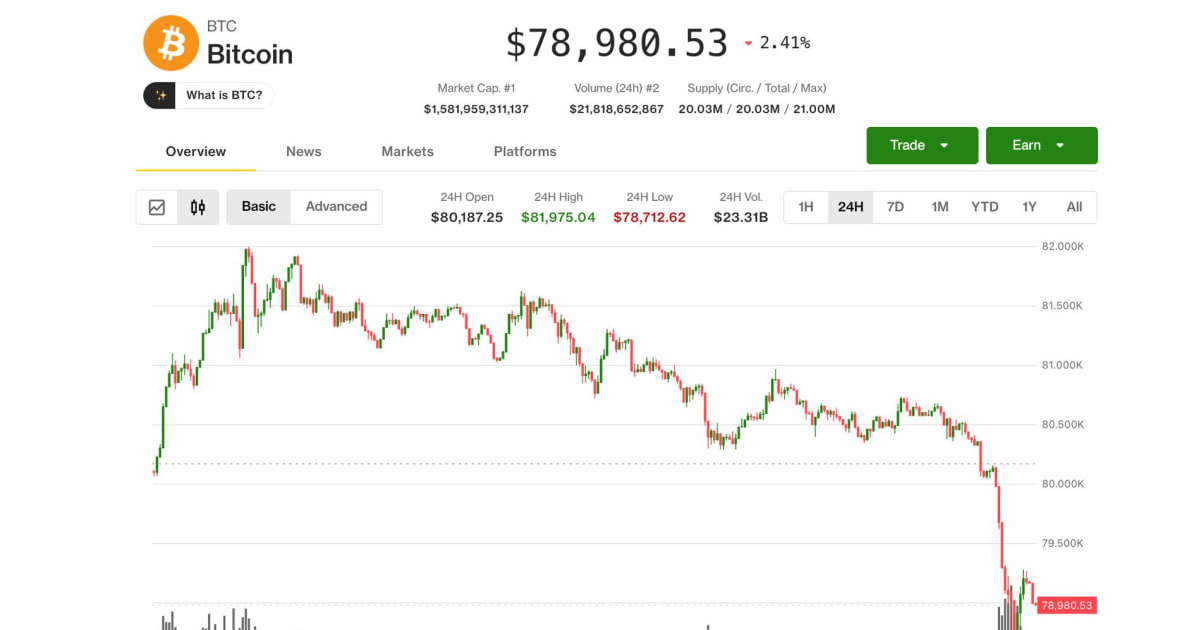
This isn't merely a temporary market dip; it is a liquidity-driven repricing. The correlation between the recent tumble in crypto-assets—dropping below the $79,000 threshold—and the sell-off in high-growth Indian tech stocks confirms a unified risk-off sentiment. Investors are currently fleeing speculative assets in favor of the US Dollar and gold, signaling that the 'easy money' era has officially been replaced by a period of rigorous valuation discipline.
How does the US 10-Year Treasury Yield impact Nifty 50 valuations?
The relationship between US bond yields and the Indian equity market is inverse and mechanical. When the US 10-year yield rises, the discount rate applied to future cash flows of Indian companies increases. For high-growth sectors, this compresses P/E ratios significantly. In 2022, when the Fed aggressively hiked rates, the Nifty 50 saw a sharp contraction in valuation multiples, with IT indices shedding over 20% in value within six months.
Foreign Institutional Investors (FIIs) operate on a global hurdle rate. As US Treasuries approach 4.5%–5% yields, the 'risk premium' required to stay invested in an emerging market like India increases. If the expected return on Indian equities does not significantly outperform this new, higher risk-free rate, capital outflow is mathematically inevitable. We are currently observing this trend manifest in the sustained net selling by FIIs, which is directly draining liquidity from the Indian banking system.
Sector-Level Breakdown: The Winners and Losers
The market is currently bifurcating into two distinct camps: the defensive safe havens and the high-beta casualties. Sectors with low debt-to-equity ratios and stable dividend yields are holding firm, while companies reliant on speculative growth or high US-dollar revenue exposure are under fire.
The IT Services Sector: Structural Headwinds
Indian IT majors, which derive the bulk of their revenue from North American clients, are facing a dual threat: the strengthening of the USD (which helps on revenue translation) is being overshadowed by the fear of a US recession or prolonged high-interest-rate environment that encourages enterprise-level budget cuts.
- TCS (TCS.NS): Despite a robust balance sheet, the stock is seeing multiple compression as institutional investors rotate out of high-valuation IT names.
- Infosys (INFY.NS): Revenue guidance is being scrutinized under the lens of reduced discretionary tech spending in the US financial services sector.
- HCL Tech (HCLTECH.NS) & Wipro (WIPRO.NS): Facing margin pressure as the cost of talent remains sticky while client contract renewals face pricing scrutiny.
- Tech Mahindra (TECHM.NS): High exposure to the communications vertical, which is historically sensitive to interest rate cycles, makes this a high-beta play currently out of favor.
Expert Perspective: Bulls vs. Bears
The Bear Case: Liquidity is the lifeblood of equity markets. If the Fed maintains rates at current levels, we are looking at a 'valuation reset' that could see Nifty 50 earnings multiples contract by another 10-15%. The cost of capital for Indian corporates is rising, which will inevitably show up in lower EPS growth in the coming quarters.
The Bull Case: India remains the fastest-growing major economy. Domestic Institutional Investors (DIIs) are providing a structural floor that did not exist a decade ago. While FIIs are selling, the SIP (Systematic Investment Plan) inflows from Indian retail investors provide a massive liquidity buffer that prevents a total market collapse.
Actionable Investor Playbook: Navigating the Volatility
Investors should adopt a 'barbell strategy' during this period of uncertainty. Keep 30% of your portfolio in cash or short-term liquid funds to capture entry points during panic-driven sell-offs. Focus the remaining 70% on companies with high pricing power and low net debt.
- Defensive Rotation: Increase allocation to FMCG and Pharmaceuticals. These sectors are historically resilient during periods of high inflation and rising interest rates.
- Watch for Entry Points: Do not 'catch a falling knife' in IT stocks. Wait for valuation multiples to reach the 5-year mean before initiating long-term positions.
- Monitor the USD/INR: A depreciating Rupee is a tailwind for export-heavy sectors, but only if the underlying demand from the US remains stable.
Risk Matrix: Probability of Market Scenarios
| Risk Factor | Probability | Impact |
|---|---|---|
| Persistent US Inflation (Sticky CPI) | High | High |
| FII Outflow Acceleration | Medium | High |
| Corporate Earnings Misses | Medium | Medium |
| Geopolitical Escalation | Low | Very High |
What to Watch Next
The next few weeks will be critical. Investors should keep a close eye on the US Federal Reserve's FOMC meeting minutes and the upcoming US CPI data releases. Any sign that the Fed is wavering on its 'higher-for-longer' stance will provide an immediate relief rally for Indian equities. Conversely, a 'hot' inflation print will likely trigger another leg down in global risk assets, further pressuring the Nifty's support levels at the 200-day moving average.
See TCS's AI Score
Our algorithmic screener scores TCS on fundamentals, momentum, and risk — free to try, no card needed.
Try the AI Screener →Have questions about this story?
Ask Welth, our finance-focused AI research assistant, for a deeper breakdown — free trial included.
Chat with Welth AI →Disclaimer: This content is generated by WelthWest Research Desk based on publicly available reports and is for informational purposes only. It does not constitute financial advice, investment recommendations, or an offer to buy or sell securities. Always consult a qualified financial advisor before making investment decisions.