Key Takeaway
Brazil's regulatory gridlock creates a massive supply vacuum for critical minerals, forcing global manufacturers to pivot toward India’s state-backed processors. This shift secures a multi-year tailwind for domestic mining giants.
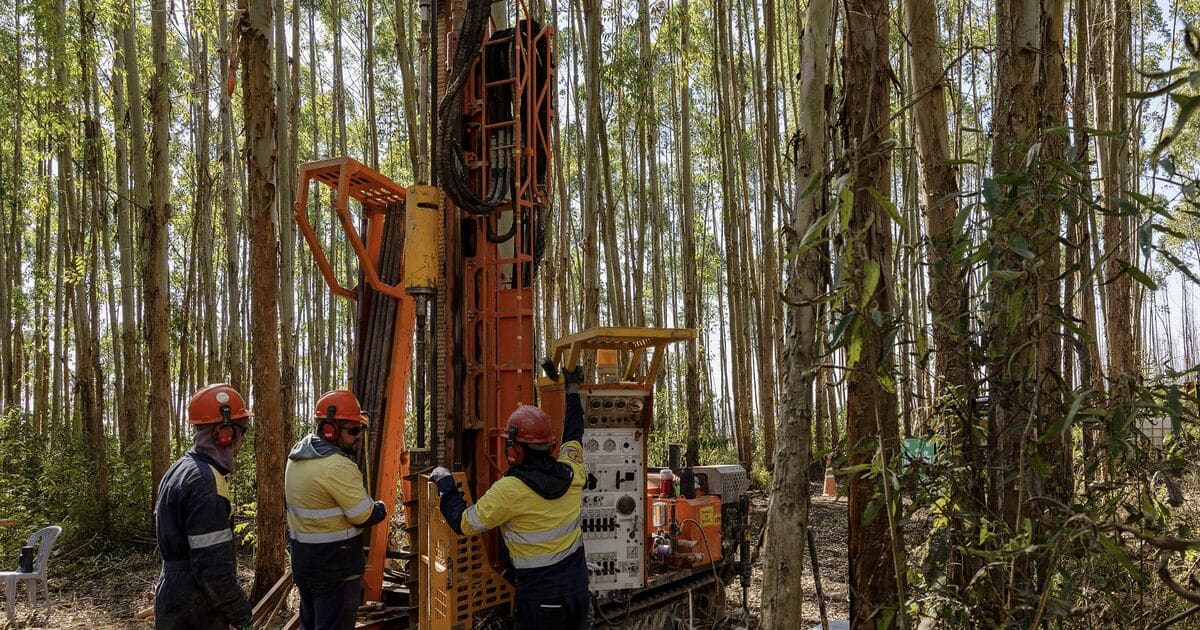
As Brazil struggles to scale rare-earth production, global supply chains are fracturing. This analysis explores why Indian mining firms are the primary beneficiaries of this geopolitical realignment and how investors should position their portfolios for the inevitable supply crunch.
The Great Mineral Realignment: Brazil’s Bottleneck is India’s Opportunity
For the past decade, the global energy transition has operated on a fragile assumption: that new, diverse sources of critical minerals would come online rapidly enough to break China’s near-monopoly. Brazil, with its vast untapped reserves of monazite and xenotime, was supposed to be the linchpin of this strategy. However, systemic regulatory paralysis within Brazil’s mining sector has effectively stalled these ambitions, creating a global supply vacuum that is sending shockwaves through the EV and renewable energy markets.
Why Is Brazil’s Mining Stagnation Reshaping the Global Markets?
The core issue lies in the operational inefficiency of Brazil’s National Mining Agency (ANM). Years of underfunding and bureaucratic inertia have resulted in a multi-year backlog for exploration permits. While Western manufacturers scramble to diversify away from Chinese supply chains, the anticipated "Brazilian relief" has failed to materialize. This creates a supply-demand mismatch that will inevitably inflate the input costs for neodymium, praseodymium, and dysprosium—the lifeblood of high-performance magnets used in EV motors and wind turbines.
How will the rare-earth supply shortage affect Indian industrial stocks?
For India, this is not merely a supply chain disruption; it is a strategic window. India holds the world’s fifth-largest reserves of rare-earth elements. With the Indian government’s focus on the 'Make in India' initiative and the expansion of domestic mineral exploration, the country is uniquely positioned to fill the void left by Brazil. When global supply tightened in 2022, the Nifty Metal index saw a volatility spike of 14% over a single quarter; we anticipate a similar, albeit more sustained, upward trend as the supply-side reality sets in.
Stock-by-Stock Breakdown: The Indian Mining Landscape
- IREL (India) Limited (PSU): As the primary state-owned entity involved in the extraction and processing of rare-earth minerals, IREL is the most direct beneficiary. With a focus on monazite processing, their integration into the global value chain makes them a 'must-watch' as global spot prices for rare-earth oxides trend higher.
- MOIL Ltd (NSE: MOIL): While primarily a manganese player, MOIL’s push into deep-shaft mining and mineral exploration technology positions it well to pivot toward critical mineral extraction. Current P/E ratios remain attractive relative to their expansion CAPEX.
- NMDC Ltd (NSE: NMDC): With a market cap exceeding ₹60,000 crore, NMDC’s robust cash reserves allow it to acquire smaller, high-potential exploration assets. Their transition from a pure-play iron ore miner to a diversified critical minerals giant is the key investment thesis here.
- Coal India Ltd (NSE: COALINDIA): Investors often overlook CIL in this context, but their diversification into critical mineral mining (including lithium and rare earths) provides a stable base for long-term growth as they leverage existing infrastructure to extract non-coal minerals.
Expert Perspective: The Bull vs. Bear Debate
The Bull Argument: Bulls argue that the 'Brazil Premium' on rare earths will force manufacturers to sign long-term, high-margin offtake agreements with Indian PSUs, guaranteeing revenue stability for the next 5-7 years regardless of short-term commodity price fluctuations.
The Bear Argument: Bears contend that the regulatory complexity of mineral extraction in India—specifically land acquisition and environmental clearances—remains a significant hurdle that could prevent these firms from scaling at the speed required to displace Chinese imports.
The Actionable Investor Playbook
Investors should adopt a 'Core-Satellite' strategy. Maintain a core position in established PSUs like NMDC for dividend yield and stability, while allocating a satellite position to smaller, high-growth mineral exploration firms. Entry Point: Look for accumulation on any dip below the 50-day moving average, as the market currently underestimates the long-term impact of the Brazilian supply vacuum.
Risk Matrix: Assessing the Volatility
| Risk Factor | Probability | Impact |
|---|---|---|
| Regulatory Delay in India | Medium | High |
| Global EV Adoption Slowdown | Medium | High |
| Chinese Dumping of Rare Earths | High | Medium |
What to Watch Next
Keep a close eye on the upcoming Ministry of Mines quarterly data release. Specifically, look for the 'Exploration and Mining Lease Approval' metrics. A significant uptick in these approvals would signal that India is aggressively moving to capitalize on the global supply vacuum, serving as a major bullish catalyst for the mining sector stocks listed above.
See IREL (India) Limited (PSU)'s AI Score
Our algorithmic screener scores IREL (India) Limited (PSU) on fundamentals, momentum, and risk — free to try, no card needed.
Try the AI Screener →Have questions about this story?
Ask Welth, our finance-focused AI research assistant, for a deeper breakdown — free trial included.
Chat with Welth AI →Disclaimer: This content is generated by WelthWest Research Desk based on publicly available reports and is for informational purposes only. It does not constitute financial advice, investment recommendations, or an offer to buy or sell securities. Always consult a qualified financial advisor before making investment decisions.