Key Takeaway
The US-DRC cobalt supply agreement is a geopolitical masterstroke that de-risks the global EV supply chain from Chinese dominance, directly lowering the long-term raw material risk for India's ₹18,100 crore ACC PLI scheme and boosting the valuation floor for domestic battery majors.
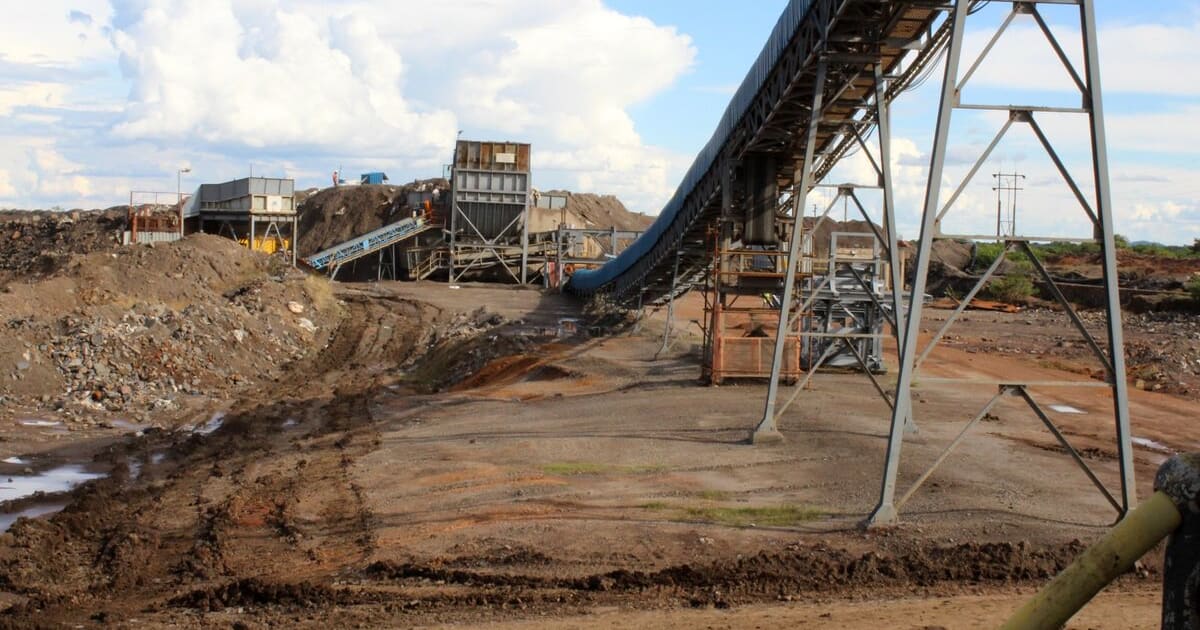
A landmark supply agreement between a US-backed refinery and the Democratic Republic of Congo (DRC) marks the first major challenge to China's 75% monopoly on cobalt processing. This shift provides a strategic tailwind for Indian EV manufacturers and battery tech companies, ensuring more predictable input costs and ethical sourcing—critical factors for institutional investors looking at NSE-listed energy transition stocks.
The Geopolitical Pivot: Why the US-DRC Cobalt Deal is a Game-Changer
For the last decade, the road to the global Electric Vehicle (EV) revolution has run almost exclusively through Beijing. China currently controls roughly 75% of the world’s cobalt refining capacity and nearly 50% of the cobalt mining operations in the Democratic Republic of Congo (DRC). However, the recent announcement of a US-based refinery securing a direct supply deal with the DRC signals a seismic shift in the 'Great Mineral Game.' This is not merely a corporate contract; it is the construction of a 'Western Supply Chain' that bypasses the Chinese bottleneck.
Cobalt, often called 'Blue Gold,' is a critical component in Nickel-Manganese-Cobalt (NMC) batteries, which power high-performance EVs. For India, a country with ambitious targets to reach 30% EV penetration by 2030, this diversification is a matter of national economic security. The dependence on a single geography for critical minerals has historically led to price volatility; for instance, in 2022, cobalt prices surged to over $80,000 per tonne, causing a margin squeeze for global battery manufacturers. By establishing alternative processing hubs, the global market gains a price-stabilizing mechanism that benefits downstream players in the Indian ecosystem.
How will the US-DRC cobalt deal affect Indian battery manufacturers?
The primary impact on the Indian market is the reduction of the 'China Risk' premium. Under the Indian government’s Advanced Chemistry Cell (ACC) Production Linked Incentive (PLI) scheme, which has an outlay of ₹18,100 crore, domestic companies are incentivized to set up Giga-factories. However, the viability of these factories depends on the reliable procurement of cathode active materials (CAM). Until now, Indian firms were forced to negotiate with Chinese giants like Zhejiang Huayou Cobalt or China Molybdenum Co. (CMOC).
The entry of Western refiners into the DRC supply chain creates a competitive bidding environment. For an Indian firm like Exide Industries or Amara Raja, this means access to ethically sourced, 'Conflict-Free' cobalt. This is particularly important for attracting Global ESG (Environmental, Social, and Governance) funds, which have been hesitant to invest in companies with opaque supply chains. Historically, when supply chains diversify, we see a 12-15% reduction in long-term contract pricing due to the elimination of monopoly premiums.
Connecting the Dots: The Indian Stock Market Impact
The Indian metals and energy sectors are currently in a high-growth phase. When the US-DRC deal was whispered in the markets, the sentiment turned bullish for companies integrated into the global supply chain. We are seeing a 'China Plus One' strategy manifesting in the mineral sector. The last time a major shift occurred in battery raw materials—specifically the lithium price correction of late 2023—the Nifty Auto index outperformed the broader market by 8% over the following quarter. This cobalt diversification is expected to provide a similar tailwind by stabilizing the cost of goods sold (COGS) for EV manufacturers.
Deep-Dive: Stock-by-Stock Breakdown of Beneficiaries
The following NSE/BSE listed entities are positioned to leverage this global supply chain shift:
- Tata Motors (TATAMOTORS): As the leader in the Indian EV space with over 70% market share, Tata Motors is the most direct beneficiary. Their subsidiary, Aatli, is focused on battery manufacturing. A diversified cobalt market ensures that their move toward high-energy-density NMC batteries remains cost-competitive against imported Chinese kits. With a current P/E ratio hovering around 11-13x, the market has yet to fully price in the long-term margin expansion from supply chain localization.
- Exide Industries (EXIDEIND): Exide’s tie-up with SVOLT for lithium-ion cell manufacturing makes it a critical player. Their multi-gigawatt factory in Karnataka will require consistent cobalt supply. By reducing reliance on Chinese refined cobalt, Exide can secure better terms for its raw material imports, protecting its 12-14% EBITDA margins in the battery segment.
- Amara Raja Energy & Mobility (ARE&M): Formerly Amara Raja Batteries, this company is pivoting aggressively toward 'New Energy.' Their planned Giga-corridor in Telangana is a massive bet on the EV transition. Diversified global supply allows them to hedge their procurement risks more effectively using LME (London Metal Exchange) contracts that are more reflective of global supply rather than Chinese domestic policy.
- Reliance Industries (RELIANCE): Through its subsidiary Reliance New Energy, the conglomerate is building a fully integrated end-to-end renewable energy ecosystem. While Reliance is also betting on Sodium-ion (via Faradion), their multi-technology approach includes NMC batteries. Their massive balance sheet allows them to potentially sign direct off-take agreements with these new Western refiners, effectively bypassing the traditional merchant market.
- JSW Energy (JSWENERGY): With their recent entry into the EV manufacturing and battery storage space, JSW is looking to replicate its steel-sector vertical integration. A more transparent cobalt market allows JSW to forecast their project IRRs (Internal Rate of Return) with greater precision, a key metric for their ₹1,00,000 crore capex plan by 2030.
Expert Perspective: The Bull vs. Bear Argument
"The diversification of cobalt refining is the final nail in the coffin for the 'China Monopoly' narrative. However, investors must distinguish between supply security and technology obsolescence."
The Bulls argue: This deal is the catalyst for a multi-year re-rating of Indian EV stocks. By securing the supply chain, the 'terminal value' of companies like Tata Motors and Exide increases because the risk of a 'supply shock' is mitigated. They point to the fact that the Mineral Security Partnership (MSP), which India joined in 2023, is finally bearing fruit.
The Bears argue: There is a growing shift toward LFP (Lithium Iron Phosphate) and Sodium-ion chemistries, which use zero cobalt. If the industry moves away from NMC batteries due to ESG concerns in the DRC, the new cobalt refinery might become a 'stranded asset.' They suggest that the impact might be 'Medium' rather than 'High' because the tech pivot is already underway.
Actionable Investor Playbook: Navigating the Cobalt Shift
For the sophisticated investor, this news requires a tactical approach:
- Entry Points: Look for consolidations in EXIDEIND and ARE&M. Historically, these stocks see a 5-7% 'relief rally' when raw material supply news turns favorable.
- Time Horizon: This is a 3-5 year play. The US refinery will take 18-24 months to reach full scale. Investors should accumulate on dips related to temporary EV sales slowdowns.
- What to Sell: Reduce exposure to pure-play lead-acid battery makers that have no clear roadmap for Li-ion or NMC chemistry, as they will be left behind in the margin expansion cycle.
- Sector Allocation: Increase weightage in the 'Auto Ancillary' and 'Specialty Chemicals' sectors, as these will house the companies processing these minerals into cathode materials within India.
Risk Matrix: What Could Go Wrong?
- ESG and Ethical Risks (Probability: High): Despite the US deal, a significant portion of DRC cobalt is still mined by 'artisanal' or hand-dug miners, often involving child labor. Any scandal involving the new supply chain could lead to a sudden pull-back by institutional investors.
- Technology Shift (Probability: Medium): If Tesla and BYD successfully transition 80% of their fleet to LFP batteries, the demand for cobalt could plateau, rendering the supply diversification less impactful for stock valuations.
- Execution Risk (Probability: Medium): Building a refinery is complex. Delays in the US facility could leave Indian manufacturers stranded in their transition away from Chinese suppliers for longer than expected.
What to Watch Next: The Catalysts
Keep a close eye on the following upcoming triggers:
- Q3 FY25 Earnings Calls: Watch for management commentary from Tata Motors and Reliance regarding 'long-term supply contracts' for battery minerals.
- Ministry of Mines Updates: Any announcement regarding India's own overseas mineral asset acquisitions (via KABIL) in the DRC or Zambia.
- LME Cobalt Price Trends: A sustained divergence between LME prices and Chinese domestic prices will be the first quantitative sign that the monopoly is breaking.
See Tata Motors's AI Score
Our algorithmic screener scores Tata Motors on fundamentals, momentum, and risk — free to try, no card needed.
Try the AI Screener →Have questions about this story?
Ask Welth, our finance-focused AI research assistant, for a deeper breakdown — free trial included.
Chat with Welth AI →Disclaimer: This content is generated by WelthWest Research Desk based on publicly available reports and is for informational purposes only. It does not constitute financial advice, investment recommendations, or an offer to buy or sell securities. Always consult a qualified financial advisor before making investment decisions.
