Key Takeaway
The expanded BRICS bloc, driven by de-dollarization and intra-bloc trade, presents a strategic pivot for India. While internal divisions pose risks, the push for local currency trade could significantly benefit Indian energy importers, banks, and infrastructure companies, potentially strengthening the rupee's global standing.
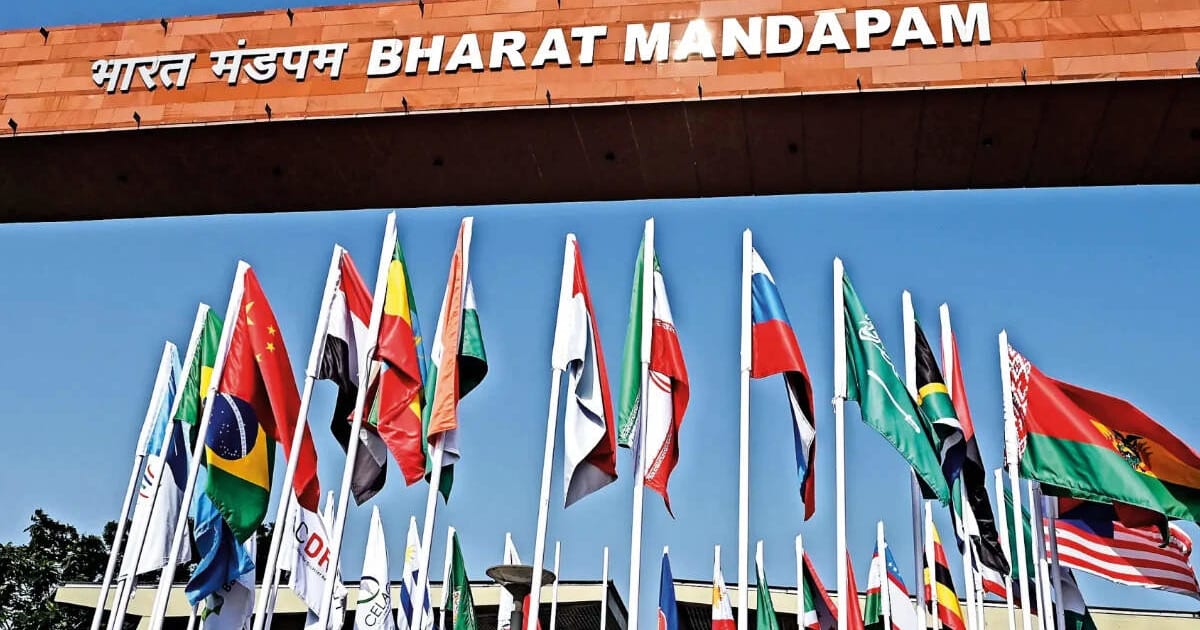
The recent BRICS Summit in New Delhi marked a pivotal moment, signaling an intensified focus on expansion, intra-bloc trade, and de-dollarization. This WelthWest Research Desk exclusive explores how this strategic shift could reshape global finance, directly impacting key Indian sectors from energy to banking. We dissect the opportunities for rupee internationalization and the challenges posed by a more diverse, potentially divided, bloc.
BRICS Expansion & De-Dollarization: India's Rupee Opportunity Amidst Global Shift
The recent BRICS Summit in New Delhi wasn't just another diplomatic gathering; it heralded a significant inflection point in the global economic landscape. With the formal invitation to new members – Argentina, Egypt, Ethiopia, Iran, Saudi Arabia, and the UAE – the bloc has fundamentally transformed, now representing a formidable share of global GDP and, crucially, energy production and consumption. WelthWest Research Desk's deep dive reveals that this expansion, coupled with an explicit agenda for de-dollarization and increased intra-bloc trade in local currencies, holds profound implications, particularly for the Indian economy and its capital markets.
Why does this matter now? The confluence of persistent global inflation, geopolitical realignments, and a growing appetite among emerging economies for diversified payment mechanisms has created a fertile ground for alternatives to the US dollar's dominance. For India, a net energy importer, the ability to settle trade in rupees or other local currencies with major oil producers like Saudi Arabia and the UAE within the expanded BRICS framework could significantly reduce currency conversion costs and exposure to dollar volatility. This strategic shift isn't merely theoretical; it's a tangible push towards a multipolar financial system, and India stands at a critical juncture to leverage this evolution.
Deep Market Impact Analysis: Navigating the BRICS Ripple Effect on Indian Stocks
The implications of a strengthened BRICS bloc and its de-dollarization agenda for the Indian stock market are multifaceted, touching various sectors from banking to energy and infrastructure. While the immediate impact might appear nuanced, the long-term structural shifts could be substantial, creating both opportunities and challenges for investors.
The most direct beneficiaries are likely to be companies involved in international trade, particularly those dealing with energy imports and exports. Imagine a scenario where India, through its public sector oil marketing companies, can settle a significant portion of its crude oil purchases from Saudi Arabia or the UAE in Indian Rupees. This would not only reduce the demand for US dollars but also mitigate foreign exchange risk, potentially leading to more stable import costs. Historically, periods of rupee depreciation against the dollar have directly impacted the profitability of these companies, as evidenced by the Q2 FY23 results where several oil marketing companies reported inventory losses due to currency fluctuations. A shift towards local currency trade could dampen such volatility.
Furthermore, the increased focus on intra-BRICS trade and potential funding from institutions like the New Development Bank (NDB) could spur infrastructure development. The NDB, with its mandate to mobilize resources for infrastructure and sustainable development projects in BRICS and other emerging economies, could see an expanded role. If the NDB increases its project funding, particularly within member states, Indian infrastructure companies could find new avenues for growth, securing contracts for projects financed by the bank.
The financial sector, particularly public and private banks with significant international trade finance operations, stands to gain from increased local currency transactions. As the Reserve Bank of India (RBI) actively promotes the internationalization of the rupee through mechanisms like the Rupee Trade Settlement mechanism, banks facilitating these transactions will see an uptick in fee-based income and potentially larger balance sheet sizes for trade finance. While a full-scale de-dollarization is a decades-long process, even a marginal shift represents a substantial redirection of global financial flows, given the sheer volume of international trade.
Last time significant global trade realignments occurred, such as post-Brexit trade shifts or the US-China trade war in 2018-2019, specific sectors and companies with strong international exposure experienced notable volatility. For instance, companies heavily reliant on exports to the UK saw initial dips post-Brexit, while those with diversified trade partners proved more resilient. The BRICS expansion, while different in nature, similarly prompts a re-evaluation of supply chains and payment mechanisms, favoring entities agile enough to adapt to new trade paradigms.
Which Indian Stocks Will Thrive or Face Headwinds from BRICS De-Dollarization?
The BRICS expansion and its de-dollarization agenda will create distinct winners and, potentially, some indirect losers within the Indian stock market. Here’s a detailed breakdown of specific NSE/BSE stocks and sectors:
- State Bank of India (SBI): As India's largest public sector bank, SBI is at the forefront of facilitating international trade and has a significant presence in global finance. An increase in rupee-denominated trade with BRICS nations would directly boost its trade finance volumes, foreign currency operations, and correspondent banking relationships. SBI's extensive network and government backing position it strongly to capture market share in this evolving landscape. Its market capitalization of approximately ₹5.5 trillion and P/E ratio of around 11x (as of recent data) suggest a robust, value-oriented play in the financial sector. Sector peers like Bank of Baroda and Punjab National Bank, also with strong international operations, would similarly benefit.
- ICICI Bank: A leading private sector bank known for its technological prowess and robust corporate banking services, ICICI Bank is well-positioned to capitalize on increased local currency trade. Its focus on digital solutions for trade finance and strong relationships with large corporates engaged in international business could see it gaining market share. The bank's agile approach to adopting new payment mechanisms could give it an edge. With a market cap exceeding ₹7.5 trillion and a P/E ratio around 19x, it offers a growth-oriented exposure to the financial sector's evolving dynamics. HDFC Bank, with its vast corporate client base, is another strong contender in this space.
- Reliance Industries (RIL): While primarily known for its diversified portfolio, RIL's massive refining and petrochemical operations make it a significant energy importer and exporter. The ability to settle a portion of its crude oil imports in rupees or other local currencies could provide substantial cost savings and reduce foreign exchange exposure. Given RIL's scale (market cap over ₹19 trillion) and its strategic focus on global energy markets, any move towards de-dollarization in energy trade could directly impact its bottom line, improving profitability margins in its O2C (Oil-to-Chemicals) segment.
- Oil and Natural Gas Corporation (ONGC): As India's largest crude oil and natural gas producer, ONGC's primary impact would be indirect but significant. While ONGC sells its output domestically, a more stable and diversified currency environment for energy imports benefits the entire Indian energy ecosystem. Reduced volatility in crude prices (due to potentially lower currency risk premiums for importers) could create a more predictable operating environment for upstream players like ONGC, indirectly supporting stable revenue streams and investment planning. Its market cap is around ₹2.5 trillion.
- Indian Oil Corporation (IOC): As the largest refiner and marketer of petroleum products in India, IOC is a major importer of crude oil. Direct payment mechanisms in local currencies with BRICS energy producers would immediately reduce its reliance on dollar-denominated transactions, potentially lowering hedging costs and improving operational efficiency. IOC's massive import bill makes it highly sensitive to currency fluctuations, and any de-dollarization efforts offer a direct financial benefit. Its market cap stands around ₹2.3 trillion. Bharat Petroleum Corporation (BPCL) and Hindustan Petroleum Corporation (HPCL) are direct peers that would experience similar impacts.
Expert Perspective: Bulls vs. Bears on BRICS' Real Impact
The BRICS expansion and de-dollarization narrative elicit strong, often divergent, views from market experts.
The Bulls argue that the expanded BRICS bloc, now encompassing a significant portion of global GDP, population, and crucially, energy resources, represents an undeniable shift towards a multipolar world order. They believe the sheer economic weight of the bloc, coupled with a concerted effort to reduce reliance on the US dollar, will inevitably lead to increased local currency trade. This, for India, translates into enhanced energy security, reduced import costs, and a significant boost to the rupee's internationalization efforts. From an investor's perspective, this creates a long-term structural tailwind for Indian banks facilitating cross-border trade and energy companies benefiting from diversified payment mechanisms. They point to the growing number of bilateral agreements for trade settlement in local currencies as tangible evidence of this trend, arguing that the momentum is irreversible.
The Bears, however, temper this optimism with a healthy dose of skepticism. They highlight the inherent internal divisions within the enlarged BRICS bloc – geopolitical tensions between India and China, differing economic priorities, and varying levels of commitment to de-dollarization. They argue that while the ambition is clear, the practical implementation of a cohesive trade and currency strategy will be fraught with challenges. The absence of a common BRICS currency, coupled with the continued dominance of the dollar in global financial infrastructure and commodity markets, means any shift will be slow and incremental. For investors, this implies that while the narrative is compelling, the actual market impact might be far less dramatic in the short to medium term, with many announced initiatives remaining symbolic rather than transformative. They caution against overestimating the bloc's ability to overcome its internal friction and present a united front against established global financial norms.
Actionable Investor Playbook: Positioning for the BRICS Shift
Given the nuanced outlook, a strategic approach is essential for Indian investors looking to capitalize on the BRICS expansion and de-dollarization trend:
- Watch & Accumulate (Long-Term): Financials and Energy Importers. Begin accumulating positions in leading public and private sector banks (e.g., SBI, ICICI Bank) and major oil marketing companies (e.g., IOC, BPCL) over a 2-3 year horizon. Look for dips in their stock prices as entry points. These companies are direct beneficiaries of increased local currency trade and reduced dollar reliance for energy imports. Monitor their quarterly reports for commentary on international trade volumes and currency hedging costs.
- Strategic Allocation (Medium-Term): Infrastructure & Commodity Trading. Consider a tactical allocation to infrastructure companies that could benefit from increased NDB funding or intra-BRICS project collaboration. Companies with strong execution capabilities and international experience could see new opportunities. Similarly, commodity trading companies (though less directly listed pure-plays on NSE/BSE) that facilitate trade between BRICS nations could see increased volumes. This is a 1-2 year horizon.
- Monitor Closely (Short-Term): Geopolitical Developments. The primary risk to this thesis is internal BRICS divisions. Investors should closely monitor geopolitical developments, particularly relations between India and China, and the broader coherence of the bloc's economic agenda. Any signs of significant friction could dampen enthusiasm and slow down proposed initiatives.
- Hedge Against Dollar Strength (Optional): While the BRICS agenda aims to reduce dollar reliance, the dollar remains the dominant global currency. For investors heavily exposed to dollar-denominated assets, considering a small hedge against potential dollar strength (e.g., through currency ETFs or futures) might be prudent, especially if the de-dollarization narrative faces significant headwinds.
Risk Matrix: Assessing the Hurdles for BRICS' Ambitions
While the BRICS expansion presents significant opportunities, several risks could impede the realization of its full potential:
- Internal Bloc Divisions (High Probability, Medium Impact): The expanded BRICS bloc is more diverse than ever, encompassing nations with differing political systems, economic priorities, and even geopolitical rivalries (e.g., India-China border tensions, Saudi Arabia-Iran historical animosities). This internal friction could significantly hinder the effective implementation of a unified trade or currency strategy. Consensus-building will be challenging, potentially leading to stalled initiatives or watered-down commitments.
- US Dollar Resilience & Global Financial Infrastructure (Medium Probability, High Impact): The US dollar's dominance is deeply entrenched in global trade, finance, and commodity markets. The existing global financial infrastructure, including SWIFT, is heavily dollar-centric. Overcoming this inertia, even with a concerted effort, will be a monumental task requiring decades. Any significant shift away from the dollar would necessitate parallel development of robust, alternative financial clearing systems that can instill confidence globally, a process that is far from complete.
- Lack of a Common BRICS Currency (High Probability, Medium Impact): Despite discussions, the creation of a common BRICS currency remains a distant prospect, if at all feasible. Without a unified currency or a fully convertible, widely accepted proxy, local currency trade will largely rely on bilateral agreements and currency swaps, which, while beneficial, lack the systemic impact of a truly alternative global reserve asset. This limits the scale and efficiency of de-dollarization efforts.
- Global Economic Slowdown (Medium Probability, Medium Impact): A significant global economic downturn could divert attention and resources from long-term strategic initiatives like de-dollarization, as nations prioritize immediate economic stability. Reduced global trade volumes, irrespective of currency, would naturally dampen the impact of any intra-BRICS trade initiatives.
What to Watch Next: Catalysts for the BRICS Narrative
Investors should closely monitor the following developments to gauge the trajectory of the BRICS agenda and its impact on Indian markets:
- RBI's Rupee Trade Settlement Progress: Keep an eye on the volume and value of trade settled through the RBI's rupee trade settlement mechanism. Regular updates from the central bank or banking sector on the number of countries and transactions utilizing this mechanism will be a key indicator of rupee internationalization.
- New Development Bank (NDB) Funding Announcements: Watch for announcements of new projects financed by the NDB, particularly those involving Indian companies or significant intra-BRICS collaboration. Increased funding activity signals tangible progress in the bloc's development agenda.
- Bilateral Currency Swap Agreements: Any new bilateral currency swap agreements between India and other BRICS nations (especially the new members like Saudi Arabia or UAE) for trade settlement will be a strong positive signal.
- Statements from BRICS Finance Ministers and Central Bank Governors: Communiqués from these high-level meetings will provide insights into the practical steps being taken towards de-dollarization and enhanced intra-bloc economic cooperation. Specific commitments or pilot projects will be crucial to watch.
- Commodity Pricing in Local Currencies: Observe if major commodity exchanges or trading houses begin offering pricing or settlement options for key commodities (e.g., crude oil, metals) in currencies other than the US dollar, particularly within BRICS nations.
See SBI (State Bank of India)'s AI Score
Our algorithmic screener scores SBI (State Bank of India) on fundamentals, momentum, and risk — free to try, no card needed.
Try the AI Screener →Have questions about this story?
Ask Welth, our finance-focused AI research assistant, for a deeper breakdown — free trial included.
Chat with Welth AI →Disclaimer: This content is generated by WelthWest Research Desk based on publicly available reports and is for informational purposes only. It does not constitute financial advice, investment recommendations, or an offer to buy or sell securities. Always consult a qualified financial advisor before making investment decisions.