Key Takeaway
The escalating Canada-US tariff dispute signals a growing global protectionist trend, threatening supply chains and commodity prices. Indian investors must brace for increased market volatility, potential headwinds for export-oriented sectors, and a re-evaluation of auto component and IT service providers as global trade uncertainty mounts.
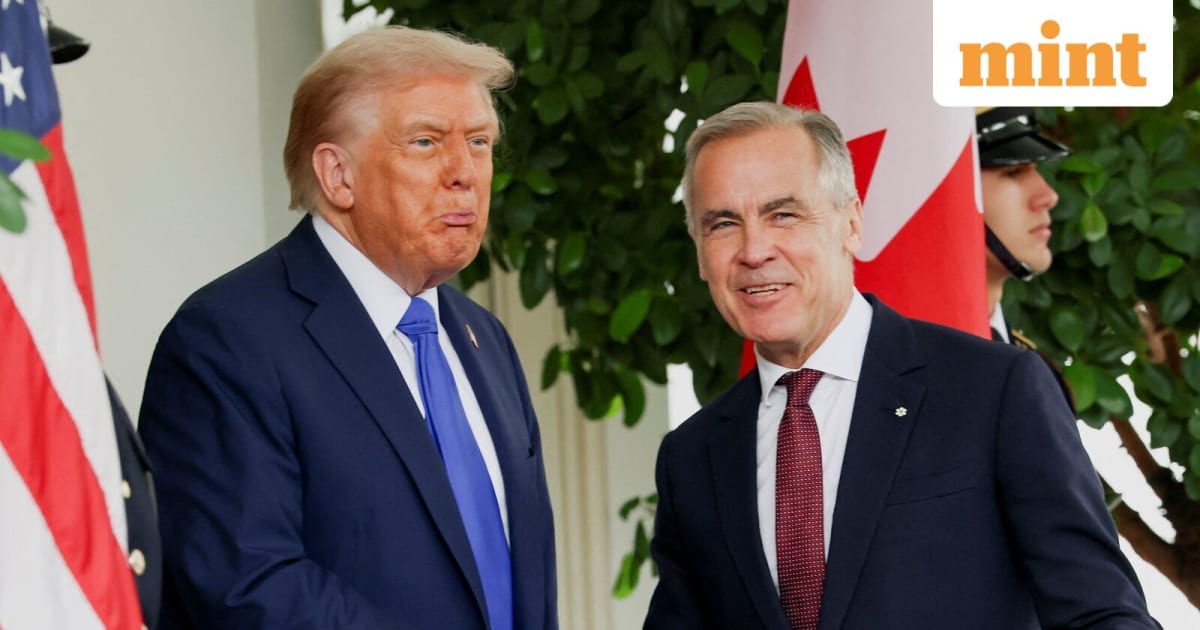
Canada's imminent retaliatory tariffs on US goods mark a critical escalation in global trade tensions, moving beyond rhetoric to concrete action. This WelthWest deep dive analyzes how this bilateral dispute between two major economies could ripple through global supply chains, commodity markets, and ultimately impact specific Indian sectors and stocks. We provide an actionable investor playbook to navigate this evolving landscape.
Canada-US Tariff War Ignites: Unpacking the Global Trade Ripple Effect on Indian Markets
The global economic landscape is bracing for a significant shift as Canada prepares to levy retaliatory tariffs on a range of U.S. goods. This move isn't just another diplomatic spat; it's a potent signal of escalating protectionism, threatening to unravel decades of integrated global supply chains and potentially igniting a broader trade war. At WelthWest Research Desk, we believe this development, while seemingly distant, carries profound implications for Indian investors, impacting everything from the Nifty's trajectory to the earnings of specific export-oriented companies.
The immediate trigger is the U.S. threat of tariffs on Canadian auto exports and critical minerals, a move widely perceived as an attempt to compel Canada to 'fall in line' with U.S. trade demands. Canada's response, expected to be announced imminently, will target specific U.S. products, mirroring the U.S. action. This tit-for-tat dynamic is eerily reminiscent of the U.S.-China trade war, which significantly dampened global trade volumes and created considerable market uncertainty between 2018 and 2020. Understanding the mechanisms through which this dispute can affect Indian equities is paramount for prudent portfolio management.
Why Does the Canada-US Trade Spat Matter for Indian Investors Now?
While India is not a direct party to this bilateral dispute, its deep integration into the global economy means it's far from immune. The primary transmission channels are threefold: global supply chain disruption, commodity price volatility, and shifts in global investor sentiment. A significant portion of India's economic growth is tied to global demand and stable trade environments. Any disruption to major trade arteries, especially those involving critical sectors like automobiles and minerals, creates a ripple effect that touches every corner of the world market.
Consider the automotive sector, a global industry with highly interconnected supply chains. Tariffs between the U.S. and Canada on auto components or finished vehicles will force manufacturers to re-evaluate sourcing, production locations, and pricing strategies. This inevitably leads to inefficiencies, increased costs, and potentially reduced profitability for global players. Indian auto component manufacturers, while not directly supplying North American OEMs for their intra-region trade, are deeply embedded in the global automotive value chain. Any slowdown in global auto production or demand due to tariffs will eventually translate into reduced order books for Indian suppliers.
Furthermore, the broader sentiment of protectionism can lead to a 'risk-off' environment among foreign institutional investors (FIIs). When global trade uncertainty rises, FIIs tend to withdraw capital from emerging markets like India and reallocate to safer assets. This can lead to increased volatility in the Nifty and Sensex, currency depreciation, and a higher cost of capital for Indian companies. During the peak of the U.S.-China trade war in 2019, FIIs were net sellers in Indian equities for several months, contributing to a period of subdued market performance.
Deep Market Impact Analysis: Connecting the Dots to Indian Equities
The escalating trade friction is not merely a political talking point; it's a tangible economic threat that demands a granular analysis of its potential impact on Indian markets. Our research indicates that the most vulnerable sectors in India are those with significant export exposure or those heavily reliant on global supply chains for critical inputs. The 'global protectionist trend' isn't just a phrase; it's a direct threat to the free flow of goods and services that India's growth model has increasingly relied upon.
Historically, periods of heightened global trade tensions have seen the Nifty 50 exhibit increased beta to global equity market movements. For instance, during the U.S.-China trade war escalation in Q2 2019, when both sides imposed significant tariffs, the Nifty 50 saw a correlation coefficient of nearly 0.7 with the S&P 500, compared to an average of 0.5 in more stable periods. A similar pattern could emerge, leading to Indian benchmarks mirroring global downturns more acutely.
Beyond the headline indices, the impact will be felt disproportionately across specific sectors. The automotive sector, as discussed, is particularly exposed. India's auto component industry, with an estimated export revenue of over $15 billion annually, could face indirect demand headwinds. Similarly, IT services, while seemingly insulated, rely on a stable global economic environment for client spending. Any global economic slowdown triggered by trade wars could lead to deferred IT projects and reduced discretionary spending by international clients, impacting growth rates for Indian IT giants.
How Will Global Trade Tensions Affect Indian Auto & IT Stocks?
The ripple effect from the Canada-US trade dispute will likely manifest in two key ways for Indian markets: direct impact on export-oriented sectors and indirect impact via global economic slowdown and FII sentiment. Let's delve into specific stocks.
- Tata Motors (NSE: TATAMOTORS): As a global automotive player with significant international operations (Jaguar Land Rover), Tata Motors is indirectly exposed to global auto demand fluctuations. While JLR's primary markets are Europe and China, a general downturn in North American auto demand due to tariffs could create a global oversupply, depressing prices and volumes. Its current market cap stands at approximately INR 3.3 trillion. A sustained global auto slowdown could pressure its ambitious EV transition plans and profitability.
- Motherson Sumi Wiring India (NSE: MSUMI): A leading auto component manufacturer, MSUMI's fortunes are intrinsically linked to the global automotive production cycle. While its primary focus is wiring harnesses, a general slowdown in global auto manufacturing, driven by tariff-induced cost increases and demand contraction, could lead to reduced order books. Despite its strong domestic presence, global headwinds cannot be ignored. The stock has a P/E ratio of around 70x, reflecting high growth expectations that could be challenged by global trade uncertainties.
- Bosch Ltd (NSE: BOSCHLTD): As a major supplier of automotive technology and components, Bosch Ltd is another bellwether for the Indian auto ancillary sector. Its revenue streams are diversified but a significant portion comes from supplying to OEMs. Global trade friction leading to reduced vehicle production or increased input costs for OEMs could indirectly impact Bosch's order pipeline and margins.
- Infosys (NSE: INFY): While not directly in the crosshairs of auto tariffs, Infosys, with its substantial revenue from North American clients (over 60%), faces an indirect threat. A global economic slowdown fueled by widespread trade protectionism could lead to reduced IT spending by its clients, particularly in discretionary projects. Historically, during periods of global economic uncertainty, IT services companies have seen project deferrals. Infosys' current market cap is approximately INR 6.2 trillion. A sustained global slowdown could temper its revenue growth guidance.
- Tata Steel (NSE: TATASTEEL): As a major global steel producer, Tata Steel is sensitive to global commodity prices and industrial demand. While not directly involved in Canada-US tariffs, a broader trade war could depress global steel prices due to oversupply or reduced demand from manufacturing sectors. This could impact its European operations and overall profitability. Its current P/E is around 20x.
- Grasim Industries (NSE: GRASIM): With diverse interests including chemicals and textiles, Grasim could see an impact through its global supply chains and export markets. Its VSF (Viscose Staple Fibre) business, for instance, is exposed to global textile demand. Any slowdown in global trade could affect demand for its products and increase freight costs due to logistical disruptions.
Expert Perspective: Bulls vs. Bears on Global Trade Tensions and Indian Markets
The WelthWest Research Desk has engaged with leading market strategists to distill a balanced perspective on this evolving situation. The prevailing sentiment leans towards caution, but a contrarian view offers nuances.
The Bears' Argument: "This Canada-US tariff escalation is the thin end of the wedge," argues a veteran fund manager at a Mumbai-based institutional fund. "It validates the thesis that protectionism is here to stay, not a temporary blip. Global supply chains will re-engineer, leading to higher costs and inflation. For India, this means FII outflows as global risk appetite diminishes, and export growth will face significant headwinds. We could see a 10-15% correction in export-heavy sectors like IT and auto ancillaries over the next 6-12 months if the trade war intensifies." They point to the potential for a global recession if major economies engage in widespread protectionist policies, dampening demand across the board.
The Bulls' Counterpoint: "While the headlines are concerning, the direct impact on India is limited," counters an analyst specializing in emerging markets. "Canada and the U.S. are not India's largest trading partners for these specific goods. Furthermore, global supply chain diversification could actually benefit India in the long run as companies seek alternative, stable manufacturing bases. India's robust domestic consumption story provides a significant cushion against global headwinds. Any market correction due to FII selling might present a buying opportunity for fundamentally strong domestic-focused companies, especially in infrastructure and financial services. We expect the Nifty to consolidate rather than crash, with a potential rebound once the initial shock subsides, perhaps limiting downside to 5-7% in the short term." They emphasize that India's domestic growth drivers remain strong, and the government's focus on 'Atmanirbhar Bharat' (self-reliant India) could mitigate some external shocks.
Actionable Investor Playbook: Navigating the Trade War Turbulence
Given the nuanced risks and opportunities, a strategic approach is crucial for Indian investors. Our playbook focuses on defensive positioning, selective growth opportunities, and vigilance.
- Watch (Short-term 0-3 months):
- Export-oriented Auto Ancillaries: Stocks like Motherson Sumi Wiring India (NSE: MSUMI) and Bosch Ltd (NSE: BOSCHLTD). While long-term prospects remain, short-term volatility due to global auto slowdowns and supply chain reconfigurations is likely. Monitor order book trends and management commentary closely. Entry points might emerge on significant corrections.
- Global IT Services: Companies like Infosys (NSE: INFY) and TCS (NSE: TCS). While resilient, a broad global economic slowdown could impact client spending. Watch for any revisions in revenue guidance or hiring freezes.
- Buy (Medium-term 6-12 months):
- Domestic Consumption Plays: Companies with strong domestic demand drivers and limited export exposure. Examples include leading FMCG players (e.g., Hindustan Unilever - NSE: HUL, ITC - NSE: ITC) and select financial services companies (e.g., HDFC Bank - NSE: HDFCBANK). These stocks offer relative stability during global uncertainties.
- Infrastructure & Capital Goods: Government spending on infrastructure is a key growth driver. Companies like L&T (NSE: LT) could benefit from sustained domestic capex cycles, offsetting global headwinds.
- Sell/Reduce Exposure (Short-term 0-3 months):
- Highly leveraged companies with significant foreign currency debt, as rupee depreciation could increase servicing costs.
- Companies with disproportionately high revenue reliance on North American or European discretionary spending, especially if not in critical sectors.
For investors with a longer time horizon (1-3 years), any significant market correction driven by global trade fears could present attractive entry points for high-quality Indian businesses. The key is to differentiate between temporary sentiment-driven dips and fundamental deterioration.
Risk Matrix: Assessing the Probabilities
The WelthWest Research Desk identifies the following key risks associated with the escalating trade tensions:
- Further Escalation to a Global Trade War (Probability: Medium-High): The biggest risk is that this bilateral dispute morphs into a multi-front trade war involving other major economies like China and the EU. This would severely disrupt global supply chains, dampen international trade, and significantly impact global GDP growth. The indirect effect on India through FII outflows and reduced export demand would be substantial.
- Global Economic Slowdown/Recession (Probability: Medium): Widespread tariffs increase costs for businesses and consumers, leading to reduced investment and consumption. This could trigger a global economic slowdown or even a recession, impacting corporate earnings worldwide, including for Indian companies with global operations or export exposure.
- Commodity Price Volatility (Probability: High): Trade wars can disrupt commodity flows and demand patterns. For instance, tariffs on specific goods can lead to oversupply in some markets and scarcity in others, causing price swings. India, being a net importer of crude oil and several other commodities, could face inflationary pressures or benefit from lower input costs depending on the specific commodity movements.
- Rupee Depreciation (Probability: Medium): In a 'risk-off' global environment, capital tends to flow out of emerging markets, putting pressure on their currencies. A significant FII outflow from India due to global trade uncertainty could lead to rupee depreciation against the USD, making imports more expensive and potentially fueling inflation.
What to Watch Next: Key Catalysts and Data Points
Investors should closely monitor several upcoming events and data releases that will shape the trajectory of this evolving trade narrative:
- Canadian Tariff Announcement (Imminent): The specifics of Canada's retaliatory tariffs, including the list of targeted U.S. goods and the tariff rates, will provide the first concrete measure of the immediate economic impact.
- U.S. Administration's Response: Any further escalatory moves from the U.S. side will indicate the willingness of both nations to engage in a prolonged trade dispute.
- Global Trade Data (Monthly/Quarterly): Watch for global trade volume statistics from organizations like the WTO, as well as export/import data from major economies. Any significant contraction will signal deeper trouble.
- Manufacturing PMIs (Purchasing Managers' Indices): These monthly indicators from key economies (U.S., Canada, Europe, China) will reflect the health of the manufacturing sector and provide early warnings of supply chain disruptions or demand contraction.
- Central Bank Commentary: Statements from the U.S. Federal Reserve, Bank of Canada, and other major central banks regarding trade tensions and their impact on monetary policy will be crucial.
- Corporate Earnings Calls: Listen closely to the management commentary of multinational corporations and export-oriented Indian companies for insights into their outlook on global trade, supply chains, and demand.
The Canada-U.S. tariff dispute is more than just a bilateral disagreement; it's a barometer for the future of global trade. Prudent Indian investors must stay informed, adapt their strategies, and focus on resilient businesses to navigate the potential turbulence ahead.
Run a free AI Stock Screen
Our algorithmic screener scores any NSE/BSE stock on fundamentals, momentum, and risk — free to try, no card needed.
Try the AI Screener →Have questions about this story?
Ask Welth, our finance-focused AI research assistant, for a deeper breakdown — free trial included.
Chat with Welth AI →Disclaimer: This content is generated by WelthWest Research Desk based on publicly available reports and is for informational purposes only. It does not constitute financial advice, investment recommendations, or an offer to buy or sell securities. Always consult a qualified financial advisor before making investment decisions.