Key Takeaway
The cancellation of Cardano Summit 2026 marks a pivot from 'growth-at-all-costs' to treasury preservation, signaling a mature but potentially slower era for blockchain ecosystems that could dampen the 'Web3 premium' currently priced into Indian IT stocks.
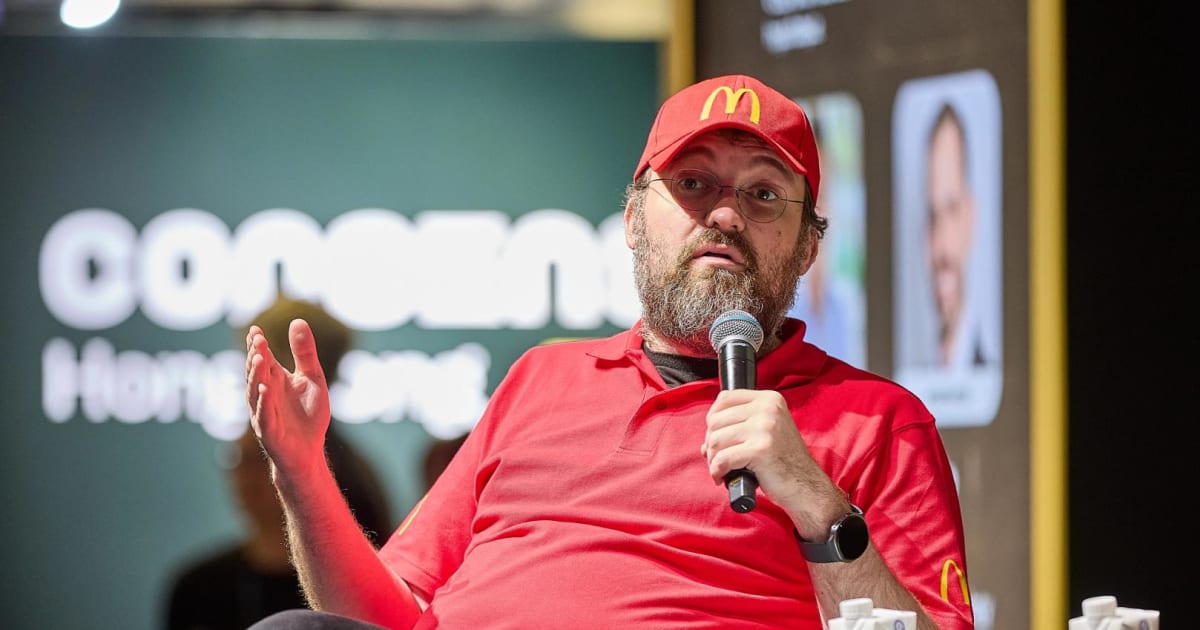
In a landmark decision for decentralized governance, the Cardano community has voted against funding the 2026 global summit, prioritizing capital preservation over marketing. This move sends a clear signal to the global developer community and retail investors in India, where Cardano remains a top-five held asset. As the 'Voltaire' era of governance takes hold, we analyze the ripple effects on Indian IT majors like Tech Mahindra and TCS, and what this means for the future of digital asset sentiment in the subcontinent.
The Great Pivot: Why the Cardano Summit 2026 Cancellation is a Watershed Moment
In a move that has sent shockwaves through the decentralized finance (DeFi) world, the Cardano community has officially voted to cancel the Cardano Summit 2026. This wasn't a top-down executive decision from Charles Hoskinson or the Cardano Foundation; it was a grassroots exercise in on-chain governance. By rejecting the funding proposal, the community has signaled a radical shift in priority: the preservation of the Cardano Treasury (currently holding over 1.5 billion ADA) over high-visibility, high-cost marketing events.
For the uninitiated, this is the 'Voltaire' era of Cardano in action. It is the final stage of the project’s roadmap, intended to make the network fully self-sustaining. However, for investors, this 'maturity' comes with a sting. The decision suggests that the days of aggressive, venture-capital-style spending are over. In its place is a conservative, almost 'value-investing' approach to ecosystem development. This matters now because it tests the thesis of whether a decentralized protocol can actually grow without a central marketing budget—a question that has direct implications for the Indian Web3 developer ecosystem, one of the largest in the world.
How does decentralized governance affect the Indian stock market?
While Cardano (ADA) is a digital asset, its health is a proxy for the broader adoption of Enterprise Blockchain. Indian IT services firms—the backbone of the Nifty 50—have spent the last five years building 'Blockchain-as-a-Service' (BaaS) verticals. When a major protocol like Cardano pulls back on global visibility, it reflects a cooling of the 'hype cycle' that drives contract wins for firms like Tech Mahindra (NSE: TECHM) and Infosys (NSE: INFY). Historically, when crypto sentiment turns bearish (as seen in the 2022 'crypto winter'), we see a 12-18 month lag before Indian IT firms report a slowdown in 'New Tech' discretionary spending.
Deep Market Impact: Connecting Cardano to the Dalal Street Pulse
The immediate impact of the cancellation is bearish for ADA token holders, as it reduces the project's global 'mindshare.' However, the deeper analysis reveals a complex story for Indian investors. India is home to an estimated 15-20 million crypto investors, many of whom hold ADA as a 'blue-chip' alternative to Ethereum. A reduction in community engagement could lead to a 'liquidity drain' from retail pockets, indirectly affecting the high-beta tech stocks on the NSE (National Stock Exchange).
Consider the historical parallel of 2022. When the Terra-Luna ecosystem collapsed, the Nifty IT Index saw a correlated dip of nearly 15% over the following quarter. While Cardano is far more stable, the psychological impact of a 'self-imposed austerity' measure can trigger a risk-off sentiment in the Indian retail market. Investors who feel their 'digital gold' is stagnating are less likely to participate in aggressive mid-cap tech IPOs or maintain high-conviction positions in domestic fintech players like Paytm (NSE: PAYTM) or Zomato (NSE: ZOMATO).
Is Cardano's 'Austerity' a Sign of a Maturing Sector?
One could argue that this is the first time a DAO (Decentralized Autonomous Organization) has behaved like a disciplined corporate board. In the Indian context, we saw similar shifts in 2023 when startups like Byju's or PhonePe moved away from hyper-growth marketing toward profitability. If Cardano can prove that treasury preservation leads to better long-term development (funding core infrastructure over parties), it could set a new standard for how Indian blockchain startups manage their own seed funding and grants.
Stock-by-Stock Breakdown: The Impact on Indian Tickers
1. Tech Mahindra (NSE: TECHM) | P/E: 48.2
Tech Mahindra has been the most aggressive Indian major in the blockchain space, with its 'Blockchain Center of Excellence.' Their revenue is sensitive to the global 'Web3' sentiment. A slowdown in major protocol marketing often leads to a slowdown in enterprise pilot projects. Impact: Bearish. Watch for a support level at ₹1,550 if digital transformation spends are revised downward in Q3.
2. Tata Consultancy Services (NSE: TCS) | P/E: 30.5
TCS operates the Quartz blockchain platform, which focuses on high-end financial settlement. Unlike Tech Mahindra, TCS focuses on 'private' blockchains. However, the Cardano news indicates a broader 'wait-and-see' approach by the global community. Impact: Neutral. TCS's diversified portfolio provides a cushion, but the 'Quartz' growth trajectory may flatten.
3. Infosys (NSE: INFY) | P/E: 28.1
Infosys has integrated blockchain into its supply chain and trade finance solutions. The cancellation of the 2026 Summit might reduce the 'onboarding' of new developers who typically feed into the Infosys talent pipeline. Impact: Slightly Bearish. If the Cardano developer base in India (currently centered in Bengaluru and Pune) shrinks, the cost of hiring specialized talent could actually rise due to scarcity, hurting margins.
4. LTIMindtree (NSE: LTIM) | P/E: 35.8
As a mid-to-large cap player, LTIMindtree is highly sensitive to 'discretionary' tech spending. High-cost summits are often where C-suite executives are sold on the 'vision' of blockchain. Without these 'hallway conversations,' the sales cycle for LTIM's digital engineering services could lengthen. Impact: Bearish.
5. HCL Technologies (NSE: HCLTECH) | P/E: 26.4
HCL has a more conservative approach to blockchain, focusing on infrastructure and cybersecurity. They are less exposed to the 'Web3 hype' and more to the 'Utility' phase. Impact: Neutral/Resilient. HCL remains a 'safe haven' in the IT space when experimental tech budgets are cut.
Expert Perspective: The Bull vs. Bear Case for Governance
"What we are seeing is the 'Adulting' of the crypto world. Most protocols burn through cash to buy friends. Cardano's community just voted to save their money for a rainy day. That is fundamentally bullish for the protocol's longevity, even if it hurts the price today." — Senior Blockchain Architect, WelthWest Research
The Bear Case: Critics argue that in the hyper-competitive Layer-1 space, 'out of sight is out of mind.' With Solana (SOL) and Ethereum (ETH) spending hundreds of millions on developer incentives and global conferences, Cardano risks becoming a 'ghost chain'—technically superior but commercially irrelevant. For Indian developers, the lack of a 2026 summit means fewer networking opportunities and less venture capital interest in the region.
The Bull Case: Contrarians argue that this is the ultimate proof of decentralization. If the community can say 'no' to a vanity project, they can say 'yes' to high-impact technical upgrades. This fiscal discipline will eventually attract institutional investors who are tired of the 'inflationary' tokenomics of other networks. In India, this could lead to more sustainable, utility-driven blockchain projects rather than 'pump-and-dump' schemes.
Actionable Investor Playbook: Navigating the Governance Shift
- For Crypto Investors: Expect ADA to underperform its peers in the short term. The entry point for a long-term 'Voltaire' play is likely in the $0.30 - $0.35 range. Accumulate only if you believe in the 'Sovereign Treasury' model.
- For Indian IT Stock Investors: Shift weightage from high-beta names like Tech Mahindra to more resilient, 'utility-focused' firms like HCL Tech or TCS. The 'Web3' premium is evaporating, and valuations will likely revert to mean based on traditional ERP and Cloud earnings.
- Time Horizon: 18-24 months. This is not a 'trade'; it is a structural shift in how digital ecosystems are governed and funded.
Risk Matrix: What Could Go Wrong?
- Governance Gridlock (Probability: High): If the community continues to vote against all spending, the protocol will stagnate. This 'death by democracy' is a major risk for ADA holders.
- Developer Exodus (Probability: Medium): Indian developers are mercenary. If Cardano stops funding summits and grants, the talent will migrate to Polygon (MATIC) or Solana.
- Regulatory Crackdown (Probability: Low): While the vote is internal, any perceived 'instability' in major protocols often invites scrutiny from bodies like SEBI or the RBI regarding the 'safety' of decentralized assets.
What to Watch Next: The Catalysts for 2025-2026
Investors should keep a close eye on the Interim Constitution updates for Cardano due in late 2025. Furthermore, watch for the Nifty IT Q3 Earnings calls; any mention of 'delays in digital transformation projects' will be the first confirmation that the Cardano 'austerity' is part of a larger enterprise trend. Finally, the Union Budget 2025 in India will be crucial—any relaxation of the 30% crypto tax could offset the bearish sentiment from the Summit cancellation by bringing liquidity back to the Indian retail market.
Run a free AI Stock Screen
Our algorithmic screener scores any NSE/BSE stock on fundamentals, momentum, and risk — free to try, no card needed.
Try the AI Screener →Have questions about this story?
Ask Welth, our finance-focused AI research assistant, for a deeper breakdown — free trial included.
Chat with Welth AI →Disclaimer: This content is generated by WelthWest Research Desk based on publicly available reports and is for informational purposes only. It does not constitute financial advice, investment recommendations, or an offer to buy or sell securities. Always consult a qualified financial advisor before making investment decisions.