Key Takeaway
China's intensified capital controls, evident in tightened cross-border stock trading, are creating a bearish sentiment across emerging markets. Investors must re-evaluate risk exposure, particularly for Hong Kong-linked assets and companies with significant China exposure, as global liquidity flows adjust to this regulatory shift.
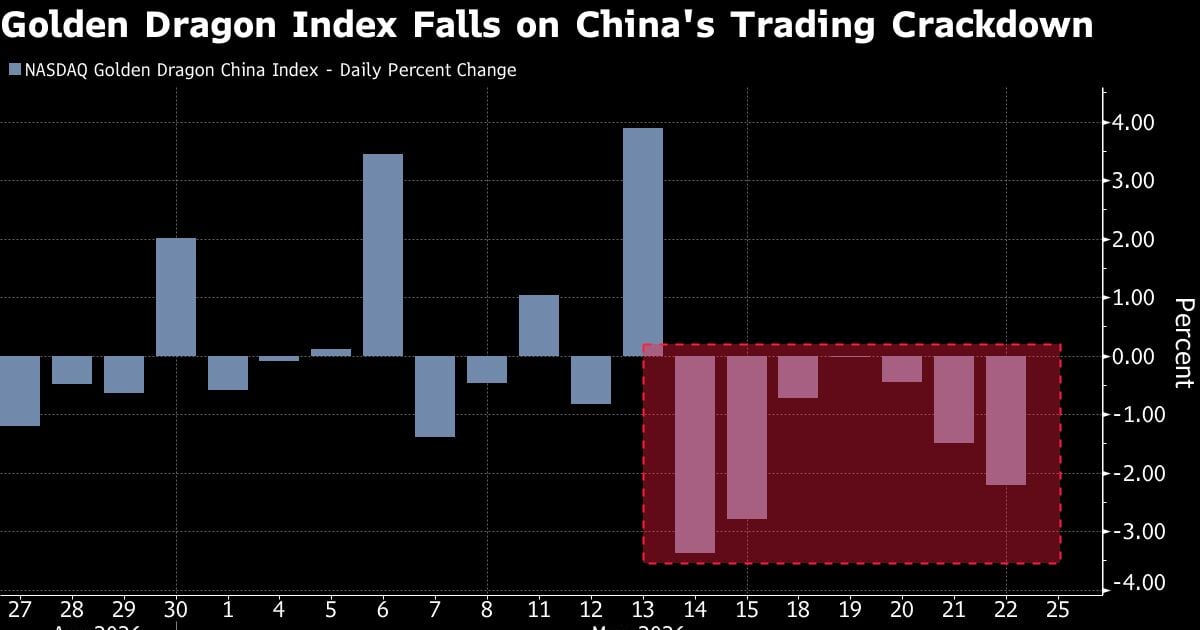
Beijing's latest move to restrict cross-border stock trading is sending ripples beyond Hong Kong, potentially impacting $32 billion in assets and signaling a broader trend of capital tightening. This analysis delves into the direct consequences for Hong Kong markets and, critically, explores the nuanced implications for the Indian stock market, identifying key sectors and individual companies poised for volatility. We provide an actionable investor playbook to navigate this evolving landscape.
China's Capital Chokehold: Beyond Hong Kong's Shores, India Faces Emerging Market Headwinds
The recent tightening of cross-border stock trading regulations by Beijing, primarily impacting Hong Kong-listed assets, is more than just a regional development; it represents a significant signal of China's escalating capital control agenda. This strategic pivot by the world's second-largest economy is poised to reshape foreign investment appetites, particularly within emerging markets, and necessitates a deep dive into its potential ramifications for the Indian equity landscape. The immediate aftermath sees approximately $32 billion in Hong Kong assets facing scrutiny, according to preliminary estimates, but the long-term implications for global liquidity and investor confidence are far more profound.
For decades, Hong Kong has served as a crucial gateway for international capital to access mainland China and vice-versa. This intricate web of financial interconnectedness has now been subjected to a significant structural adjustment. The rationale behind such measures, often framed by Beijing as a means to enhance financial stability, prevent capital flight, and protect domestic markets from external volatility, ultimately translates into a more insular approach to capital flows. This regulatory recalibration introduces a heightened perception of geopolitical and operational risk for global investors, potentially dampening their enthusiasm for other emerging economies that are perceived as sharing similar systemic vulnerabilities or being subject to similar regulatory whims.
What is the Direct Impact of China's Trading Curbs on Hong Kong Assets?
The immediate fallout from China's tightened cross-border trading rules is a palpable bearish sentiment engulfing Hong Kong's financial markets. The ability for mainland investors to easily access Hong Kong stocks and for Hong Kong investors to trade mainland shares is being curtailed. This restriction directly affects the liquidity and valuation of Hong Kong-listed equities, particularly those with substantial mainland China business operations or those that have historically benefited from the free flow of capital between the two markets. Companies that have structured their operations or investments with an assumption of seamless cross-border capital movement are now facing operational and strategic reassessments. The market capitalization of Hong Kong-listed firms, which has long been a barometer of international investor sentiment towards China, is likely to experience downward pressure as the arbitrage opportunities and ease of access diminish.
This move is not entirely unprecedented, but the current context, marked by global economic uncertainty and geopolitical tensions, imbues it with greater significance. Investors who have allocated substantial capital to Hong Kong, seeking direct or indirect exposure to China's growth story, are now confronted with a less predictable and potentially more restrictive investment environment. The reduction in capital mobility can lead to a de-rating of these assets, as their accessibility and the potential for capital repatriation become more complex. This directly impacts the perceived attractiveness of the entire Greater China region as an investment destination.
The Ripple Effect: How China's Capital Controls Could Sway the Indian Stock Market
While the direct nexus is between China and Hong Kong, the implications for the Indian stock market are substantial and multifaceted. India, often grouped with China as a major emerging market destination for global capital, could find itself caught in the crossfire of a broader investor recalibration. The core concern for Indian equities stems from a potential decline in overall foreign institutional investor (FII) inflows into emerging markets. When a significant player like China tightens its capital account, it often triggers a 'risk-off' sentiment globally, leading investors to pare back their exposure across the entire emerging market spectrum. This is not merely a hypothetical concern; historical parallels demonstrate how systemic shifts in major economies can create contagion effects.
Consider the period in late 2022 when global central banks were aggressively hiking interest rates. This led to a significant outflow of foreign capital from emerging markets, including India. The Nifty 50, for instance, saw its year-to-date returns diminish significantly as risk aversion peaked. While the current trigger is regulatory rather than monetary, the outcome can be similar: a reduced appetite for riskier assets in emerging economies. If foreign investors perceive increased regulatory uncertainty and potential capital repatriation challenges in China, they may extend this caution to other developing economies, including India, even if India's domestic fundamentals remain robust.
This could manifest in several ways. Firstly, a general slowdown in FII inflows could put pressure on Indian equity indices like the Nifty 50 and BSE Sensex. Secondly, companies in India with significant cross-border investments or business ties with China might come under increased scrutiny from investors. Thirdly, emerging market equity funds, which often hold diversified portfolios across Asian economies, may see redemptions, impacting the underlying Indian stocks they hold. The perceived increase in regulatory risk in one major emerging market can lead to a broader re-pricing of risk across the entire asset class.
How Might China's Capital Tightening Affect Specific Indian Sectors?
The impact on India will not be uniform across sectors. Sectors with direct or indirect exposure to China's economy or those that rely heavily on foreign capital are likely to be more vulnerable. Conversely, sectors with strong domestic demand drivers and limited China-centric operations might prove more resilient.
- IT Services: Indian IT companies derive a significant portion of their revenue from global clients, including those in China. A slowdown in Chinese economic activity or a broader global tech slowdown triggered by capital repatriation concerns could impact order books and revenue growth. Companies like Tata Consultancy Services (TCS) and Infosys, while diversified, will feel the pinch if their Chinese clients scale back investments or if the global demand for IT services weakens due to reduced capital availability. Their P/E ratios, which often reflect growth expectations, could face downward revision.
- Automobiles and Auto Ancillaries: While India's auto sector is largely driven by domestic consumption, some Indian auto component manufacturers have established supply chains or manufacturing presence in China to cater to global OEMs. A slowdown in the Chinese auto market or disruptions in supply chains due to capital controls could indirectly affect these Indian players. Companies like Maruti Suzuki India, while primarily domestic, could see indirect impacts if global supply chains are disrupted, affecting component availability.
- Pharmaceuticals: India's pharmaceutical sector has a growing export market, including to China. If China tightens its import regulations or if its domestic pharmaceutical industry faces funding challenges due to capital controls, Indian drug manufacturers could see reduced sales. Companies like Sun Pharmaceutical Industries and Dr. Reddy's Laboratories, which have a presence in China, will need to monitor these developments closely.
- Metals and Mining: China is the world's largest consumer of metals. Any slowdown in its industrial output or construction activity, potentially exacerbated by capital constraints, could directly impact global commodity prices. Indian metal producers like Hindalco Industries and Vedanta, which are influenced by global metal prices, could see their profitability affected by a decline in demand from China.
- Specialty Chemicals: Similar to IT and Pharma, the specialty chemicals sector in India has a significant export component, with China being a key market. Reduced industrial activity in China or a shift in its sourcing strategies due to capital controls could impact Indian chemical manufacturers. Companies like Deepak Nitrite and Aarti Industries, which operate in this space, will need to navigate these evolving dynamics.
Stock-by-Stock Impact: Which Indian Companies Face Direct Headwinds?
While the broad strokes indicate a potential sector-wide impact, certain Indian companies are more directly exposed due to their operational footprint, investment strategies, or reliance on capital flows related to China or Hong Kong.
- Laurus Labs (NSE: LAURUSLABS): This pharmaceutical and biotechnology company has been actively expanding its presence in China, particularly in its API (Active Pharmaceutical Ingredient) and custom synthesis segments. A tightening of capital flows and potential regulatory hurdles in China could directly impact its revenue growth and expansion plans in the region. Its current P/E ratio of approximately 25x reflects strong growth expectations, which could be challenged if its China strategy falters.
- Godrej Consumer Products (NSE: GODREJCP): While primarily focused on domestic and Southeast Asian markets, Godrej Consumer Products has had some exposure to the Chinese market through its acquisitions or distribution networks. A general deleveraging by international companies in emerging markets, including China, could indirectly affect its growth prospects if it relies on foreign capital for further expansion or if consumer sentiment in export markets weakens. Its current market cap of around ₹1.1 lakh crore signifies its scale, but international headwinds can always impact large caps.
- Dixon Technologies (India) (NSE: DIXONTECH): As a leading contract manufacturer for electronics, Dixon's fortunes are tied to global demand for consumer electronics. While its primary manufacturing is in India, its clients are global, and a slowdown in the Chinese economy or reduced consumer spending globally due to capital constraints could affect orders. If its international clients scale back production or investment in China, it could indirectly impact Dixon's order book. Its P/E ratio of around 60x indicates high growth expectations that are sensitive to global demand.
- Tata Motors (NSE: TATAMOTORS): Tata Motors, through its Jaguar Land Rover (JLR) subsidiary, has significant exposure to the Chinese market, which is a key revenue generator for JLR. Any downturn in China's premium car segment, exacerbated by economic slowdowns or shifts in consumer spending due to capital controls, would directly impact JLR's sales and profitability, thereby affecting Tata Motors' consolidated performance. The company's enterprise value of over ₹1.2 lakh crore underscores the significance of its global operations.
- Aarti Industries (NSE: AARTIIND): This specialty chemical manufacturer has a growing export business, including to China. A slowdown in China's industrial output or a shift in its chemical sourcing policies due to capital restrictions could impact Aarti Industries' export revenues. While its P/E ratio of around 40x reflects strong growth, any disruption in its key export markets could pose a challenge.
What Do Bears and Bulls Argue About China's Capital Controls and India?
The differing perspectives on this evolving situation highlight the inherent uncertainties and opportunities within the market.
Bearish View: Bears emphasize the increased systemic risk associated with China's capital tightening. They argue that this move signals a broader trend of deglobalization and rising protectionism, which will disproportionately impact emerging markets reliant on foreign capital. The fear is that capital outflows from Hong Kong could trigger a domino effect, leading to a sustained period of reduced FII flows into India and other developing economies. This could depress valuations across the board, with companies having direct China exposure or those in cyclical sectors being particularly vulnerable. The sentiment is that increased regulatory uncertainty will lead to a higher risk premium being applied to all emerging market assets.
Bullish View: Bulls, conversely, argue that the impact will be contained and that India's strong domestic fundamentals will provide a buffer. They contend that China's move is primarily aimed at stabilizing its own financial system and that the direct impact on India's trade and investment flows might be limited. Furthermore, they might point out that a de-risking away from China could, in some instances, lead to 'China Plus One' strategies where manufacturing and investment are redirected to other Asian nations, potentially benefiting India. They also believe that the Indian market's valuation is attractive relative to global peers, and any sell-off driven by external factors might present attractive buying opportunities for long-term investors. The focus remains on India's robust domestic demand, infrastructure push, and policy reforms.
The Investor's Playbook: Navigating the Emerging Market Minefield
In light of China's tightening capital controls and their potential spillover effects, investors should adopt a cautious yet strategic approach. The key is to enhance portfolio resilience and capitalize on opportunities arising from market dislocations.
- Diversify Beyond China-Linked Assets: For investors with direct exposure to Hong Kong or mainland China through ADRs or ETFs, consider paring back positions or hedging. For Indian investors, ensure that any portfolio exposure to China is well-understood and proportionate.
- Focus on Domestic Demand Drivers: Prioritize sectors and companies in India that are largely insulated from global capital flows and China-specific economic conditions. This includes companies benefiting from government infrastructure spending, the growth of the Indian middle class, and domestic consumption trends. Think companies in banking (e.g., HDFC Bank, ICICI Bank), consumer staples (e.g., Hindustan Unilever), and domestic-focused infrastructure plays.
- Scrutinize Cross-Border Exposure: Conduct thorough due diligence on companies within your Indian portfolio that have significant revenue streams, supply chains, or investments linked to China. Analyze their contingency plans and the potential impact on their profit margins and revenue growth. For instance, a company like Pidilite Industries, known for its domestic brand strength, might be less exposed than a specialty chemical exporter with heavy China reliance.
- Consider Quality and Valuation: In an environment of heightened risk aversion, focus on companies with strong balance sheets, consistent profitability, and robust corporate governance. While P/E ratios might seem high for some Indian growth stocks, a disciplined approach to entry points is crucial. For example, if a quality IT stock like Wipro dips significantly due to broad emerging market sell-offs, it might present a long-term buying opportunity if its core business remains sound.
- Dollar-Cost Averaging (DCA): For long-term investors, market downturns driven by external factors can be excellent opportunities to accumulate quality assets at lower prices. Implementing a DCA strategy can help mitigate the risk of timing the market perfectly.
- Watch Sector Rotation: Be prepared for potential sector rotations. As global capital becomes more discerning, defensive sectors or those with strong domestic tailwinds might outperform. Conversely, highly cyclical or export-oriented sectors with significant China exposure could face headwinds.
What to Watch Next: Upcoming Catalysts and Data Points
The narrative surrounding China's capital controls and its impact on emerging markets is dynamic. Investors must remain vigilant and monitor key developments:
- Chinese Economic Data Releases: Closely track China's inflation, industrial production, retail sales, and trade balance figures. Weak data could amplify concerns about its economic health and reinforce capital control narratives. Key releases are typically monthly.
- Hong Kong Market Performance: Monitor the Hang Seng Index (HSI) for sustained weakness or volatility. Significant drops in HSI could indicate continued investor apprehension about Beijing's policies.
- FII Inflow/Outflow Data for India: The weekly and monthly data on FII investments in Indian equities will be a critical barometer of global investor sentiment towards India amidst emerging market jitters.
- Statements from Chinese Regulators: Any official statements or policy clarifications from the People's Bank of China or the China Securities Regulatory Commission (CSRC) regarding capital flows and market access will be closely watched.
- Global Risk Sentiment Indicators: Keep an eye on global indices like the MSCI Emerging Markets Index and broader market volatility measures (e.g., VIX) to gauge the overall risk appetite of international investors.
China's tightening grip on cross-border capital flows is a significant event that reverberates far beyond its immediate financial hubs. For India, it presents a complex interplay of risks and opportunities. By understanding the mechanisms of impact, focusing on domestic resilience, and maintaining a disciplined investment approach, Indian investors can better navigate this evolving global financial landscape.
Run a free AI Stock Screen
Our algorithmic screener scores any NSE/BSE stock on fundamentals, momentum, and risk — free to try, no card needed.
Try the AI Screener →Have questions about this story?
Ask Welth, our finance-focused AI research assistant, for a deeper breakdown — free trial included.
Chat with Welth AI →Disclaimer: This content is generated by WelthWest Research Desk based on publicly available reports and is for informational purposes only. It does not constitute financial advice, investment recommendations, or an offer to buy or sell securities. Always consult a qualified financial advisor before making investment decisions.