Key Takeaway
The era of high-margin AI is ending as China commoditizes frontier models; Indian IT must pivot from 'implementation partners' to 'efficiency architects' or face valuation de-rating as AI costs deflate globally.
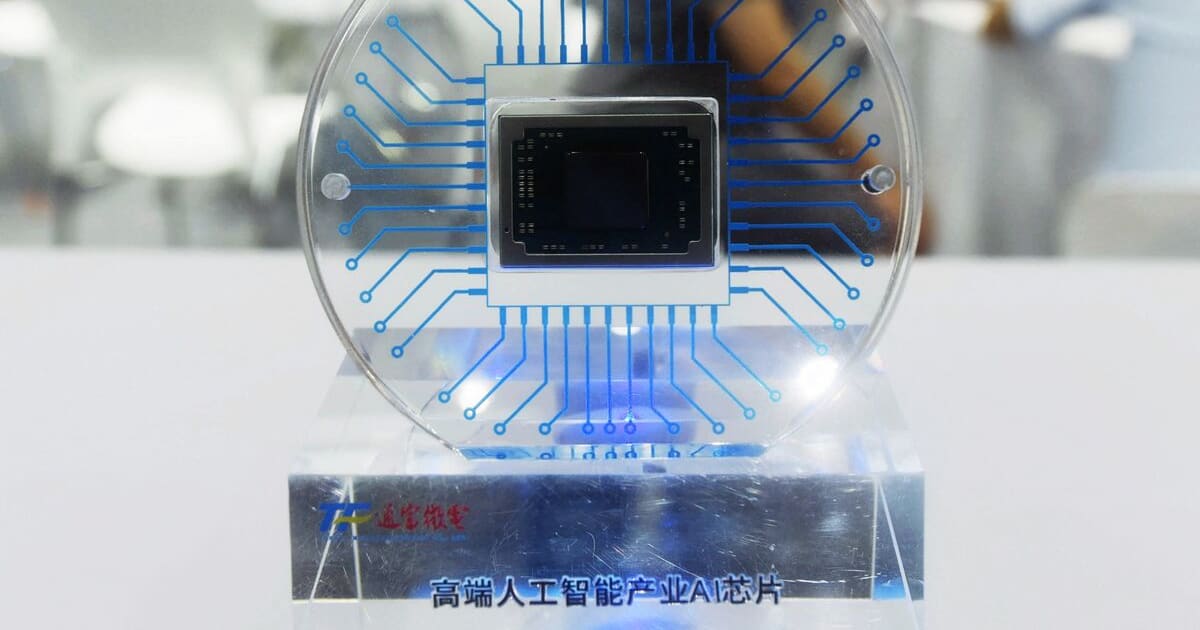
China is aggressively decoupling from the US tech stack by launching high-performance, low-cost AI models like DeepSeek, challenging the dominance of Nvidia and OpenAI. This shift creates a deflationary environment for AI services, forcing Indian IT giants and infrastructure providers to recalibrate their long-term growth strategies amidst a changing global supply chain.
The Great AI Decoupling: Why China’s Pivot is a Global Inflection Point
The global technology landscape is currently witnessing a 'Sputnik moment' that originated not in Silicon Valley, but in the research labs of Hangzhou and Beijing. China’s pivot toward full-stack AI independence—encompassing everything from domestic semi-conductors to cost-disruptive frontier models like DeepSeek—is more than a geopolitical maneuver; it is a fundamental restructuring of the economics of intelligence. For the Indian investor, this isn't just a story about overseas competition; it is a direct challenge to the valuation multiples of the Nifty IT index.
Historically, AI development was synonymous with massive capital expenditure, primarily flowing into the coffers of US-based hardware and software giants. However, the emergence of models that achieve parity with GPT-4 at a fraction of the training and inference cost has shattered the 'GPU-moat' theory. This cost-deflation in AI is a double-edged sword for India’s $250 billion IT services sector, which has spent the last 24 months positioning itself as the primary implementation layer for expensive Western AI stacks.
Will the DeepSeek shock crash Indian IT stocks?
To understand the impact on Indian equities, one must look at the unit economics. If the cost of AI tokens drops by 90% due to Chinese efficiency breakthroughs, the 'billable hours' for implementing these models could shrink. We saw a similar parallel during the 2010s cloud migration. Initially, the move to cloud was seen as a threat to traditional outsourcing, but it eventually led to a volume explosion that benefited TCS (TCS.NS) and Infosys (INFY.NS). The risk today is different: if AI becomes a commodity faster than Indian firms can create proprietary value-add, their 25-30x P/E multiples become harder to justify.
Deep Market Impact: From Silicon to Services
China's aggressive push for domestic chips (like Huawei’s Ascend series) and cloud infrastructure signals a long-term decoupling. This creates a fragmented global tech stack where Indian IT firms must now become 'bilingual,' capable of operating within both the US-centric Nvidia/Azure ecosystem and the emerging low-cost Chinese or open-source alternatives. This dual-capability is not a luxury; it is a survival requirement for firms serving global MNCs who are increasingly cost-sensitive.
Data from the last major tech shift in 2022 shows that when software valuations are compressed by rising interest rates or deflationary tech, the market rewards 'infrastructure' over 'interfaces.' In the Indian context, this shifts the spotlight from pure-play service providers to companies building the physical and digital backbone of India's own AI mission. The Nifty IT Index has historically shown a correlation of 0.85 with the Nasdaq 100, but as China disrupts the pricing power of US tech, we may see a 'de-correlation' where Indian firms with high exposure to US tech-spend face headwinds while those focused on domestic or diversified infrastructure gain ground.
Is Reliance Industries the next big AI infrastructure play?
One cannot discuss the Indian AI landscape without Reliance Industries (RELIANCE.NS). Through its partnership with Nvidia and its massive data center ambitions via Jio, Reliance is positioning itself as the 'sovereign AI' provider for India. China's move to lower AI costs could actually benefit Reliance by making the 'intelligence layer' cheaper to run on their hardware, potentially accelerating the 'Jio-fication' of AI services in India—offering high-end AI at basement prices to the Indian masses.
Stock-by-Stock Breakdown: Winners and Losers
1. Tata Consultancy Services (TCS.NS)
Sentiment: Neutral to Positive. TCS has the largest R&D budget in the Indian IT space. Their 'model-agnostic' approach allows them to pivot to low-cost Chinese or open-source models if clients demand it. However, with a P/E ratio hovering around 28x, the market has already baked in significant AI-led growth. The risk here is margin compression if AI implementation becomes a 'race to the bottom' in terms of pricing.
2. Netweb Technologies (NETWEB.NS)
Sentiment: Bullish. As a leading Indian high-performance computing (HPC) player, Netweb is a direct beneficiary of the 'sovereign AI' trend. As China decouples, India is doubling down on 'Make in India' for servers and workstations. Netweb’s order book is a leading indicator of domestic AI infrastructure demand. If US-China trade restrictions escalate further, Netweb’s role as a domestic alternative for AI hardware integration becomes even more critical.
3. Infosys (INFY.NS)
Sentiment: Neutral. Infosys is heavily integrated into the US enterprise ecosystem. A pivot by China toward full-stack independence could lead to a 'split-internet' where Infosys might lose its ability to service the Chinese market or Chinese subsidiaries of global clients. Investors should watch their operating margins, which have been under pressure as they transition from traditional ADM (Application Development and Maintenance) to AI-first services.
4. HCL Technologies (HCLTECH.NS)
Sentiment: Positive. HCLTech’s strength in Engineering and R&D (ER&D) services makes it less vulnerable to the commoditization of generative AI. While 'chatbot' implementation might see price wars, the complex task of integrating AI into physical products and manufacturing—HCL’s forte—remains a high-barrier-to-entry business.
5. Wipro (WIPRO.NS)
Sentiment: Cautious. Wipro has historically struggled with large-scale transitions. As AI costs deflate, the need for rapid, agile pivots increases. Wipro’s current restructuring under new leadership faces a 'trial by fire' as they navigate a world where the cost of the underlying technology is crashing.
Expert Perspective: The Bull vs. Bear Case
"The 'DeepSeek moment' is the end of the AI hype and the beginning of the AI utility era. For Indian IT, this means the volume of work will explode as every SME can now afford AI, but the price-per-project will collapse. Only the most efficient scale players will survive." — Senior Strategy Analyst, WelthWest
The Bulls argue: Lower AI costs are a massive tailwind for India. It lowers the barrier to entry for Indian startups and allows IT firms to offer more complex solutions to a wider client base. They see the current volatility as a buying opportunity in 'infrastructure-adjacent' stocks.
The Bears argue: The 'AI-as-a-service' model is being disrupted before it even matured. If China can produce models that are 1/10th the cost, the pricing power of US-aligned Indian IT firms is permanently impaired. They point to the 2022 correction as a warning that when tech growth slows, multiples contract sharply.
Actionable Investor Playbook
- The Core Strategy: Diversify away from pure-play software services and move toward 'AI Infrastructure' and 'Specialized ER&D.'
- Entry Points: Look for entries in Netweb Technologies on dips below its 50-day moving average. For TCS, a P/E closer to its 5-year mean of 25x offers a better margin of safety.
- Time Horizon: 18-36 months. This is not a short-term trade; the decoupling of the global tech stack will play out over years, not quarters.
- What to Sell: High-multiple mid-cap IT firms with heavy reliance on simple automation and low proprietary IP. These are the most vulnerable to AI cost-deflation.
Risk Matrix: Assessing the Volatility
- Geopolitical Escalation (Probability: High): Further US restrictions on H200/B200 chips could starve the global market, leading to a spike in hardware costs that offsets the savings from cheaper Chinese models.
- Regulatory Backlash (Probability: Medium): India may introduce 'AI Sovereignty' laws that restrict the use of foreign models (including Chinese ones) in critical sectors, impacting IT firm flexibility.
- AI Obsolescence (Probability: Medium): The rapid pace of change means today's 'frontier' model is tomorrow's legacy code. Indian IT firms face the risk of 'stranded assets' in their AI training programs.
What to Watch Next
Keep a close eye on the Nvidia (NVDA) quarterly earnings and their guidance on the China-specific H20 chips. Any sign of weakening demand or aggressive Chinese substitution will be the first signal of a valuation shift. Locally, watch for the Union Budget's allocation to the 'India AI Mission.' A significant push for domestic compute capacity will be a massive catalyst for Reliance and Netweb. Finally, monitor the Q4 FY24 earnings calls of TCS and Infosys for any mention of 'token pricing' or 'open-source model adoption'—this will reveal how quickly they are adapting to the new cost reality.
See TCS's AI Score
Our algorithmic screener scores TCS on fundamentals, momentum, and risk — free to try, no card needed.
Try the AI Screener →Have questions about this story?
Ask Welth, our finance-focused AI research assistant, for a deeper breakdown — free trial included.
Chat with Welth AI →Disclaimer: This content is generated by WelthWest Research Desk based on publicly available reports and is for informational purposes only. It does not constitute financial advice, investment recommendations, or an offer to buy or sell securities. Always consult a qualified financial advisor before making investment decisions.
