Key Takeaway
China’s transition from heavy industry to tech-led growth has decoupled its GDP from energy intensity, leaving global commodity markets—and Indian import bills—exposed to a permanent state of pricing uncertainty.
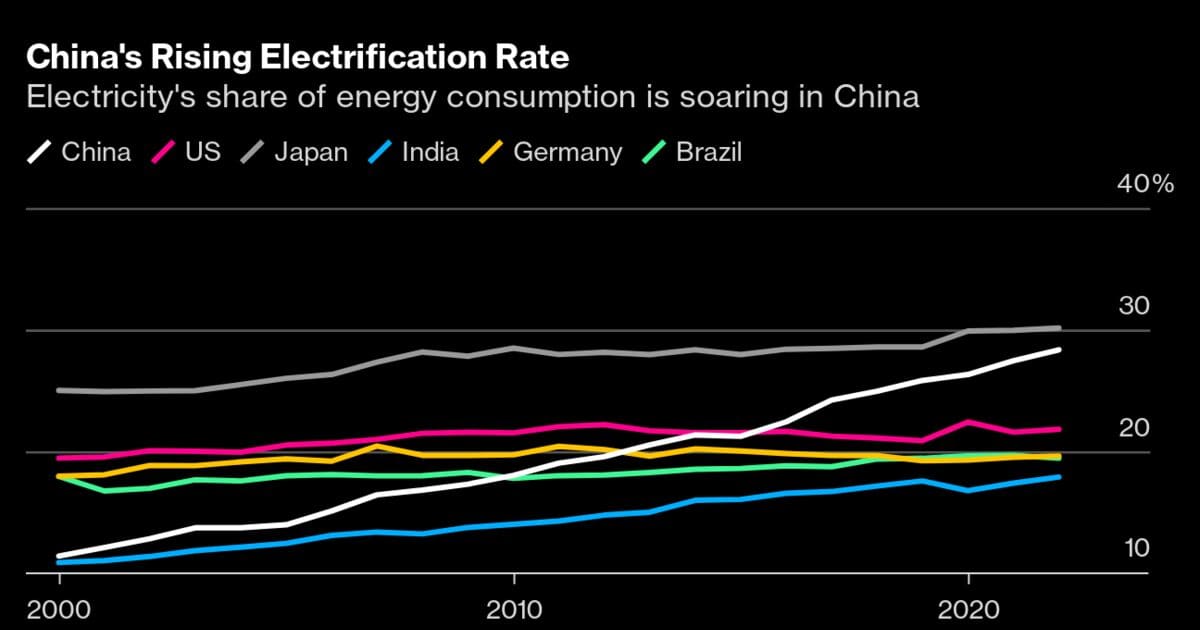
China’s pivot toward high-tech manufacturing is creating a 'demand-trap' for global energy markets. For Indian investors, this shift introduces a new layer of volatility in the Current Account Deficit, directly impacting the profitability of OMCs and energy-heavy industrial stocks.
The End of the China-Commodity Supercycle
For two decades, the global energy market operated on a simple heuristic: China’s GDP growth equals a predictable multiplier for crude oil and coal consumption. That logic has officially shattered. As Beijing pivots its economic engine toward high-tech manufacturing, electric vehicles (EVs), and digital services, the energy-intensity of its growth is plummeting. This structural realignment is no longer a localized Chinese issue; it is a systemic risk for the Indian equity market, which remains highly sensitive to global energy commodity benchmarks.
Why Is China’s Energy Consumption Pattern Becoming Unpredictable?
Traditionally, Chinese infrastructure investment—steel, cement, and massive real estate projects—served as the primary floor for global oil and coal prices. Today, China is the global leader in EV adoption and renewable energy infrastructure. This shift means that even when the Chinese economy grows, its appetite for fossil fuels does not necessarily follow the same trajectory. For global traders, this creates a 'forecasting vacuum' that leads to sudden, violent price swings in Brent crude and thermal coal futures.
How does China’s energy shift impact India’s inflation and current account?
India remains a price-taker in the global energy market. When Chinese demand spikes unexpectedly, global prices surge, widening India’s Current Account Deficit (CAD) and fueling imported inflation. Conversely, if China’s transition causes a rapid decline in demand, global deflationary shocks could rattle the Nifty 50, particularly impacting energy-exporting firms and PSU stocks that rely on inventory gains.
Deep Market Impact: The Winners and Losers
The transition creates a bifurcated market. Traditional Energy Marketing Companies (OMCs) are finding it increasingly difficult to hedge against price volatility, while renewable energy providers are seeing a secular tailwind as the cost of capital for green projects becomes more attractive relative to the high-risk profiles of traditional fuel extraction.
Sector-Level Breakdown
- Energy-Intensive Manufacturing: Firms in the steel, cement, and chemical sectors face margin compression. When oil prices spike due to sudden demand shifts, their input costs balloon, but their ability to pass costs to the consumer remains limited by domestic competition.
- Renewables: Companies with integrated green energy portfolios are moving from 'speculative bets' to 'core holdings' as the global energy transition accelerates.
Stock-by-Stock Breakdown: Navigating the NSE/BSE Landscape
Investors must differentiate between companies that benefit from stable energy prices and those that are structurally exposed to global price shocks.
1. ONGC (NSE: ONGC)
Impact: Neutral to Positive. As a crude producer, ONGC benefits from higher realization prices. However, the 'windfall tax' mechanism in India often caps the upside during global spikes. With a P/E ratio hovering near 7-8x, it remains a value play, but investors must watch for government intervention if oil prices stay elevated for too long.
2. Reliance Industries (NSE: RELIANCE)
Impact: Diversified. Reliance acts as a hedge. While its O2C (Oil-to-Chemicals) business is sensitive to global commodity demand, its massive investments in 'New Energy' create a long-term buffer against the decline of fossil fuel reliance. Look for the O2C segment to show margin volatility as Chinese demand patterns shift.
3. IOCL and BPCL (NSE: IOC, BPCL)
Impact: Negative. These OMCs are the most vulnerable to volatility. Sudden spikes in crude prices, combined with the political necessity to keep domestic pump prices stable, lead to massive margin erosion. During the 2022 energy crisis, these stocks saw significant underperformance relative to the Nifty Energy Index.
4. Tata Power (NSE: TATAPOWER)
Impact: Positive. As a proxy for the energy transition, Tata Power benefits from the structural shift away from coal-dependence. Their valuation premium (P/E ~30x) reflects the market's expectation of sustained growth in renewables and EV charging infrastructure.
Expert Perspective: The Bull vs. Bear Divide
The Bear Case: Bears argue that the global economy is too dependent on Chinese industrial output. They believe that any attempt by China to 're-stimulate' its economy will lead to a 'bull whip' effect—a sudden, massive demand spike that will drive oil prices to $100+/barrel, triggering a recessionary environment in India.
The Bull Case: Bulls argue that China’s shift to high-tech is permanent. They view the energy volatility as a 'short-term noise' that masks a long-term trend of cheaper, more efficient energy consumption. They believe India’s domestic energy infrastructure, specifically the focus on green hydrogen and solar, will insulate the market from future global shocks.
Actionable Investor Playbook
- Reduce Exposure to Pure-Play OMCs: If you hold IOCL or BPCL, consider trimming positions during periods of extreme price stability to avoid the 'volatility traps' associated with global supply shocks.
- Accumulate Renewables: Use dips in Tata Power or other green-energy-focused firms as long-term entry points. The structural shift in China is a multi-decade trend, not a quarterly event.
- Monitor the CAD: Keep a close eye on the RBI’s monthly trade data. If the import bill for energy starts to trend significantly upward, it is a signal to rotate into defensive sectors like FMCG or IT.
Risk Matrix
| Risk | Probability | Impact |
|---|---|---|
| Geopolitical conflict in the Middle East | Medium | High |
| Sudden Chinese stimulus (Infrastructure-led) | Low | Very High |
| Global recession slowing energy demand | Medium | Medium |
| Breakthrough in energy storage tech | Low | High |
What to Watch Next
Investors should track the IEA Monthly Oil Market Report and the China Manufacturing PMI. A divergence between these two—where China's PMI rises but oil demand remains stagnant—will confirm the structural decoupling of their economy. Furthermore, watch for the RBI's policy meetings in the coming months; any commentary on 'imported inflation' will be the primary signal that the Chinese energy pivot is affecting domestic monetary policy.
See ONGC's AI Score
Our algorithmic screener scores ONGC on fundamentals, momentum, and risk — free to try, no card needed.
Try the AI Screener →Have questions about this story?
Ask Welth, our finance-focused AI research assistant, for a deeper breakdown — free trial included.
Chat with Welth AI →Disclaimer: This content is generated by WelthWest Research Desk based on publicly available reports and is for informational purposes only. It does not constitute financial advice, investment recommendations, or an offer to buy or sell securities. Always consult a qualified financial advisor before making investment decisions.
