Key Takeaway
Circle’s $222M capital raise proves that institutional appetite for stablecoin infrastructure is decoupling from volatile crypto prices. For Indian IT, this signals a massive pivot from legacy SWIFT-based settlement maintenance to building the next generation of cross-chain, blockchain-native payment rails.
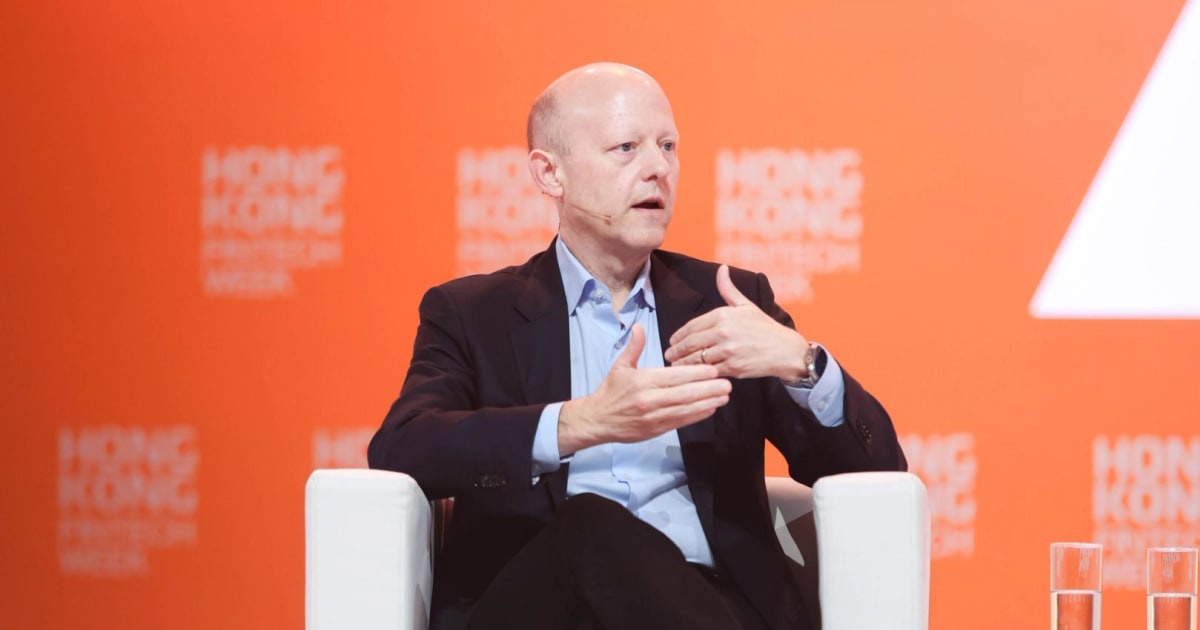
While Circle’s Q1 revenue missed analyst expectations, its successful $222 million raise for the Arc platform highlights a critical shift in global finance. We examine how this move toward interoperability forces Indian IT majors to accelerate their blockchain R&D. This analysis covers the shifting landscape for TCS, Persistent Systems, and the broader NSE fintech ecosystem.
The $222M Bet on Interoperability: Why Circle Arc Matters
In a liquidity-constrained environment, Circle’s successful $222 million funding round for its Arc platform acts as a definitive bellwether for the digital asset industry. Despite a tepid Q1 revenue performance—a reflection of the broader compression in crypto-trading volumes—the capital infusion underscores a fundamental pivot: the market is no longer betting on speculative tokens, but on the infrastructure of value transfer.
Arc is designed to bridge the chasm between legacy banking systems and decentralized finance (DeFi). For the Indian financial ecosystem, which remains the global leader in real-time retail payments via UPI, the arrival of stablecoin-native infrastructure presents both a competitive threat and an enormous service-export opportunity.
How Will Circle’s Arc Infrastructure Reshape Cross-Border Settlements?
The current cross-border remittance model relies on the antiquated correspondent banking system, characterized by high fees (often 3-7%) and T+3 settlement times. Circle Arc aims to solve this by providing a unified layer for cross-chain liquidity. For Indian IT service providers, this is a multi-billion dollar shift in the 'Digital Transformation' budget.
Historically, when financial infrastructure shifts—such as the transition from manual ledger systems to the adoption of ISO 20022 messaging standards—Indian IT firms have been the primary beneficiaries of the implementation work. Unlike the 2022 crypto winter, where Nifty IT stocks faced a sharp 20% correction due to general market risk-off sentiment, the current move toward stablecoin rails is being driven by enterprise-grade institutional demand, providing a more stable floor for IT services revenue.
Stock-by-Stock Breakdown: Who Wins in the Indian Market?
- Persistent Systems (PERSISTENT): With a strong focus on digital engineering and cloud-native development, Persistent is best positioned to lead the integration of blockchain middleware. Their P/E ratio of ~55x reflects the market's high growth expectations, which this shift in fintech architecture supports.
- Zensar Technologies (ZENSARTECH): Zensar has been quietly expanding its banking and financial services (BFS) portfolio. As Arc-style infrastructure requires custom API development for legacy bank cores, Zensar stands to capture mid-market contracts from regional banks looking to modernize.
- Tata Consultancy Services (TCS): As the incumbent giant, TCS is the 'safety' play. Their Quartz blockchain platform is a direct competitor/partner ecosystem to emerging rails like Arc. Watch for TCS to secure large-scale systems integration contracts as global banks begin to pilot stablecoin-based settlement.
- LTIMindtree (LTIM): LTIM’s deep expertise in payments processing and cloud migration makes them the primary candidate for migrating legacy SWIFT-based pipelines to blockchain-integrated solutions.
Expert Perspective: The Bull vs. Bear Divide
The Bull Argument: The institutionalization of stablecoins is inevitable. By 2026, stablecoin volume will rival traditional credit card networks. Indian IT firms that own the 'integration layer' will command 25-30% operating margins on these projects.
The Bear Argument: Regulatory friction in India remains the 'black swan.' If the RBI maintains a restrictive stance on stablecoin-denominated settlements, Indian firms may be forced to restrict their blockchain services to overseas clients only, capping the domestic addressable market.
Actionable Investor Playbook
Investors should view this as a 24-month horizon thematic play. The 'buy' signal is not the crypto market itself, but the IT services revenue growth derived from fintech infrastructure projects.
- Watch: Quarterly management commentary from TCS and Persistent specifically regarding 'blockchain infrastructure' and 'payments modernization' revenue.
- Entry Points: Accumulate on dips where the Nifty IT index experiences broad-market volatility, rather than sector-specific weakness.
- Avoid: Pure-play crypto exchanges or speculative digital asset firms on the NSE; focus on the 'picks and shovels' (IT service providers).
Risk Matrix
| Risk Factor | Probability | Impact |
|---|---|---|
| Regulatory Crackdown (India) | High | High |
| Revenue Misses/Valuation Compression | Medium | Medium |
| Cybersecurity/Protocol Failure | Low | Critical |
What to Watch Next
The next major catalyst is the upcoming G20/BIS reporting on cross-border payments integration, expected in Q3. Any regulatory framework that acknowledges stablecoin usage for wholesale settlement will be the 'green light' for Indian IT firms to scale their blockchain units aggressively. Monitor the Q2 earnings calls of the mentioned stocks for explicit mentions of 'stablecoin-as-a-service' or 'interoperability infrastructure' project pipelines.
See Zensar Technologies's AI Score
Our algorithmic screener scores Zensar Technologies on fundamentals, momentum, and risk — free to try, no card needed.
Try the AI Screener →Have questions about this story?
Ask Welth, our finance-focused AI research assistant, for a deeper breakdown — free trial included.
Chat with Welth AI →Disclaimer: This content is generated by WelthWest Research Desk based on publicly available reports and is for informational purposes only. It does not constitute financial advice, investment recommendations, or an offer to buy or sell securities. Always consult a qualified financial advisor before making investment decisions.