Key Takeaway
While the CME disruption was short-lived, it exposes the fragility of global liquidity plumbing. For Indian investors, this is a wake-up call to monitor cross-market correlation risks when global benchmarks falter.
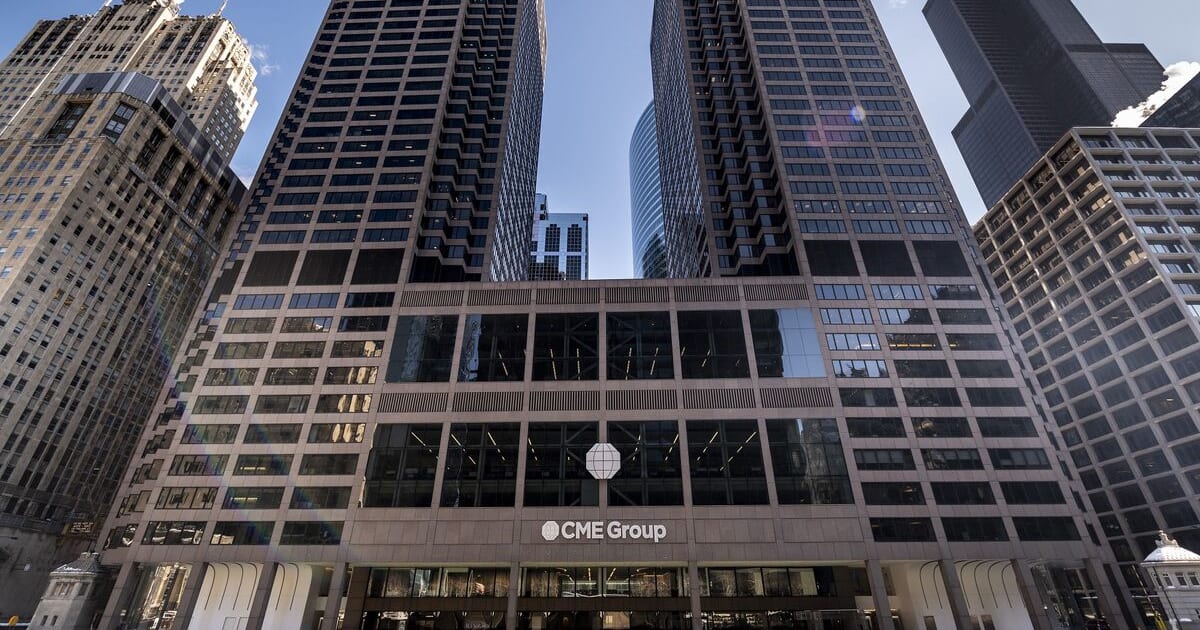
A technical glitch at the world’s largest derivatives exchange, CME Group, briefly paralyzed global trading. We break down the ripple effects on Indian equities, the systemic risks to high-frequency trading, and why your portfolio’s sensitivity to global infrastructure is higher than you think.
The Invisible Thread: Why CME Group’s Glitch Matters to Dalal Street
When the CME Group—the heartbeat of global interest rate and commodity pricing—experienced a technical disconnect, the immediate reaction was a collective hold-breath across global trading desks. While the outage was resolved within a standard operational window, the incident serves as a stark reminder of the 'brittleness' inherent in modern electronic financial infrastructure. For the Indian investor, this isn't just a story about Chicago; it is a story about the transmission of liquidity shocks into the Nifty 50 and beyond.
How does global exchange infrastructure impact Indian equity volatility?
Global markets are no longer siloed; they are synchronized via high-frequency trading (HFT) algorithms that rely on uninterrupted data feeds from major exchanges. When the CME goes offline, arbitrage desks—which keep prices of Indian ADRs and GDRs in sync with their domestic counterparts—are forced to widen spreads or freeze activity. Historically, when global benchmark platforms face instability, we see a 'liquidity vacuum' where volatility spikes in the Nifty Bank and IT indices as global institutional capital pauses to reassess risk parity.
Consider the 2022 flash-volatility events: when global data feeds lagged, Indian markets witnessed an intra-day variance of over 1.5% in the Nifty 50, driven largely by algorithmic 'stop-loss' triggers that misinterpreted the lack of volume as a directional trend. The current CME outage, while contained, highlights that our domestic market infrastructure is essentially an extension of the global digital nervous system.
Stock-by-Stock Impact: Who is Most Vulnerable?
When global liquidity tightens, the impact is felt most acutely by companies with high foreign institutional investor (FII) participation and those that serve as proxies for global commodity prices.
- Reliance Industries (RELIANCE): As a massive player in global energy derivatives, any disruption at the CME affects the hedging strategies for RIL’s refining margins. With a P/E ratio of ~28x, RIL is sensitive to sudden shifts in global oil price benchmarks.
- Tata Consultancy Services (TCS): IT majors are proxies for global financial sector health. When exchange infrastructure fails, the resulting uncertainty hits the 'Banking & Financial Services' revenue vertical, which accounts for over 30% of TCS’s total income.
- HDFC Bank (HDFCBANK): As the largest private lender, HDFC Bank’s sensitivity to interest rate derivatives is high. CME’s Fed Funds futures are the base for global rate expectations; a platform glitch creates a 'pricing black hole' that forces conservative positioning in large-cap banking stocks.
- Vedanta (VEDL): Highly correlated to the LME and CME metal futures, Vedanta faces immediate pricing uncertainty when global exchange connectivity is compromised, often leading to knee-jerk sell-offs in the NSE.
Expert Perspective: The Bull vs. Bear Divide
The Bull Case: Proponents argue that the resilience of the CME’s recovery proves that the system is 'self-healing.' They view the outage as a minor 'hiccup' in a robust, multi-layered financial architecture, suggesting that investors should treat such dips as buying opportunities in high-quality blue-chip stocks.
The Bear Case: Critics point to the increasing complexity of cross-exchange linkages. They argue that as we move toward a fully automated, 24/7 global trading environment, the 'single point of failure' risk—where a technical error at one exchange triggers a cascading margin call across the globe—is becoming an existential threat to market stability.
Investor Playbook: Defensive Maneuvers
For the average investor, these events are a signal to pivot toward structural stability rather than speculative arbitrage:
- Increase Cash Holdings: During periods of global infrastructure uncertainty, maintain a cash buffer of 10-15% to capitalize on volatility-induced price drops.
- Focus on Domestic Consumption: Shift exposure toward FMCG or domestic-heavy sectors that are less reliant on global commodity hedging, such as HUL or Asian Paints.
- Monitor VIX: If the India VIX spikes in reaction to global technical issues, use it as a signal to tighten stop-losses on highly leveraged positions.
Risk Matrix: Assessing the Systemic Fragility
| Risk Factor | Probability | Impact |
|---|---|---|
| Persistent Platform Outage | Low | Critical |
| Algorithmic Liquidity Freeze | Moderate | High |
| Data Feed Corruption | Low | Moderate |
| Regulatory Scrutiny on HFT | Moderate | Moderate |
What to Watch Next
Investors should keep a close eye on the upcoming RBI Monetary Policy Committee (MPC) meeting and global inflation prints. These catalysts, combined with the recent CME instability, could create a 'perfect storm' for volatility. Furthermore, keep track of SEBI’s latest circulars regarding 'System Audit' requirements for domestic exchanges; if India follows the global trend of tightening infrastructure regulations, we may see a short-term increase in compliance costs for brokers but a significant long-term boost in market stability.
See None (Direct impact is limited to global exchange infrastructure)'s AI Score
Our algorithmic screener scores None (Direct impact is limited to global exchange infrastructure) on fundamentals, momentum, and risk — free to try, no card needed.
Try the AI Screener →Have questions about this story?
Ask Welth, our finance-focused AI research assistant, for a deeper breakdown — free trial included.
Chat with Welth AI →Disclaimer: This content is generated by WelthWest Research Desk based on publicly available reports and is for informational purposes only. It does not constitute financial advice, investment recommendations, or an offer to buy or sell securities. Always consult a qualified financial advisor before making investment decisions.