Key Takeaway
The HCCB IPO will end the 'scarcity premium' currently enjoyed by Varun Beverages (VBL), potentially triggering a sector-wide rerating while providing a $10B+ benchmark for India’s booming beverage consumption story.
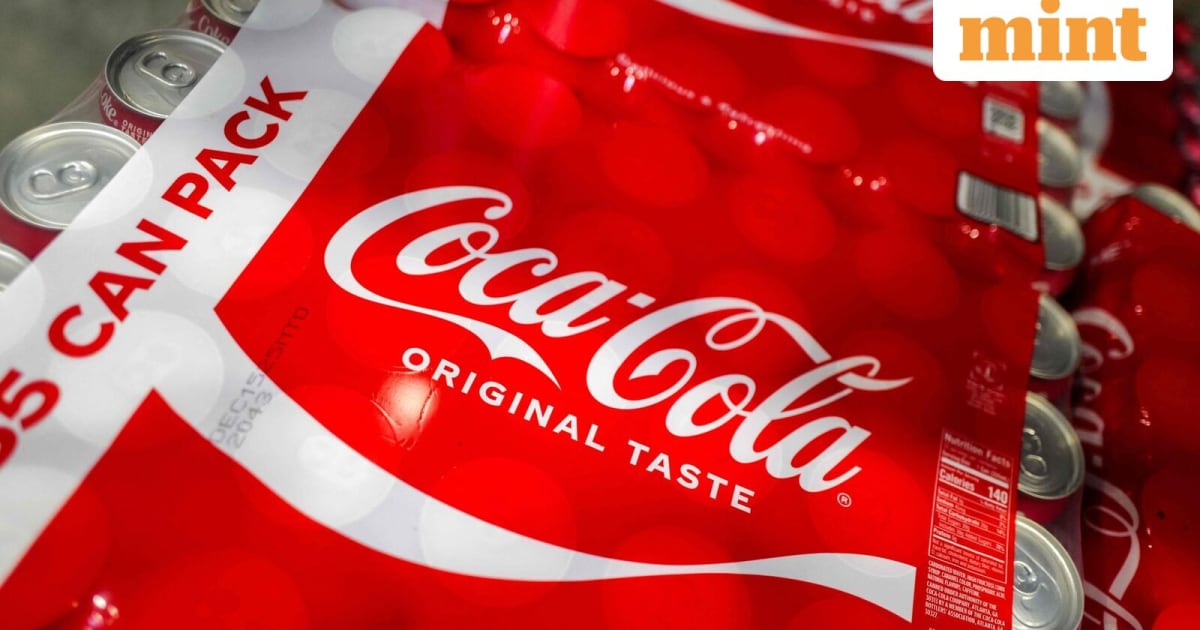
Coca-Cola is preparing to list its Indian bottling arm, Hindustan Coca-Cola Beverages (HCCB), by 2027. This move signals a massive shift in the FMCG landscape, challenging the dominance of Varun Beverages on the bourses and offering investors a direct play on India's cooling and refreshment market. Our analysis explores the valuation metrics, competitive disruption, and the specific NSE stocks set to move.
The $10 Billion Fizz: Why the HCCB IPO is a Watershed Moment for Dalal Street
For over a decade, Indian equity investors looking for a pure-play bet on the nation’s burgeoning soft drink consumption had exactly one door to knock on: Varun Beverages Limited (VBL). That era of exclusivity is officially drawing to a close. Coca-Cola’s strategic decision to explore an Initial Public Offering (IPO) for its wholly-owned bottling subsidiary, Hindustan Coca-Cola Beverages (HCCB), by 2027 is not merely a corporate divestment—it is a seismic shift in the Indian Fast-Moving Consumer Goods (FMCG) ecosystem.
As a senior analyst at WelthWest, I view this move as a 'coming of age' for the Indian consumer market. HCCB operates 16 manufacturing facilities and accounts for a significant portion of Coca-Cola’s volume in India. By listing this entity, the Atlanta-based giant is following a global playbook seen in Latin America and Europe, where localized bottling listings have unlocked massive shareholder value. For the Indian markets (NSE/BSE), this represents the potential addition of a multi-billion dollar market cap heavyweight that could rival the likes of Nestle India or Britannia in terms of institutional interest.
Why is Coca-Cola Listing HCCB Now?
The timing of 2027 is deliberate. India is currently Coca-Cola’s fifth-largest market by volume, but the company’s leadership has openly stated their ambition to make it the third-largest globally. To achieve this, the capital expenditure (CAPEX) requirements are staggering. We are looking at a multi-year cycle of building cold-chain infrastructure, expanding rural distribution, and diversifying into high-margin categories like coffee (Costa Coffee) and sports drinks (Powerade).
By listing HCCB, Coca-Cola achieves three objectives: it raises growth capital without straining the parent’s balance sheet, it provides a localized currency for potential regional acquisitions, and it aligns with the 'Make in India' sentiment that global MNCs are increasingly adopting to navigate regulatory landscapes. Furthermore, the Indian stock market is currently trading at a premium compared to global peers, offering an ideal valuation environment for a high-growth consumer business.
Deep Market Impact: Ending the Monopolistic Valuation of Beverage Stocks
Currently, Varun Beverages (VBL) trades at a price-to-earnings (P/E) multiple often exceeding 60x to 80x, depending on the quarterly earnings cycle. This 'scarcity premium' exists because institutional investors have no other liquid, large-cap alternative to play the beverage theme. The entry of HCCB will introduce a direct valuation benchmark.
Historical parallels can be drawn from the insurance sector listing boom in 2017. Before HDFC Life and SBI Life listed, ICICI Prudential enjoyed a specific valuation status. Once the sector matured with multiple listings, valuations became more data-driven and peer-benchmarked. We expect a similar 'normalization' in the beverage sector. However, this doesn't necessarily mean a crash for existing players; rather, it expands the total addressable market (TAM) for capital. The combined market capitalization of the listed beverage sector could easily double by 2028, attracting dedicated sectoral funds and ETFs.
How will the HCCB IPO affect the FMCG sector valuation?
The FMCG sector in India (Nifty FMCG Index) has been a defensive play with steady 10-12% growth. HCCB brings a high-growth, high-intensity CAPEX model that differs from the asset-light models of companies like HUL. This could lead to a bifurcation in the index: the 'Steady Compounders' (HUL, ITC) vs. the 'High-Growth Aggressors' (HCCB, VBL). We anticipate that HCCB’s listing will force a rerating of the entire 'liquid refreshment' category, as investors realize the sheer scale of unpenetrated rural markets.
Stock-by-Stock Breakdown: The Winners and the Targeted
The ripple effects of this IPO will be felt across several NSE-listed entities. Here is our forensic breakdown:
- Varun Beverages (VBL): As the primary bottler for PepsiCo, VBL is the most direct peer. While the 'scarcity premium' may fade, the listing of HCCB provides a floor for VBL's valuation. If HCCB lists at a premium, VBL could see a further rally. However, competition for institutional 'wallet share' will intensify. Strategy: Hold, but monitor for valuation convergence.
- Tata Consumer Products (TCPL): Through its NourishCo division (Himalayan, Tata Gluco Plus), Tata is a rising challenger in the liquid beverage space. A high-profile HCCB listing shines a spotlight on the profitability of this segment, likely leading to a higher internal valuation for TCPL's beverage arm.
- Reliance Industries (RIL): Reliance’s aggressive push with Campa Cola is the elephant in the room. By the time HCCB lists in 2027, the price war between Coke, Pepsi, and Campa will be at its peak. HCCB’s IPO prospectus will be the first time the market gets a clear look at the margin damage (or resilience) caused by Reliance’s disruption.
- BSE Ltd & NSE (Unlisted): Large-scale IPOs are high-margin events for exchanges. An IPO of this scale (expected to be ₹8,000 - ₹12,000 crore) generates massive transaction fees and boosts derivative volumes in the FMCG segment.
- Dabur India: Known for its 'Real' juice brand, Dabur competes for the same 'share of throat.' The increased marketing spend by a newly-listed, capital-flush HCCB could force Dabur to increase its own CAPEX and advertising spends to defend its 25-30% market share in the juice category.
Expert Perspective: The Bull vs. Bear Case
"The HCCB listing is the final stamp of approval on India's consumption-led growth. We are moving from a market that consumes 'to survive' to a market that consumes 'for lifestyle.' Beverage companies are the biggest beneficiaries of this transition."
The Bull Case: Bulls argue that India’s per capita consumption of soft drinks is still a fraction of China’s or Brazil’s. With rising temperatures and an improving electricity grid (leading to more refrigeration in rural areas), the growth runway is decades long. They see HCCB as a 'must-have' in any India-centric portfolio.
The Bear Case: Contrarians point to the 'Sugar Tax' risk. The Indian government has shown a willingness to impose high GST 'sin taxes' on carbonated drinks. Furthermore, the environmental, social, and governance (ESG) concerns regarding water usage in water-stressed Indian states could lead to sudden regulatory shocks or operational halts, as seen in the past with bottling plants in Kerala and Uttar Pradesh.
Actionable Investor Playbook: Preparing for 2027
Investors should not wait until 2027 to position themselves. The narrative will start building 12-18 months in advance.
- The Pre-IPO Accumulation: Monitor Varun Beverages (VBL). Any significant dip in VBL due to 'competition fears' should be viewed as an entry point. VBL has a massive head start in logistics that HCCB will take years to match in certain territories.
- The Disruption Hedge: Keep a close eye on Reliance Industries (RIL). If Campa Cola successfully gains 10-15% market share by 2026, the HCCB IPO valuation will be suppressed, offering a better entry point for long-term investors.
- Sectoral Rotation: As the IPO approaches, expect a rotation out of 'stagnant' FMCG stocks into 'growth' beverage stocks. This is the time to pivot from slow-moving staples to high-velocity impulse categories.
Risk Matrix: What Could Derail the Fizz?
| Risk Factor | Probability | Impact on IPO |
|---|---|---|
| Regulatory Sugar Tax Hike | High | Medium - Margin compression |
| Water Usage Restrictions | Moderate | High - Operational disruption |
| Market Volatility (Bear Market) | Moderate | Delays the 2027 timeline |
What to watch next?
The immediate catalysts will be Coca-Cola’s quarterly earnings calls, where analysts will probe for 'HCCB reorganization' details. Watch for any internal restructuring where Coca-Cola might transfer more bottling territories from independent franchisees to HCCB—this would be a clear signal that they are 'fattening the calf' for a higher IPO valuation. Additionally, keep an eye on the Nifty FMCG index performance relative to the broader Nifty 50; a widening gap could indicate the market is already pricing in a sectoral transformation.
The 2027 HCCB IPO is not just a news headline; it is a multi-year investment theme that will redefine the 'Share of Throat' in the Indian market. At WelthWest, we remain bullish on the sector but advise a selective, data-driven approach to stock picking as the landscape becomes increasingly crowded.
See Varun Beverages (VBL)'s AI Score
Our algorithmic screener scores Varun Beverages (VBL) on fundamentals, momentum, and risk — free to try, no card needed.
Try the AI Screener →Have questions about this story?
Ask Welth, our finance-focused AI research assistant, for a deeper breakdown — free trial included.
Chat with Welth AI →Disclaimer: This content is generated by WelthWest Research Desk based on publicly available reports and is for informational purposes only. It does not constitute financial advice, investment recommendations, or an offer to buy or sell securities. Always consult a qualified financial advisor before making investment decisions.