Key Takeaway
The transition from 'crypto-native' to 'institutional-integrated' infrastructure is no longer a theory—it is a forced reality. For Indian investors, the Copper sale signals a valuation reset for fintech and a massive opportunity for legacy banks and conglomerates to acquire high-tech digital asset rails at a discount.
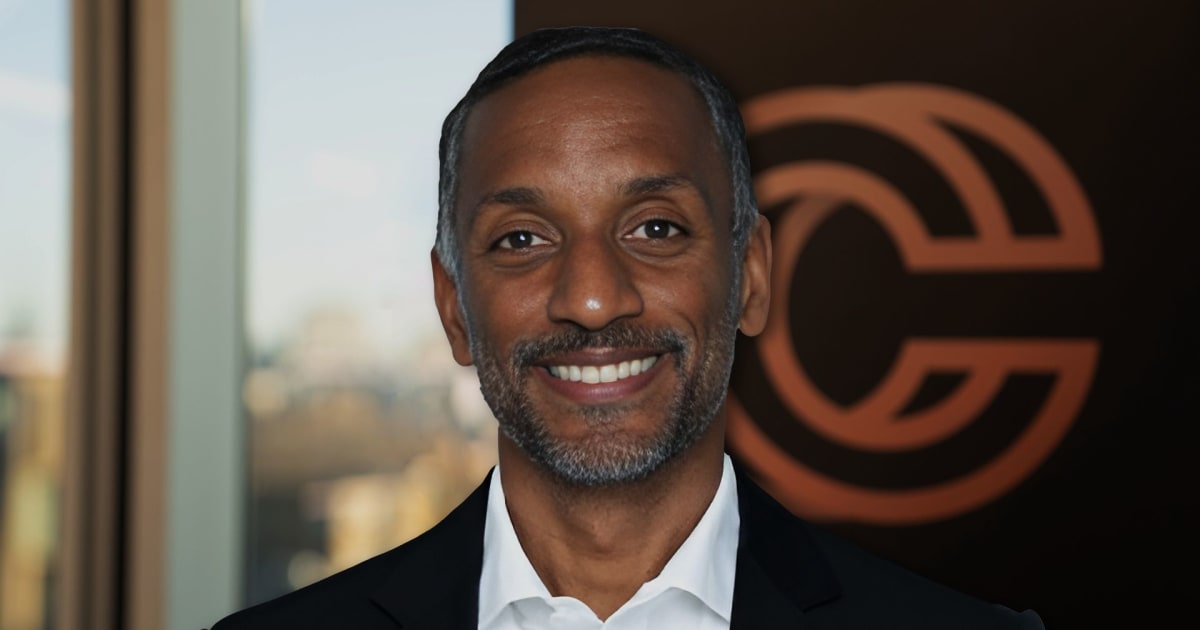
Institutional crypto custodian Copper is reportedly exploring a $500 million sale, a significant climbdown from its previous $2 billion valuation. This consolidation event marks the end of the 'pure-play' crypto infrastructure era and the beginning of a cycle where Tier-1 global banks and fintech giants absorb distressed digital asset pioneers. We break down what this means for the NSE/BSE fintech sector and which Indian stocks are positioned to win from this infrastructure land grab.
The $500 Million Pivot: Why Copper’s Sale is a Watershed Moment for Digital Finance
The digital asset landscape is currently witnessing a tectonic shift that many retail investors have yet to price in. Copper, once the high-flying poster child of institutional crypto custody with a peak valuation of $2 billion, is reportedly exploring a sale at a $500 million price tag. This 75% valuation haircut is not merely a sign of a 'crypto winter'—it is a signal of a structural consolidation phase where the infrastructure of the future is being handed over from startups to the old guard of finance.
In 2021 and early 2022, venture capital flowed into standalone custody firms like Copper, Fireblocks, and Anchorage under the assumption that they would become the 'Goldman Sachs of Crypto.' However, the reality of 2024 is different. Regulatory hurdles, the high cost of capital, and the entry of legacy behemoths like BNY Mellon and BlackRock into the space have squeezed the margins of independent players. For an investigative analyst, the 'why now' is clear: Copper’s backers, including heavyweights like Dawn Capital and Tiger Global, are looking for liquidity in a market that has pivoted from speculative growth to sustainable, regulated infrastructure.
How will the Copper sale affect Indian fintech and blockchain valuations?
The ripple effects of Copper’s potential exit will be felt deeply within the Indian fintech ecosystem. India has one of the world's highest grassroots adoption rates for digital assets, yet its institutional infrastructure remains in its infancy. When a global benchmark like Copper sees a valuation compression, it sets a new 'ceiling' for Indian startups in the Web3 and blockchain space. We are likely to see a cooling of private equity interest in standalone Indian crypto exchanges and custody projects, shifting the focus toward hybrid fintechs that can bridge the gap between UPI-based payments and blockchain-based settlement layers.
Deep Market Impact: Connecting the Global Consolidation to the Nifty 50
Historically, when global fintech leaders consolidate, the Indian market follows with a 6-to-12-month lag. We saw this in 2022 when the global 'Buy Now, Pay Later' (BNPL) crash led to a massive re-rating of Indian fintech players. The Copper sale is a 'canary in the coal mine' for the valuation of any Indian firm claiming a 'blockchain premium.'
The Institutional Absorption Theory: We are entering a phase where the 'winners' are not the companies building the blockchains, but the companies that own the distribution. In India, this means the large private banks and tech-heavy conglomerates. As global custody firms become targets for Tier-1 banks, expect Indian giants like HDFC Bank and Reliance Industries to accelerate their internal 'Digital Asset Desks' rather than partnering with external startups.
Parallels can be drawn to the 2001 dot-com bust. Companies with 'dot-com' in their name perished, but their underlying technology was absorbed by companies like Microsoft and IBM. Copper’s $500 million valuation is a bargain for a global bank looking to acquire years of R&D in MPC (Multi-Party Computation) technology, which is essential for the RBI’s CBDC (e-Rupee) rollout.
Stock-by-Stock Breakdown: The Winners and Losers on the NSE/BSE
While Copper is a private UK entity, the shift it represents directly impacts the strategic roadmap and valuation multiples of several Indian listed entities. Here is how to play the consolidation:
1. Jio Financial Services (NSE: JIOFIN)
Impact: Positive / Strategic Opportunity
Jio Financial Services, in partnership with BlackRock, is perfectly positioned to be the 'Copper of India.' As global valuations for custody tech drop, JIOFIN has the balance sheet to either acquire distressed domestic tech or build its own institutional-grade digital asset vault. BlackRock is already a global leader in Bitcoin ETFs; JIOFIN will likely leverage this expertise to dominate the Indian custody market for institutional investors. Look for JIOFIN to trade at a premium as it moves from a 'holding company' to an 'infrastructure giant.'
2. HDFC Bank (NSE: HDFCBANK)
Impact: Neutral to Positive
HDFC Bank has been cautious but active in the blockchain space, particularly with the RBI’s CBDC pilots. The consolidation of firms like Copper means that the cost of acquiring 'bank-grade' crypto technology is falling. HDFC Bank’s P/E ratio, currently around 18-19x, doesn't yet price in the efficiency gains from blockchain-based cross-border settlements. If they acquire or build on the back of this global valuation reset, expect a long-term margin expansion in their treasury operations.
3. Infosys (NSE: INFY)
Impact: Positive (The Tech Provider)
Infosys, through its Finacle core banking solution, is the silent engine behind the digital transformation of global banks. As banks acquire firms like Copper, they will need system integrators like Infosys to weave this new tech into legacy architecture. Infosys has already been vocal about its 'Blockchain-as-a-Service' offerings. A consolidation in the crypto sector moves the 'center of gravity' toward the enterprise clients that Infosys serves.
4. One97 Communications / Paytm (NSE: PAYTM)
Impact: Negative (Valuation Compression)
Paytm has often been valued as a 'high-growth fintech disruptor.' However, as the global market re-rates infrastructure firms like Copper downward, the 'innovation premium' for Indian fintechs is shrinking. Investors are now demanding profitability over 'future-tech' promises. Paytm’s struggle to find a clear path in the regulated digital asset space in India, combined with global sector cooling, suggests continued volatility for the stock.
5. Tata Consultancy Services (NSE: TCS)
Impact: Positive
TCS’s 'Quartz' blockchain solution is a direct competitor to the tech stack offered by firms like Copper. As standalone firms fail or sell cheap, TCS becomes the 'safe' choice for global central banks and financial institutions. TCS remains a 'Buy' on dips for investors looking for exposure to the institutionalization of digital assets without the volatility of the tokens themselves.
Expert Perspective: The Bull vs. Bear Case
"The Copper sale is not a failure of technology; it is a failure of the standalone business model in a high-interest-rate environment. The 'Bulls' argue that this is the necessary cleansing required for the next leg of the bull market—where digital assets are just another line item in a standard brokerage account. The 'Bears,' however, will point to the 75% valuation drop as proof that the 'crypto-infrastructure' hype was a bubble that has yet to find its true floor." — Senior Strategy Lead, WelthWest Research
Is the RBI's stance on crypto protecting Indian banks from this volatility?
The Reserve Bank of India (RBI) has been notoriously skeptical of private cryptocurrencies. In hindsight, this 'regulatory moat' has protected Indian banks from the contagion that hit US regional banks like Silvergate or Signature. However, the Copper sale proves that the technology (custody, MPC, settlement) is now a commodity. The RBI’s focus on the e-Rupee creates a massive internal market for the very tech Copper is selling. Indian banks are not just 'protected'; they are now 'buyers' in a buyer's market.
Actionable Investor Playbook: How to Position Your Portfolio
- The Infrastructure Play: Avoid 'pure-play' crypto startups or micro-cap blockchain stocks in India. Instead, focus on Jio Financial Services (JIOFIN) and TCS. They have the capital to survive the consolidation and the scale to implement the tech.
- Entry Points: For JIOFIN, look for entries near the ₹320-₹330 support levels. For TCS, any dip toward the 200-day EMA (Exponential Moving Average) represents a long-term accumulation opportunity.
- Time Horizon: This is a 3-to-5-year play. The integration of digital asset infrastructure into mainstream banking won't happen overnight, but the 'Copper Sale' marks the start of the acquisition cycle.
- What to Sell: Trim exposure to fintechs with high 'burn rates' and no clear regulatory path in the digital asset space. The market is no longer rewarding 'potential'; it is rewarding 'integration.'
Risk Matrix: Assessing the Downside
| Risk Factor | Probability | Impact on Indian Markets |
|---|---|---|
| Regulatory Overreach (RBI) | High | Could delay the adoption of digital asset tech in banks, leading to missed opportunities. | Valuation Contagion | Medium | Further markdowns in global fintech could drag down NSE fintech multiples (Paytm, PB Fintech). | Security Breaches | Low | Any hack of a major custodian during a sale process would crash sector sentiment. |
What to Watch Next: The Catalysts for 2024-2025
Investors should keep a close eye on the following dates and events:
- The Final Buyer of Copper: If a firm like State Street or JPMorgan acquires Copper, it will trigger a massive rally in institutional-grade blockchain stocks globally and in India.
- RBI CBDC Phase 2: Any announcement regarding the expansion of the e-Rupee to wholesale cross-border settlements will be a major trigger for HDFC Bank and SBI.
- Jio Financial Services Q3 Earnings: Listen for any mentions of 'digital asset infrastructure' or 'blockchain custody' in the management commentary.
The Copper sale is the end of the beginning. For the savvy Indian investor, it is a rare window to buy the future of finance at a significant discount, provided they know where the real infrastructure lies.
Run a free AI Stock Screen
Our algorithmic screener scores any NSE/BSE stock on fundamentals, momentum, and risk — free to try, no card needed.
Try the AI Screener →Have questions about this story?
Ask Welth, our finance-focused AI research assistant, for a deeper breakdown — free trial included.
Chat with Welth AI →Disclaimer: This content is generated by WelthWest Research Desk based on publicly available reports and is for informational purposes only. It does not constitute financial advice, investment recommendations, or an offer to buy or sell securities. Always consult a qualified financial advisor before making investment decisions.