Key Takeaway
The cooling appetite for high-grade credit in the West is a canary in the coal mine for Indian liquidity. Expect downward pressure on high-beta banking stocks as global cost-of-capital rises.
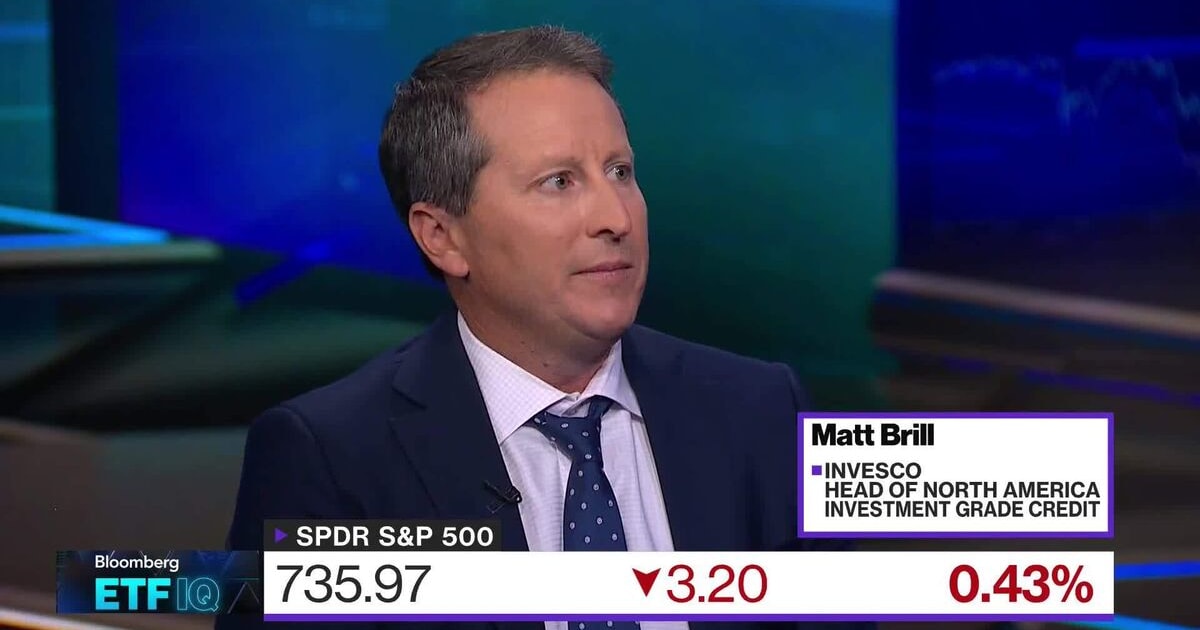
As North American investment-grade credit markets signal exhaustion, the ripple effects are hitting India's banking sector. This analysis explores the risks to FII debt flows, domestic yields, and the outlook for major NSE bank stocks in a 'higher-for-longer' interest rate environment.
The Great Credit Chill: North American Fatigue Hits Indian Shores
For the past eighteen months, global credit markets have defied gravity, absorbing record-breaking issuance with an insatiable appetite for yield. However, the narrative is shifting. Emerging buyer fatigue in North American investment-grade credit markets is no longer a localized phenomenon; it is a structural warning sign for global risk assets, with the Indian banking sector sitting squarely in the firing line.
When North American credit desks signal 'exhaustion,' it implies that the marginal buyer is no longer willing to absorb new supply without a significant yield concession. For the Indian market, this means the 'carry trade' dynamics that have supported FII (Foreign Institutional Investor) inflows are nearing an inflection point. As global liquidity tightens, the cost of capital for Indian lenders is poised to rise, challenging the net interest margin (NIM) expansion narratives that have dominated the last three fiscal years.
How will the US credit slowdown impact Indian bond yields?
The correlation between US Treasury volatility and Indian G-Sec (Government Security) yields has tightened significantly since the post-pandemic recovery. When US credit spreads widen due to buyer fatigue, the 'risk-off' sentiment typically triggers a flight to safety—specifically, the US Dollar and gold. Historically, as seen in the 2022 Fed hiking cycle, the Nifty 50 experienced a sharp drawdown when the 10-year US Treasury yield pierced the 4% threshold. We are currently witnessing a similar setup.
As FIIs recalibrate their portfolios, the immediate casualty is emerging market (EM) debt. If Indian bond yields are forced upward to remain competitive against rising US yields, the domestic banking sector—which holds massive portfolios of government securities—will face mark-to-market (MTM) losses on their treasury books. This is not just theoretical; it directly impacts the Tier-1 capital adequacy ratios of the largest public and private sector lenders.
Deep Market Impact: The Banking Sector Breakdown
The Indian banking sector, currently trading at a weighted average P/E ratio of approximately 16x-18x, has been the primary beneficiary of India's credit growth cycle. However, the credit fatigue in the West suggests that the 'cheap money' era is firmly behind us. When liquidity retreats, high-beta equities are the first to be pruned by institutional desks.
Stock-by-Stock Analysis
- HDFC Bank (NSE: HDFCBANK): With a massive market cap exceeding ₹12 trillion, HDFC Bank is the primary proxy for FII flows. Any sustained FII selling due to global credit fatigue will disproportionately impact this counter. Watch for compression in NIMs as the cost of deposits stays sticky while asset yields face pressure.
- ICICI Bank (NSE: ICICIBANK): Known for its robust asset quality, ICICI Bank remains a relative safe haven. However, if domestic bond yields spike, the bank’s treasury income will likely decline, potentially tempering its P/B ratio expansion.
- State Bank of India (NSE: SBIN): As the largest lender, SBI is highly sensitive to the G-Sec yield curve. An aggressive move in 10-year yields will necessitate higher provisions for MTM losses, impacting quarterly bottom-line performance.
- Bajaj Finance (NSE: BAJFINANCE): As a non-bank lender with high sensitivity to retail credit demand, Bajaj Finance faces a double-whammy: rising borrowing costs and a potential slowdown in consumer discretionary spending as credit conditions tighten.
Expert Perspective: Bulls vs. Bears
The Bulls argue that India’s domestic retail flows (SIPs) provide a permanent floor to the market, insulating it from global credit cycles. They point to the resilient 15% YoY credit growth numbers as evidence that India is 'decoupled' from Western credit fatigue.
Conversely, the Bears—and our analysis supports this—argue that liquidity is fungible. When the cost of dollar-denominated debt rises, FIIs are forced to liquidate liquid positions in EM markets to cover margin calls or rebalance portfolios. The 'decoupling' theory has historically failed during periods of global systemic liquidity contraction. The current fatigue in North American credit is the precursor to a broader liquidity withdrawal.
Actionable Investor Playbook
Investors should move from a 'growth-at-any-cost' mindset to a defensive posture. Key steps include:
- Reduce Exposure to High-Beta Financials: Trim positions in stocks with high P/B ratios that rely on consistent FII inflows to maintain valuation premiums.
- Increase Defensive Allocations: Rotate capital into gold and short-duration debt funds which provide a hedge against interest rate volatility.
- Monitor the 10-Year G-Sec: If the 10-year yield breaches 7.3%, it is a technical sell signal for interest-rate-sensitive stocks.
Risk Matrix
| Risk Factor | Probability | Impact |
|---|---|---|
| US Treasury Spike (>4.5%) | High | Severe |
| Sharp INR Depreciation | Medium | High |
| Domestic Credit Growth Slowdown | Medium | Medium |
What to Watch Next
The primary catalysts to monitor are the upcoming US CPI data releases and the FOMC minutes. Any hawkish surprise will accelerate credit market fatigue, putting immediate pressure on the Nifty Bank index. Additionally, keep a close watch on the RBI’s open market operations (OMO); if the central bank intervenes to cap yields, it will be a short-term relief, but a long-term inflationary risk that could eventually lead to currency depreciation.
See HDFC Bank's AI Score
Our algorithmic screener scores HDFC Bank on fundamentals, momentum, and risk — free to try, no card needed.
Try the AI Screener →Have questions about this story?
Ask Welth, our finance-focused AI research assistant, for a deeper breakdown — free trial included.
Chat with Welth AI →Disclaimer: This content is generated by WelthWest Research Desk based on publicly available reports and is for informational purposes only. It does not constitute financial advice, investment recommendations, or an offer to buy or sell securities. Always consult a qualified financial advisor before making investment decisions.
