Key Takeaway
The crypto liquidity crunch is a canary in the coal mine for global risk appetite. For Indian investors, this signals a transition from speculative growth to defensive capital preservation as FIIs hedge against macro volatility.
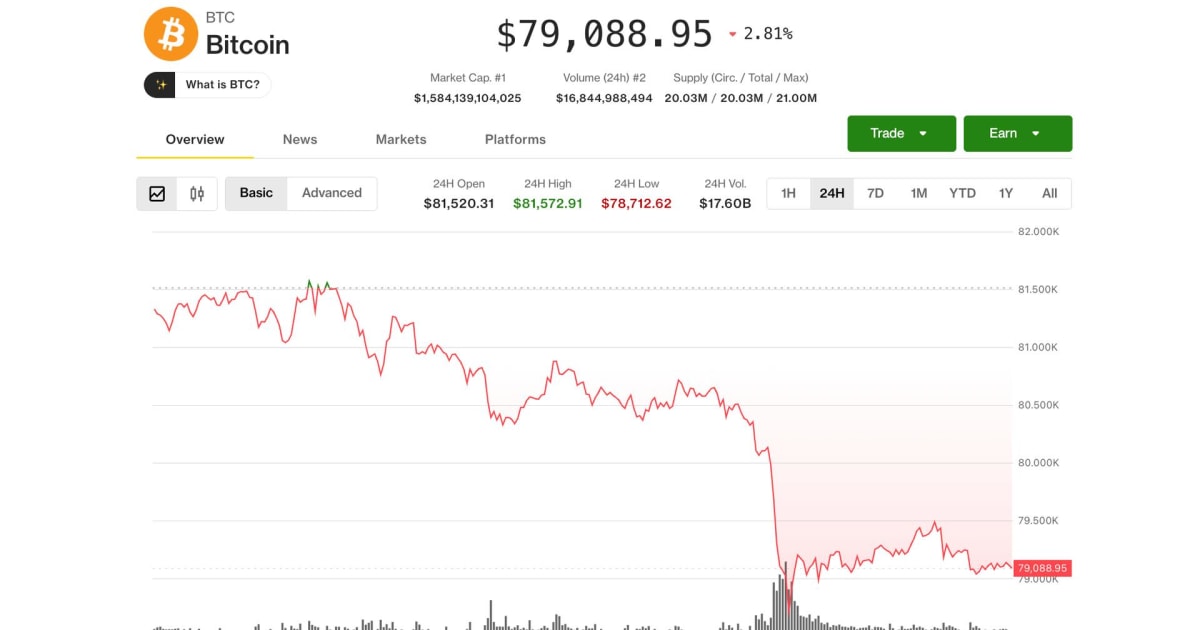
A sharp reversal in crypto markets is signaling a broader liquidity tightening across global asset classes. We analyze how this deleveraging cycle forces institutional exits from high-beta Indian equities and what defensive positioning is required to navigate the coming volatility.
The Great Deleveraging: Why Crypto Volatility Matters for Nifty
The recent seismic shift in cryptocurrency markets—marked by the liquidation of massive leveraged positions—is far more than a digital asset correction. It is a fundamental indicator of tightening global liquidity. When crypto bulls are forced to unwind positions to cover margin calls elsewhere, the contagion quickly spreads to traditional equity markets, specifically targeting high-beta growth stocks in emerging markets like India.
Historically, the correlation between Bitcoin and the Nasdaq 100 has served as a proxy for 'risk-on' sentiment. When this correlation breaks down during a liquidity crunch, Foreign Institutional Investors (FIIs) shift into 'risk-off' mode, liquidating positions in emerging markets to shore up balance sheets in developed markets. For the Indian investor, this isn't just about crypto; it’s about the cost of capital and the durability of high-valuation growth sectors.
How does global crypto deleveraging impact the Indian stock market?
When the global 'easy money' environment evaporates, the first assets to be sold are those with the highest volatility. In India, this primarily impacts the IT services and mid-cap technology sectors. During the 2022 liquidity tightening cycle, the Nifty IT index experienced a drawdown of over 25% as the narrative shifted from 'growth at any price' to 'margin protection.'
The current deleveraging cycle is exerting pressure on the INR, as FIIs repatriate capital to the US Dollar. As the USD strengthens, the import cost for Indian firms rises, and the perceived risk premium for Indian equities increases. This creates a feedback loop: lower liquidity leads to higher yields, which in turn compresses the P/E multiples of high-growth IT stocks.
Stock-by-Stock Breakdown: The High-Beta Exposure
Investors should monitor the following NSE-listed entities, as they are most susceptible to the current risk-off rotation:
- Persistent Systems (PERSISTENT): Trading at a premium P/E ratio, Persistent is highly sensitive to discretionary tech spending. As clients tighten budgets due to macro uncertainty, the revenue growth projections for mid-sized IT firms face significant headwinds.
- Zensar Technologies (ZENSARTECH): As a smaller-cap player, Zensar often exhibits higher beta than the Nifty 50. In a liquidity crunch, liquidity in these stocks dries up faster, exacerbating downside swings.
- Tata Consultancy Services (TCS): While TCS remains a cash-cow, its valuation is tethered to global macro health. With a P/E hovering near 30x, any sustained FII outflow will force valuation multiple contraction, regardless of operational excellence.
- Infosys (INFY): As a preferred FII proxy for the Indian IT sector, Infosys is often the first stock sold when global desks need to rebalance their portfolios. Monitor FII holding percentages closely over the next two quarters.
Expert Perspective: Bull vs. Bear
The Bear case rests on the theory of 'contagion.' Bears argue that the current crypto deleveraging is merely the first domino, and that persistent US inflation will force the Fed to maintain higher rates for longer, making speculative assets and high-growth Indian stocks fundamentally unattractive.
The Bull case, conversely, argues that the Indian economy is decoupled from the crypto ecosystem. They suggest that the current dip is a 'buying opportunity' for long-term investors, as the fundamental demand for digital transformation remains intact, and Indian IT firms are currently trading at more reasonable valuations compared to their 2021 peaks.
Actionable Investor Playbook: Navigating the Volatility
To survive this cycle, investors should pivot toward defensive capital allocation:
- Increase Exposure to Safe Havens: Allocate 5-10% of the portfolio to Gold or USD-denominated assets. Gold historically serves as a hedge against currency devaluation and systemic risk.
- Quality Over Growth: Move capital from high-beta, speculative mid-caps into large-cap 'value' stocks with strong dividend yields (e.g., FMCG, Pharma).
- Wait for the Pivot: Avoid 'catching the falling knife' in IT stocks. Wait for a stabilization in the 10-year US Treasury yield before re-entering high-beta growth positions.
Risk Matrix
| Risk Factor | Probability | Impact |
|---|---|---|
| Persistent FII Outflows | High | Severe |
| INR Depreciation vs USD | Medium | High |
| Global Recessionary Contagion | Medium | High |
What to watch next?
Investors must keep a close eye on the upcoming US Non-Farm Payroll data and RBI Monetary Policy Committee (MPC) meetings. A surprise print in US inflation data could trigger a second, more violent wave of deleveraging. Furthermore, watch for the quarterly earnings guidance from major US cloud providers—if they signal a slowdown in IT spending, the Indian IT sector will face a significant downward re-rating.
See Zensar Technologies's AI Score
Our algorithmic screener scores Zensar Technologies on fundamentals, momentum, and risk — free to try, no card needed.
Try the AI Screener →Have questions about this story?
Ask Welth, our finance-focused AI research assistant, for a deeper breakdown — free trial included.
Chat with Welth AI →Disclaimer: This content is generated by WelthWest Research Desk based on publicly available reports and is for informational purposes only. It does not constitute financial advice, investment recommendations, or an offer to buy or sell securities. Always consult a qualified financial advisor before making investment decisions.
