Key Takeaway
Deutsche Bank’s rising credit provisions signal a cooling European economy and a tightening global credit cycle, likely triggering defensive FII repositioning away from high-beta emerging market financials, including the Nifty Bank index.
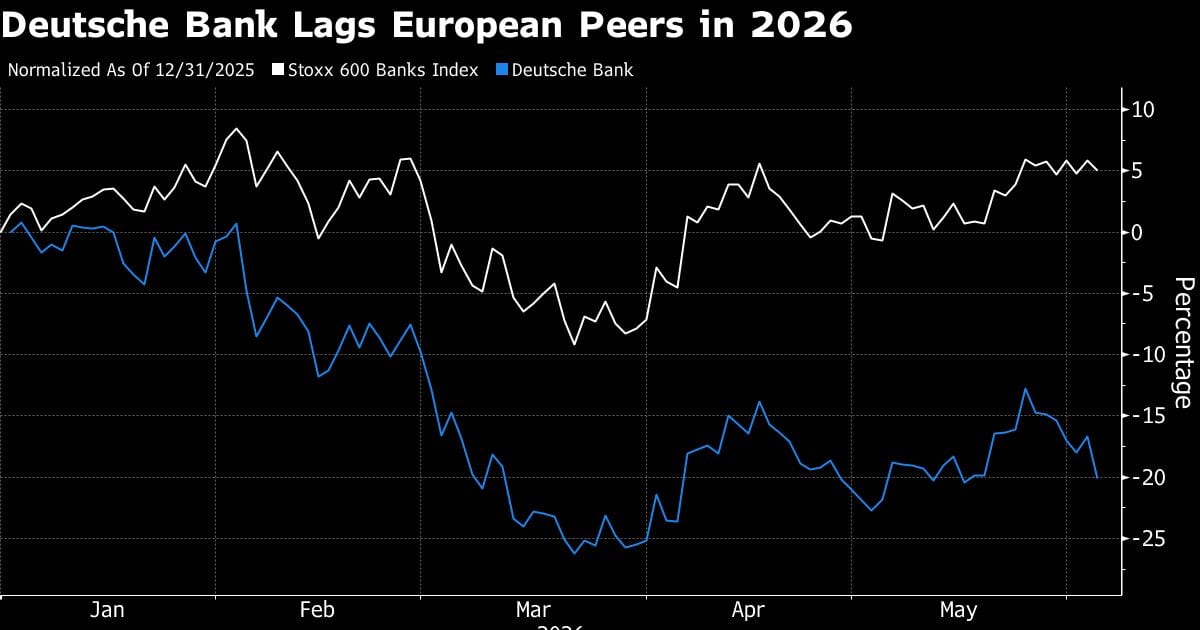
Deutsche Bank has signaled a significant increase in credit provisions for Q2, sparking fears of systemic credit stress in the Eurozone. While Indian domestic fundamentals remain robust, this global headwind threatens to stall the recent rally in Indian banking heavyweights as foreign institutional investors turn risk-averse. This deep dive explores the historical parallels, sector-level impacts, and an actionable playbook for Indian investors.
The Canary in the Credit Mine: Decoding Deutsche Bank’s Q2 Warning
In the high-stakes world of global finance, Deutsche Bank AG (DB) often serves as a barometer for the health of the European credit landscape. The recent signaling from Frankfurt that credit provisions for the second quarter will likely exceed previous market guidance is not merely a localized accounting adjustment; it is a structural red flag. For a Global Systemically Important Bank (G-SIB), increasing the 'rainy day fund' for soured loans suggests that the economic cooling in the Eurozone is biting harder than anticipated, particularly in the Commercial Real Estate (CRE) and mid-cap corporate sectors.
Why does this matter now? We are currently in a delicate transition phase where global central banks are weighing rate cuts against stubborn inflation. When a titan like Deutsche Bank—with its total assets exceeding €1.3 trillion—braces for impact, it forces a repricing of risk across the Atlantic and into emerging markets (EMs). For the Indian markets, which have seen the Nifty Bank scale new heights recently, this serves as a sobering reminder that global liquidity and sentiment are inextricably linked to the health of the 'Old World' financial institutions.
How Will the Global Credit Slowdown Affect Indian Bank Stocks?
The primary transmission mechanism from a European banking hiccup to the National Stock Exchange (NSE) is through Foreign Institutional Investor (FII) flows. Historically, when European credit risk spikes (measured by the iTraxx Europe Crossover index), FIIs tend to de-risk their portfolios by selling high-beta assets in emerging markets. The Indian banking sector, which constitutes roughly 30-35% of the Nifty 50 weightage, is the first port of call for such exits.
Looking back at the March 2023 banking jitters—triggered by the collapse of Silicon Valley Bank and the forced merger of Credit Suisse—the Nifty Bank index corrected by nearly 8% in a matter of weeks, despite Indian banks having zero direct exposure to the failing entities. The 'contagion of sentiment' is often more potent than the contagion of balance sheets. With Deutsche Bank signaling stress, we expect a similar 'caution-first' approach from global funds, which could lead to a temporary ceiling on the valuations of private lenders like HDFC Bank and ICICI Bank.
The Valuation Gap and the 'Safe Haven' Fallacy
Indian banks are currently trading at a premium compared to their global peers. While Deutsche Bank trades at a price-to-book (P/B) ratio of roughly 0.4x, Indian private giants like ICICI Bank trade at 3.2x. While this premium is justified by higher ROEs (Return on Equity) and credit growth (15-16% in India vs. low single digits in Europe), a global risk-off event shrinks the 'valuation umbrella.' When global risk premiums rise, the cost of equity for Indian banks increases, leading to a natural compression in P/E and P/B multiples.
Stock-by-Stock Breakdown: The Ripple Effect on Dalal Street
While the direct impact is low, the indirect sentiment shift will be felt across specific tickers. Here is how we see the impact unfolding:
1. HDFC Bank Ltd (HDFCBANK)
As the heaviest weight in the Nifty and a favorite for FIIs (holding over 47%), HDFC Bank is the most vulnerable to global sentiment shifts. Any cooling in global banking appetite leads to 'mechanical selling' by ETFs and global funds. Currently trading at a P/E of ~19x, the stock has been struggling to find momentum post-merger. A bearish signal from Europe could delay its breakout past the ₹1,750 resistance level. Sector Peer: Kotak Mahindra Bank (KOTAKBANK).
2. ICICI Bank Ltd (ICICIBANK)
ICICI Bank has been the gold standard for operational excellence in recent quarters. However, its significant American Depository Receipt (ADR) presence makes it highly sensitive to global banking news. If Deutsche Bank’s news leads to a sell-off in the KBW Bank Index in the US, ICICI's ADR will likely face pressure, which translates to a gap-down opening on the NSE. Sector Peer: Axis Bank (AXISBANK).
3. State Bank of India (SBIN)
The behemoth of Indian banking, SBI, often acts as a proxy for the Indian macro story. While its domestic credit cycle is at its healthiest in a decade (Gross NPA at 2.42%), it is not immune to FII outflows. However, we expect SBI to outperform private peers in a 'global fear' scenario as domestic institutional investors (DIIs) often use it as a defensive play within the sector. Sector Peer: Bank of Baroda (BANKBARODA).
4. Axis Bank (AXISBANK)
Axis Bank has a robust corporate lending book. The risk here is the potential for global yields to spike if European banks face liquidity crunches, which could increase the cost of offshore borrowing for Indian corporates. This might indirectly slow down the corporate credit off-take that Axis has been capitalizing on. Sector Peer: IndusInd Bank (INDUSINDBK).
5. Infosys Ltd (INFY) & TCS (TCS)
Though not banks, these IT giants are significantly impacted. The BFSI (Banking, Financial Services, and Insurance) vertical contributes nearly 30% of their revenue. If European banks like Deutsche Bank enter a cycle of aggressive provisioning and cost-cutting, discretionary IT spending in Europe will be the first to be slashed. This adds a layer of revenue risk for the upcoming fiscal quarters.
Is the European Banking Crisis Returning?
The question on every investor's mind is whether this is a localized Deutsche Bank issue or a systemic European failure. The reality lies in the middle. The European Central Bank (ECB) has kept rates higher for longer, and the 'lag effect' is finally showing up in loan defaults. Unlike the 2008 crisis, European banks are better capitalized (CET1 ratios are significantly higher). However, the profitability crisis is real. For Indian investors, this means that while a global collapse is unlikely, a 'growth drag' is almost certain. This suggests that the 'decoupling' theory will be tested; India will grow, but its stock market might face headwinds from global capital reallocation.
Expert Perspective: The Bull vs. Bear Case
"The Indian banking sector is currently in a 'Goldilocks' zone—high credit growth, low NPAs, and stable margins. A provision hike in Frankfurt doesn't change the fact that a small-business owner in Bengaluru is expanding. Any dip caused by FII selling should be viewed as a generational buying opportunity for domestic investors." — Bullish View
"Markets are priced for perfection. When the 10th largest bank in the world signals credit stress, you don't ignore it. The interconnectedness of global finance means that a liquidity squeeze in Europe will eventually tighten financial conditions in India, leading to a much-needed correction in overstretched banking valuations." — Bearish View
Actionable Investor Playbook: Navigating the Turbulence
- The Tactical Move: If the Nifty Bank falls 2-3% on the back of European news, avoid catching the falling knife immediately. Wait for the FII selling data to stabilize. Historically, the best entry points occur when the 'Fear Index' (VIX) spikes above 18.
- The Defensive Strategy: Shift a portion of the banking allocation to Safe-haven assets like Gold or Sovereign Gold Bonds (SGBs). Gold typically has a negative correlation with banking sector stress.
- Accumulation Zone: For long-term investors, look at ICICI Bank in the ₹1,050–₹1,080 range and HDFC Bank near ₹1,550. These levels provide a significant margin of safety regardless of European headwinds.
- Avoid High Leverage: This is not the time for aggressive leveraged positions in banking futures. The 'overnight risk' of global news is currently too high.
Risk Matrix: Assessing the Fallout
| Risk Factor | Probability | Impact on Indian Markets |
|---|---|---|
| Systemic European Contagion | Low (20%) | High (10-15% correction in Nifty) |
| Aggressive FII Outflows | Medium (50%) | Moderate (3-5% volatility in Bank Nifty) |
| Domestic Credit Slowdown | Very Low (10%) | Severe (Long-term bear market) |
What to Watch Next: The Critical Catalysts
Investors should keep a close eye on the following dates and data points to gauge the direction of the market:
- Deutsche Bank Q2 Earnings Release: The full breakdown of the credit provisions will reveal which sectors are failing.
- ECB Policy Commentary: Any hint of a 'dovish pivot' to save the banks could reverse the bearish sentiment.
- RBI Monetary Policy Committee (MPC) Minutes: To see if the Indian central bank is tracking global credit risks.
- US 10-Year Treasury Yield: If yields fall alongside banking stress, it indicates a 'flight to safety' which could ironically help EM bonds but hurt EM equities.
In conclusion, while Deutsche Bank's warning is a tremor rather than an earthquake for India, it signals that the era of 'easy credit' and 'ignored risks' is ending in the West. Indian investors must remain vigilant, prioritizing quality and liquidity over speculative gains in the banking space.
See None directly; indirect sentiment impact on Nifty Bank's AI Score
Our algorithmic screener scores None directly; indirect sentiment impact on Nifty Bank on fundamentals, momentum, and risk — free to try, no card needed.
Try the AI Screener →Have questions about this story?
Ask Welth, our finance-focused AI research assistant, for a deeper breakdown — free trial included.
Chat with Welth AI →Disclaimer: This content is generated by WelthWest Research Desk based on publicly available reports and is for informational purposes only. It does not constitute financial advice, investment recommendations, or an offer to buy or sell securities. Always consult a qualified financial advisor before making investment decisions.
