Key Takeaway
While Dogecoin's 5% dip leads altcoin losses, Bitcoin's steadfast $78,000 support suggests a flight to quality within crypto. Indian investors with altcoin exposure face immediate headwinds, but the broader equity market impact remains contained, favoring large-cap stability over speculative assets.
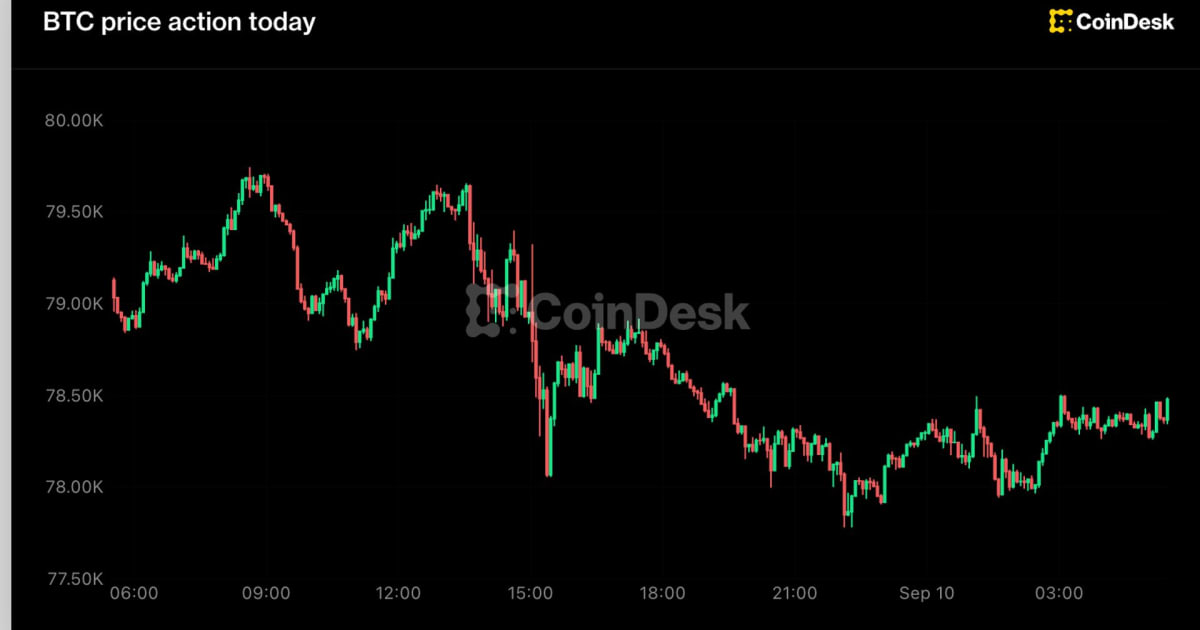
Dogecoin's recent 5% plunge has sent ripples through the altcoin market, contrasting sharply with Bitcoin's resilient hold above $78,000. This divergence signals a critical shift in crypto investor sentiment, moving away from speculative 'meme coins' towards established digital assets. For India, this trend has direct implications for a burgeoning investor base and indirect effects on capital flows, prompting a deep dive into specific NSE/BSE stock exposures and potential market shifts.
Dogecoin Crash Signals Altcoin Instability: What It Means for Indian Stocks?
The cryptocurrency market is once again at a pivotal juncture, with Dogecoin, the poster child of speculative altcoins, experiencing a notable 5% decline, leading losses among major digital assets. This downturn starkly contrasts with Bitcoin's (BTC) tenacious hold above the crucial $78,000 support level, a divergence that offers profound insights into evolving investor sentiment and potential ramifications for the broader financial landscape, particularly within the Indian equity market. At WelthWest Research Desk, our in-depth analysis suggests this isn't merely a crypto market blip, but a significant indicator of capital reallocation away from high-risk, high-reward altcoins towards more established digital stores of value. For Indian investors, understanding this dynamic is paramount, as the nation's burgeoning crypto participation intersects with a vibrant, yet sensitive, stock market.
This event matters now because it underscores a critical 'flight to quality' within the digital asset sphere. While directly impacting the estimated 15-20 million Indian crypto investors, a significant downturn in major altcoins can indirectly affect global investor sentiment towards risk assets. For India, this primarily impacts individuals and entities with direct crypto exposure, and potentially reduces speculative capital flows that might otherwise enter other asset classes, including equities. Bitcoin's resilience at $78,000 suggests an underlying bedrock of institutional and long-term investor support, preventing a broader panic. However, the pronounced altcoin weakness, exemplified by Dogecoin's performance, indicates a clear preference for stability over volatility, a sentiment that often precedes broader market adjustments.
What is the Deep Market Impact on Indian Equities from Crypto Volatility?
The immediate impact of Dogecoin's decline and broader altcoin weakness on the Indian stock market appears contained, primarily due to the relatively nascent integration of crypto assets into mainstream Indian financial institutions. However, an indirect effect is undeniable. The Indian crypto market, with an estimated valuation of over $150 billion, represents a significant pool of speculative capital. When altcoins experience sharp corrections, a portion of this capital is either liquidated, leading to a temporary reduction in disposable income for some investors, or reallocated within the crypto ecosystem, rather than flowing into traditional assets like Indian equities. Historically, periods of intense crypto volatility, such as the 'crypto winter' of 2022, saw a minor dampening of overall risk appetite, but the Nifty 50's resilience (only declining ~3% in Q2 2022 amidst significant global headwinds and crypto crashes) demonstrated the Indian market's relative insulation from direct crypto shocks. Nevertheless, a sustained altcoin bear market could reduce the 'wealth effect' for early crypto adopters, potentially moderating discretionary spending and investment in smaller, more speculative Indian mid-cap and small-cap stocks.
Furthermore, the regulatory uncertainty surrounding cryptocurrencies in India adds another layer of complexity. The lack of a clear, comprehensive regulatory framework means that large-scale institutional participation from Indian banks or mutual funds in crypto assets remains minimal. This limits direct exposure but also means that any significant capital flight from crypto assets by retail investors could indirectly impact sectors that rely on disposable income or speculative retail capital. For instance, brokerage firms that also facilitate crypto trading, or fintech companies exploring blockchain solutions, could experience indirect pressure. The current scenario, where Bitcoin holds strong while altcoins falter, is reminiscent of late 2017 to early 2018, when Bitcoin surged past $19,000 while many altcoins saw significant corrections in its wake. During that period, the Nifty 50 continued its upward trajectory, demonstrating a decoupled trend, but the overall sentiment for high-growth, high-risk assets did see some moderation. The current P/E ratio of the Nifty 50 hovering around 22x, while not excessively high, suggests that investors are already seeking value, making them less inclined to chase highly volatile assets, whether crypto or small-cap equities.
Which Indian Stocks Are Most Affected by Altcoin Instability?
While no Indian company has direct, significant treasury holdings in Dogecoin or other altcoins that would materially impact their balance sheets, several NSE/BSE listed entities have indirect exposure or are positioned to be affected by shifting investor sentiment:
- One97 Communications (PAYTM.NS): As a leading fintech player, Paytm has explored blockchain applications and its user base includes many individuals likely involved in crypto. While not directly exposed to crypto prices, a downturn in retail investor sentiment for speculative assets could indirectly affect transaction volumes or interest in new digital financial products. Paytm's recent efforts to streamline operations and achieve profitability (Q4 FY24 revenue growth of 13%, but still reporting losses) mean any headwind to digital payments or speculative capital flows could be a concern. Sector peers like PB Fintech (POLICYBZR.NS), which relies on digital adoption, could also see minor indirect impacts.
- Infosys (INFY.NS): As a major IT services provider, Infosys and its peers like Tata Consultancy Services (TCS.NS) are increasingly involved in blockchain and Web3 development projects for global clients. While not directly holding crypto, a sustained downturn in the crypto market could lead to reduced enterprise spending on these nascent technologies, impacting their consulting and implementation revenue streams in the long term. However, given the vastness of their traditional IT services, this impact would be marginal, likely less than 0.5% of overall revenue for the next 1-2 years.
- Central Depository Services (India) Limited (CDSL.NS): As a primary depository for Indian securities, CDSL benefits from increased trading activity. While not directly linked to crypto, a significant shift of retail capital out of speculative crypto assets and into traditional equities could theoretically boost DMAT account openings and trading volumes on exchanges, indirectly benefiting CDSL. Conversely, a broad decline in risk appetite could reduce overall trading activity. CDSL's P/E ratio of over 50x reflects high growth expectations, which could be sensitive to any dampening of retail participation.
- Angel One (ANGELONE.NS): As a prominent discount broker in India, Angel One caters to a large retail investor base, many of whom are active in speculative segments. While their core business is equity and derivatives trading, a significant portion of their clientele might also be active in crypto. A 'flight to quality' from altcoins could see some of this capital re-entering the equity market, potentially boosting Angel One's brokerage volumes. However, a broader decline in speculative appetite could have the opposite effect. Their Q4 FY24 client base grew 31% YoY, indicating strong retail participation, but this could moderate if speculative fervor wanes. ICICI Securities (ISEC.NS), another brokerage house, would face similar dynamics.
Contrarian Views: Bulls vs. Bears on Crypto's Indian Equity Influence
The current crypto market dynamics elicit varied perspectives from financial experts:
Bulls argue: "Bitcoin's stability at $78,000 amidst altcoin weakness is a sign of market maturity, not panic. It represents a healthy 'de-risking' within crypto, where capital flows into more robust assets. For India, this implies that any capital exiting speculative altcoins is more likely to be re-deployed into stable, high-quality Indian equities or fixed income, rather than leaving the financial system entirely. Furthermore, the Indian stock market's robust domestic liquidity and strong corporate earnings growth provide a significant buffer against external crypto volatility. The Nifty's consistent performance, even during previous crypto downturns, underscores this decoupling. This 'flight to quality' within crypto could even be a net positive for Indian blue-chip stocks as investors seek reliable returns."
Bears counter: "While Bitcoin holds, the altcoin market's fragility is a canary in the coal mine for broader risk assets. Dogecoin's 5% drop is just the tip of the iceberg, as many smaller altcoins are experiencing much steeper declines. This erosion of wealth among a significant portion of Indian retail investors could lead to reduced discretionary spending and a cautious approach to new equity investments, especially in the mid and small-cap segments which thrive on retail participation. The regulatory uncertainty in India means that any significant crypto market stress could trigger knee-jerk reactions from policymakers, creating an adverse environment for fintech innovation and potentially impacting investor confidence across the board. The 'de-risking' narrative is merely a euphemism for capital flight from speculative assets, a trend that rarely bodes well for general market exuberance."
Actionable Investor Playbook: Navigating Crypto Volatility in Indian Markets
Given the current market dynamics, Indian investors should consider a strategic re-evaluation of their portfolios:
- Buy/Watch: Investors with a medium to long-term horizon (1-3 years+) should consider accumulating high-quality, large-cap Indian equities with strong fundamentals and consistent earnings. Companies like Reliance Industries (RELIANCE.NS), HDFC Bank (HDFCBANK.NS), and Infosys (INFY.NS) offer stability and resilience. The current environment favors established leaders over speculative plays. Consider entry points during minor market corrections, aiming for P/E ratios slightly below their 5-year averages.
- Sell/Reduce: Re-evaluate exposure to highly speculative altcoins, especially those with limited utility or strong 'meme' coin characteristics. For equity portfolios, consider reducing positions in highly leveraged or consistently loss-making small-cap companies that rely heavily on speculative retail sentiment.
- Watch: Closely monitor regulatory developments in India regarding cryptocurrencies. A clear regulatory framework, whether positive or negative, will significantly impact sentiment and capital flows. Also, watch the Nifty Smallcap 100 index; a sustained decline could signal broader retail investor caution.
- Time Horizon: This 'flight to quality' trend suggests a preference for longer-term, value-driven investments. Short-term speculative trading in altcoins or highly volatile equities carries elevated risk.
For those with existing altcoin exposure, a disciplined approach to profit-taking or loss-cutting is advised, especially for assets that have seen parabolic rises without underlying fundamental support. Re-allocating a portion of these funds into diversified, blue-chip Indian equity mutual funds or ETFs (e.g., Nifty 50 ETFs) can provide a hedge against further crypto volatility while maintaining exposure to India's growth story.
Risk Matrix: Assessing Potential Headwinds
The current crypto market instability presents several risks for Indian investors:
- Continued Altcoin Weakness (Probability: Medium-High): A sustained bear market for altcoins could further erode wealth for retail investors, potentially dampening overall risk appetite for other speculative assets, including small-cap Indian equities. This could lead to a 'risk-off' sentiment spilling over into broader markets.
- Regulatory Clampdown in India (Probability: Medium): The Indian government and RBI have expressed concerns about crypto. Any sudden, restrictive regulatory action (e.g., outright ban, punitive taxation) could cause significant capital flight from crypto, potentially creating a temporary liquidity crunch for some investors and impacting fintech companies exploring blockchain.
- Global Economic Slowdown (Probability: Medium): While Bitcoin shows resilience, a broader global economic slowdown or recession could trigger a 'risk-off' cascade across all asset classes, including Bitcoin. This would inevitably impact Indian equities, especially export-oriented sectors, regardless of crypto's specific performance.
- Exacerbated FII Outflows (Probability: Low-Medium): While not directly linked to altcoins, a significant global risk-off event, potentially triggered or amplified by crypto instability, could lead to increased Foreign Institutional Investor (FII) outflows from Indian markets, putting pressure on the Rupee and equity valuations.
What to Watch Next: Catalysts for the Crypto-Equity Interplay
Several key events and data releases will shape the narrative surrounding crypto and its impact on Indian equities:
- Indian Regulatory Clarity (Ongoing): Any official statements, draft bills, or final legislation from the Indian government or RBI regarding cryptocurrency will be the most significant domestic catalyst. A clear framework could either legitimize the asset class, attracting institutional capital, or severely restrict it, leading to further capital flight.
- US Federal Reserve Monetary Policy (June 12th FOMC Meeting): Global liquidity conditions, heavily influenced by the Fed's interest rate decisions, directly impact risk asset appetite, including crypto. A hawkish stance could further pressure altcoins, while dovish signals might provide some relief.
- Bitcoin Halving Post-Effects (Next 3-6 months): The recent Bitcoin halving event (April 2024) historically leads to price appreciation in the months following. How Bitcoin performs in the next quarter will dictate overall crypto sentiment and its ability to act as a 'safe haven' within the digital asset space.
- Quarterly Earnings of Indian Fintech & IT Companies (Q1 FY25, July-August): The performance and outlook commentary from companies like Paytm, Infosys, and brokerage firms will provide insights into retail investor sentiment and enterprise spending on new technologies, offering indirect clues about crypto's broader economic impact.
The current market environment demands vigilance and a discerning eye. While Dogecoin's decline underscores the inherent risks of speculative altcoins, Bitcoin's resilience offers a beacon of stability. Indian investors must navigate this landscape with a clear strategy, prioritizing fundamental strength and diversification over chasing ephemeral trends, ensuring their portfolios are robust against both crypto volatility and broader market shifts.
Run a free AI Stock Screen
Our algorithmic screener scores any NSE/BSE stock on fundamentals, momentum, and risk — free to try, no card needed.
Try the AI Screener →Have questions about this story?
Ask Welth, our finance-focused AI research assistant, for a deeper breakdown — free trial included.
Chat with Welth AI →Disclaimer: This content is generated by WelthWest Research Desk based on publicly available reports and is for informational purposes only. It does not constitute financial advice, investment recommendations, or an offer to buy or sell securities. Always consult a qualified financial advisor before making investment decisions.