Key Takeaway
The strengthening El Niño threatens to derail India's fragile rural recovery, potentially triggering a pivot from growth-oriented consumption stocks to defensive irrigation and power plays as food inflation risks resurface.
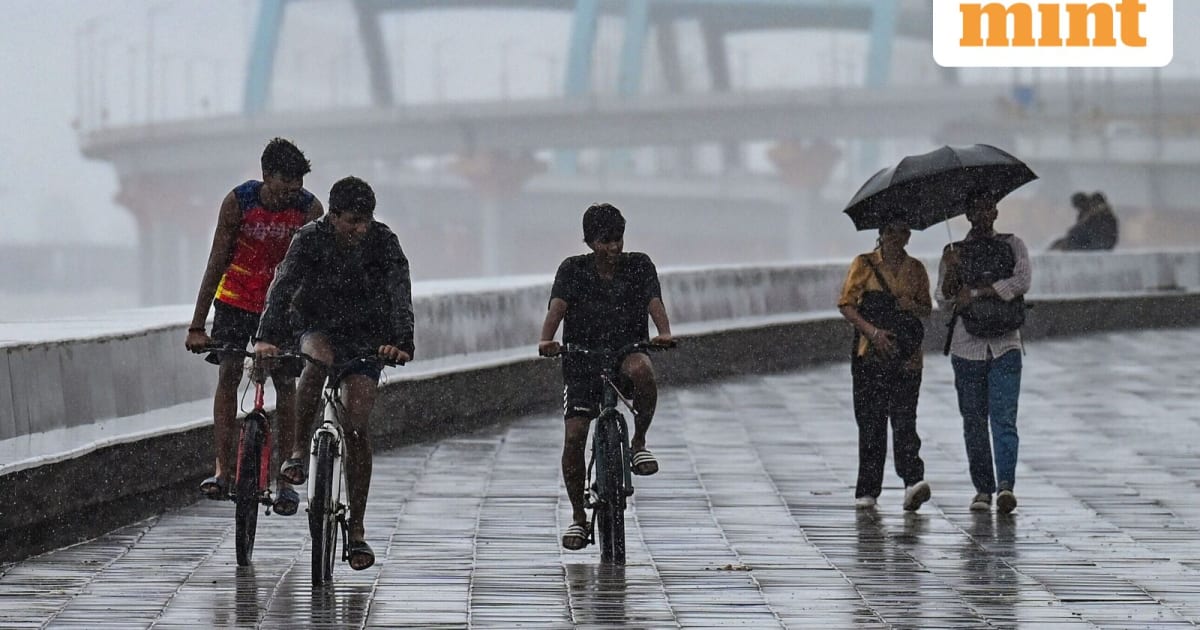
As the ENSO cycle shifts toward a potent El Niño, the Indian monsoon faces a significant deficit risk, threatening nearly 50% of the country's consumer demand. This deep-dive explores why the rural economy is at a breaking point and which specific NSE/BSE stocks will bear the brunt of a dry spell versus those positioned to hedge the climate risk.
The Climate Catalyst: Why El Niño is the 'Black Swan' for 2024 Markets
For the Indian equity markets, the monsoon is more than just a weather pattern; it is the ultimate economic stimulus package. With nearly 14% of India’s GDP and over 40% of its workforce tied directly to agriculture, the annual rainfall cycle dictates the trajectory of national consumption. The emergence of a strengthening El Niño—a climate phenomenon characterized by the warming of surface waters in the eastern Pacific Ocean—is now casting a long shadow over the Nifty 50’s earnings expectations for the second half of the fiscal year.
Historically, El Niño years have been synonymous with sub-par monsoons in India. Data from the India Meteorological Department (IMD) suggests that since 1950, roughly 60% of El Niño years resulted in a drought or below-normal rainfall. This matters now because the Indian rural economy is currently in a state of 'K-shaped' fragility. While urban demand has remained resilient, rural real wages have been stagnant. A weak monsoon wouldn't just be a minor setback; it could be the tipping point that collapses rural discretionary spending, which accounts for nearly 45% of the Fast-Moving Consumer Goods (FMCG) sector and over 50% of entry-level two-wheeler sales.
Deep Market Impact: Connecting Rainfall Deficits to Nifty Valuations
When the monsoon fails, the transmission mechanism to the stock market is three-fold: Income, Inflation, and Interest Rates. First, lower crop yields directly reduce the disposable income of over 150 million farming households. Second, a supply shock in staples like pulses, cereals, and oilseeds triggers a spike in the Consumer Price Index (CPI). Third, persistent food inflation prevents the Reserve Bank of India (RBI) from pivoting to a dovish stance, keeping the cost of capital high for India Inc.
Looking at historical parallels, during the 2014-2015 El Niño cycle, the Nifty FMCG index saw significant volatility as volume growth for giants like HUL plummeted to low single digits. Similarly, in 2023, erratic rainfall led to a 15% surge in vegetable prices within a single quarter, forcing the RBI to maintain a 'withdrawal of accommodation' stance longer than the market anticipated. If the current El Niño intensifies, we expect a 150-200 basis point compression in the operating margins of companies that cannot pass on raw material price hikes to an already distressed rural consumer.
How will El Niño affect the RBI's interest rate trajectory?
The RBI’s primary mandate is to keep inflation at the 4% target. Food accounts for nearly 46% of the CPI basket. A weak monsoon typically leads to 'sticky' food inflation. If the monsoon deficit exceeds 10%, the market must price in a 'Higher for Longer' interest rate regime. This is particularly bearish for high-growth, high-P/E midcap stocks that rely on cheap liquidity. A hawkish RBI would also keep the 10-year benchmark yield elevated, making equity valuations look expensive relative to bonds.
Stock-by-Stock Breakdown: Identifying the Casualties and the Hedges
The impact of a weak monsoon is never uniform. Investors must distinguish between companies with deep rural penetration and those that provide the infrastructure to combat water scarcity.
The Vulnerable: FMCG and Rural Discretionary
- Hindustan Unilever Ltd (HUL) [NSE: HUL]: With over 40% of its revenue derived from rural markets, HUL is the canary in the coal mine. Currently trading at a P/E of ~55x, HUL’s valuation leaves little room for volume disappointment. A weak monsoon leads to 'down-trading,' where rural consumers switch from branded soaps and detergents to unorganized, cheaper local alternatives.
- Hero MotoCorp [NSE: HEROMOTOCO]: As the leader in the entry-level motorcycle segment (100cc-110cc), Hero’s fortunes are tethered to the harvest. Rural distress translates directly into lower footfalls at dealerships in Tier-3 and Tier-4 towns. Unlike Eicher Motors, which caters to an urban/premium demographic, Hero remains highly sensitive to agricultural output.
- Mahindra & Mahindra (M&M) [NSE: M&M]: While M&M has a robust SUV portfolio, it remains the world’s largest tractor manufacturer by volume. The Farm Equipment Sector (FES) typically contributes high-margin revenue. A monsoon failure could see tractor industry volumes decline by 5-8%, impacting M&M’s consolidated bottom line.
The Resilient: Irrigation and Agri-Inputs
- Jain Irrigation Systems [NSE: JISLJALEQS]: As a leader in micro-irrigation, Jain Irrigation becomes a strategic play during water-scarce years. Government subsidies for 'More Crop Per Drop' schemes tend to accelerate when reservoir levels are low, driving demand for drip and sprinkler systems.
- UPL Limited [NSE: UPL]: While a global player, UPL’s pesticide and seed treatment business in India sees a shift in demand during dry spells. Farmers focus on crop protection to save whatever yield is possible. However, high debt levels remain a concern for UPL, making it a tactical rather than a structural play.
- Coromandel International [NSE: COROMANDEL]: As a dominant player in the fertilizer and phosphatic space, Coromandel is a 'mixed bag.' While lower sowing reduces volume, the company’s move into specialty nutrients and retail centers provides a cushion that pure-play urea manufacturers lack.
Expert Perspective: The Bull vs. Bear Argument
"The market is currently underestimating the 'wealth effect' reversal in rural India. If the monsoon fails, the rural recovery isn't just delayed; it's derailed for the next 18 months." — Senior Institutional Strategist
The Bear Case: Bears argue that the Nifty 50 is trading at a premium (20x+ forward P/E) that assumes a perfect recovery. They point to the fact that reservoir levels in Southern and Western India are already below 10-year averages. A dry monsoon would trigger an earnings downgrade cycle for the entire consumption basket, leading to a potential 10-12% correction in the Nifty FMCG and Auto indices.
The Bull Case: Bulls contend that the Indian economy is now more diversified. They argue that the rising contribution of the services sector and government capex on infrastructure will offset the agricultural drag. Furthermore, they believe that the government’s pre-election spending and increased MSP (Minimum Support Price) will provide a safety net for rural incomes, regardless of the weather.
Actionable Investor Playbook: Navigating the Dry Spell
Investors should not panic-sell but rather rebalance. Here is a concrete strategy for the next 6-9 months:
- Reduce Exposure: Lighten positions in entry-level consumer durables and microfinance institutions (MFIs) like CreditAccess Grameen, which are highly susceptible to rural default rates during droughts.
- The 'Irrigation' Hedge: Increase weightage in companies like Finolex Industries or Astral Ltd (specifically their agri-pipe divisions) and KSB Ltd (pump manufacturers). These are direct beneficiaries of increased groundwater extraction.
- Defensive Pivot: Shift capital toward IT Services (TCS, Infosys) and Pharma (Sun Pharma, Cipla). These sectors are decoupled from the Indian monsoon and benefit from a potential weakening of the Rupee if the trade deficit widens due to food imports.
- Entry Points: For long-term investors, a monsoon-led dip in ITC or HUL could provide an attractive entry point. Look for HUL near the ″2,300-2,350 levels and ITC near ″400, provided the dividend yield remains supportive.
Risk Matrix: What Could Go Wrong?
1. Positive IOD (Indian Ocean Dipole): There is a 30% probability that a 'Positive IOD' could neutralize the El Niño effect, leading to normal rainfall despite the Pacific warming. (Impact: Market Rally)
2. Government Intervention: To control inflation, the government may ban exports of rice, wheat, or sugar. This hurts the realization prices for farmers and stocks like LT Foods or Renuka Sugars. (Probability: High)
3. Crude Oil Spike: If a weak monsoon coincides with a spike in global oil prices, India faces a 'twin deficit' threat, leading to a sharp sell-off in the broader markets. (Probability: Moderate)
What to Watch Next: The Critical Catalysts
Keep a close eye on these dates and data points to stay ahead of the curve:
- Skymet & IMD Updates (April-May): The second stage forecasts will provide more granular data on the spatial distribution of rain.
- Central Water Commission (CWC) Reservoir Reports: Weekly updates on the storage levels in 150 major reservoirs. Anything below 30% of total capacity by June is a red flag.
- Kharif Sowing Data (July): The Ministry of Agriculture releases weekly sowing numbers. A lag in pulses and oilseeds sowing will be the first sign of impending food inflation.
- RBI Monetary Policy Committee (MPC) Minutes: Look for any shift in language regarding 'climate-induced inflation risks.'
See HUL's AI Score
Our algorithmic screener scores HUL on fundamentals, momentum, and risk — free to try, no card needed.
Try the AI Screener →Have questions about this story?
Ask Welth, our finance-focused AI research assistant, for a deeper breakdown — free trial included.
Chat with Welth AI →Disclaimer: This content is generated by WelthWest Research Desk based on publicly available reports and is for informational purposes only. It does not constitute financial advice, investment recommendations, or an offer to buy or sell securities. Always consult a qualified financial advisor before making investment decisions.