Key Takeaway
Bitmine's massive Ethereum accumulation underscores growing institutional conviction in crypto. While direct Indian market impact is nuanced, it signals potential for amplified ETH price volatility, indirectly affecting Indian investors with crypto exposure and spotlighting global tech firms with digital asset strategies.
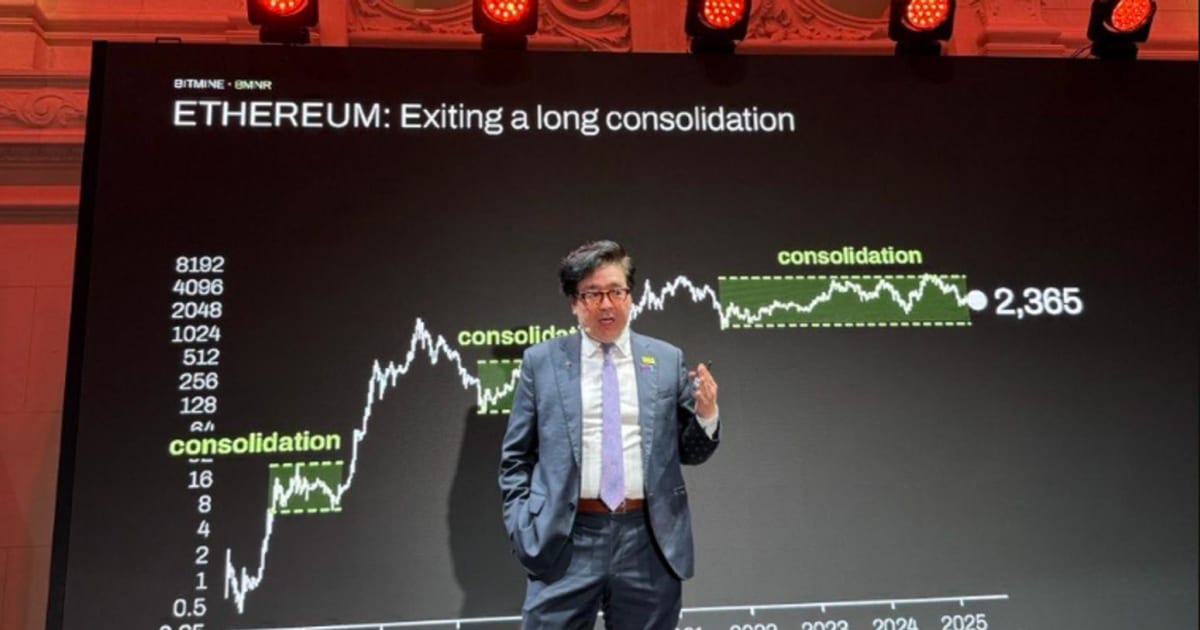
A major institutional player, Bitmine, has amassed nearly 5% of the total Ethereum supply, a move signaling a significant shift in the cryptocurrency landscape. This unprecedented accumulation by a prominent fund manager highlights increasing institutional validation of digital assets. Our deep dive explores the ripple effects on global crypto markets and the subtle, yet critical, implications for Indian investors and related public companies.
Ethereum Whale Roars: Bitmine's Near 5% ETH Stake Reshapes Crypto Landscape & Indian Market Shadows
The cryptocurrency world is abuzz with a seismic shift: Bitmine, the investment vehicle led by renowned analyst Tom Lee, has reportedly accumulated an astonishing 4.8% of the total Ethereum (ETH) supply. This isn't just a large purchase; it's a strategic, long-term bet by a well-capitalized institutional entity, fundamentally altering the ownership structure of the world's second-largest cryptocurrency by market capitalization. With Ethereum's current market cap hovering around $450 billion, Bitmine's stake represents a multi-billion dollar position, positioning it as one of the single largest non-exchange holders of ETH.
This development is far more than a mere transaction; it's a powerful signal of increasing institutional conviction in Ethereum's long-term value proposition, particularly its role as the foundational layer for decentralized finance (DeFi), NFTs, and Web3 applications. The timing is crucial, occurring amidst a period of renewed interest in digital assets, driven by macroeconomic uncertainties and the search for uncorrelated alpha. For Indian investors, while direct exposure to crypto via regulated channels remains limited, the global ripple effects of such significant institutional moves cannot be ignored. It influences global tech sentiment, capital flows, and the narrative around digital innovation, all of which eventually find their way to domestic equity markets.
What Does Bitmine's Ethereum Accumulation Mean for Global Markets and Indian Investors?
The immediate implication of Bitmine's colossal ETH holding is a significant reduction in the readily available circulating supply. When a substantial portion of an asset is locked up in institutional hands, it naturally creates a supply-side squeeze. Historically, such 'supply shocks' in any asset class – be it commodities or equities – have often preceded upward price movements, assuming demand remains constant or increases. For Ethereum, this means potential for heightened price volatility, particularly upwards, as fewer tokens are available for daily trading. This dynamic is especially potent for ETH, which has a deflationary mechanism post-merge, further tightening supply over time.
For Indian investors, the impact is indirect but profound. Those with existing exposure to cryptocurrencies, either directly through international exchanges or indirectly via global funds, will likely see their ETH holdings appreciate. More broadly, the institutional validation from a fund like Bitmine lends credibility to the entire digital asset space. This can influence sentiment towards Indian companies that are either exploring blockchain technology, have global tech partnerships, or are seen as innovation plays. While the Reserve Bank of India (RBI) and the Indian government maintain a cautious stance on cryptocurrencies, global trends inevitably shape local perceptions and strategic decisions within the tech sector.
Consider the historical parallel: during the 2020-2021 bull run, when institutional adoption of Bitcoin first gained significant traction with announcements from companies like MicroStrategy and Tesla, we observed a spillover effect into global tech stocks. Companies perceived as 'innovative' or 'digital-first' saw boosted valuations. While the Nifty 50's direct correlation was limited, specific Indian IT services companies with significant exposure to global clients in fintech and emerging technologies did experience tailwinds, driven by an overall bullish sentiment towards technological disruption. Bitmine's ETH move could catalyze a similar, albeit more nuanced, sentiment shift, focusing on the utility and ecosystem growth of Ethereum.
Deep Market Impact Analysis: Connecting Crypto Whales to Indian Equities
The concentration of nearly 5% of Ethereum's supply in a single institutional entity like Bitmine introduces a new dimension of market dynamics. This isn't just about price; it's about control and influence. Such a large stake grants Bitmine significant leverage in the Ethereum ecosystem, potentially influencing governance proposals or even dictating market liquidity during periods of high volatility. For the broader crypto market, this signals a maturation, moving from a purely retail-driven speculative asset to one attracting serious institutional capital seeking long-term value.
The indirect impact on the Indian stock market, specifically the NSE and BSE, will primarily manifest through two channels: sentiment and technology adoption. The 'institutionalization' of crypto, spearheaded by players like Bitmine, can foster a more positive global outlook on digital assets. This, in turn, can accelerate the digital transformation initiatives of Indian companies, particularly those in the IT services, fintech, and e-commerce sectors, who are increasingly looking at blockchain for supply chain, payments, and data management solutions. Companies perceived as leaders in adopting or enabling these next-gen technologies could see increased investor interest.
Furthermore, the increased stability and perceived legitimacy brought by institutional players could eventually pave the way for clearer regulatory frameworks globally, and perhaps even in India. Should India eventually adopt a more progressive stance on digital assets, companies already positioning themselves in the blockchain space would be prime beneficiaries. The current 'low impact' assessment for Indian markets might evolve rapidly if global regulatory clarity emerges, making it crucial for investors to monitor this space proactively.
Which Indian Stocks Could Benefit from Surging Institutional Crypto Interest?
While no Indian company directly holds Ethereum as a treasury asset in the way MicroStrategy holds Bitcoin, the indirect beneficiaries will be those positioned to capitalize on the broader digital economy and blockchain adoption trends. Here are 4-6 specific NSE/BSE stocks and sectors to watch:
- Tata Consultancy Services (TCS: NSE): As a global IT services behemoth with a market cap exceeding ₹14 lakh crore, TCS is a bellwether for India's tech sector. TCS has been actively involved in blockchain solutions for enterprise clients, including supply chain management and financial services. Increased institutional crypto interest globally translates into more demand for blockchain consulting and implementation services, directly benefiting TCS's digital transformation revenue streams. Their P/E ratio of around 30x reflects premium valuation for their diversified services, and a surge in blockchain adoption could further justify this.
- Infosys (INFY: NSE): Another IT services giant (market cap ~₹6 lakh crore), Infosys also has a dedicated blockchain practice, developing solutions for various industries. Their focus on innovation and digital services positions them well to capture opportunities arising from increased global blockchain adoption. If institutional capital flows into crypto accelerate, it validates the underlying technology, leading to more enterprise adoption, a direct revenue driver for Infosys.
- Persistent Systems (PERSISTENT: NSE): A mid-cap IT services company (market cap ~₹50,000 crore) with a strong focus on digital engineering and product development. Persistent Systems has a notable presence in the fintech and banking sectors, where blockchain applications are gaining traction. Their agility and niche expertise could allow them to capture specialized blockchain projects faster than larger peers, making them a high-beta play on the institutional crypto narrative.
- HCL Technologies (HCLTECH: NSE): With a market cap around ₹3.7 lakh crore, HCLTech is another major IT services player. While perhaps less vocal about blockchain than TCS or Infosys, their broad client base across industries means they are inevitably involved in digital transformation projects that increasingly incorporate distributed ledger technologies. A rising tide of institutional confidence in crypto elevates the entire blockchain ecosystem, indirectly boosting demand for HCLTech's services.
- Zomato (ZOMATO: NSE): While not directly a tech services company, Zomato (market cap ~₹1.5 lakh crore) represents India's burgeoning digital economy and consumer tech space. Increased global institutional comfort with digital assets can foster a more favorable regulatory environment for digital payments and potentially even future tokenization efforts within consumer platforms. While speculative, a long-term shift in digital asset perception could indirectly benefit companies like Zomato by accelerating broader digital adoption and innovation.
Sector peers for these IT services companies include Wipro (WIPRO: NSE) and Tech Mahindra (TECHM: NSE), both of whom are also actively involved in offering blockchain solutions to their global clientele. The common thread is that increased institutional validation of core blockchain assets like Ethereum elevates the entire technology stack, leading to greater enterprise adoption and, consequently, more business for these IT service providers.
Expert Perspective: Bulls vs. Bears on Institutional Crypto Hoarding
"Bitmine's move is a game-changer, solidifying Ethereum's position as a 'digital commodity' and a critical piece of the future financial infrastructure. This isn't just speculation; it's strategic long-term allocation by sophisticated capital. The supply squeeze alone could propel ETH to new highs, and the institutional endorsement will inevitably trickle down, legitimizing the broader crypto space for traditional finance." - Bullish Analyst
"While a large institutional stake might seem bullish, it also introduces significant concentration risk. A single entity holding nearly 5% of the supply could exert undue influence, potentially leading to market manipulation or amplified volatility if they decide to liquidate. Furthermore, regulatory uncertainty remains paramount. Until global regulators provide clear guidelines, even institutional accumulation remains a high-risk, speculative bet, especially for Indian investors with limited direct access." - Bearish Analyst
The bullish argument centers on the scarcity principle and validation. A significant portion of ETH being held off-market by a long-term institutional player reduces sell pressure and confirms Ethereum's fundamental value. This could attract more institutional capital, creating a positive feedback loop. The bearish counter-argument, however, highlights the inherent risks of concentrated ownership. Should Bitmine face unforeseen financial pressures or a strategic shift, a large-scale liquidation could trigger a cascading sell-off, disproportionately impacting market prices due to their dominant position. Regulatory headwinds, particularly from major economies, also remain an overhang that even institutional buying cannot fully dissipate.
Actionable Investor Playbook: Navigating the Institutional Crypto Wave
For Indian investors, navigating this evolving landscape requires a nuanced approach, balancing global trends with domestic market realities:
- What to Watch: Closely monitor global regulatory developments around cryptocurrencies, especially from the US SEC and European Union. Any move towards clearer frameworks could significantly boost institutional confidence and accelerate broader adoption. Also, keep an eye on Ethereum's on-chain metrics, such as exchange balances and staking rates, to gauge supply dynamics.
- Entry Points for Indirect Exposure: For those seeking indirect exposure to the crypto narrative through Indian equities, consider accumulating quality IT services stocks like TCS and Infosys on dips. These companies offer diversified revenue streams, but their blockchain practices will see tailwinds from increased institutional crypto interest. Look for P/E ratios below their 5-year averages as potential entry points, offering a margin of safety.
- Long-Term Horizon for Innovation Plays: For investors with a longer time horizon (3-5 years), consider smaller, agile tech companies like Persistent Systems that are deeply embedded in digital transformation and fintech. These companies could offer higher beta exposure to the rapid evolution of blockchain technology, albeit with increased risk.
- Avoid Speculation: Given the regulatory landscape in India, direct speculative bets on cryptocurrencies are fraught with risk. Focus on fundamentally strong Indian companies that indirectly benefit from global tech trends and institutional validation of blockchain.
Risk Matrix: Assessing the Road Ahead
While Bitmine's accumulation is a significant event, several risks could derail the bullish narrative or amplify volatility:
- Regulatory Clampdown (High Probability, High Impact): Renewed or more stringent global regulatory action, particularly from major economies, could severely impact crypto prices and institutional participation. This remains the single largest systemic risk.
- Concentration Risk (Medium Probability, High Impact): Bitmine's large stake creates a single point of failure. A forced liquidation or strategic exit could trigger significant market instability, underscoring the dangers of centralized ownership in a decentralized asset.
- Technological Obsolescence/Competition (Low Probability, Medium Impact): While Ethereum is dominant, competing smart contract platforms are constantly innovating. A significant technological breakthrough from a rival could erode Ethereum's market share, though this is a longer-term risk.
- Macroeconomic Headwinds (Medium Probability, Medium Impact): A severe global recession or sustained high interest rates could reduce risk appetite across all asset classes, including cryptocurrencies, leading to outflows even from institutional holdings.
What to Watch Next: Catalysts for the Crypto-Equity Link
Several upcoming events and data releases will be crucial for investors tracking the intertwining narrative of institutional crypto and Indian equities:
- Ethereum Improvement Proposals (EIPs) and Network Upgrades: Keep an eye on major Ethereum network upgrades and EIPs, which could enhance scalability, security, and efficiency, further strengthening its value proposition. Specific dates for 'Dencun' or subsequent upgrades are key.
- Global Crypto ETF Approvals: Further approvals of spot Ethereum ETFs in major jurisdictions (e.g., US SEC decision on various ETH ETF applications, expected throughout 2024) would significantly open doors for broader institutional capital, validating the asset class further.
- Quarterly Earnings of Indian IT Majors: Pay close attention to the commentary from TCS, Infosys, HCLTech, and Persistent Systems during their quarterly earnings calls. Any specific mentions of blockchain project wins, revenue growth from digital transformation, or client demand for DLT solutions will provide real-time insights into the enterprise adoption of this technology.
- RBI and Government Stance: Any official statements or policy papers from the Indian government or RBI regarding cryptocurrency regulation will be critical, as it could signal future domestic market opportunities or continued caution.
- Bitmine's Future Disclosures: While unlikely to be frequent, any further public statements or disclosures from Bitmine regarding their Ethereum strategy or other digital asset allocations would be closely scrutinized by the market.
The institutional embrace of Ethereum, exemplified by Bitmine's massive stake, is a definitive marker in the evolution of digital assets. While the immediate impact on the Indian stock market is indirect, the underlying narrative of technological innovation, digital transformation, and shifting global capital flows creates a compelling long-term investment theme for discerning Indian investors.
Run a free AI Stock Screen
Our algorithmic screener scores any NSE/BSE stock on fundamentals, momentum, and risk — free to try, no card needed.
Try the AI Screener →Have questions about this story?
Ask Welth, our finance-focused AI research assistant, for a deeper breakdown — free trial included.
Chat with Welth AI →Disclaimer: This content is generated by WelthWest Research Desk based on publicly available reports and is for informational purposes only. It does not constitute financial advice, investment recommendations, or an offer to buy or sell securities. Always consult a qualified financial advisor before making investment decisions.
