Key Takeaway
While global platforms like eToro double down on crypto despite waning volumes, Indian firms face a regulatory fork in the road. Investors should prioritize diversified IT service providers over pure-play retail trading platforms.
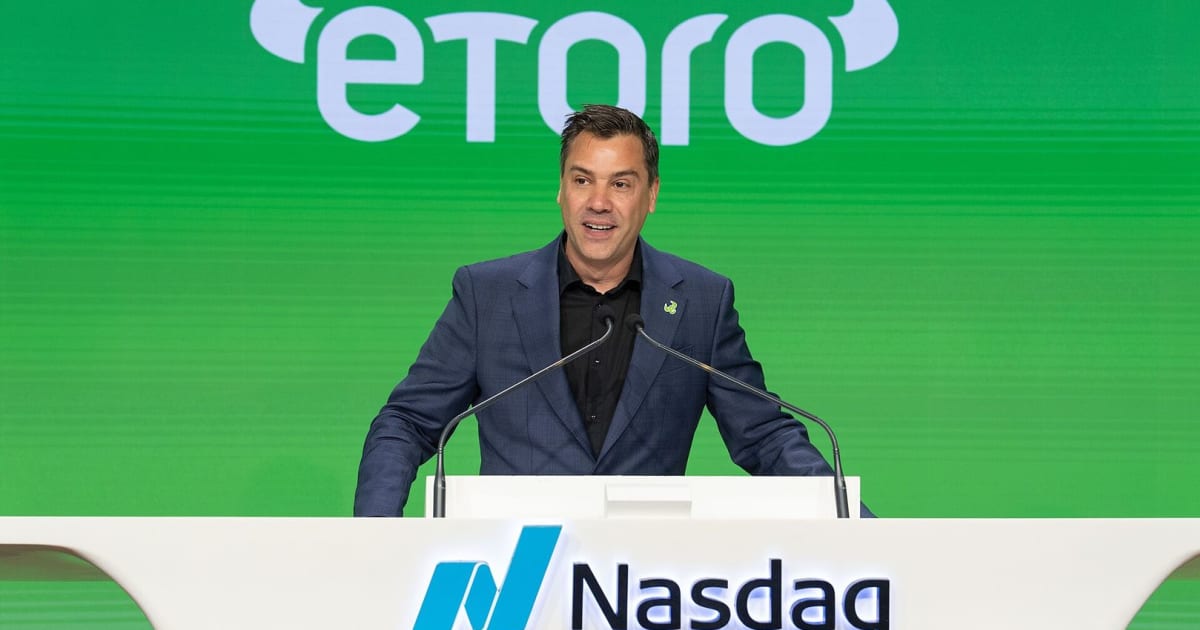
eToro's decision to maintain a crypto-heavy business model despite Q1 trading volume contractions highlights a structural bet on digital assets. For the Indian market, this divergence between global retail appetite and local regulatory constraints creates both risks and opportunities for domestic IT and fintech players.
The Crypto-Retail Paradox: Why eToro’s Strategy Matters
In the high-stakes world of retail brokerage, few metrics are as telling as trading volume. When eToro recently reported a contraction in Q1 activity, the market expected a pivot toward traditional equities or diversified financial instruments. Instead, the platform doubled down on its crypto-centric identity. This is not merely a corporate decision; it is a signal of a long-term structural bet on the tokenization of assets that transcends current market volatility.
For the Indian investor, this global development serves as a mirror for the domestic market. While global platforms are optimizing for a post-volatility crypto landscape, Indian fintechs and IT service providers are operating under a restrictive regulatory environment that forces a more cautious, infrastructure-led approach. Understanding this divergence is critical for navigating the next 18 months of market volatility.
How does the global crypto slump impact Indian IT stocks?
The link between global crypto trading volumes and the Indian stock market is primarily found in the IT services sector. Indian giants like Tata Consultancy Services (TCS) and Persistent Systems are the silent architects of the infrastructure powering these global platforms. When retail volumes on platforms like eToro drop, the immediate impact isn't seen in the Nifty 50's headline index, but in the project pipelines of Tier-1 IT exporters.
Historically, during the crypto winter of 2022, we observed a direct correlation between the decline in global digital asset liquidity and a compression in the P/E ratios of mid-cap IT firms heavily exposed to blockchain development contracts. As trading volumes contracted by nearly 40% in late 2022, the Nifty IT index corrected by approximately 22% over the following six months, as revenue guidance for digital transformation projects was revised downward.
Stock-by-Stock Breakdown: Who Wins and Who Loses?
- Tata Consultancy Services (TCS): With a massive market cap exceeding ₹14 lakh crore, TCS remains the safest bet. Their diversified revenue model minimizes the impact of a crypto-volume contraction, but their 'Quartz' blockchain solution is a key growth lever. Investors should watch for enterprise adoption rates rather than retail crypto sentiment.
- Persistent Systems: Highly exposed to the fintech and digital asset infrastructure space. With a P/E ratio hovering near 55x, the market has priced in high growth. If global crypto platforms continue to struggle with volume, Persistent may face margin pressure as clients delay non-essential blockchain integrations.
- Zensar Technologies: A nimble player in the digital engineering space. Their focus on high-end software services for global financial institutions makes them a tactical buy if they can capture the market share of smaller, distressed blockchain consultancies.
- BSE Ltd: As a traditional exchange, BSE is a 'winner' by default. As retail interest in crypto remains volatile and regulated, capital flows back into traditional, safer equity markets. BSE's P/E of ~45x reflects this flight to quality.
Expert Perspectives: The Bull vs. Bear Case
The current market sentiment is a classic 'wait-and-see' scenario. Bulls argue that eToro’s persistence proves that digital assets are now a permanent asset class, ensuring long-term demand for IT infrastructure services. Bears, however, highlight that the regulatory 'chilling effect' in jurisdictions like India and the US will inevitably lead to a thinning of margins for any platform relying on transactional crypto fees.
From a contrarian standpoint, the current low-volume environment is the ideal time to accumulate stocks in firms that are building the 'plumbing' of the future financial system—the middleware and ledger technologies—rather than those dependent on the retail trading churn.
Actionable Investor Playbook
Investors should adopt a barbell strategy for the remainder of the fiscal year:
- Defensive Core (60%): Allocate to large-cap IT services (TCS, Infosys) that have diversified away from pure-play crypto projects to avoid volatility.
- Growth Satellite (30%): Monitor mid-cap firms like Persistent Systems. Look for entry points on dips if the P/E ratio contracts toward 45x, signaling a better valuation entry.
- Cash/Liquidity (10%): Keep dry powder ready for potential regulatory shifts. If the RBI clarifies its stance on blockchain-based settlement, this will act as a major catalyst for the domestic fintech sector.
Risk Matrix
| Risk Factor | Probability | Impact |
|---|---|---|
| Regulatory Crackdown (Global) | High | High |
| Prolonged Volume Contraction | Medium | Medium |
| Currency/Forex Volatility | Medium | Low |
What to Watch Next: Catalysts for Q3
The primary catalyst for this sector remains the Q2 earnings call cycle for Indian IT majors. Specifically, look for management commentary on 'Digital Engineering' revenue growth. If these figures remain stagnant, it indicates that the global crypto-volume contraction is indeed bleeding into broader enterprise blockchain spend. Additionally, monitor the SEC’s upcoming regulatory filings regarding institutional crypto custody, as this will dictate the next wave of capital expenditure for the global platforms that Indian IT firms serve.
See Zensar Technologies's AI Score
Our algorithmic screener scores Zensar Technologies on fundamentals, momentum, and risk — free to try, no card needed.
Try the AI Screener →Have questions about this story?
Ask Welth, our finance-focused AI research assistant, for a deeper breakdown — free trial included.
Chat with Welth AI →Disclaimer: This content is generated by WelthWest Research Desk based on publicly available reports and is for informational purposes only. It does not constitute financial advice, investment recommendations, or an offer to buy or sell securities. Always consult a qualified financial advisor before making investment decisions.
