Key Takeaway
The Fed’s pivot from 'higher for longer' to 'active hiking' threatens to drain global liquidity, forcing a repricing of Indian equities. Investors must brace for a transition from growth-at-any-cost to defensive, cash-rich positioning.
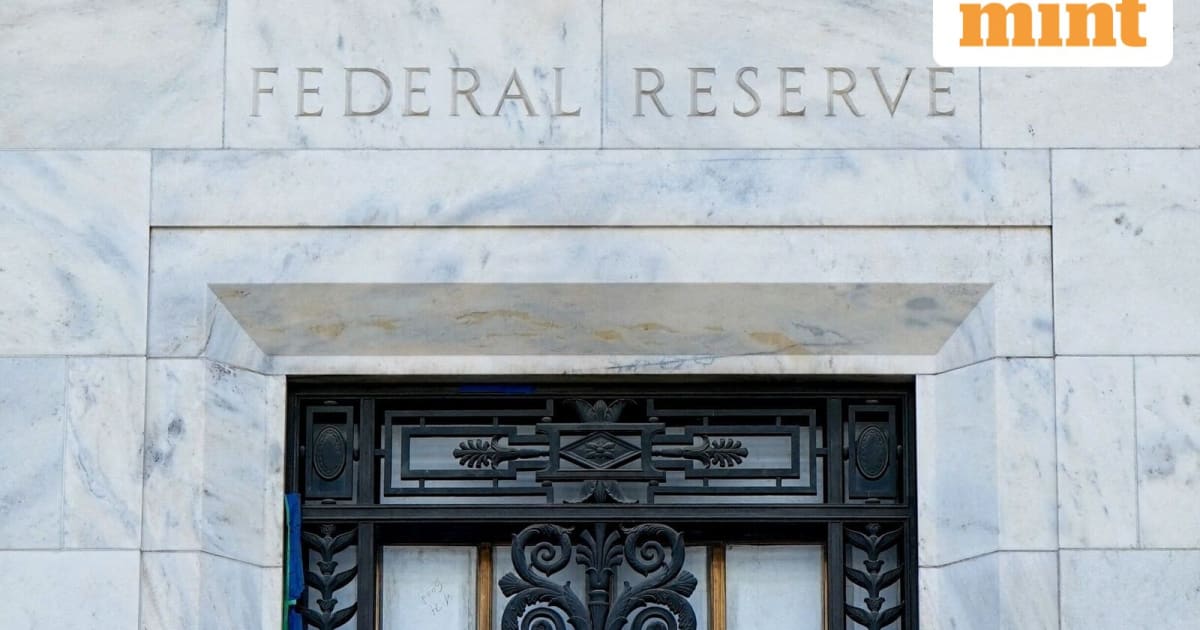
Recent Fed minutes reveal a hawkish shift fueled by persistent inflation and geopolitical instability. This pivot spells trouble for emerging markets like India, threatening FII inflows, currency stability, and the valuation of high-growth sectors. We analyze the critical risks to your portfolio and the roadmap for the coming quarter.
The Hawkish Pivot: Why the Fed Just Changed the Rules of the Game
The latest Federal Reserve meeting minutes have sent a chilling signal through global capital markets: the 'pause' may be over, and the 'hike' cycle could be back on the table. For Indian investors, this isn't merely an American macroeconomic concern; it is a direct threat to the liquidity premium that has kept the Nifty 50 floating near record valuations. When the world's most influential central bank signals that inflation remains sticky—partly due to energy shocks from Middle Eastern volatility—the cost of capital globally shifts upward. This effectively creates a gravitational pull on Foreign Institutional Investor (FII) capital, dragging it away from emerging markets and back toward the safety of US Treasuries.
How will rising US Treasury yields impact Indian stock valuations?
Historical data from the 2022 rate-hike cycle provides a sobering template. As the US 10-year yield climbed, the Nifty 50 experienced significant volatility, with FIIs pulling out nearly $18 billion in a single calendar year. Currently, with Indian equity P/E ratios hovering in the 22x-25x range, there is little margin for error. If the Fed hikes rates, the risk-free rate in the US becomes more attractive than the equity risk premium offered by Indian mid-caps, forcing a valuation compression. We are already seeing the early stages of this, as the Rupee faces downward pressure, forcing the Reserve Bank of India (RBI) into a corner: prioritize domestic growth or defend the currency.
The Sector-Level Fallout: Where the Pain is Concentrated
The impact of this hawkish shift is not uniform. We categorize the market into three distinct risk tiers:
- High Risk (IT Services): With US enterprise spending already slowing, a higher interest rate environment will further tighten IT budgets. Companies like TCS and Infosys are highly sensitive to US discretionary spending.
- Moderate Risk (NBFCs & Real Estate): Higher borrowing costs directly compress the Net Interest Margins (NIMs) of lenders like Bajaj Finance. Similarly, real estate developers, who rely on leverage, face a dual threat of rising EMI burdens for buyers and increased cost of debt for projects.
- Defensive Play (Energy & Defense): As inflation remains a primary catalyst for the Fed's hawkishness, commodity-linked energy stocks act as a hedge, while global defense spending remains decoupled from interest rate cycles.
Stock-by-Stock Breakdown: Vulnerability and Exposure
1. TCS (NSE: TCS): As the bellwether of the Indian IT sector, TCS’s revenue is heavily tethered to US client spending. With the Fed signaling a potential hike, we anticipate a reduction in digital transformation project approvals. P/E contraction is likely if revenue growth fails to hit double digits in constant currency terms.
2. Infosys (NSE: INFY): Similar to TCS, Infosys faces margin pressure. The cost of labor is high, and the inability to pass on costs to US clients in a high-interest-rate environment will weigh on EPS growth projections.
3. HDFC Bank (NSE: HDFCBANK): Despite its massive market cap, the bank faces a dual hurdle: the difficulty of maintaining NIMs when deposit growth is lagging and the potential for increased credit costs as the interest rate cycle stays elevated for longer than anticipated.
4. Bajaj Finance (NSE: BAJFINANCE): The poster child of Indian NBFCs. Higher rates mean higher cost of funds. If the RBI is forced to keep domestic rates high to track the Fed, Bajaj Finance’s ability to grow its loan book at the current 25%+ clip will be challenged.
5. LTIMindtree (NSE: LTIM): A high-growth mid-cap IT stock that has enjoyed a valuation premium. In a liquidity-crunch environment, these 'growth' stocks are often the first to be sold by FIIs to rebalance portfolios.
The Contrarian View: Are the Bears Overplaying the Fed?
Bulls argue that the Indian economy is fundamentally decoupled from the US Fed's cycle due to strong domestic consumption and robust GST collections. They contend that the RBI has shown enough independence to manage liquidity without blindly following the Fed. However, the data suggests that in a truly globalized financial system, no market is an island. While domestic retail inflows (SIPs) provide a cushion, they are not deep enough to absorb a sustained, massive exit by FIIs if the DXY (US Dollar Index) climbs toward the 106-107 level.
Actionable Investor Playbook: How to Position Your Portfolio
- Reduce Beta: Trim exposure to high-P/E tech and small-cap stocks that have rallied excessively on liquidity rather than earnings.
- Seek Cash Generators: Rotate capital into high-dividend-yield stocks and companies with low debt-to-equity ratios.
- Monitor the DXY: If the US Dollar Index breaks above 107, expect a significant correction in Nifty. Use this as a signal to move into defensive sectors like FMCG or Pharmaceuticals.
- Time Horizon: Shift to a 12-24 month horizon. Avoid 'trading' the volatility; instead, look for quality stocks at 15-20% corrections from their 52-week highs.
Risk Matrix: What Could Break the Narrative?
| Risk Factor | Probability | Impact |
|---|---|---|
| Persistent Energy Price Shock | High | Severe |
| Geopolitical Escalation in Middle East | Moderate | Severe |
| RBI Forced to Hike Rates | Moderate | High |
| US Recession (Hard Landing) | Low | Catastrophic |
What to Watch Next: The Upcoming Catalysts
The market will be hyper-focused on the upcoming US CPI data releases and the next FOMC meeting transcripts. Additionally, keep a close eye on the 10-year G-Sec yields in India; any spike above 7.3% will be the primary indicator that the bond market is pricing in a tougher liquidity environment, likely triggering a sell-off in equity markets shortly thereafter.
See TCS's AI Score
Our algorithmic screener scores TCS on fundamentals, momentum, and risk — free to try, no card needed.
Try the AI Screener →Have questions about this story?
Ask Welth, our finance-focused AI research assistant, for a deeper breakdown — free trial included.
Chat with Welth AI →Disclaimer: This content is generated by WelthWest Research Desk based on publicly available reports and is for informational purposes only. It does not constitute financial advice, investment recommendations, or an offer to buy or sell securities. Always consult a qualified financial advisor before making investment decisions.