Key Takeaway
The Federal Reserve's renewed tightening signals a critical inflection point for global liquidity and risk assets. Indian investors must brace for potential capital shifts, dollar strength, and a 'risk-off' sentiment that could pressure speculative sectors and the Rupee, demanding a more defensive portfolio posture.
The Federal Reserve's recent decision to resume interest rate increases has sent ripples across global financial markets, rekindling concerns for risk assets like Bitcoin and emerging markets. WelthWest Research Desk uncovers the intricate links between US monetary policy, crypto performance, and the direct implications for Indian equities and the Rupee. This deep dive provides actionable insights for navigating the looming 'risk-off' environment.
Fed Hikes Return: Bitcoin's Shadow & Indian Market Impact Deep Dive
The financial world is once again bracing for the reverberations of the US Federal Reserve's monetary policy, as it recently signaled a resumption of interest rate increases. This pivotal shift, following a period of relative calm, is not merely a technical adjustment; it represents a fundamental recalibration of global liquidity and risk appetite. For investors, particularly those in emerging markets like India, understanding the historical correlations and the nuanced implications is paramount. WelthWest Research Desk delves deep into how the Fed's tightening cycle, often a harbinger of capital flight from speculative assets, is poised to reshape the landscape for Bitcoin and cast a long shadow over Indian equities and the Rupee.
The 'why now' is crucial. After a brief pause, persistent inflationary pressures in the US have compelled the Fed to reaffirm its commitment to price stability, even at the risk of dampening economic growth. This renewed hawkish stance directly impacts the cost of capital globally. A stronger US dollar, a typical consequence of higher US rates, makes dollar-denominated assets more attractive, drawing capital away from emerging markets. For the cryptocurrency sector, historically a bellwether for speculative fervor, this environment often translates into significant headwinds, as the cost of holding non-yielding, volatile assets rises.
How Will Renewed Fed Tightening Impact Global Liquidity and Indian Markets?
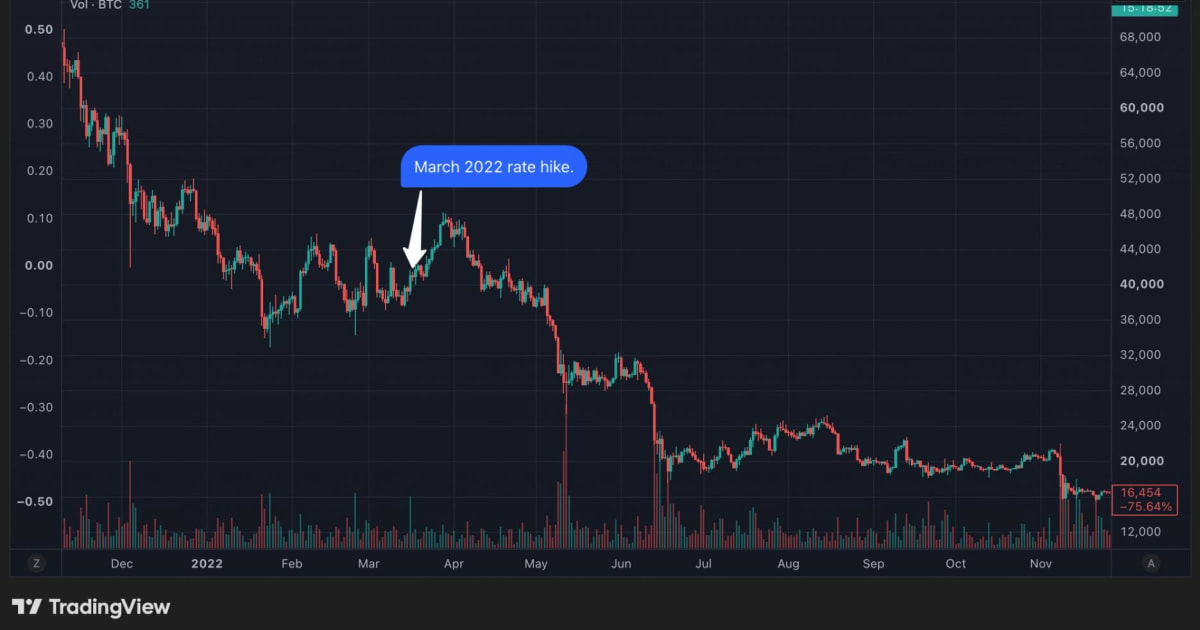
The immediate and most profound impact of a tightening Fed is on global liquidity. As the Fed raises rates, it effectively makes borrowing more expensive, reducing the overall supply of cheap money circulating in the financial system. This 'liquidity drain' disproportionately affects riskier assets. Historically, periods of aggressive Fed tightening have coincided with significant drawdowns in speculative asset classes. For instance, in 2022, when the Fed embarked on its most aggressive rate hike cycle in decades, Bitcoin plummeted by over 60% from its peak, while the broader crypto market shed trillions in market capitalization. This historical parallel serves as a stark warning for the current environment.
For the Indian market, the transmission mechanism is multifaceted. Firstly, a stronger dollar tends to pressure the Indian Rupee (INR). A depreciating Rupee makes imports more expensive, potentially fueling domestic inflation, and negatively impacts companies with significant unhedged foreign currency debt. Secondly, higher US yields reduce the attractiveness of Indian sovereign bonds and equities for Foreign Institutional Investors (FIIs). When US Treasury yields become competitive, FIIs tend to reallocate capital from emerging markets to safer, higher-yielding US assets. This 'FII outflow' can exert downward pressure on Indian stock indices. During the 2022 tightening cycle, FIIs were net sellers in Indian equities for several months, contributing to the Nifty 50's relatively subdued performance compared to its own historical growth trajectory.
Consider the sector-level breakdown. High-growth, speculative tech stocks, which thrive on abundant liquidity and low-interest rates, are particularly vulnerable. Companies with significant future earnings potential, but limited current profitability, often see their valuations compressed as discount rates rise. While India's tech sector is less exposed to direct crypto treasury holdings than some global counterparts, the broader 'risk-off' sentiment will undoubtedly affect investor appetite for companies perceived as highly growth-oriented or speculative. Furthermore, the burgeoning Indian crypto ecosystem, though largely unregulated, is not immune. Lower global crypto prices directly impact trading volumes and, consequently, the revenue streams of crypto exchanges and related service providers.
Which Indian Stocks Are Most Vulnerable to Crypto Headwinds and Risk-Off Sentiment?
While direct exposure to Bitcoin or other cryptocurrencies among publicly listed Indian companies is rare, the indirect impacts are significant. The 'risk-off' sentiment generated by the Fed's actions will ripple through sectors that rely on discretionary spending, investor sentiment, and broader capital flows. Here are 4-6 specific NSE/BSE stocks and sectors that warrant close attention:
- Info Edge (India) Ltd. (NSE: NAUKRI): While primarily known for its job portal and real estate classifieds, Info Edge also holds stakes in various Indian tech startups, some of which operate in adjacent fintech or digital spaces. A broader slowdown in startup funding, driven by higher interest rates and a 'risk-off' environment, could impact the valuations of its portfolio companies, thereby affecting Info Edge's investment value. The company's P/E ratio of over 60x makes it susceptible to re-rating in a tightening liquidity environment.
- One 97 Communications Ltd. (NSE: PAYTM): As a leading fintech player, Paytm's valuation is highly sensitive to growth prospects and investor sentiment towards high-growth tech. While not directly exposed to crypto, a general aversion to speculative tech and a focus on profitability over growth could put pressure on its stock. Its journey towards profitability could face increased scrutiny in a tighter capital market.
- Zomato Ltd. (NSE: ZOMATO): Similar to Paytm, Zomato is a prominent new-age tech company whose valuation depends on continued growth and market expansion. A tightening monetary policy globally could temper investor enthusiasm for high-burn growth models and shift focus towards established, profitable businesses. Zomato's market capitalization, while significant, could see volatility as investors re-evaluate growth narratives.
- Nykaa (FSN E-Commerce Ventures Ltd.) (NSE: NYKAA): As a leading beauty and fashion e-commerce platform, Nykaa represents the discretionary spending segment and the broader Indian consumer tech story. A 'risk-off' environment, coupled with potential inflationary pressures from a weaker Rupee, could impact consumer spending on non-essential items, thereby affecting Nykaa's sales growth and profitability. Its premium valuation could face downward pressure.
- Companies with significant FII Ownership (e.g., HDFC Bank, Reliance Industries): While these are fundamentally strong companies, any sustained FII outflow from the broader Indian market due to global liquidity tightening could lead to temporary price pressures. For instance, if FIIs pare down their holdings in large-cap bellwethers like Reliance (which has a market cap exceeding ₹18 lakh crore) to reallocate to US assets, it creates selling pressure, irrespective of the company's underlying performance.
The impact on Indian crypto exchanges like CoinDCX and WazirX, though not publicly listed, is direct and severe. Their business model relies on trading volumes and transaction fees. A prolonged crypto bear market, driven by global liquidity tightening, would inevitably lead to reduced trading activity, impacting their revenue and profitability. This indirectly affects the broader Indian fintech ecosystem that interacts with these platforms.
Bulls vs. Bears: Navigating the Contrarian Views on Fed Hikes and Crypto
The narrative surrounding Fed rate hikes and their impact is rarely monolithic. While the bearish argument, as detailed above, focuses on liquidity drain and risk aversion, contrarian views offer alternative perspectives.
The Bear Case: Bears will argue that the Fed's renewed hawkishness signals a prolonged period of elevated interest rates, making non-yielding assets like Bitcoin fundamentally unattractive. They point to historical correlations where significant rate hike cycles led to crypto market contractions. Furthermore, the strengthening dollar will continue to drain capital from emerging markets, putting sustained pressure on the Rupee and Indian equities, especially those reliant on FII inflows or high growth narratives. The current macroeconomic environment – persistent inflation, geopolitical tensions – reinforces the need for capital preservation over speculative returns.
The Bull Case: Bulls, however, might contend that the market has already priced in a significant portion of the Fed's tightening. They could argue that Bitcoin, having corrected substantially from its highs, may be nearing a bottom, potentially presenting a buying opportunity for long-term holders who believe in its fundamental value proposition as 'digital gold' or a decentralized asset. For Indian equities, bulls might highlight India's strong domestic consumption story, robust corporate earnings, and relatively stable political environment as factors that could cushion the blow from global headwinds. They might also point to the Reserve Bank of India's (RBI) potential ability to manage domestic liquidity and currency stability, preventing a severe FII exodus. Moreover, some might argue that a 'flight to quality' within emerging markets could still favor India over more volatile peers.
It's also worth considering that the Fed's actions are data-dependent. Any signs of cooling inflation or a significant economic slowdown could prompt a pivot, leading to a resurgence in risk appetite. However, betting on a quick pivot in the current environment carries its own set of risks.
Actionable Investor Playbook: Strategies for a Tightening Fed Environment
In an environment characterized by rising interest rates and potential risk aversion, a defensive yet opportunistic investor playbook is crucial for navigating the Indian market and assessing crypto exposure:
- Re-evaluate Crypto Exposure: For those with direct crypto holdings, consider reducing exposure to highly speculative altcoins and consolidating into more established assets like Bitcoin or Ethereum, if conviction remains high. Understand that the current environment favors capital preservation. Entry points for long-term crypto investors might emerge during significant market corrections, but timing remains highly challenging.
- Shift Towards Value and Quality in Equities: In the Indian equity market, pivot towards companies with strong balance sheets, consistent cash flows, and proven profitability. Sectors like consumer staples (e.g., Hindustan Unilever, Nestle India), pharma (e.g., Sun Pharmaceutical Industries, Dr. Reddy's Laboratories), and select financials with robust asset quality (e.g., ICICI Bank, Kotak Mahindra Bank) tend to outperform during 'risk-off' periods. These companies often have lower P/E multiples compared to high-growth tech and offer greater stability.
- Focus on Export-Oriented Sectors: A depreciating Rupee, while challenging for some, can be a tailwind for export-oriented sectors. IT services companies (e.g., Tata Consultancy Services, Infosys, Wipro) and certain manufacturing exporters can benefit from stronger dollar earnings when converted back to INR. However, be mindful of global economic slowdowns impacting demand.
- Consider Debt Allocation: With rising interest rates, shorter-duration debt instruments or high-quality corporate bonds might become more attractive, offering better yields than in previous low-rate environments. This can provide a defensive cushion to a portfolio.
- Maintain Liquidity: In uncertain times, maintaining a higher cash allocation allows for opportunistic buying during market dips and provides a buffer against unforeseen volatility.
- Long-Term Horizon for Growth Stocks: For investors with a very long-term horizon (5+ years), significant corrections in quality growth stocks (like those mentioned earlier – Paytm, Zomato, Nykaa) could present attractive entry points, but these must be approached with caution and a deep understanding of their business fundamentals and path to profitability.
Risk Matrix: Assessing Potential Headwinds
The current environment presents several specific risks that investors must monitor closely:
- Sustained FII Outflow (Probability: Medium-High): If global risk aversion persists and US yields continue to rise, significant FII capital flight from Indian equities could lead to prolonged market weakness. This could see the Nifty 50 struggling to breach previous highs and potentially retesting support levels.
- Rupee Depreciation Beyond RBI Comfort (Probability: Medium): While the RBI has tools to intervene, a strong dollar combined with domestic inflation pressures could lead to a more significant depreciation of the Rupee against the USD (e.g., INR moving towards 84-85 per USD), impacting import costs and corporate foreign debt servicing.
- Global Economic Slowdown/Recession (Probability: Medium): The Fed's aggressive tightening increases the risk of a global recession. This would severely impact demand for Indian exports and corporate earnings across various sectors, leading to broad market corrections.
- Regulatory Uncertainty in Crypto (Probability: High): For crypto investors, the lack of clear regulatory frameworks in India, coupled with global regulatory crackdowns, adds an additional layer of risk, potentially impacting the viability of domestic crypto ventures.
What to Watch Next: Catalysts and Data Releases
The trajectory of this narrative will be heavily influenced by key economic data releases and central bank pronouncements. Investors should closely monitor:
- US Inflation Data (CPI, PCE): Future inflation reports will be critical in determining the Fed's next steps. Any signs of inflation moderating could lead to a less hawkish stance, while persistent high inflation would reinforce the tightening cycle. (Next CPI release: typically mid-month).
- US Employment Data (Non-Farm Payrolls, Unemployment Rate): A strong labor market gives the Fed more room to hike rates without fearing a severe recession. Any weakness could signal a potential pause. (Next NFP release: first Friday of each month).
- Federal Reserve FOMC Meetings: The statements and dot plots from upcoming FOMC meetings will provide direct guidance on the Fed's future rate hike trajectory and economic outlook. (Scheduled meetings throughout the year).
- RBI Monetary Policy Committee (MPC) Meetings: The RBI's response to global liquidity conditions and domestic inflation will be crucial for the Rupee and Indian interest rates. (Scheduled meetings throughout the year).
- FII Flow Data: Daily and monthly FII investment data will indicate whether capital is flowing into or out of Indian equities, providing a real-time gauge of global investor sentiment towards India.
- Corporate Earnings Reports: The Q2 and Q3 earnings seasons will reveal the actual impact of global headwinds and domestic inflation on Indian companies' profitability and growth prospects.
The Federal Reserve's renewed commitment to tightening monetary policy marks a significant shift in the global financial landscape. While the direct impact on Bitcoin is often immediate and visible, the indirect effects on Indian equities and the broader economy warrant careful consideration. Investors equipped with this deep analysis can better position their portfolios to navigate the evolving 'risk-off' environment and capitalize on opportunities that emerge from volatility.
Run a free AI Stock Screen
Our algorithmic screener scores any NSE/BSE stock on fundamentals, momentum, and risk — free to try, no card needed.
Try the AI Screener →Have questions about this story?
Ask Welth, our finance-focused AI research assistant, for a deeper breakdown — free trial included.
Chat with Welth AI →Disclaimer: This content is generated by WelthWest Research Desk based on publicly available reports and is for informational purposes only. It does not constitute financial advice, investment recommendations, or an offer to buy or sell securities. Always consult a qualified financial advisor before making investment decisions.