Key Takeaway
The fading prospect of aggressive US Federal Reserve rate hikes is injecting a powerful dose of optimism into Asian markets, particularly India. Investors are anticipating a potential inflection point in global borrowing costs, which could unlock significant foreign capital inflows into Indian equities and debt, potentially bolstering the Rupee.
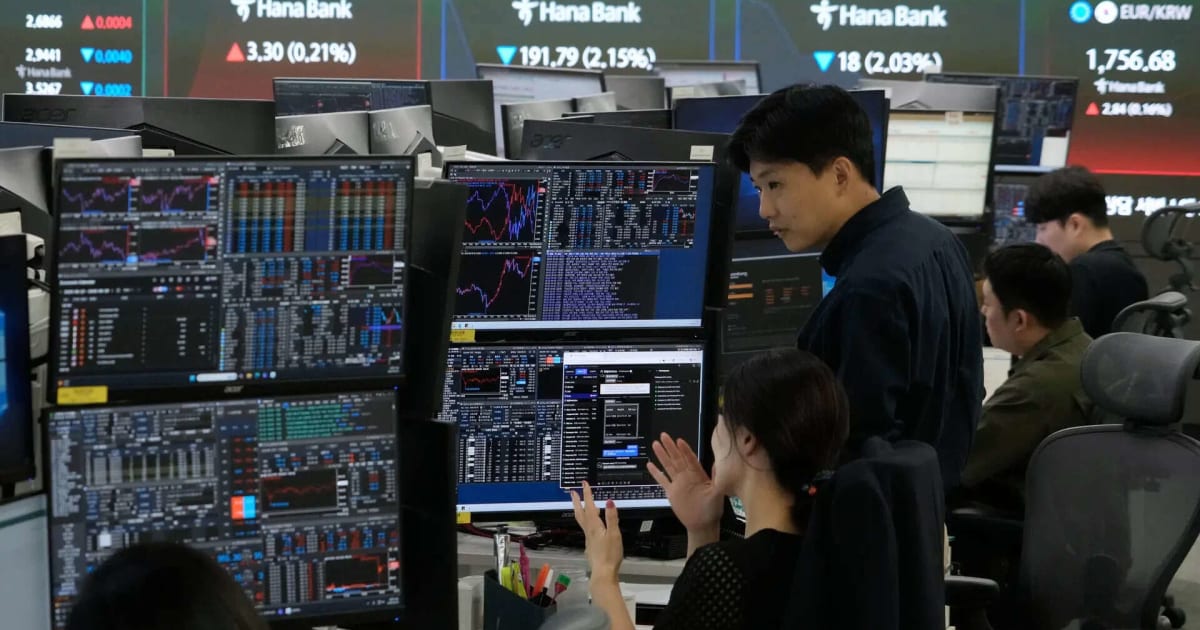
WelthWest Research analyzes the seismic shift in global monetary policy expectations following softer US jobs data and a perceived cooling in Fed rate hike aggression. This analysis delves into the cascading effects on Asian markets, with a laser focus on the profound implications for Indian stocks, sectors, and individual companies poised to benefit from a less hawkish global interest rate environment.
Fed's Soft Landing Signals: Why Asian Markets, Especially India, Are Cheering
A palpable shift in global monetary policy sentiment is currently rippling through financial markets, with Asian bourses leading the charge. The core catalyst? A discernible retreat in expectations for aggressive interest rate hikes by the US Federal Reserve, amplified by recent data indicating a softening in the American labor market. This recalibration is not merely a fleeting market tremor; it represents a potential inflection point, signaling that the peak of global interest rate tightening may be within sight. For emerging economies, and India in particular, this development carries immense strategic importance, promising a more favorable environment for capital flows, currency stability, and economic growth.
The 'So What' for Indian Investors: A Bullish Tailwinds Emerges
The immediate implication for Indian investors is a potent cocktail of optimism. Reduced fears of a sustained high-interest rate regime in the US translate into a lower perceived risk for emerging market assets. This typically encourages Foreign Institutional Investors (FIIs) to reallocate capital from safer, high-yield developed markets back into growth-oriented economies like India. The anticipated influx of FII money can directly support equity valuations, boost bond prices, and, crucially, strengthen the Indian Rupee against the US Dollar. This scenario paints a picture of a market poised for upward momentum, driven by both domestic economic resilience and favorable external monetary conditions.
Deconstructing the Global Monetary Shift: The Fed's Tightening Cycle Reaches a Plateau?
For months, global financial discourse has been dominated by the Federal Reserve's relentless campaign to combat inflation through a series of steep interest rate increases. However, recent economic indicators from the United States have begun to paint a different picture. A deceleration in job growth, coupled with a moderation in wage pressures, has led many market participants to believe that the Fed's aggressive tightening cycle may be nearing its conclusion. While the central bank has maintained a hawkish stance, the market's interpretation of this stance has evolved. The probability assigned to further substantial rate hikes has diminished, while the likelihood of a pause, or even a pivot, in the not-too-distant future has gained traction. This sentiment, amplified across major financial news outlets, is the bedrock upon which the current bullish sentiment in Asian markets is built. The rationale is straightforward: when the world's largest economy and issuer of the reserve currency signals a move away from aggressive monetary tightening, it significantly reduces borrowing costs and risk premiums globally.
Why Now Matters: The Interconnectedness of Global Capital Flows
The timing of this sentiment shift is critical. Emerging markets, including India, are highly sensitive to global liquidity conditions and investor risk appetite. During periods of aggressive global monetary tightening, capital tends to flow out of riskier assets and into perceived safe havens. Conversely, when the tide of monetary policy begins to turn, even subtly, the reverse occurs. The prospect of a peak in US interest rates means that the yield differential between developed and emerging market debt may narrow, making Indian debt instruments more attractive. Furthermore, a less restrictive global financial environment typically fuels demand for goods and services, benefiting export-oriented economies and companies with global footprints. For India, this translates into a potential dual benefit: increased foreign investment and a stronger economic tailwind.
Deep Market Impact Analysis: India's Equity and Debt Landscape
The implications for the Indian stock market are multifaceted and predominantly positive. The Nifty 50, India's benchmark equity index, has historically shown a strong correlation with global liquidity conditions and FII inflows. A sustained period of easing Fed rate hike expectations is likely to translate into renewed FII interest. Last time market participants anticipated a Fed pivot in late 2022, the Nifty 50 witnessed a significant rally, gaining over 15% in the subsequent quarter as foreign investors re-entered the market. We are observing similar patterns emerge now, with FIIs showing increased buying activity in recent weeks.
The Indian Rupee is another key beneficiary. A strong inflow of foreign currency, coupled with a potentially weaker US Dollar as the Fed pauses, could lead to a significant appreciation of the Rupee. Historically, a strengthening Rupee has a mixed impact, benefiting importers and those with foreign debt but posing challenges for exporters. However, from a broader investment perspective, a stable or appreciating Rupee reduces the currency risk for foreign investors, making Indian assets even more attractive.
Sectoral Ripples: Winners and Potential Concerns
Information Technology (IT) Services: Indian IT companies, with their significant revenue streams from North America and Europe, are direct beneficiaries of a stable or strengthening global economy and a less volatile currency. Companies like TCS (NSE: TCS) and Infosys (NSE: INFY), which derive over 50% of their revenue from these regions, are poised to see improved order books and potentially higher profit margins as the cost of doing business abroad stabilizes. Their valuations, often driven by growth expectations, are likely to receive a boost.
Technology Stocks & Growth Stocks: Beyond traditional IT services, the broader technology sector, including software, internet services, and fintech, thrives in a low-interest-rate environment. These companies often have high valuations based on future earnings potential, which are discounted more heavily in a high-interest-rate scenario. As rate hike fears recede, the present value of these future earnings increases, making growth stocks more attractive. Stocks like Zomato (NSE: ZOMATO) and Nykaa (NSE: NYKAA), which are still in their growth phases and have substantial market capitalizations (Zomato: ~₹60,000 Cr, Nykaa: ~₹35,000 Cr), could see renewed investor interest.
Fast-Moving Consumer Goods (FMCG) & Consumer Discretionary: While not directly impacted by FII flows in the same way as IT, the FMCG and Consumer Discretionary sectors stand to benefit indirectly. A stronger Rupee can reduce the import cost of raw materials for some FMCG companies, potentially boosting margins. More importantly, a more stable economic outlook, coupled with increased consumer confidence stemming from a less volatile global environment, can lead to higher discretionary spending. Companies like HUL (NSE: HUL) and Titan Company (NSE: TITAN), with market caps of ~₹5.5 Lakh Cr and ~₹3.3 Lakh Cr respectively, could witness an uplift in sales volumes as household incomes and confidence improve.
Banks: The impact on the banking sector is more nuanced. On one hand, a robust economy and increased FII inflows can lead to higher credit demand, benefiting banks. However, if the market was pricing in sustained high Net Interest Margins (NIMs) driven by aggressive rate hikes, a pause or slowdown in hikes might temper NIM expansion expectations. Large public sector banks like State Bank of India (NSE: SBIN) (Market Cap: ~₹5.5 Lakh Cr) and private sector peers like HDFC Bank (NSE: HDFCBANK) (Market Cap: ~₹11.9 Lakh Cr) will be closely watched for their ability to maintain profitability amidst evolving interest rate dynamics.
Companies with High Debt: Businesses carrying significant debt burdens are indirectly affected. While a stabilization of rates is positive, a sharp decline in borrowing costs is not guaranteed. Companies that have been struggling with high interest expenses may find some relief, but those that have levered up aggressively might still face pressure if their revenue growth doesn't keep pace with debt servicing requirements.
Navigating the Nuances: Specific Stock Impacts
The broader market sentiment shift will inevitably translate into specific stock movements. Here's a breakdown of key companies and their potential responses:
- Tata Consultancy Services (TCS) (NSE: TCS): As India's largest IT services exporter, TCS stands to gain significantly from a robust US and European economy and a stable Rupee. Its consistent revenue growth (FY23 Revenue: ~₹2.26 Lakh Cr) and strong order pipeline make it a prime beneficiary of increased IT spending by global corporations. A potential increase in its P/E multiple, currently around 28x, is plausible as global economic uncertainty recedes.
- Infosys (NSE: INFY): Similar to TCS, Infosys (FY23 Revenue: ~₹1.26 Lakh Cr) benefits from its extensive global client base. Its focus on digital transformation and cloud services aligns well with the growth drivers of developed economies. Expect a positive correlation in its stock performance with the broader IT sector's re-rating. Its P/E ratio, currently around 25x, could see an upward revision.
- Reliance Industries (NSE: RELIANCE): While a conglomerate with diverse interests, Reliance's petrochemical and retail arms are sensitive to consumer spending and global commodity prices. A stronger Rupee can help manage its imported crude oil costs for its refining business, while a stable global economy boosts its retail segment. Its market capitalization of over ₹16 Lakh Cr makes it a bellwether for the overall market sentiment.
- HDFC Bank (NSE: HDFCBANK): The banking giant's performance is intrinsically linked to economic growth and credit demand. A more stable interest rate environment and increased FII inflows can lead to a surge in loan origination and a reduction in asset quality concerns. However, the pace of NIM expansion might moderate if aggressive rate hikes are indeed off the table. Its P/E ratio, around 20x, reflects its market leadership.
- Avenue Supermarts (DMart) (NSE: DMART): As a leading player in the organized retail space, DMart (Market Cap: ~₹2.5 Lakh Cr) is a proxy for consumer spending. A potential boost in consumer confidence due to a more stable economic outlook and a stronger Rupee could translate into higher footfalls and sales growth, supporting its premium P/E valuation of around 70x.
- Pidilite Industries (NSE: PIDILITE): This consumer staples company, known for its adhesives and construction chemicals, is indirectly sensitive to infrastructure development and urban housing demand. A stable economic environment and potentially lower borrowing costs for construction projects can spur demand for its products. Its consistent revenue growth (FY23 Revenue: ~₹12,000 Cr) and strong brand equity make it a resilient play.
Expert Perspectives: Bulls vs. Bears on the Fed's Stance
The prevailing optimism is not without its dissenting voices. Bulls argue that the Fed's perceived dovish pivot is a clear signal for a sustained rally in risk assets, particularly in emerging markets like India. They point to the historical tendency of markets to front-run central bank policy shifts, anticipating lower borrowing costs and a stronger economic rebound. For them, the current dip in interest rate hike expectations is a golden opportunity to accumulate quality assets at attractive valuations.
Conversely, bears caution against premature celebration. They contend that inflation, while moderating, remains stubbornly above the Fed's target. Any hint of resurgent price pressures could force the Fed to maintain its hawkish stance, or even hike rates further, leading to a sharp reversal in market sentiment. Bears also highlight that the global economy is still grappling with geopolitical uncertainties and supply chain fragilities, which could independently trigger a downturn. They would argue that the current market exuberance is a temporary reprieve, and investors should remain cautious and prioritize capital preservation.
Actionable Investor Playbook: Navigating the Emerging Bullish Tide
For investors seeking to capitalize on this evolving global monetary landscape, a strategic approach is paramount:
- Accumulate Quality Growth Stocks: Focus on companies with strong fundamentals, robust balance sheets, and clear growth trajectories, particularly in the IT, technology, and consumer discretionary sectors. These are the segments most likely to benefit from increased foreign inflows and improved economic sentiment.
- Consider IT Services Leaders: Given their direct exposure to global demand, leading IT service providers like TCS and Infosys are attractive. Look for entry points on minor pullbacks, aiming for a medium-term investment horizon of 1-2 years.
- Monitor FMCG and Consumer Discretionary for Indirect Gains: While not direct beneficiaries of FII inflows, companies like HUL and Titan offer exposure to domestic consumption, which should improve with a more stable economic outlook.
- Evaluate Banking Sector Selectively: Banks will benefit from overall economic growth, but monitor NIM trends and asset quality closely. Large-cap banks with strong retail franchises are likely to be more resilient.
- Debt Market Exposure: Consider increasing exposure to Indian government bonds and high-quality corporate bonds. A potential stabilization of interest rates can lead to capital appreciation in these instruments.
- Currency Hedging: For investors with significant unhedged foreign currency exposure, a strengthening Rupee might necessitate a review of hedging strategies.
Entry Points & Time Horizons: While the sentiment is bullish, avoid chasing rallies. Look for strategic entry points during market corrections or consolidation phases. The ideal time horizon for capitalizing on this trend is medium-term (6-18 months), allowing the full impact of easing global monetary policy to materialize.
The Risk Matrix: Potential Pitfalls to Watch
Despite the positive outlook, several risks could derail this bullish narrative:
- Resurgent Inflation (Probability: Medium): Any unexpected surge in inflation data from the US or other major economies could force the Fed to revert to a hawkish stance, triggering a sharp market downturn.
- Geopolitical Shocks (Probability: Low to Medium): Escalation of existing geopolitical conflicts or the emergence of new ones can quickly dampen investor sentiment and disrupt global supply chains, impacting economic growth.
- Fed Communication Missteps (Probability: Medium): Ambiguous or hawkish commentary from Fed officials, even if not backed by immediate policy action, can create significant market volatility and reverse positive sentiment.
- Global Economic Slowdown (Probability: Medium): Persistent weakness in major economies, even without aggressive rate hikes, could still lead to reduced global demand and impact emerging market growth.
What to Watch Next: Catalysts and Data Points
The trajectory of this market trend will be heavily influenced by upcoming economic data and central bank communications. Investors should closely monitor:
- US Inflation Data (CPI & PPI): Scheduled monthly releases will be critical in shaping Fed expectations. A continued moderation is key to sustaining the current sentiment.
- US Non-Farm Payrolls & Wage Growth: These labor market indicators will provide further clues about the strength of the US economy and the Fed's likely path.
- Federal Reserve Meeting Minutes & Speeches: Every word from Fed officials will be scrutinized for any hints of policy shifts or underlying concerns about inflation.
- FII Inflow Data: The sustained trend of foreign institutional investor flows into India will be a direct confirmation of the positive sentiment.
- Indian Economic Indicators: Domestic data such as GDP growth, inflation, and industrial production will also play a role in reinforcing the bullish narrative for Indian equities.
The current market environment presents a compelling case for optimism, driven by a fundamental shift in global monetary policy expectations. By understanding the underlying drivers and potential risks, investors can strategically position themselves to benefit from this evolving landscape, particularly within the dynamic Indian stock market.
Run a free AI Stock Screen
Our algorithmic screener scores any NSE/BSE stock on fundamentals, momentum, and risk — free to try, no card needed.
Try the AI Screener →Have questions about this story?
Ask Welth, our finance-focused AI research assistant, for a deeper breakdown — free trial included.
Chat with Welth AI →Disclaimer: This content is generated by WelthWest Research Desk based on publicly available reports and is for informational purposes only. It does not constitute financial advice, investment recommendations, or an offer to buy or sell securities. Always consult a qualified financial advisor before making investment decisions.