Key Takeaway
The pivot from 'rate cut optimism' to a 'higher-for-longer' regime, compounded by geopolitical volatility in the Middle East, signals an immediate repricing of risk for Indian equities. Investors must rotate from interest-rate-sensitive sectors toward energy and defense hedges.
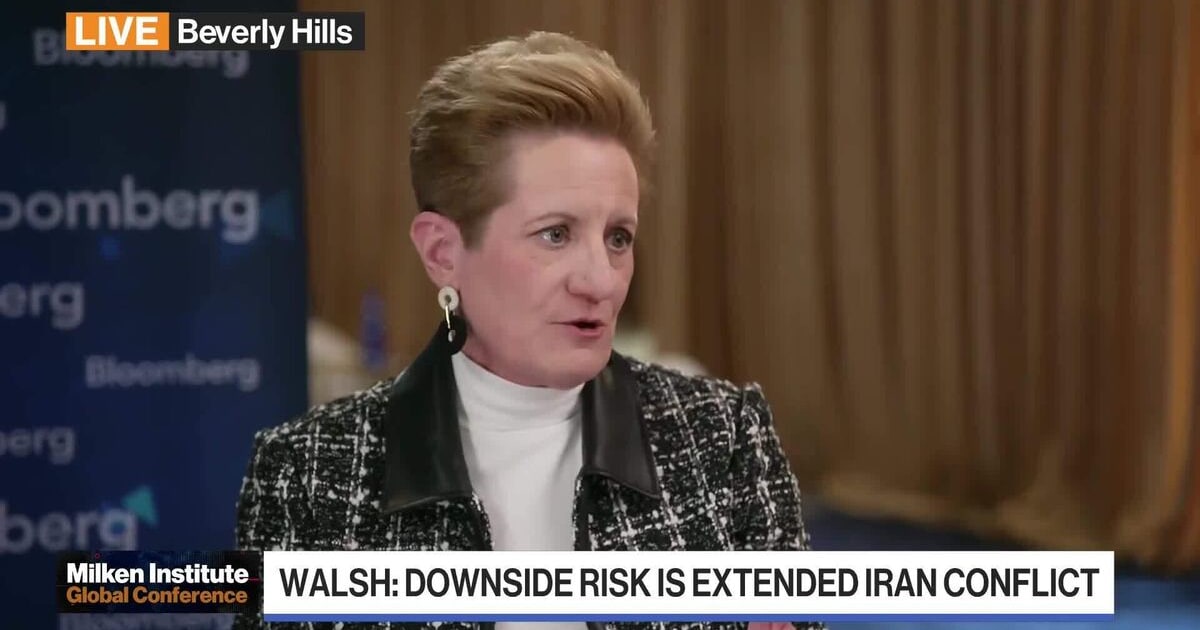
Guggenheim’s shift to a single-cut forecast for 2024, coupled with escalating Iran-Israel tensions, threatens to derail the bullish momentum in Indian markets. We analyze the macro-thematic shift, the resulting pressure on the Rupee, and which sectors are poised to outperform in this volatile landscape.
The Macro Pivot: Why Guggenheim’s Single-Cut Forecast Changes Everything
For the past six months, the Indian equity market has been fueled by the narrative of a 'Fed pivot.' However, Guggenheim Partners' recent assertion that we may see only one rate cut in 2024 has shattered that consensus. When the Federal Reserve maintains a 'higher-for-longer' stance, the yield differential between the US Dollar and emerging market assets widens, triggering institutional capital flight. In the Indian context, this is not merely a theoretical risk; it is a liquidity headwind that directly threatens the Nifty 50’s valuation multiples.
The situation is exacerbated by the deteriorating geopolitical landscape in the Middle East. With Iran’s direct involvement, the 'War Premium' on crude oil has returned with a vengeance. For India, the world’s third-largest oil importer, this represents a double whammy: a stronger Dollar increases import costs, and higher crude prices widen the Current Account Deficit (CAD), creating a structural drag on the Indian Rupee.
How will the 'Higher-for-Longer' Fed regime impact Indian Bank stocks?
The banking sector, often considered the bellwether of the Indian economy, faces significant margin compression risks. As global interest rates stay elevated, the Reserve Bank of India (RBI) is stripped of its ability to initiate rate cuts, regardless of domestic growth needs. This keeps the cost of funds high for non-banking financial companies (NBFCs) and banks alike.
Historically, when the Fed delayed rate cycles, Indian banking indices (Nifty Bank) experienced a 5-8% drawdown as FIIs rotated out of high-beta financial stocks into safer, defensive assets. With valuations in the PSU banking space currently trading at P/E ratios of 12x-15x, any contraction in liquidity could lead to a rapid mean-reversion.
Sectoral Winners and Losers: A Tactical Reallocation
In this high-volatility environment, the classic growth-at-any-price strategy is failing. We are seeing a clear bifurcation in market performance:
- Winners (The Defensive/Hedge Play): Energy exploration firms stand to benefit from the crude oil supply-side shock. Similarly, the defense sector remains insulated by government-led capital expenditure cycles, regardless of global monetary policy.
- Losers (The High-Beta Play): IT services, which are heavily dependent on US discretionary spending, face a potential slowdown if the US economy faces a recessionary shock. Aviation is also under pressure due to the dual impact of rising ATF (Aviation Turbine Fuel) costs and currency depreciation.
Stock-by-Stock Breakdown: Where the Money Moves
1. ONGC & OIL (Energy Exploration)
With Brent crude hovering near $90/bbl, these upstream players are seeing massive margin expansion. ONGC, with its production profile, is a direct beneficiary of rising realisations. Investment Thesis: Use as a hedge against energy-driven inflation.
2. HAL & BEL (Defense)
Defense stocks are decoupling from broader market sentiment. With a healthy order book exceeding ₹80,000 Cr for HAL, these companies are immune to interest rate fluctuations. Investment Thesis: Long-term structural growth story.
3. TCS & INFY (IT Services)
These stocks are sensitive to US interest rates. If the Fed keeps rates high, IT budget cuts in North America become inevitable. With P/E ratios hovering near 25x-30x, the downside risk is significant if earnings growth slows.
4. INDIGO (Aviation)
The airline industry is the most exposed to the Iran-Israel crisis. Rising crude oil prices directly increase ATF costs, which account for nearly 40% of operating expenses. Expect margin erosion in the coming two quarters.
Expert Perspective: The Bull vs. Bear Debate
The Bear Case: Macro-analysts argue that the 'Goldilocks' scenario is dead. If inflation remains sticky due to energy prices, the Fed will have no choice but to tighten, leading to a liquidity crunch that will hit emerging markets first. The Bull Case: Contrarians point to India’s robust domestic consumption and strong corporate balance sheets. They argue that India is now 'decoupled' from US monetary policy, citing the resilience of the Nifty during the 2022 rate hike cycle, where the index ended the year with positive returns despite global headwinds.
Actionable Investor Playbook
For the sophisticated investor, the current regime calls for a 'barbell' strategy:
- Defensive Allocation: Increase exposure to Gold ETFs and energy-linked stocks (ONGC). Gold historically acts as a safe haven during geopolitical spikes.
- Selective Trimming: Reduce exposure to high-P/E IT stocks and aviation. These sectors have limited upside in a 'higher-for-longer' environment.
- Watch the Rupee: If USD/INR crosses 84.50, expect further FII outflows. Use this as a trigger to increase cash positions.
Risk Matrix
| Risk Factor | Probability | Impact |
|---|---|---|
| Direct Iran-Israel Conflict Escalation | High | Severe |
| Brent Crude > $100/bbl | Moderate | High |
| RBI keeps repo rate unchanged through 2024 | High | Moderate |
What to Watch Next
Investors should closely monitor the upcoming US CPI print and the FOMC meeting minutes. Any hawkish rhetoric regarding 'sticky services inflation' will be the catalyst for the next leg of volatility. Domestically, track the Q1 earnings guidance from major IT firms to gauge the health of US discretionary spending.
See ONGC's AI Score
Our algorithmic screener scores ONGC on fundamentals, momentum, and risk — free to try, no card needed.
Try the AI Screener →Have questions about this story?
Ask Welth, our finance-focused AI research assistant, for a deeper breakdown — free trial included.
Chat with Welth AI →Disclaimer: This content is generated by WelthWest Research Desk based on publicly available reports and is for informational purposes only. It does not constitute financial advice, investment recommendations, or an offer to buy or sell securities. Always consult a qualified financial advisor before making investment decisions.