Key Takeaway
Anticipation of a US Federal Reserve rate hike is triggering a broad risk-off sentiment, leading to significant declines in Bitcoin and major cryptocurrencies. This shift suggests potential headwinds for speculative assets globally, including a possible dampening of Foreign Institutional Investor (FII) inflows into Indian riskier asset classes.
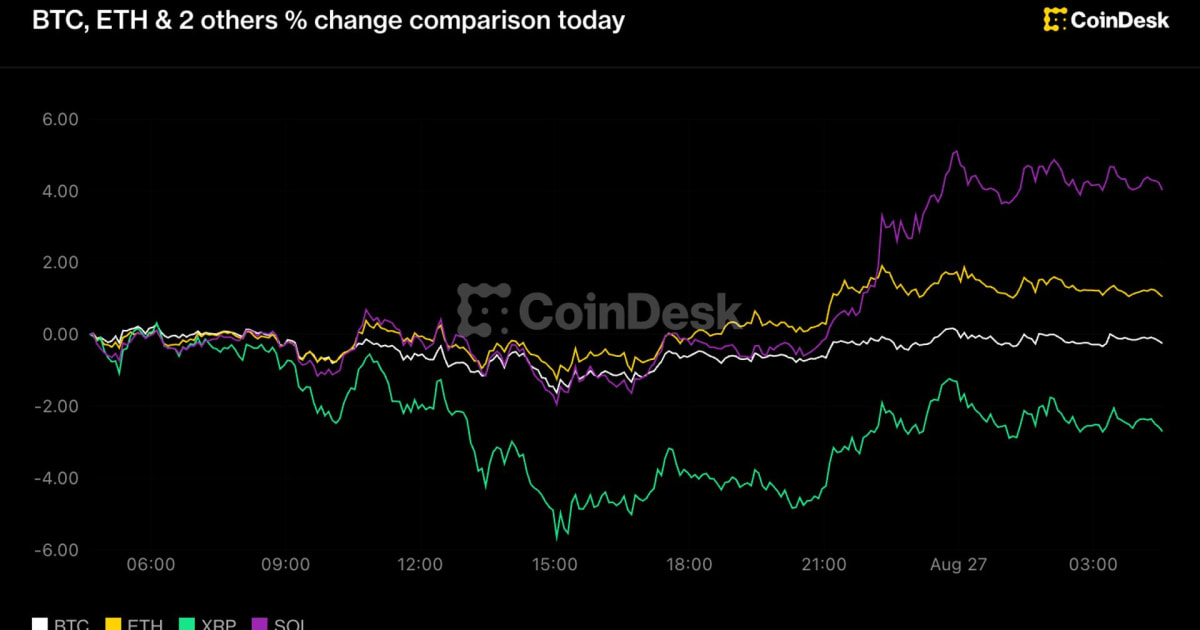
The global financial markets are on edge as traders price in a US Federal Reserve rate hike. This has sent Bitcoin and other cryptocurrencies into a sharp decline, signaling a move away from high-risk assets. Investors in India should brace for potential impacts on FII flows and the performance of speculative tech stocks.
Fed Rate Hike Speculation Sparks Crypto Sell-off: What Indian Investors Need to Know
The digital asset landscape is experiencing a significant downturn, with Bitcoin and other major cryptocurrencies witnessing substantial price erosion. This sharp correction is not an isolated event but a direct consequence of shifting market expectations regarding the US Federal Reserve's monetary policy trajectory. As traders begin to price in a higher probability of an imminent interest rate hike by the Fed, the allure of riskier assets diminishes, prompting a swift pivot towards more conservative investments. This dynamic has profound implications for global financial markets, and crucially, for Indian equities and the broader investment ecosystem.
Why is the US Federal Reserve's Stance So Critical for Crypto and Indian Markets?
The US Federal Reserve, as the central bank of the world's largest economy, wields immense influence over global liquidity and investor sentiment. When the Fed signals a tightening of monetary policy, typically through raising interest rates, it increases the cost of borrowing and makes fixed-income investments, such as government bonds, more attractive. This relative attractiveness means that investors often reallocate capital away from riskier, more volatile assets like cryptocurrencies and speculative technology stocks, seeking the safety and yield offered by traditional instruments. For India, a country heavily reliant on foreign capital inflows, particularly from FIIs, a global risk-off environment driven by Fed tightening can lead to significant outflows from its equity and debt markets. This was vividly observed in the latter half of 2022, when aggressive Fed rate hikes coincided with substantial FII withdrawals from Indian equities, contributing to a period of heightened volatility in the benchmark indices.
The current market sentiment is undeniably bearish, driven by the anticipation of tighter financial conditions. The correlation between interest rate expectations and cryptocurrency valuations has become increasingly pronounced. Historically, periods of low interest rates have fueled speculative booms in digital assets, with easy money flowing into nascent and high-growth sectors. Conversely, rising interest rates act as a natural brake on such exuberance. The market is now grappling with the potential for a sustained period of higher borrowing costs, which could fundamentally alter the risk appetite of global investors. This is not merely a short-term correction; it represents a potential regime shift in how risk is priced across asset classes.
Deep Market Impact Analysis: The Ripple Effect on Indian Equities
The immediate impact of the Fed's anticipated rate hike is a pronounced exodus from speculative assets. Bitcoin, often considered the bellwether of the crypto market, has seen its market capitalization shrink considerably. This sentiment then cascades through other risk assets. For India, this translates into a heightened risk of reduced FII inflows. FIIs are crucial drivers of liquidity and valuation for Indian equities, particularly for growth-oriented sectors and mid-cap stocks that often carry higher risk premiums. A sustained outflow of foreign capital can lead to downward pressure on the Indian Rupee and a broader de-rating of the Indian stock market.
Consider the historical parallel of 2022. During that year, as the Fed embarked on its most aggressive rate-hiking cycle in decades, the Nifty 50 experienced a significant drawdown, losing approximately 15% from its peak. Concurrently, FIIs pulled out over $25 billion from Indian equities. This period also saw a sharp decline in the valuations of technology stocks, many of which were trading at high P/E multiples based on future growth expectations that became less palatable in a higher interest rate environment. The current scenario echoes these dynamics, with speculative tech stocks and high-growth companies in India likely to face similar valuation pressures.
Sector-Level Breakdown: Where the Pain is Most Acute
The cryptocurrency sector is, by definition, at the epicenter of this risk-off move. However, the contagion effect extends to other segments of the market. Speculative technology stocks, particularly those with unproven business models or those heavily reliant on future earnings that are discounted at a higher rate, are highly vulnerable. Companies with substantial debt burdens also become more susceptible as the cost of servicing that debt rises.
In India, the IT services sector, which has benefited immensely from global digital transformation trends and strong FII participation, could see a slowdown in new deal wins or a pushback on pricing if global IT spending moderates. Mid-cap and small-cap companies, which often have less diversified revenue streams and higher beta to market movements, are also at elevated risk. The banking sector, while potentially benefiting from higher lending rates, could face increased non-performing assets (NPAs) if the economic slowdown deepens due to tighter monetary policy.
How Will the RBI's Stance Influence the Impact on Indian Markets?
While the primary driver is the Fed, the Reserve Bank of India's (RBI) monetary policy decisions will play a crucial role in moderating or amplifying the impact on Indian markets. If the RBI maintains a cautious stance, mirroring the Fed's tightening, it could provide some stability to the rupee but would also contribute to a slowdown in domestic economic activity. Conversely, if the RBI deviates significantly from the Fed's path, perhaps by signaling a pause or even a cut, it could create currency volatility and potentially attract some counter-cyclical flows, though the latter is less likely in a broad global risk-off environment. The market will be closely watching the RBI's commentary and future policy actions for clues on its independence and its approach to managing inflation versus growth in the face of global monetary tightening.
Stock-by-Stock Breakdown: Identifying the Vulnerable Players
The impact of a Fed rate hike anticipation is not uniform across the Indian equity market. Certain stocks are inherently more sensitive to shifts in global liquidity and risk appetite. Here's a look at specific NSE/BSE tickers and how they might be affected:
- Zomato (NSE: ZOMATO): This food delivery and quick-commerce platform operates in a highly competitive, capital-intensive sector. Its valuation is largely premised on rapid user acquisition and future profitability, making it sensitive to discount rates. A higher interest rate environment could diminish the present value of its long-term earnings potential, impacting its already volatile stock price. Its current market cap is approximately ₹1.2 lakh crore, and a sustained risk-off sentiment could pressure this valuation significantly.
- Paytm (NSE: PAYTM): Similar to Zomato, Paytm (One 97 Communications) is a fintech company with ambitious growth targets. Its path to profitability involves significant ongoing investment. As a speculative growth stock, it faces headwinds from rising borrowing costs and a potential slowdown in consumer discretionary spending, which could affect transaction volumes. Its market cap, around ₹20,000 crore, could see downward pressure.
- Larsen & Toubro (NSE: LT): While a fundamentally strong infrastructure and engineering giant (market cap ~₹4.5 lakh crore), LT's order book and project execution are sensitive to the broader economic climate. A global slowdown or reduced government spending on infrastructure due to fiscal constraints could impact its future revenue streams. However, its established track record and diversified business segments offer a degree of resilience compared to pure-play tech stocks.
- Infosys (NSE: INFY): As a leading IT services exporter with a market cap exceeding ₹6 lakh crore, Infosys is directly exposed to global IT spending trends. A slowdown in the US and European economies, fueled by higher interest rates, could lead to reduced IT budgets from its key clients. While the company's strong balance sheet and recurring revenue from managed services provide a buffer, a prolonged downturn could impact its growth trajectory and valuation.
- Tata Motors (NSE: TATAMOTORS): This automotive giant (market cap ~₹3.5 lakh crore) is sensitive to both domestic and global economic conditions. Higher interest rates can dampen consumer demand for vehicles, especially discretionary purchases like cars. Furthermore, its significant operations in the UK (Jaguar Land Rover) expose it to the economic health of the European market.
- Reliance Industries (NSE: RELIANCE): While RIL's diversified conglomerate structure (market cap ~₹19 lakh crore) provides significant resilience, its retail and telecom arms are sensitive to consumer spending and growth. A broader economic slowdown driven by high interest rates could indirectly impact these segments. However, its energy business and strong balance sheet offer substantial protection.
Sector peers for Zomato and Paytm would include other new-age tech companies like Delhivery (NSE: DELHIVERY) and Nykaa (NSE: NYKAA). For IT giants like Infosys, peers like TCS (NSE: TCS) and Wipro (NSE: WIPRO) would face similar headwinds, though larger, more established players often have greater pricing power and client diversification.
Expert Perspective: Bulls vs. Bears on the Fed's Next Move
Bulls argue: This current crypto sell-off is an overreaction. The Fed may be forced to pause or even reverse its tightening cycle sooner than expected if inflation cools rapidly or if economic growth falters significantly. They point to the resilience of certain sectors and believe that innovation in areas like blockchain will continue, irrespective of short-term monetary policy shifts. They might also highlight the potential for a weaker rupee to boost export-oriented companies.
Bears counter: The Fed is committed to taming inflation, and this will likely involve higher rates for longer than markets anticipate. The current crypto valuations are unsustainable in a high-interest-rate environment, and the contagion effect will spread further into equity markets, particularly affecting growth stocks. They emphasize that the cost of capital is rising globally, and this will fundamentally re-price risk assets across the board.
Actionable Investor Playbook: Navigating the Tightening Cycle
In this environment of rising interest rate anticipation, a strategic reallocation of portfolios is prudent. The focus should shift from speculative growth to quality and value.
- What to Sell: Consider reducing exposure to highly speculative cryptocurrencies and unproven tech stocks with high P/E ratios and negative earnings. Companies with significant debt and those heavily reliant on discretionary consumer spending should also be reviewed.
- What to Buy/Watch: Focus on companies with strong balance sheets, consistent cash flows, and established market positions. Sectors that tend to perform well in a rising rate environment include defensive sectors like FMCG (Fast-Moving Consumer Goods) and select pharmaceuticals. Value stocks with lower P/E ratios and dividend-paying companies can also offer relative stability. Consider companies with pricing power that can pass on rising costs to consumers.
- Entry Points: For quality stocks that may experience temporary pullbacks due to broader market sentiment, consider accumulating on dips. This is not about timing the market perfectly but about acquiring fundamentally sound assets at more attractive valuations.
- Time Horizons: This strategy is best suited for a medium to long-term investment horizon (1-3 years). Short-term volatility is expected, but a focus on quality should yield better results over time.
For specific entry points, investors should conduct thorough fundamental analysis. For instance, if a quality FMCG stock like Hindustan Unilever (NSE: HUL), with a market cap of ~₹5.5 lakh crore, dips by 5-7% due to general market weakness, it could present a buying opportunity for long-term investors. Similarly, a stable banking counter like HDFC Bank (NSE: HDFCBANK), despite short-term headwinds, might be an attractive accumulation target on significant dips, given its market leadership and strong fundamentals.
Risk Matrix: Potential Pitfalls Ahead
The trajectory of the Fed's monetary policy is subject to evolving economic data, creating inherent uncertainties. The following risks could significantly alter the current market narrative:
- Risk 1: Unexpected Dovish Pivot by the Fed (Probability: Low, Impact: High). If inflation data unexpectedly collapses or if there are signs of severe economic distress, the Fed might signal a pause or even a rate cut sooner than anticipated. This would likely trigger a sharp reversal in risk assets, including cryptocurrencies and speculative tech stocks.
- Risk 2: Persistent Inflation and Further Aggressive Rate Hikes (Probability: Medium, Impact: High). If inflation proves more stubborn than expected, the Fed could be forced to continue hiking rates aggressively or keep them elevated for an extended period. This would amplify the current risk-off sentiment, leading to deeper corrections in riskier assets and potentially a more significant slowdown in global growth.
- Risk 3: Geopolitical Shocks (Probability: Medium, Impact: Medium). Unforeseen geopolitical events, such as new conflicts or significant disruptions to global supply chains, could create uncertainty and volatility, potentially leading investors to seek safe-haven assets and exacerbating the flight from riskier instruments.
- Risk 4: Indian Economic Resilience Outperforms Global Trends (Probability: Medium, Impact: Low to Medium). If India's domestic economic growth remains robust despite global headwinds, it could provide a degree of insulation for Indian equities, attracting some capital even in a risk-off environment. However, this is unlikely to fully offset the impact of a broad global tightening cycle.
What to Watch Next: Key Catalysts and Data Releases
The market's next moves will be dictated by a series of critical data points and central bank communications:
- US Inflation Data (CPI/PCE): Upcoming releases of the Consumer Price Index (CPI) and Personal Consumption Expenditures (PCE) price index will be paramount in shaping Fed expectations. Any significant deviation from forecasts will have immediate market repercussions.
- Federal Reserve Meeting Minutes and Speeches: Detailed minutes from FOMC meetings and public statements from Fed officials will offer crucial insights into the committee's thinking on inflation, growth, and future policy.
- US Employment Data (Non-Farm Payrolls): Strong employment figures can support the Fed's case for continued tightening, while weak data might signal a need for a policy pause.
- RBI Monetary Policy Committee Meetings: The RBI's own policy decisions and forward guidance will be closely scrutinized by domestic and international investors.
The interplay of these factors will determine the duration and severity of the current market correction and shape the investment landscape for the foreseeable future. Investors must remain vigilant, adaptable, and focused on fundamental value.
Run a free AI Stock Screen
Our algorithmic screener scores any NSE/BSE stock on fundamentals, momentum, and risk — free to try, no card needed.
Try the AI Screener →Have questions about this story?
Ask Welth, our finance-focused AI research assistant, for a deeper breakdown — free trial included.
Chat with Welth AI →Disclaimer: This content is generated by WelthWest Research Desk based on publicly available reports and is for informational purposes only. It does not constitute financial advice, investment recommendations, or an offer to buy or sell securities. Always consult a qualified financial advisor before making investment decisions.
